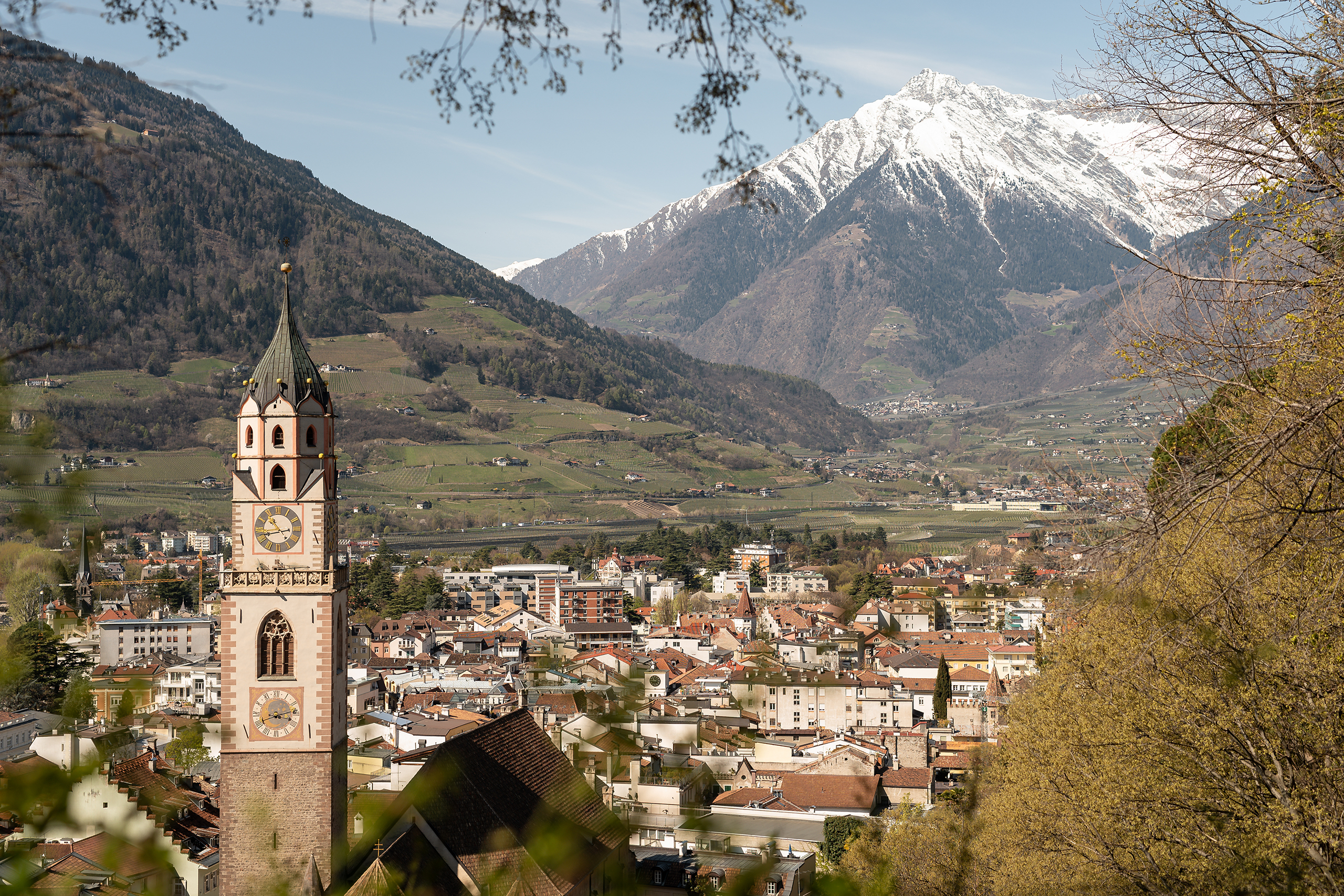

There’s something magical about borderlands – those marginal territories where countries, cultures and languages meet and mix. In a high-altitude corner of Italy, you can pinpoint the spot where Europe’s Germanic north meets its Latin south. The city of Merano is a fulcrum, its population balanced almost precisely between Italian and German speakers, with an extraordinary microclimate helping subtropical gardens and vineyards thrive against a backdrop of snow-capped peaks.
The city’s history is as one of Europe’s glitziest fin-de-siècle spa resorts. The Austro-Hungarian empress Elisabeth first made it famous, visiting Merano for its mild air and healing thermal waters, and bringing Europe’s nobility flocking to the town. Notables from Franz Kafka to Zinedine Zidane have all come since. Tyler Brûlé, the founder of Monocle magazine, once owned a home in Merano for years, drawn by the city’s refined, multicultural lifestyle and independent businesses. You can rent the midcentury house, Villa Fluggi, with its saltwater pool and Finnish wood-fired sauna by Harry Thaler, a local design hero.
In the centre of town, the head-spinning cultural mash-up is inescapable. Café menus offer espresso alongside milky Viennese Melangen; lunch could be a plate of pasta or mountain dumplings. Austrian-style spa culture and spectacular mountain views summon wellness enthusiasts to the glistening outdoor pools of Terme Merano, a gleaming glass cube in the city centre. At the riverside Caffè Wandelhalle, gangs of friends sit underneath the pergola for aperitivo – sharing Hugos (a local prosecco, elderflower and mint creation) paired with rye schüttelbrot. Overheard conversations flip between Italian and German, and everywhere has two names: for the half of the population that still favours the lingua franca of the old Austrian empire, this isn’t Merano but Meran.
The city and its wider region – Alto Adige in Italian, Südtirol in German – have been Italian territory since 1918. Before that, they were ruled from Vienna for centuries. Nearby valleys feel like a slice of pure Tyrol. Winding roads pass wooden farmsteads clinging to hillsides, hand-painted signs in German and herds of silver-grey mountain cattle, cowbells clanking. But Merano is more complex: a bilingual, bicultural place with a transition that hasn’t been totally smooth, but where peaceable coexistence reigns today – bar the occasional bust-up over flags or street signs.
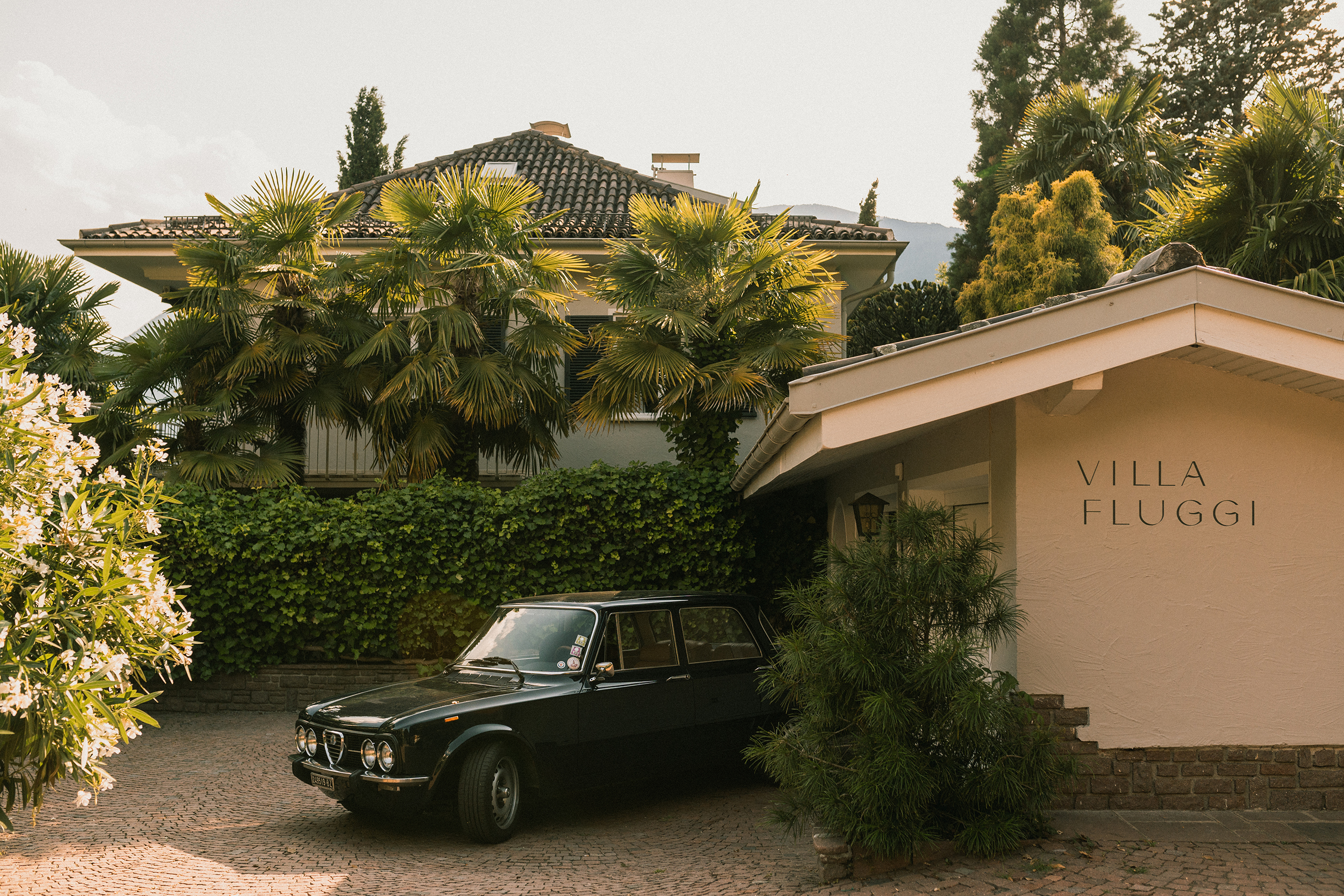
Heavenly days: Villa Fluggi is a holiday home for design aficionados
Merano’s mayor, Katharina Zeller, is an energetic character with a background in competitive swing dance. She describes the city as a “crossroads of the German and Italian linguistic and cultural spheres. From Merano, cities such as Munich and Venice are equally within reach – both geographically and culturally.”
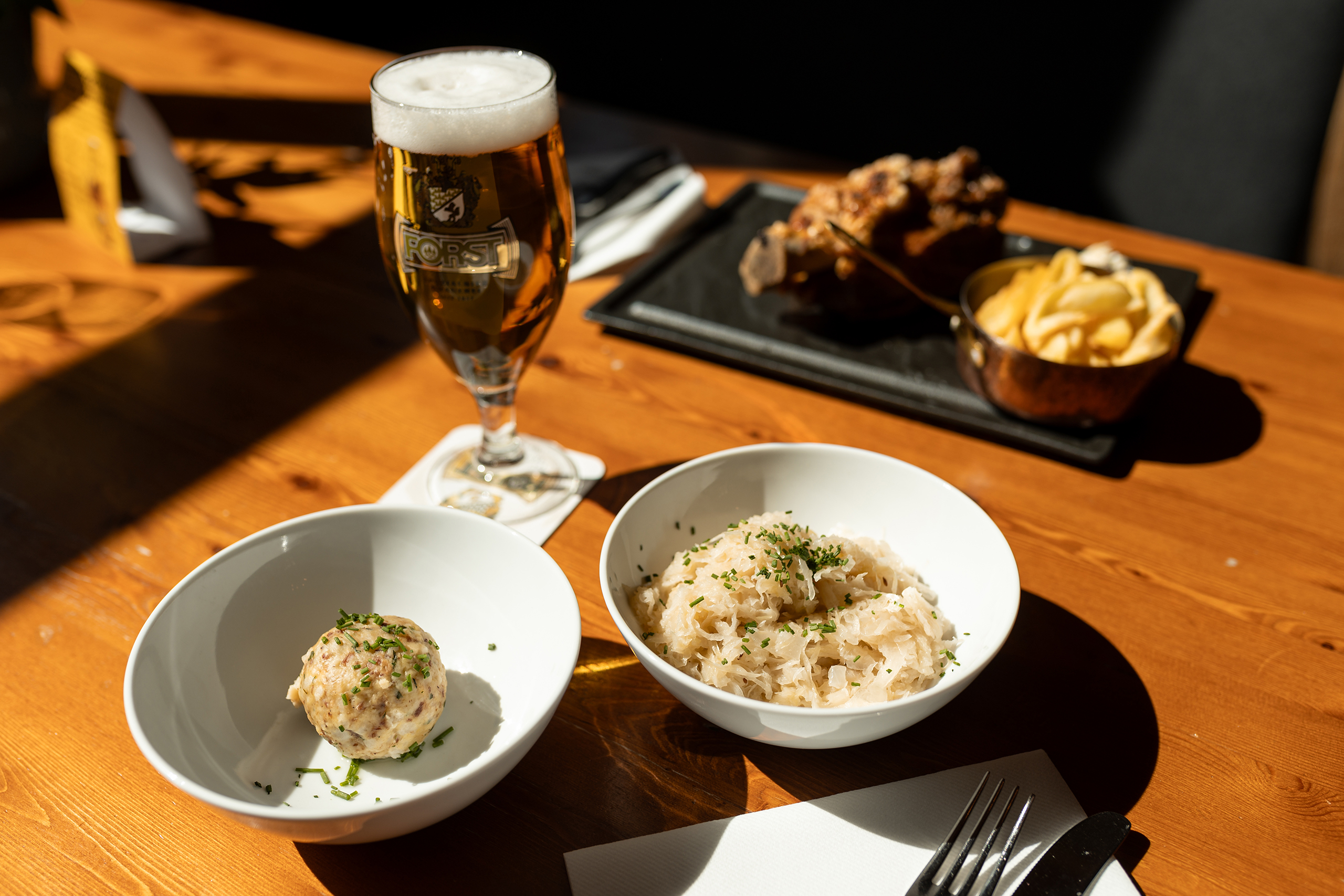
Whatever language the menu is written in, local food is a huge part of life in Merano. The full Tyrolean experience is on offer at the wood-panelled beer hall Försterbrau, where knödel dumplings, sauerkraut and pork knuckle are paired with Forst Kronen lager, brewed upriver. But there are also plenty of traditional Italian establishments. Trattoria Mainardo is a hole-in-the-wall family business on a quiet street near the city centre, run by brother and sister Marco and Sabina Timone since 1999. Under its green-and-white striped awning, it’s a low-key neighbourhood spot where regulars arrive for a plate of vitello tonnato at noon and are seen dozing off at the table shortly after. The homemade paccheri is as good as any in the backstreets of Naples, though the handwritten menus also include Austro-Hungarian classics such as goulash and rösti, along with local mountain favourites such as speck, wild boar and chanterelles.
The South Tyrolean surrounds are made up of a dense network of small farms, many of which – the Erbhöfen – have been passed down the generations for centuries thanks to strict inheritance laws. These smallholdings club together to form larger co-operatives that keep ancient traditions thriving. The Waale, medieval channels that have carried glacial water down into the valleys for centuries, shape the landscape, forming an idyllic network of hillwalking trails.
Then there’s Merano’s miraculous microclimate, providing about 300 sunny days a year, which lets vineyards flourish beneath snowy mountains. The vines begin in the city centre and stretch for miles. Kellerei Meran (or Cantina Merano) is a co-operative winery that brings together nearly 350 local producers. Stefan Kapfinger, who has been the cellar master for more than 35 years, explains, “The mountain peaks of the Texel Group protect Merano from cold winds to the north. From the south, the climate is influenced by the Mediterranean – the open Adige valley allows mild temperatures to penetrate far north, especially in spring and autumn.”
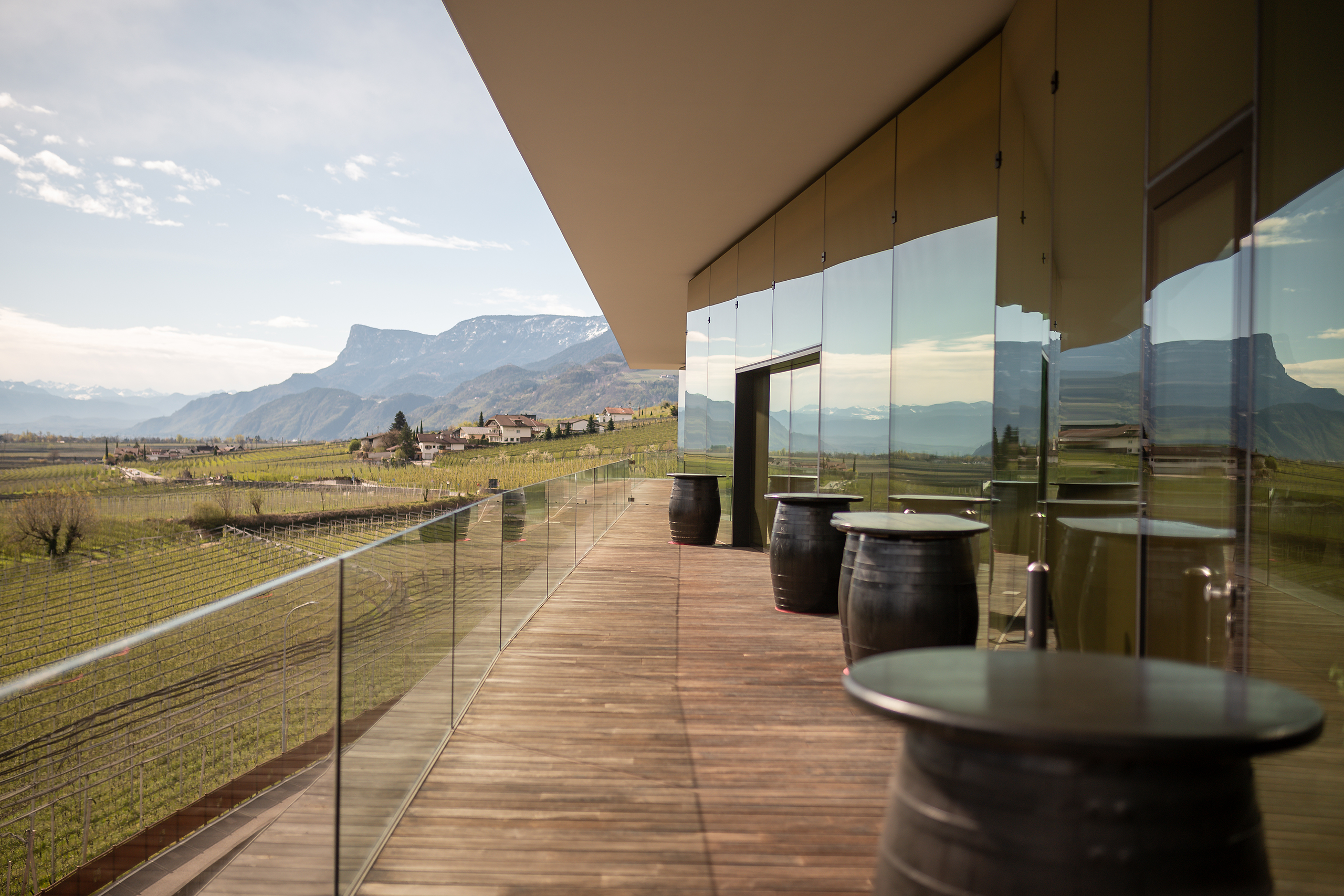
Full of flavour: the tasting room at the Kellerei Meran winery
The result of all of this is a cornucopia of low-intervention, locally grown produce and, most famously, an abundance of apples. Merano is at the centre of a vast crescent of orchards, whose fruits are exported all over Europe. The Pur Südtirol deli and Saturday farmers’ market are the best spots in the city centre to pick up farm-fresh apples, speck and local wine. Merano’s cool-climate vintages are making a name for themselves internationally, with grapes such as vernatsch and lagrein traditionally grown on distinctive pergola terraces. Kapfinger adds that the “warm, low-rain summer days, windy spring and autumn weeks, biting winter frost and, above all, the strong temperature fluctuations between day and night” let growers bottle a huge variety of wines for such a small region.
Besides the city’s annual wine festival, the best place to sample the gamut is Kellerei Meran’s glass-walled tasting room in the village of Marling. Designed by the South Tyrolean architect Werner Tscholl (known for his monumental structures in the nearby Dolomites), its glass pavilion reveals views for miles over the valley and vineyards.
The same microclimate also gives life to the botanical gardens of Trauttmansdorff Castle, on Merano’s outskirts. Sloping down to a lily pond, its terraces sprout palms and cypresses, lemon trees and exotic ferns. The gardeners go to extraordinary lengths to carry Mediterranean gardens through Alpine frosts – pots are moved indoors, vulnerable trees heated with electric wiring, and whole beds covered or mulched over until the spring.
For those looking to decode the Merano formula, there’s only one place to stay: the 10-room Ottmanngut guesthouse. It has been in the same family since 1850 and parts of the building date back to the middle ages. The garden of ancient palms, cypresses and oleanders feels timeless, and the three-course breakfasts – featuring homemade sourdough, local yoghurt and sugar-dusted gugelhupf or apple tarts – are a throwback to a slower, more generous era of hospitality. But the sixth-generation proprietor, Martin Kirchlechner, has brought Ottmanngut gently up to date, introducing acoustic jazz evenings in the orangery and weekly dinner parties open to all. “Ottmanngut is very representative of Merano and South Tyrol,” he says. “There’s a connection between tradition and the present, between a rural past and cultural openness.”
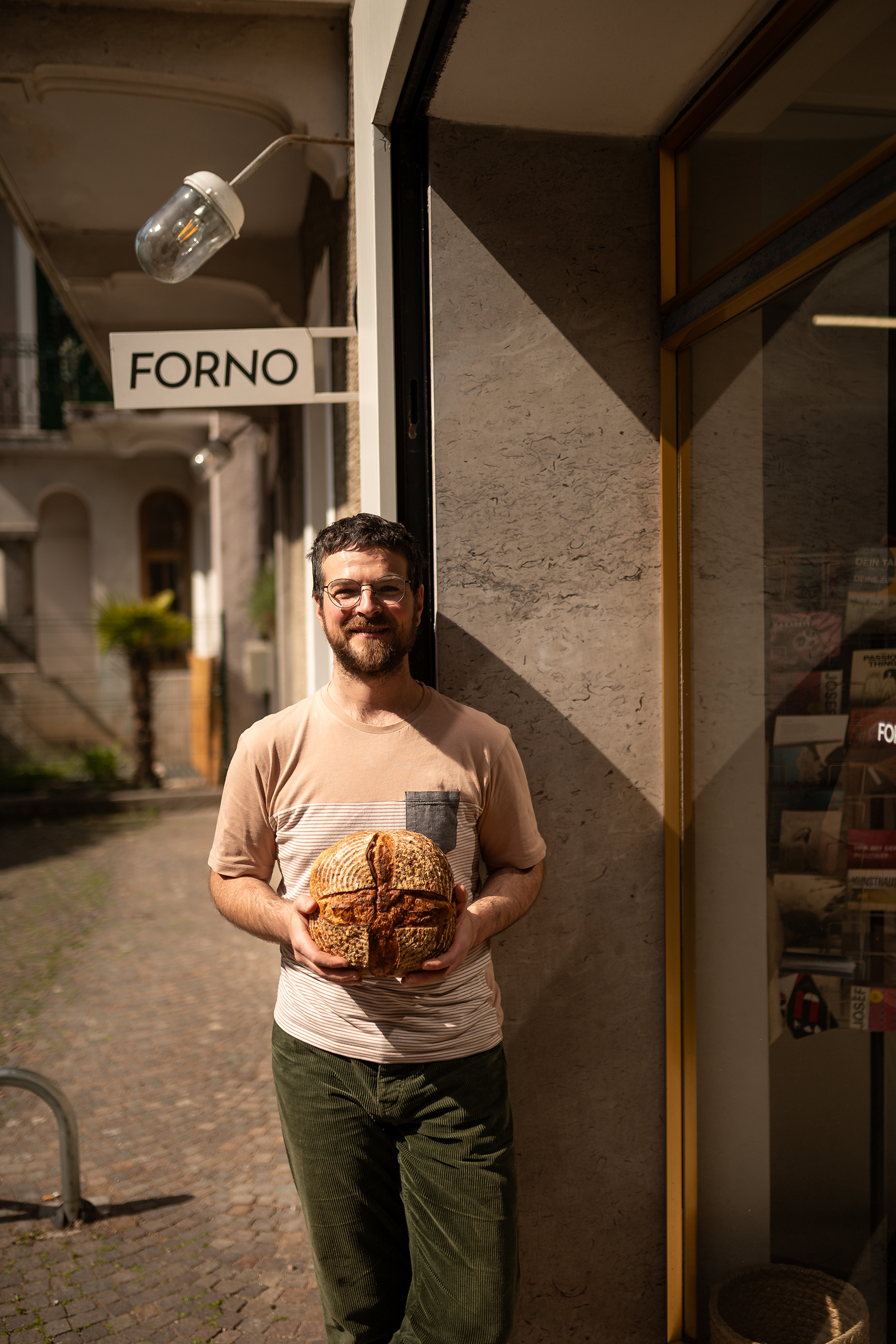
Ready to rise: the area is a haven for low-intervention, locally made produce, including bread from organic baker Ivo de Pellegrin
Having spent his whole life in and around Ottmanngut, Kirchlechner has had a prime spot from which to watch Merano subtly change. “Small, artisanal businesses are opening. Gastronomic concepts are becoming more diverse, and overall the city feels more vibrant and experimental.” That said, he adds, Merano’s immunity to trends is a draw in and of itself. “Consistency with a quiet, unhurried transformation – that perhaps describes it best.”
Kirchlechner has noticed the face of tourism change, too. “About 30 years ago, Merano was primarily a magnet for an older, German-speaking audience. Now more and more younger, international guests are coming to the city. The trends toward good, healthy food, slowing down and getting out into nature play right into Merano’s hands. All of that is easily possible here.”
Poised between the Alps and the Mediterranean, city living and the natural world, a fascinating history and a stylish present, this place seems to have found just the right balance for the good life.
Newsletters
Choose the newsletters you want to receive
View more
For information about how The Observer protects your data, read our Privacy Policy