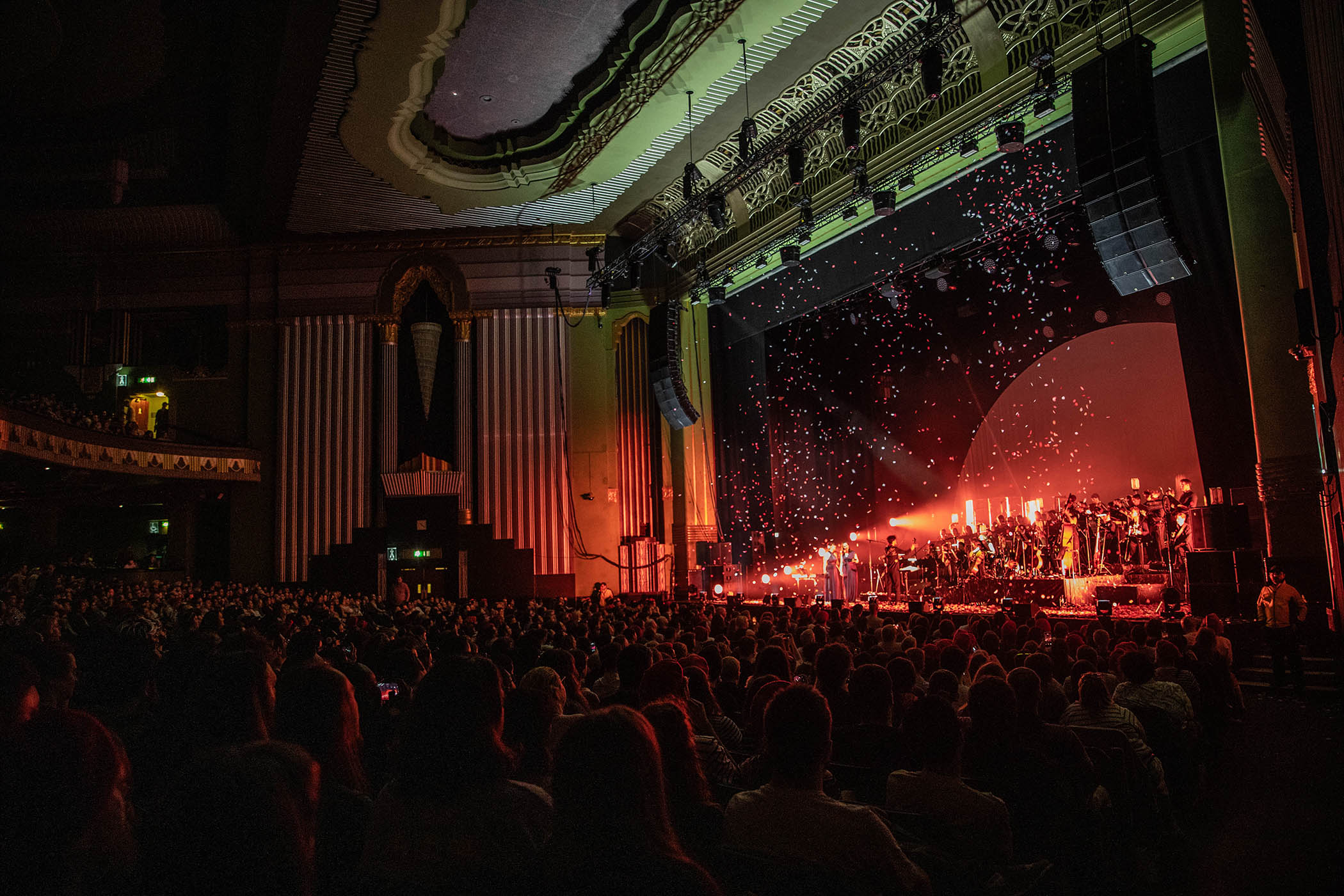



On this unseasonably warm April evening, the Hammersmith Apollo contains an improbable number of red berets. At least a quarter of the audience have arrived for A Painted Symphony – an orchestral concert drawn from the hit French video game Clair Obscur: Expedition 33 – in Gallic costume. They cluster at the bar in striped shirts and round, black-rimmed glasses; a few have gone further, crusty baguettes slung across their backs. “I bought mine on Amazon,” one told me.
Less generously viewed, the outfits may seem like a xenophobic caricature, or at least a flashmob embrace of cliche. But the impulse originates in Clair Obscur itself; a work whose Frenchness is deliberate, affectionate and more deeply rooted than its surface iconography suggests. Released a year ago, the role-playing game – developed by the Montpellier-based studio Sandfall Interactive – became one of 2025’s unexpected successes, winning awards and earning its 28 developers a knighthood in France. Set in a world shaped by the belle époque – the exuberant cultural period that ran from the end of the Franco-Prussian war to the outbreak of the first world war – the fantasy game’s Parisian streets are filled with opulence and unease. Its painterly aesthetic draws on art nouveau and surrealism; its premise – an annual culling, known as the “gommage,” in which citizens are erased at a fixed age – introduces a note of Proustian dread.
Much of its appeal rests, too, on its music, composed by Lorien Testard, a former guitar teacher making his debut in games. The score, which is melancholic, restrained and threaded with French-language vocals, many performed by soprano Alice Duport-Percier, has become a blockbuster in its own right, selling millions of copies and amassing half a billion streams to become a rare crossover between game music and the broader classical charts.
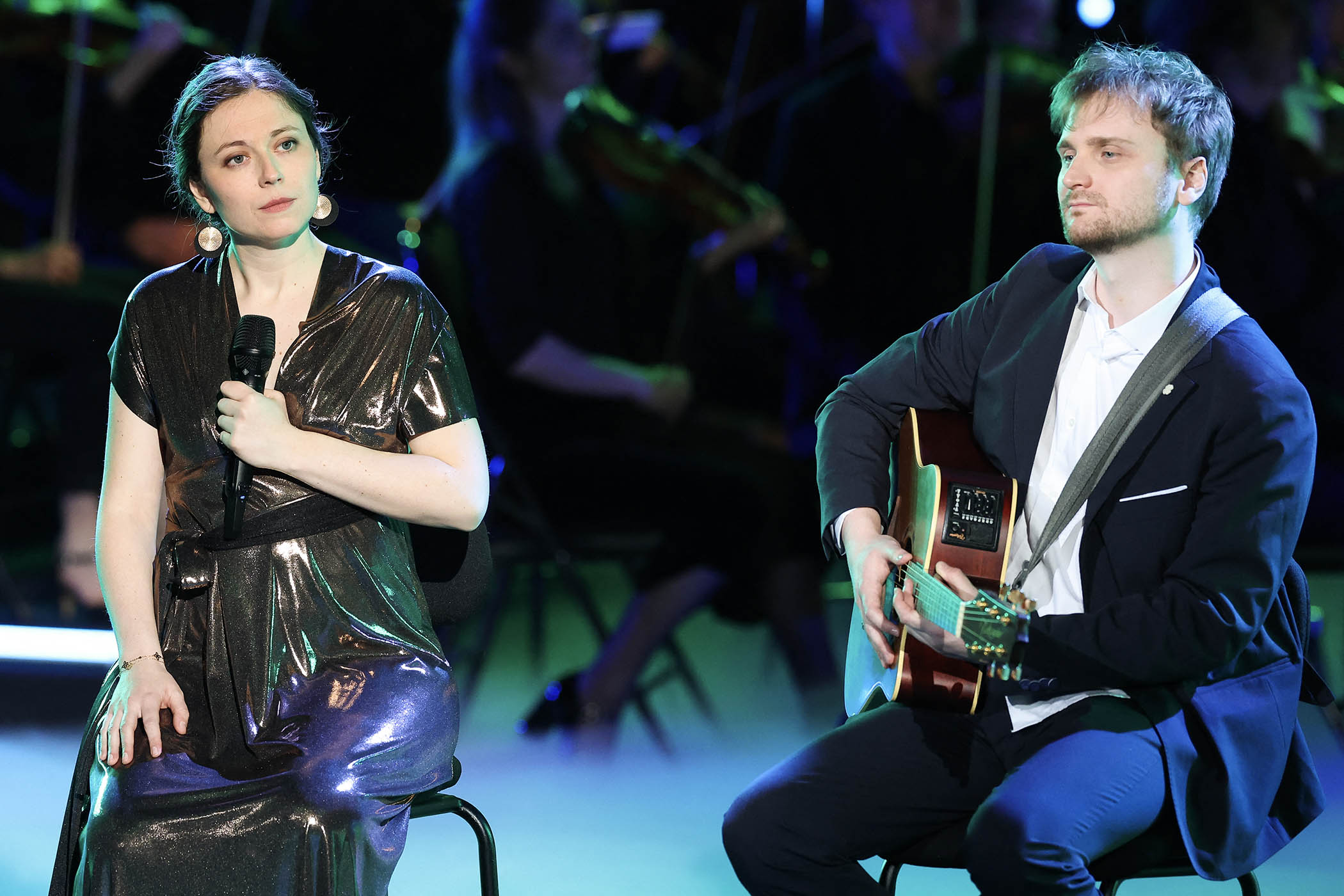
Composer Lorien Testard described soprano Alice Duport-Percier’s voice as the one he ‘heard in my music even before we met’
That affection manifests at the Apollo tonight as a kind of giddy mania. The crowd, some of whom are attending their first classical concert, babble in anticipation, then greet the musicians like Glastonbury headliners. Testard moves restlessly across the stage in front of the orchestra, swapping guitars, playing prog-inflected solos during the score’s more driving passages, then fingerpicking his way through its quieter moments. At times, he sits cross-legged at the front of the stage, joined by Duport-Percier, who wears a mauve silk gown. The audience whoops and whistles, perpetually on the brink of ovation, as confetti cannon release bursts of red and white paper and stage lamps glow purple among the players.
For Testard, the success has been dizzying – and unexpected. He grew up in Valence, southern France. His parents were young when they had him, and his father, for a time, worked in a video game shop, bringing home cartridges to play while his son gurgled on his lap. At school, however, Testard felt adrift. He struggled to concentrate, unable to see the relevance of his lessons to his life; he recalls periods of anxiety, even depression. At 16, he picked up a classical guitar he found resting against a wall in his grandmother’s house and immediately felt an elemental pull. No one around him could play, so he turned to the internet, learning chord shapes and strumming patterns alone.
“It felt like a relief,” he told me, when we spoke over Zoom. “To finally have something to create on, to be alone with.” He found, in the music he could make with the instrument, a sense of place, and resolved to study it formally as soon as he left school. “It’s really the only thing I wanted to do in my life,” he said, a conventional ambition for a young man, perhaps, but one rooted in a more niche fascination with sound as atmosphere and narrative.
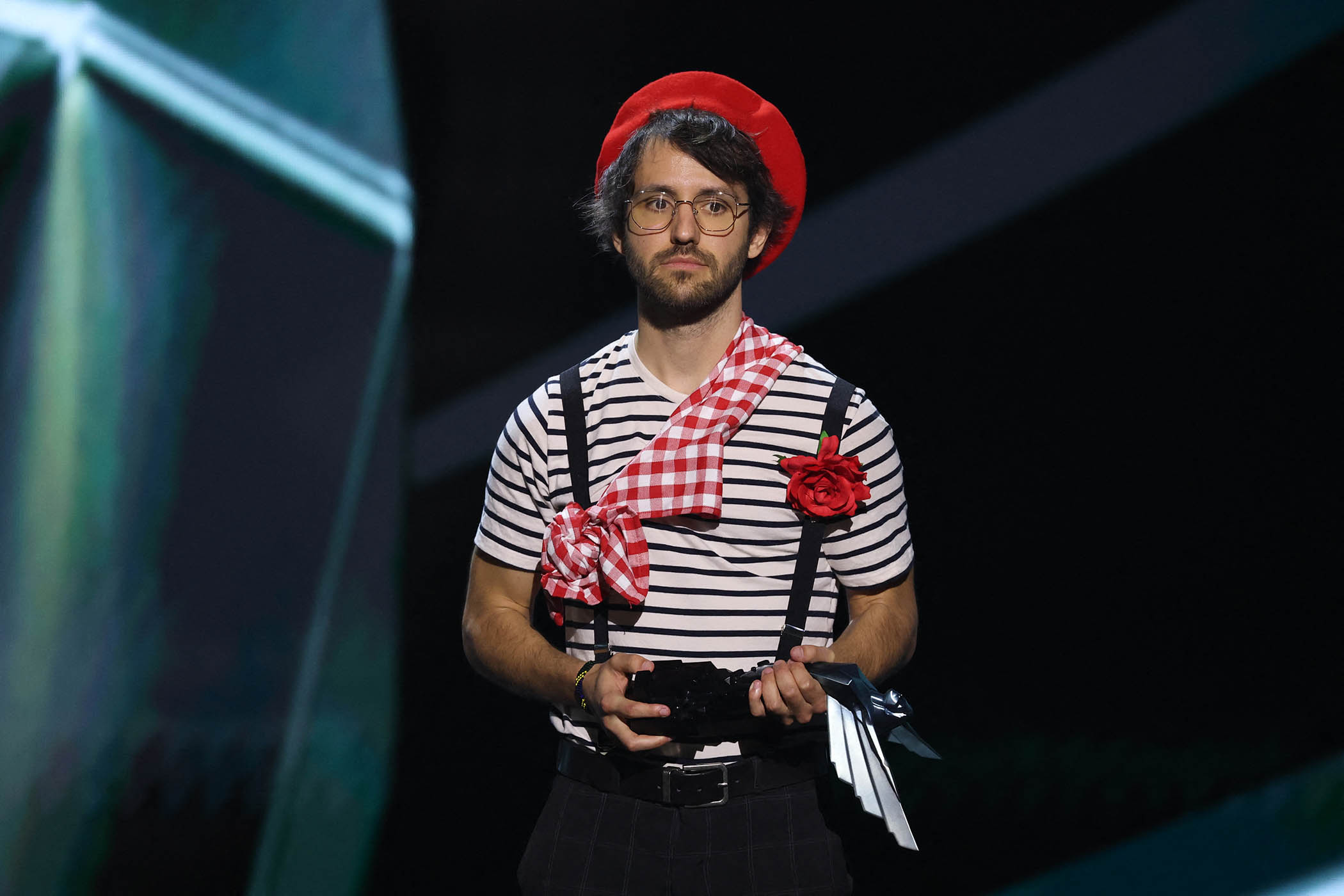
Guillaume Broche, the creator of Clair Obscur, in the outfit that some of its characters wear in the game
Having earned his qualification, Testard began to teach guitar locally. The formal structure of lessons suited him: naturally shy, he found in it a way to meet people at different stages of life, and he absorbed the perspectives of those he met. After three years, however, the work began to feel repetitive. Many of his students, he sensed, lacked his own intensity of interest and did little practice between lessons. “It became boring, always giving the same pointers,” he said.
Hoping to combine his interests, he began composing music for video game trailers he found on YouTube. He would mute the original audio and write his own melodies to complement the action on screen. The short form – one or two minutes at a time – felt manageable and allowed him to experiment across styles without being overwhelmed. He became absorbed in the practice, sometimes scoring a new trailer every day.
Rather than draw inspiration primarily from video game music, he looked elsewhere, to rock, pop and especially singers and composers such as Alain Bashung and Jacques Brel. In doing so, he began to develop a sensibility distinct from the conventions of game composition. As his confidence grew, he joined an online forum for French independent game developers. “I realised that, if I wanted to become a composer, I needed to start sharing my music with the world,” he said.
I developed a deep relationship with the music, with this world and with its characters through the creative process
I developed a deep relationship with the music, with this world and with its characters through the creative process
Testard began posting his work regularly, hoping it might be noticed and lead to something more. The weekly ritual became a way of refining both craft and instinct: speculative and playful, but also precise, and attentive to pacing, tone and the implied narrative of the footage. In time, what began as a means of distraction became a hopeful portfolio.
After he had posted about 50 tracks, he received a message on the forum from Guillaume Broche, the creative director of Sandfall Interactive, then a fledgling studio, asking whether he might be interested in composing for a new game. That project would become Clair Obscur.
The story follows a group of people in their mid-20s fated to die at the age of 33, victims of the gommage, in which a mysterious entity known as the Paintress erases everyone of that age from existence each year.
The game fused ideas popularised in Japanese role-playing-games such as Final Fantasy with French sensibilities. Within the first few minutes, for example, your character meets an ex-lover who sports a red beret, fights a street mime and eavesdrops at a door on a couple making extravagant love. At one point, you acquire the option to dress your characters in a costume named, simply, “baguette”. Thereafter, your character runs around with a stick of French bread strapped to their back, shouting putain and other aromatic Gallic curses.
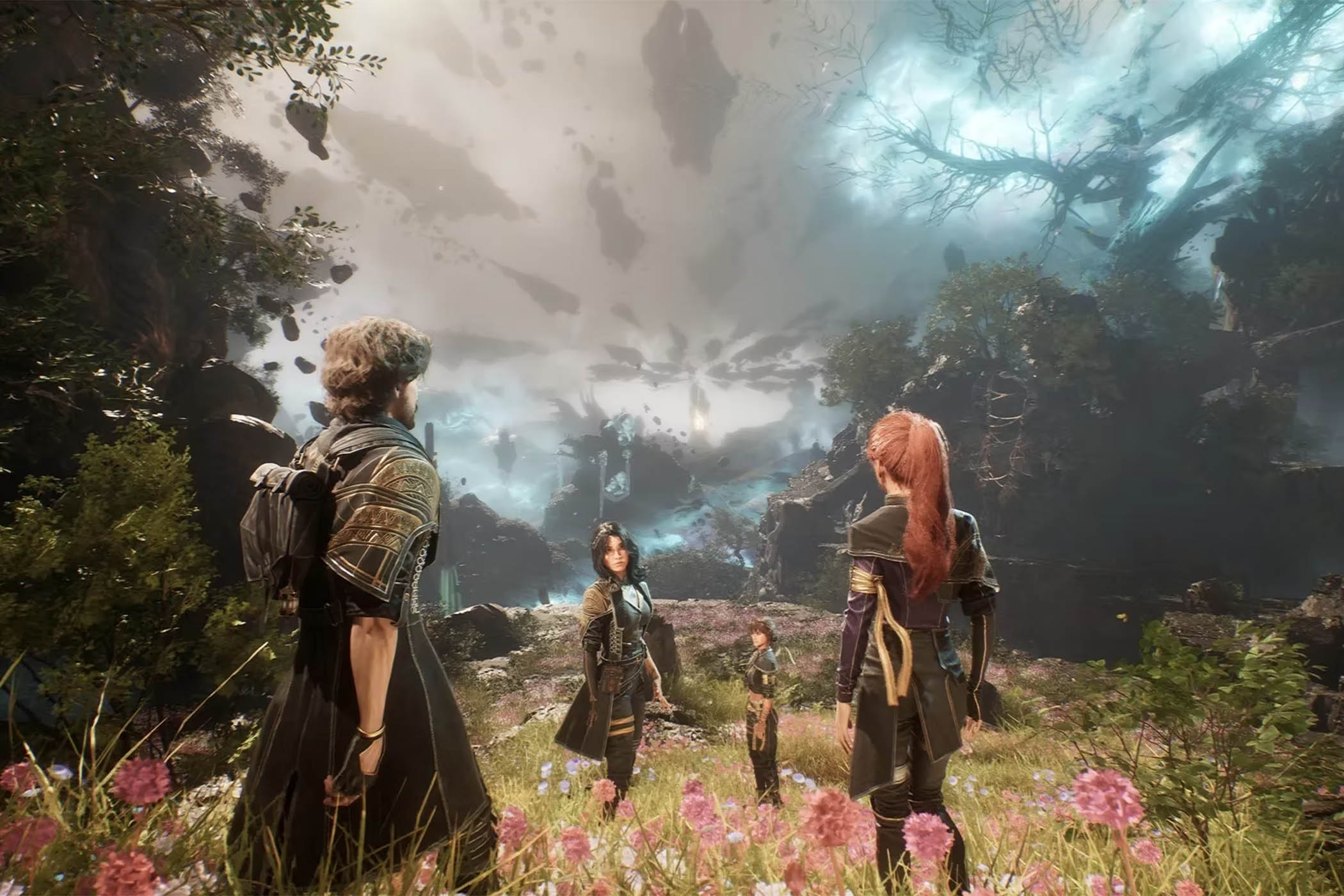
A scene from Clair Obscur
Testard, too, chose to lean into cultural specificity. Rather than default to the sweeping orchestral style that typically defines lavish game scores, he adopted a more intimate, song-led approach, built around piano, cello and voice. The game’s theme tune, sung in French, makes that influence explicit, invoking familiar cultural touchstones: the Eiffel Tower and, in one line, a painterly image of the city itself – “the roofs will happily paint the sky, as Renoir would”.
Testard contemplated the game’s themes of loss and decay and, as he put it, tried to infuse the music with his own feelings about “family, grief and the time we have left”. The result is melancholic, reflective and distinctly European in tone.
Where, for many professional composers, projects come and go like seasons, Clair Obscur enveloped Testard’s life for five years. “I developed a deep relationship with the music, with this world and with its characters through the creative process,” he said. From the outset, he knew the score would centre on a human voice: “There are an infinity of emotions and nuances that emerge from the slightest inflection.” When he met Duport-Percier, the collaboration felt preordained. “Hers is the voice I heard in my music even before we met. Even after years of hearing it every day, her singing still makes me cry.”
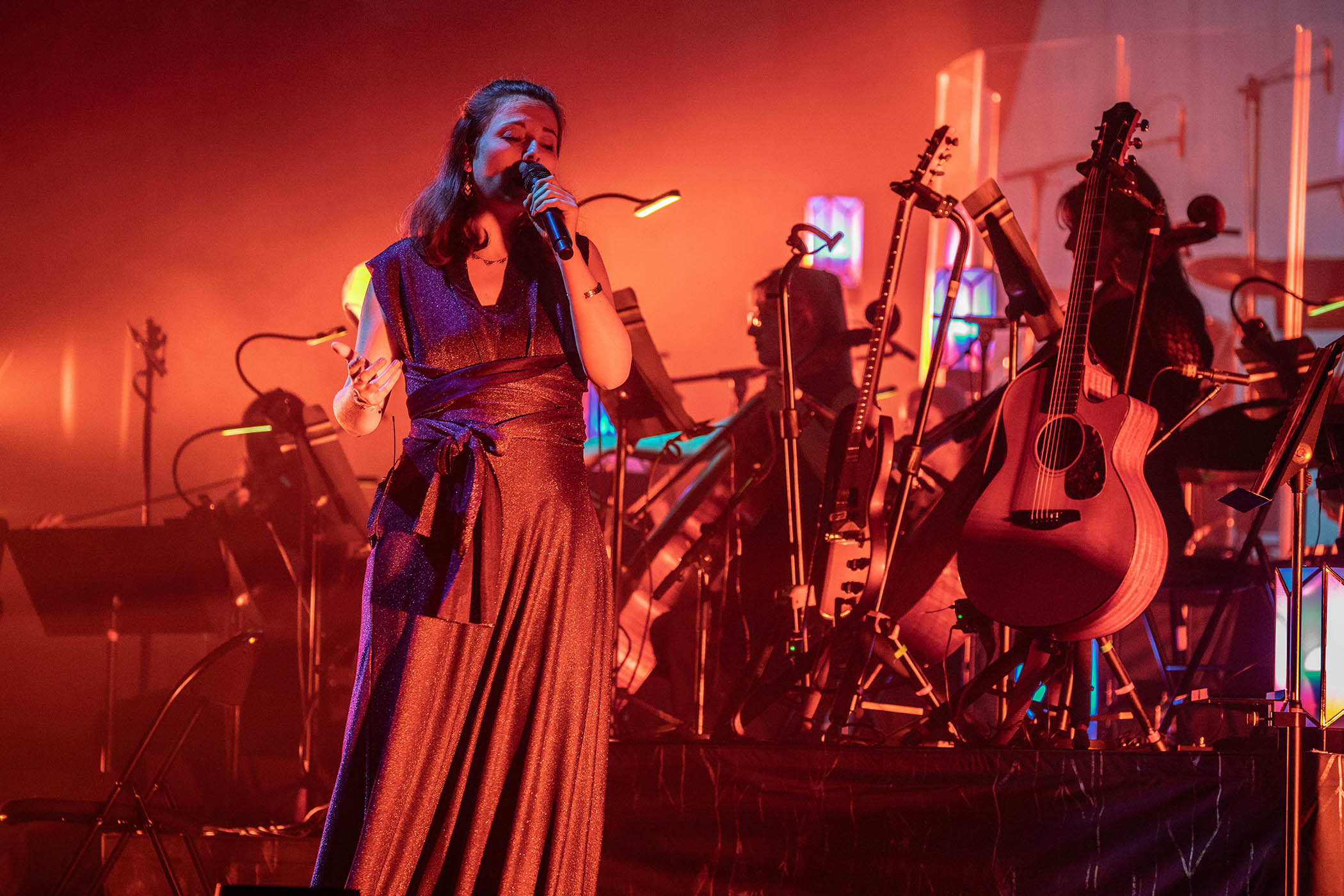
Duport-Percier performing in London
As the work expanded – eventually to more than 150 tracks – Testard felt his sense of identity becoming entwined with the project. At times, he said, he became fixated on the idea that he might die before completing it. So the game’s arrival, when it finally came, felt like a spiritual release: “It brought me a deep, eternal relief. It was a long-awaited moment. It exists now, and nothing will ever change that.”
Still, he has not yet let go. The sold-out concert tour has extended the life of the music, keeping him happily inside the world he created. “I haven’t had any time at all to process what’s happened,” he said. “The two hours on stage go by incredibly fast. By the end, I’ve experienced thousands of emotions. I feel so lucky to be able to live this.”
Long after the curtain call, as the last underground trains wend their way beneath London, a group of 40 or so fans linger outside the venue, many still in costume, now smoking and swapping impressions, hoping to catch a glimpse of Testard or one of the musicians before they leave for Strasbourg, and the next leg of the tour. Traditionalists may bristle at the incursion of video game music into the classical charts, but its vitality and reach are impossible to ignore. It fills concert halls, draws new audiences and, on nights such as this one, turns a once-private act of composition into something communal – and unmistakably alive.
Newsletters
Choose the newsletters you want to receive
View more
For information about how The Observer protects your data, read our Privacy Policy
Photographs by Fred Tanneau/AFP via Getty Images, Sarah Tsang/Sandfall Interactive