

One evening, several years ago, the Johannesburg-based video game developer Ben Myres visited London with his parents. Myres had arranged to meet fellow indie game-makers across the city, so he dropped his parents at the steps of the British Museum, that great neoclassical reliquary of world history, ideally suited to a day’s parent-sitting.
When the family reconvened later that night, however, his mother seemed bothered. She had spent the afternoon standing before the Nereid Monument, an elaborately carved Lycian tomb removed by a British expedition in the mid-19th century, stone by stone, from what is now southern Turkey. Reassembled inside the museum’s galleries, it has remained there. “She had been struck by the scale and audacity of its presence,” Myres recalls. The sheer nerve of removing an entire tomb from its landscape, culture, and cosmology had left her furious. Half-joking, half-serious, she suggested her son make a game about it.
At first, the idea sounded absurd. But institutions, curators and governments, like Myres’s mother, have begun to reckon with the colonial conditions under which so much treasure in the west was acquired. In recent years, bronze heads have travelled back to Benin City; carved ivories have been promised to Ethiopia. Many museum directors have added supplementary labels to explain how a valuable piece of another culture’s history ended up behind glass thousands of miles from home. The language of restitution, once the preserve of campaigners and academics, has seeped into official press releases. Defenders point out that monuments such as the Nereid might have lain broken and forgotten without the intervention of enterprising explorers; critics counter that Britain has for centuries monetised the spoils of its violent past while deferring responsibility over the consequences.

Ben Myres, co-founder of Nyamakop, was inspired by his mother’s British Museum experience during a family trip to London
Back in South Africa, Myres began turning over possible versions of his mother’s provocation. None quite worked. Reversing the removal of a monument stone by stone, he realised, was a worthy political demand but a boring video game. Soon, however, the conversation with his colleagues at Nyamakop, the Johannesburg-based studio he co-founded, drifted towards a more familiar and perennially seductive narrative form: the museum heist.
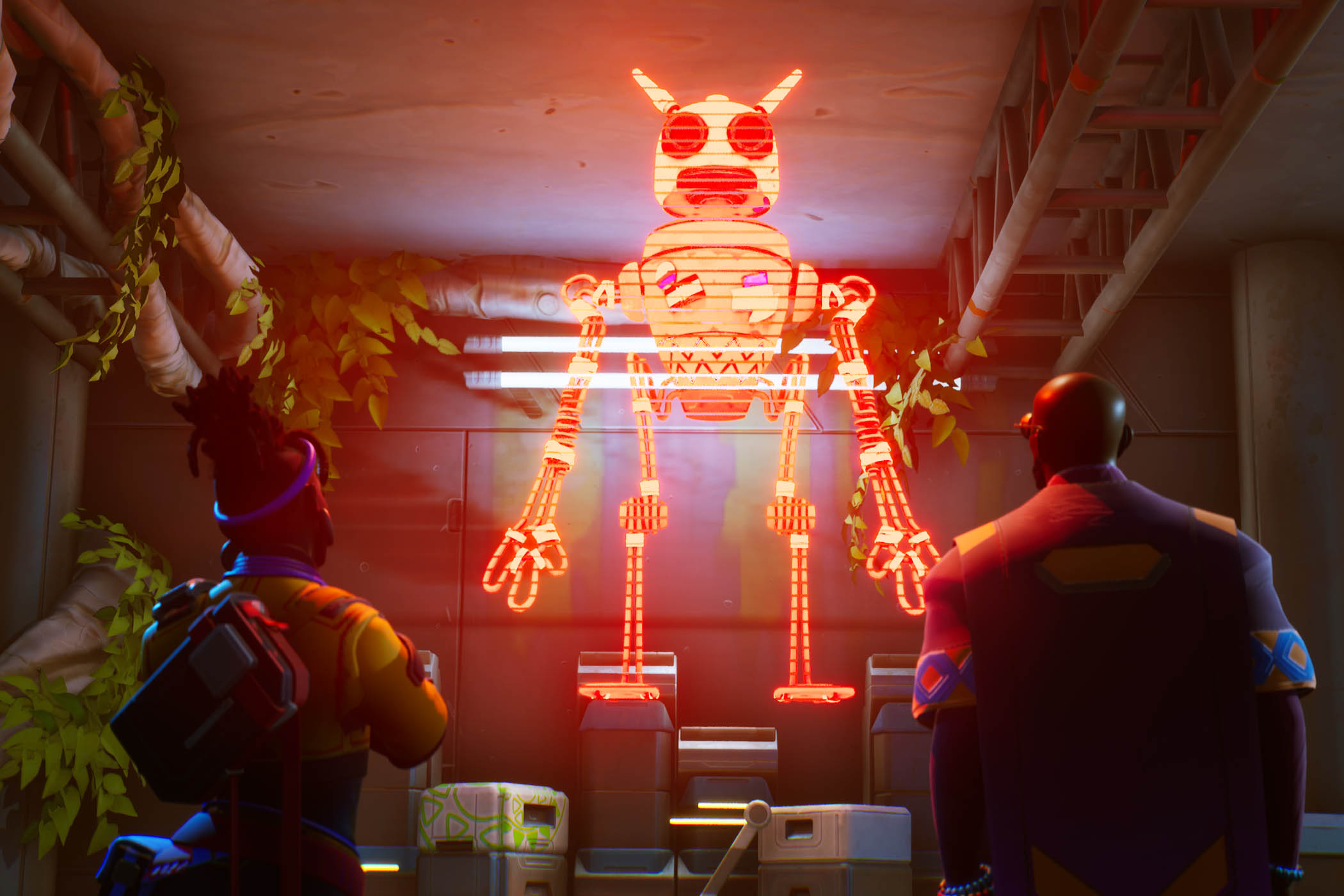
Five years on, the resulting game, Relooted, imagines a near future in which diplomacy has stalled and paperwork has failed, forcing a different kind of negotiation with museums. Instead of committees and treaties, there are blueprints and parkour routes. The thieves here are not stealing to enrich themselves but to correct the record, thereby approaching one of the most charged debates in modern cultural life with the light-footed thrill of an institutional robbery.
That lightness is not a retreat from seriousness but how the game sustains it. What first appears to be a modest side-on platformer – like a reworking of Super Mario – quickly reveals itself as something closer to a clockwork puzzle box. You play as Nomali, a parkour savant drawn into the work of restitution not by ideology but by family obligation, and each mission unfolds in two distinct movements.
First comes the casing of the joint: surveying museum interiors via a hovering drone, placing crew members at strategic choke points, unlocking shortcuts and engineering an escape route. Then comes the moment of action. The instant Nomali’s hands close around an artefact, alarms flare and doors seal. The plan, if it has been properly thought through, then unspools. The pleasure of Relooted lies in the tension between forethought and improvisation, between the cool geometry of planning and the bodily rush of flight.
That sense of coordination is not confined to the screen. It is echoed in the making of the game itself. Relooted is, by Myres’s reckoning, one of the largest video games ever made in sub-Saharan Africa, measured by team size, scope and budget. Its developers are drawn from more than a dozen African nations. After a while, he found himself driven not only to make a point about restitution but to demonstrate what African game-makers could achieve, especially when telling stories about the continent on their own terms.
From Indiana Jones to Tomb Raider, pop culture has long celebrated the extraction of objects as adventure. Relooted tells it from a new perspective
From Indiana Jones to Tomb Raider, pop culture has long celebrated the extraction of objects as adventure. Relooted tells it from a new perspective
For the novelist Mohale Mashigo, who serves as Relooted’s narrative director, stories about taking artefacts and moving them across borders are already deeply embedded in popular culture, only usually from the opposite point of view. From Indiana Jones and Tomb Raider to The Mummy, cinema and games have long celebrated the extraction of cultural objects as adventure. Relooted, Mashigo suggests, simply gives that familiar form a new perspective, and a non-violent approach.
Questions of tone, she says, were settled early. Relooted could easily have tipped towards anger or confrontation but the team kept returning to another organising principle: joy. “This is, after all, a game,” she says. The emotional high point of any heist film, Mashigo notes, is the getaway, the moment when chance and planning briefly align. Translating that feeling into play required constant iteration of the game’s flow-based movement system, while the narrative created moments of levity through sharply differentiated personalities. The genre, she points out, depends on this friction between characters, opening space for humour.
Newsletters
Choose the newsletters you want to receive
View more
For information about how The Observer protects your data, read our Privacy Policy
The historical material, by contrast, was handled with care. The artefacts in the game are mostly real, researched down to their pronunciations and provenance, and presented without embellishment. “There’s nothing confrontational or angry about historical fact,” Mashigo says.

Novelist Mohale Mashigo, who serves as Relooted’s narrative director
In reframing museums less as neutral guardians of culture than as beneficiaries of historical theft, Relooted is hardly breaking new ground. The more interesting question, Mashigo suggests, is not whether museums should be challenged, but on what authority they claim neutrality in the first place. Whose culture is being guarded? How did it come to be removed from its home? Who decides what happens to it, and to whom are those decisions ultimately accountable? These questions, asked repeatedly and rarely resolved, have come to define the limits of the restitution debate itself.
That ethical exhaustion is embodied in Relooted through the character of Prof Grace, a scholar who has spent her career labouring over restitution treaties only to watch them fail at the last moment. When she turns to heists as an alternative form of diplomacy, it is less an act of rebellion than a gesture of frustration. Even so, the game’s creators have been careful not to overstate their case. “We feel Relooted is pretty soft overall,” Myres says. Any gentler, he argues, and the game would risk erasing the culpability of museums and private collections in acquiring and displaying objects that many believe belong elsewhere; any stronger, and it might alienate players who have come to solve a puzzle rather than wrestle with an ethical dilemma. For that reason, while many of the artefacts are real, the museums themselves are fictional. “The game isn’t about museums,” Myres adds. “It’s about the artefacts.”
After more than five years of work, releasing the game into the world has been its own reckoning. Mashigo admits to fearing that the work might be misunderstood, dismissed or simply overlooked. “At the beginning of a project,” she says, “you’re not yet the person you need to be to complete it. You grow with it.” Once Relooted leaves the studio, what follows is a loss of control that no amount of planning can prevent. Yet that uncertainty feels appropriate. The game is shaped by the same act it imagines: giving something up, and trusting it will at last find its way home.
Photographs by Nyamakop/Ben Myres