“I received terrible news from Rome,” wrote Ann Goldstein, the acclaimed American translator of Elena Ferrante’s books, in a tweet on 10 March. “Elena Ferrante passed away. She hadn’t written for some time and was ill. Goodbye, my extraordinary, unforgettable, brilliant friend!”
Within minutes condolences began to flood the post. Among the first to respond was the Booker shortlisted novelist, Amitav Ghosh, who offered sympathies, and thousands of others followed. For a few hours, the internet mourned the death of an extraordinary writer, who had topped the New York Times’s ‘best book of the century’ list with her quartet of Neapolitan novels, and who has for decades been known only by her pseudonym.
By the time I saw it, the message had been confirmed to be fake. It had been posted by an Italian hoaxer, Tommaso Debenedetti, who specialises in fabricating interviews, and has pretended to be Toni Morrison, Philip Roth, Gore Vidal and many others.
Ferrante’s career has always carried this strange tension. In an industry increasingly built on visibility – book tours, social media, the steady performance of a literary persona – she has remained stubbornly absent. That absence has given her a freedom to write with intimacy and ferocity. But it has also created a vacuum others seem compelled to fill, whether through investigations, impersonations or hoaxes. The result is a peculiar cultural drama: a writer determined to disappear, while parts of the public, high on internet exposure, refuse to let her.
“Poor Elena!” said Tom Tivnan, deputy editor of The Bookseller, when I asked him about the hoax. Tivnan describes the current moment in publishing as “peak pen name”. Ferrante is unusual – Tivnan says publishers now favour what he calls the “open-secret pseudonym”, a way to reinvent a writer without entirely concealing them. A science-fiction novelist might reappear under another name to publish a thriller, or a mid-list author might attempt a more literary novel under a fresh identity. At this year’s London Book Fair, several major deals involved precisely this sort of rebranding, Tivnan said.
But Ferrante’s case is different. Her pseudonym is not a marketing strategy but a way of resisting a culture of exposure. It’s why so many people are obsessed with ‘outing’ her. “Who is entitled to other people’s identity? Are writers entitled to protect who they are?” Martha French, a literary scout, asked. “Increasingly in publishing the answer is no. It’s really hard to get published if you don’t have not only a name, but also a following.”
Ferrante’s anonymity has never been accepted easily. Ten years ago, the Italian journalist Claudio Gatti claimed to reveal Ferrante’s identity by analysing financial records and property purchases. He concluded that the author was likely an Italian translator whose biography resembled details in Ferrante’s novels. His investigation was published in Il Sole 24 Ore and the New York Review of Books. “In an age in which fame and celebrity are desperately sought after,” Gatti wrote, “the person behind Ferrante apparently didn’t want to be known. But her books’ sensational success made the search for her identity virtually inevitable.”
The investigation – a form of “doxxing” – was condemned across the literary world. Zadie Smith said her identity was “not our right”, and French still thinks of it as "perverse". Yet the revelation has largely been ignored. Ferrante remains Ferrante, a name readers accept as both real and not real.
Her absence still leaves a space others are eager to fill. In February this year someone claiming to be Ferrante emailed the journalist Sabrina Imbler. The email opened warmly: “I wanted to reach out, author to author, to share how much I appreciated [Imbler’s book] How Far the Light Reaches,” it read. “Your ability to illuminate the lives of these extraordinary sea creatures while weaving in your own journey as a queer, mixed-race writer is truly remarkable.”
Imbler then discovered that the email account used a photograph of the very translator Gatti had once identified as Ferrante. The writer Lee Goldberg received a similar email, as did Kendall Dunkelberg, a poet and professor, both describing being flattered first and then angry.
Newsletters
Choose the newsletters you want to receive
View more
For information about how The Observer protects your data, read our Privacy Policy
I wrote to this ‘Ferrante’ myself, asking if they would consider an interview. “SCAMMER,” they replied. “WHAT DID YOU HAVE FOR ME?” The email was signed: “Warmly, Elena.”
Ferrante’s name seems to invite this vicious kind of impersonation. The belief that by remaining anonymous, she is somehow “scamming us” – that she might deserve the death hoaxes, the doxxing, for holding herself back.
Ferrante’s publicist Daniela Petracco says the pseudonym exists precisely to avoid this attention. “She would rather those interested found her in her writing,” Petracco told me. For Petracco the distance has never been difficult to respect. “I have always sympathised with her wish to stay out of the limelight,” she said. “It’s been wonderful to see the admiration with which many readers have accepted it.”
In an age obsessed with exposure, the harder people try to force the writer into the open, the more her absence proves the point. Ferrante has spent decades insisting that the author matters less than the work. Readers know where to find her. She has always told them: inside the pages.
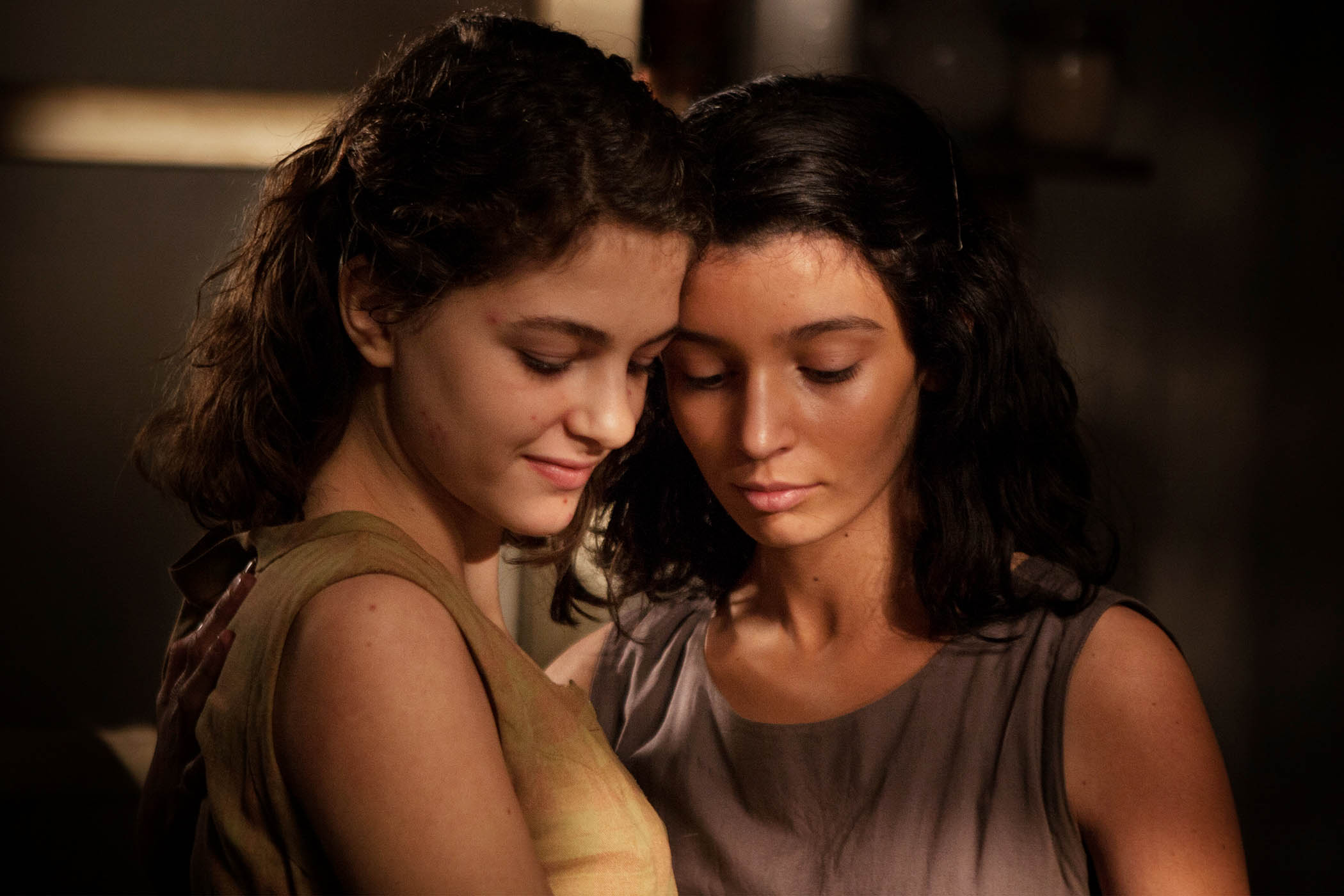
Photograph by Eduardo Castaldo/Wildside/Umedia