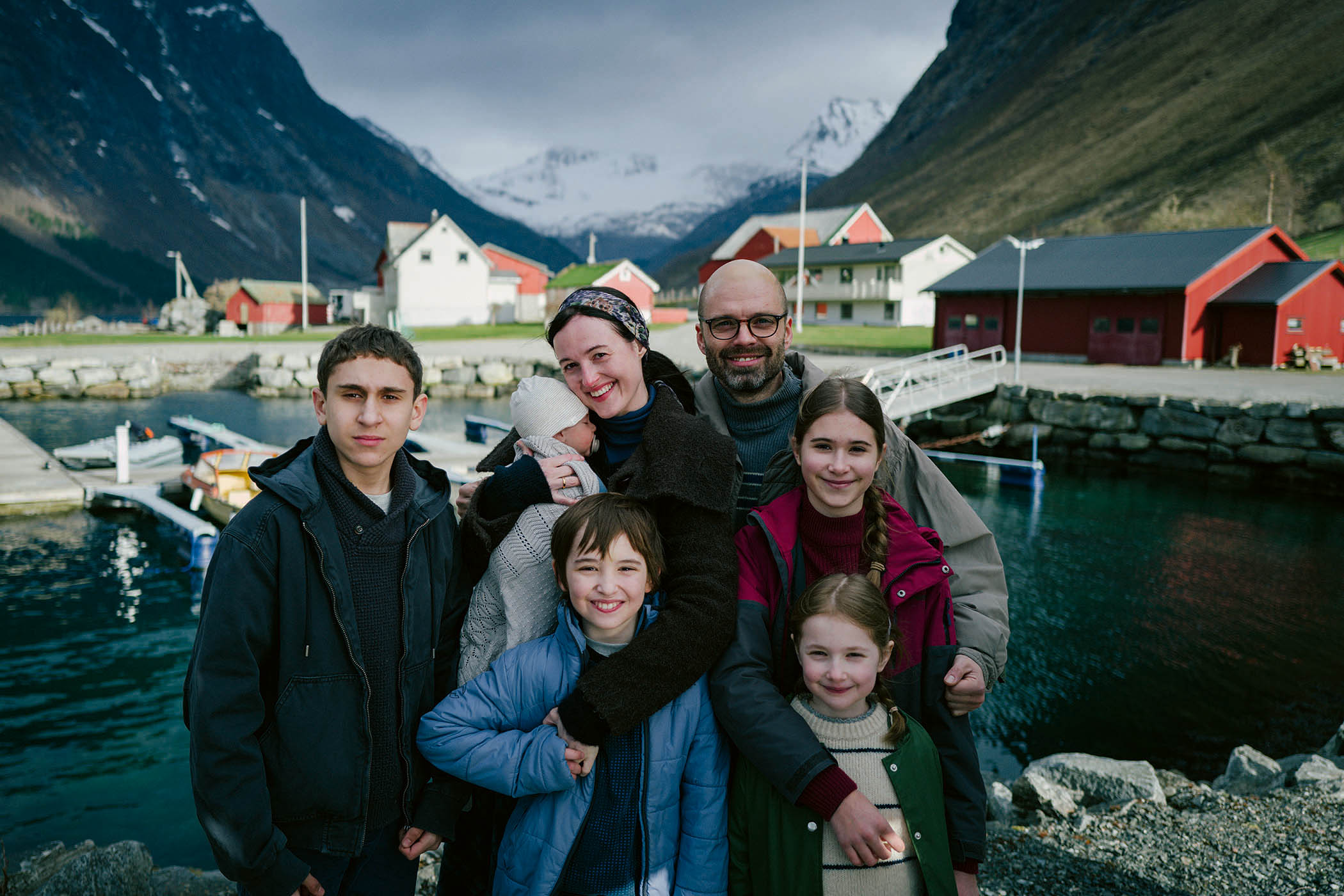
The snow shown sliding down the mountain towards a small Norwegian settlement at the opening of Cristian Mungiu’s Fjord is oblivious, as natural threats are, to the fear it inspires below. But it is not the implacable force of an avalanche that will crush the devout Pentecostal family who have just moved into town. Instead, destruction comes at the hands of the protective state, as suspicions grow among schoolteachers that the parents’ rigid religious convictions amount to child abuse. The Romanian director’s striking Cannes competition entry is one of several films in contention for the Palme d’Or this year to confront an apparently secure family unit with a modern brand of peril.
Renate Reinsve, Oscar-nominated for Sentimental Value and a previous best actress winner at Cannes for The Worst Person in the World, plays the enigmatic mother of five in this sober clash of cultures. Before the hypervigilant Norwegian authorities intervene, she has believed herself safe within the strictures of her faith. A neat resolution isn’t possible here.
As one character explicitly points out, you never know what goes on inside another household. Unfortunately for Mungiu, one of the main attractions of cinema is getting just such a judgmental peek through the curtains. The withholding of information, however thematically justified, ultimately feels unsatisfactory.
Other Palme d’Or frontrunners to stick a sharp pin in a domestic bubble include Marie Kreutzer’s Gentle Monster, in which a hidden child pornography habit is tracked and unmasked, and Hirokazu Kore-eda’s Sheep in the Box, which suggests, not entirely speculatively, that a lost child could be replaced with a lookalike robot.
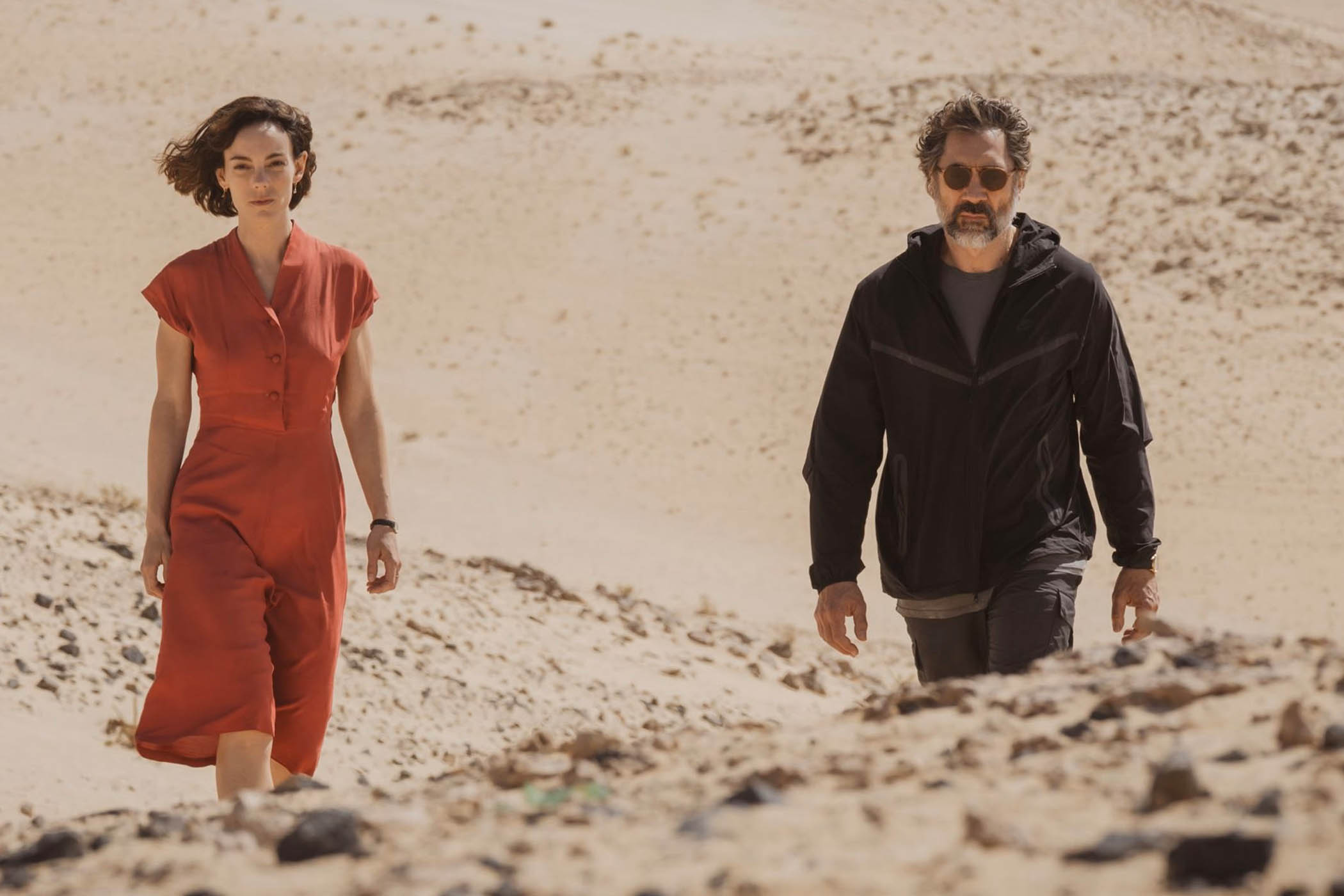
Victoria Luengo and Javier Bardem
The acclaimed Japanese director takes his title from a cute line in the classic children’s story The Little Prince about the power of the imagination, but he conducts his own hi-tech thought experiment in grief at an alarmingly slow pace. The sensitivity of his approach eventually feels like being clubbed on the head with artistic restraint.
In contrast, Kreutzer’s study of the implosion of the relationship between a pair of young bohemian parents, played by Léa Seydoux and Laurence Rupp, is both affecting and credible. The descent into familial hell also unfolds slowly, and with fewer digressions, as the police target the father – a “gentle monster”. The horror lies in the mother’s dawning doubt. The grim determination of the cops mirrors Kreutzer’s intent to convey every spasm of maternal pain on Seydoux’s face.
The actor has been riding high on the Croisette this year. She also shines in a movie that could certainly take the prize for the strangest sex scene, did it exist. In Arthur Harari’s body-swap thriller The Unknown, she plays a man in a woman’s body who must make love to the woman who now inhabits his former body. Everyday French film problems.
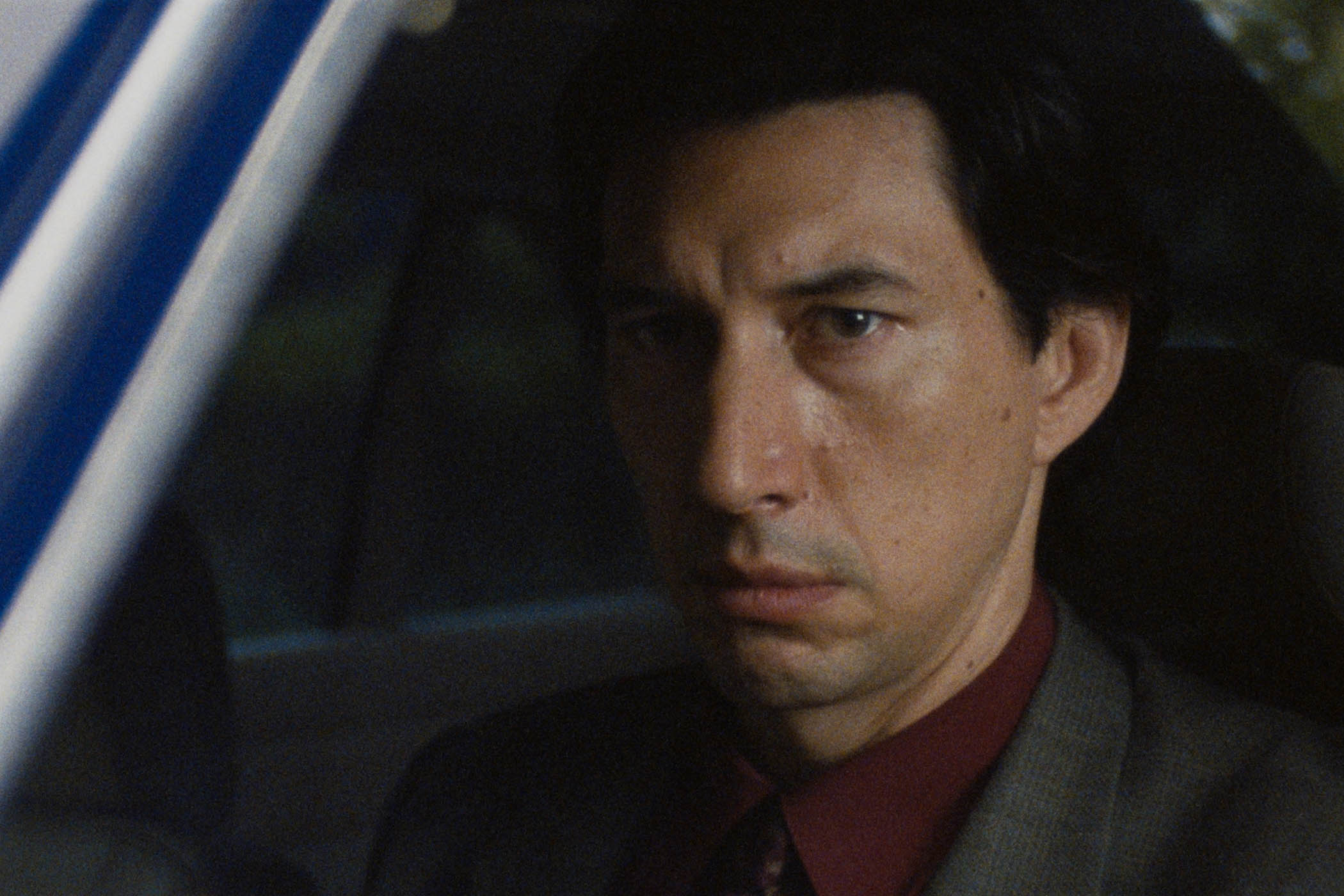
Adam Driver in Paper Tiger. Main image: Renate Reinsve (centre) stars in Fjord
A more conventional menace to family life, for filmgoers at least, rears its head in one of the festival’s much-anticipated premieres: James Gray’s Paper Tiger, starring Adam Driver and Scarlett Johansson as brother and sister-in-law. It is set in 1980s suburban New York and, this time, it is Russian gangsters who breach the sanctity of the home, although Driver’s risk-taking uncle Gary is the one who lets them in. Gray paints his story of a corrupt city struggling to play by the rules so lovingly that he moves close to retro pastiche. But the final shootout is a tour de force and makes a rewarding payback, especially when coupled with Johansson’s portrayal of a warm, worried mother facing unforeseen risks to hearth and health.
It might be pushing it to say that the films in competition at Cannes offer an X-ray of the state of the human psyche, but if so, troubled father-daughter dynamics are showing up as a cause for concern: two of the strongest pictures here expose these vexed relationships from revealing angles.
Two standout performances dominate The Beloved, directed by Rodrigo Sorogoyen: Javier Bardem as a silverback film-maker attempting to make amends, and Victoria Luengo as his failing actor daughter. Their riveting initial encounter at a restaurant is followed by volcanic showdowns once they are working on location in the ashen lava flows of Fuerteventura. The regrets of a famous director are not terra incognita for arthouse cinema, but Sorogoyen makes authenticity his subject matter in several clever ways. Visual textures alter and colour comes and goes.
Newsletters
Choose the newsletters you want to receive
View more
For information about how The Observer protects your data, read our Privacy Policy
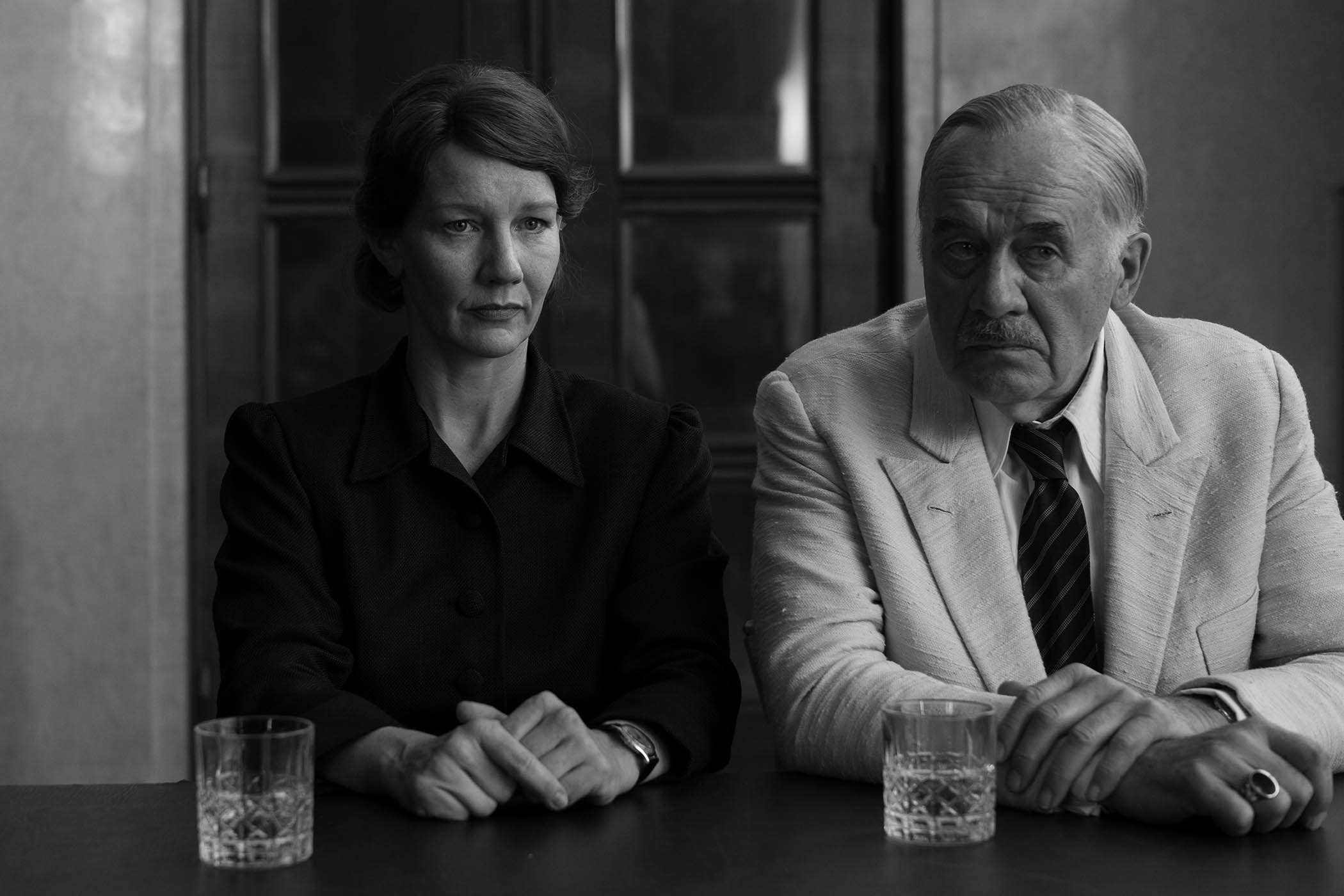
Sandra Hüller and Hanns Zischler in Fatherland
The second masterful film to tackle a daughter’s effort to survive in the shadow of a celebrated father is Paweł Pawlikowski’s Fatherland. The German novelist Thomas Mann (Hanns Zischler) returns to his homeland after the second world war with his daughter, Erika, played utterly convincingly by Sandra Hüller, acclaimed for Anatomy of a Fall and The Zone of Interest. The Polish director summons the shabby melodrama of a ruined Germany as his backdrop, only to undercut it, rightly, with gravity of tone. This is a film about guilt, how to handle it and what to sacrifice. Inspired by Colm Tóibín’s biography of the author, it avoids accurate timelines and movingly links the suicide of Mann’s novelist son, Klaus, to this return trip.
The films of Pedro Almódovar and the exiled Russian Andrey Zvyagintsev both joined the prize race later in the week. The jury, chaired by South Korean director Park Chan-wook, makes its selection from the 22 features in competition on Saturday night.