
There’s a special sort of trepidation that swirls around a film adaptation of a beloved work of literature: that niggling worry that there’s no way the source material can ever be fully realised on screen. For me, and I suspect many others, Helen Macdonald’s H Is for Hawk is one such book. Published in 2014, it was a kind of travelogue through the rocky terrain of grief that deftly balanced memoir – the spine of the story follows the author as she trains a goshawk while processing the death of her father – with evocative nature writing and biographical tangents about the writer TH White.
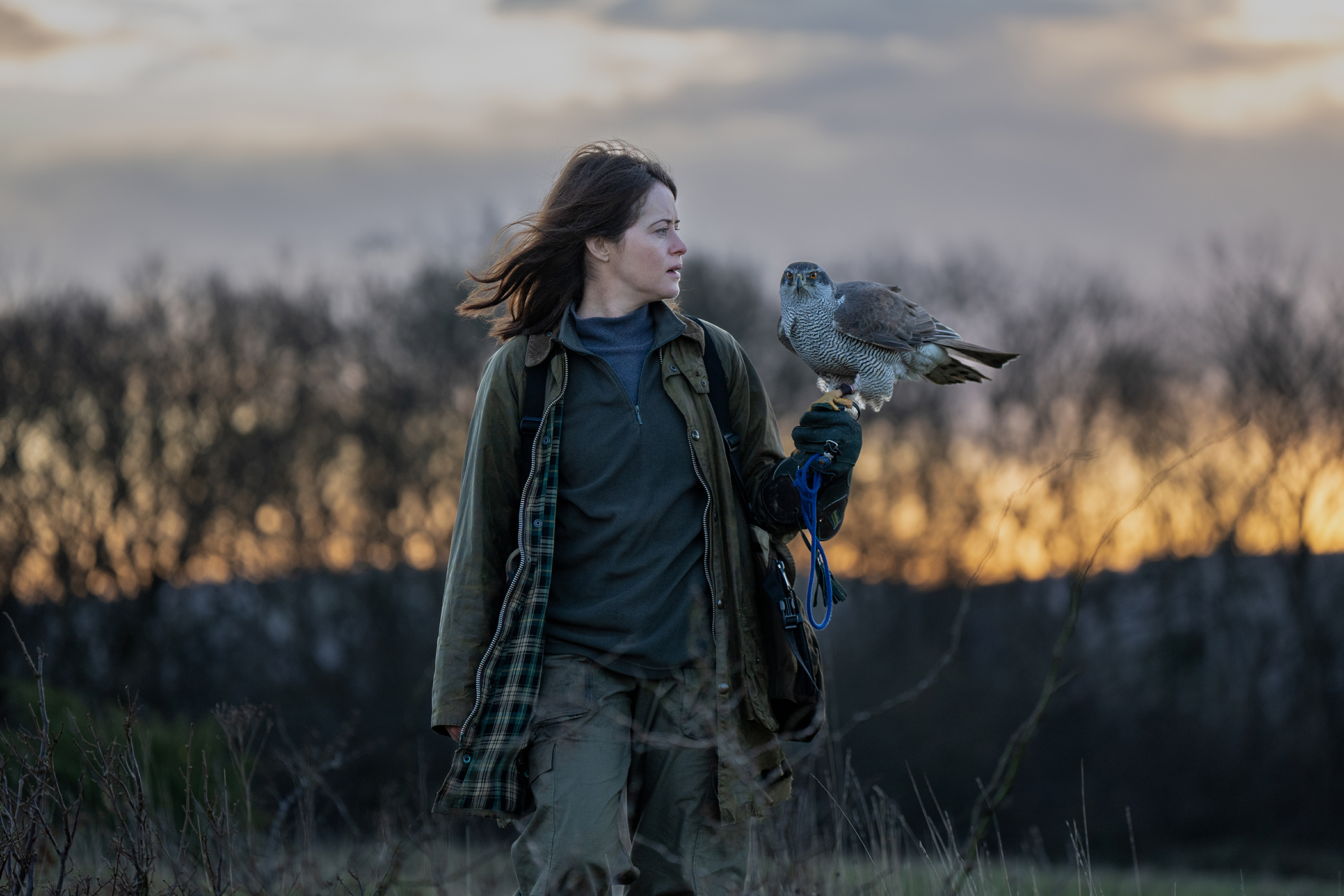
Philippa Lowthorpe’s film, starring a remarkable Claire Foy (The Crown), streamlines the multi-stranded structure of the book, but does so without diminishing its candour and emotional heft. The spirit of Macdonald’s writing soars alongside Mabel, the fearsome, amber-eyed hawk of the title.
The film opens in Cambridge in 2007. Helen is a promising young academic in the history department who seems poised for greatness. But her career, along with everything else in her life, is derailed by a brief and brutal phone call from her mother (Lindsay Duncan), relaying news of the sudden death of her father, the photojournalist Alisdair Macdonald (Brendan Gleeson). Memories of him are threaded throughout: he is alive and engaging even in the glimpses we get of him in flashback sequences. Always an affable performer, Gleeson here fills his every second of screen time with warmth and undimmed wonder.
Alisdair is a man who leaves an outsized hole in the lives of his loved ones – perhaps none more so than that of Helen, a fellow bird-watcher and nature enthusiast. A couple of months after his death, Helen becomes obsessed with training a goshawk, a notoriously challenging bird and a “perfectly evolved psychopath”, according to her falconry buddy Stuart (Sam Spruell). At first Mabel provides a focus that prises Helen away from her grief, but soon she finds herself retreating from the world.
The rattling panic of Mabel’s flapping wings is alarming, unpredictable; the bird, like Helen’s shattered psyche, is wild beyond her control
The rattling panic of Mabel’s flapping wings is alarming, unpredictable; the bird, like Helen’s shattered psyche, is wild beyond her control
This is a film about the emotional evisceration of bereavement, featuring a woman in the wilderness and a large bird of prey: the immediate comparison is with Chloé Zhao’s Hamnet. The parallels are more than just thematic, with both films carried by extraordinary, expressive central performances with key scenes played out on the faces of their lead actresses. H Is for Hawk stalks more dangerous and isolated territory, exploring the point at which grief starts to metastasise into mental crisis. The rattling panic of flapping wings, heightened by the film’s assertive sound design, is alarming, unpredictable. The bird, like Helen’s shattered psyche, is a wild thing beyond her control.
This is a terrific, committed performance from Foy, who seems undaunted by having her face well within gouging distance of Mabel’s beak and claws. Helen’s best friend Christina (Denise Gough) gently suggests that she might be “over-identifying with Mabel”. A perceptive if almost redundant observation, given that in the previous shot Foy, through some kind of acting alchemy, virtually morphs into the bird: in her posture, with sinews strung as tight as piano wires; in her eyes, which capture with uncanny accuracy the goshawk’s penetrating scowl, as Helen surveys a room full of clinking glasses and gossiping academics as if they were an alien species.
An appreciation of the natural world runs through both the book and the film. Helen’s relationship with it is active not passive: she may be an avid birder, but she is more than an observer; she is a seeker, looking for answers in the outdoors and forcing herself into gorily close proximity with death. But the film balances red in tooth and claw savagery with moments of striking beauty: the velvety twilight of the interior shots, in which Helen and her bird grow to know each other; the exhilarating drone footage of Mabel in flight; and the real-life photographs from Alisdair’s archive, his life’s work immortalised.
Newsletters
Choose the newsletters you want to receive
View more
For information about how The Observer protects your data, read our Privacy Policy