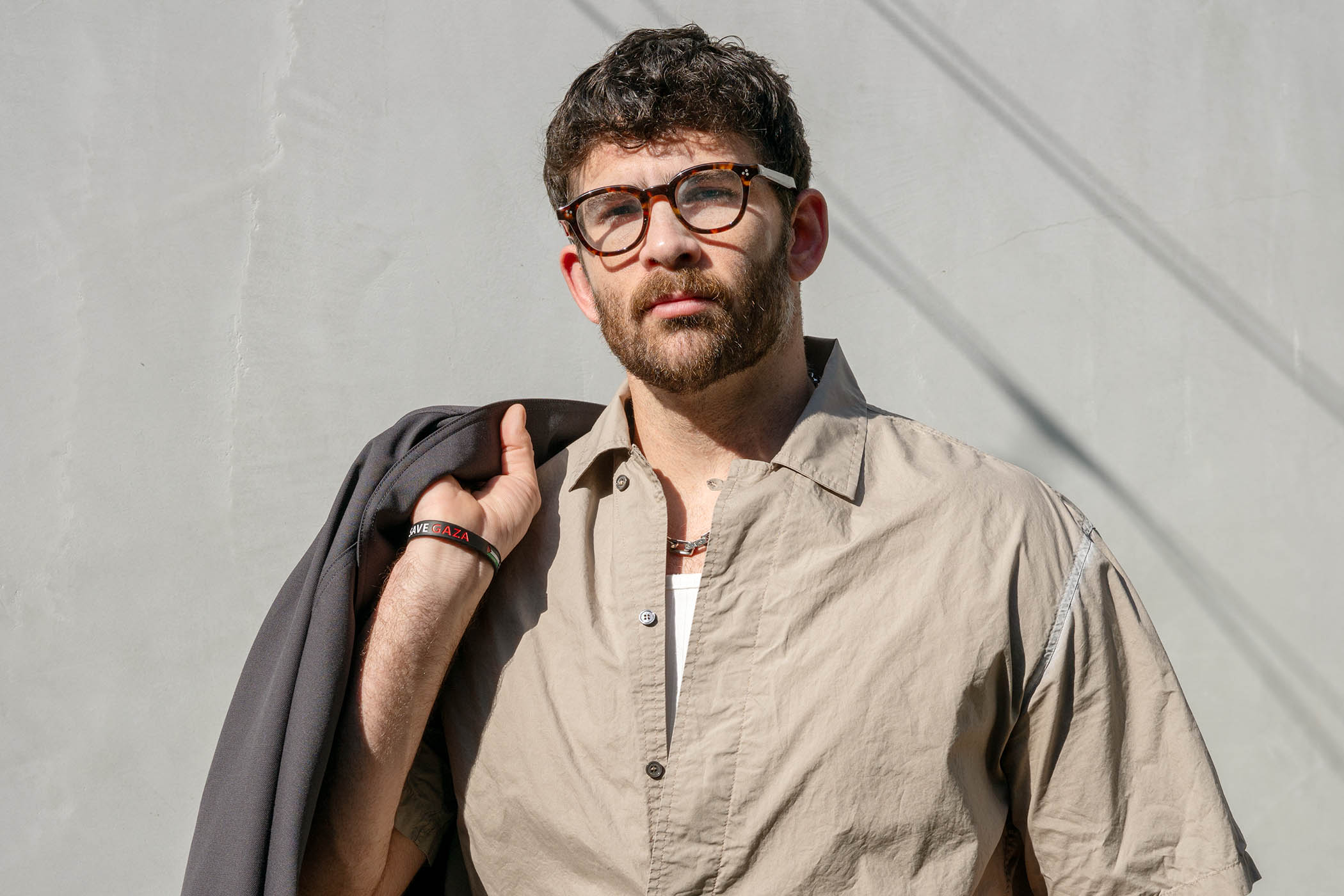



Photograph by Joe Leavenworth
Hasan Piker is rarely lost for words. A larger-than-life presence in the online spaces of American leftwing politics, he has spent countless hours talking to his audience on the livestreaming platform Twitch. When he’s not streaming, he’s appearing on videos and podcasts, delivering barbed commentary about the degraded state of US political life. But for his first few hours in Minneapolis, where he flew on 23 January to take part in protests against the violent actions of ICE, Piker’s conversation, usually so forthright and self-assured, was freezing up.
“Oh my fuckin’ lord, this is crazy,” he said, shrinking into his thermals. It was the day of a general strike and tens of thousands of Minnesotans were marching through the city to express outrage at the brutality of Donald Trump’s deportation agenda. The majority of the demonstrators seemed unfazed by the -30C (-22F) cold, but Piker, who is Turkish-American and lives in Los Angeles, was visibly struggling. “We’ve done protests all around the world,” he remarked to the cameraman filming his every move for a live broadcast, “and I would rather get no-scoped by a federal agent with a rubber bullet than endure what the Minnesotans endure on a daily basis.”
Before long, word spread that Piker was at the march, and fans of his stream – he has 3 million followers on Twitch, with tens of thousands logging on at a time – began to mill around him. He was hard to miss: at 6ft 4in and strikingly handsome with a bodybuilder’s physique, Piker towered over the crowd. A group of young women closed in to take selfies. “Y’all are crazy,” he said as they removed their gloves to work the phone cameras. Later he praised Minnesotans’ resilience and noted that ICE agents must be “extra racist” to be out detaining five-year-olds in this weather.
It was a muted performance from the 34-year-old, who has established himself as one of the loudest and most controversial voices on the American left. Usually, Piker’s broadcasts are sweary and irreverent, punctuated with remarks designed to send ripples of outrage across the internet. On a live stream on the night last November when Zohran Mamdani won the New York mayoral election, I watched him revelling in the defeat of Andrew Cuomo, who had tried to tarnish Mamdani’s campaign by its association with Piker. “Fuck you, Andrew Cuomo,” he said, flashing his middle finger at the camera. “Suck my dick.”
In January, he received a several-day ban from Twitch – his seventh suspension from the platform – for an outburst against “rabid fucking ultra-Zionist pigs” while discussing watchlists that federal agencies were allegedly using to track anti-ICE and pro-Palestinian protesters.
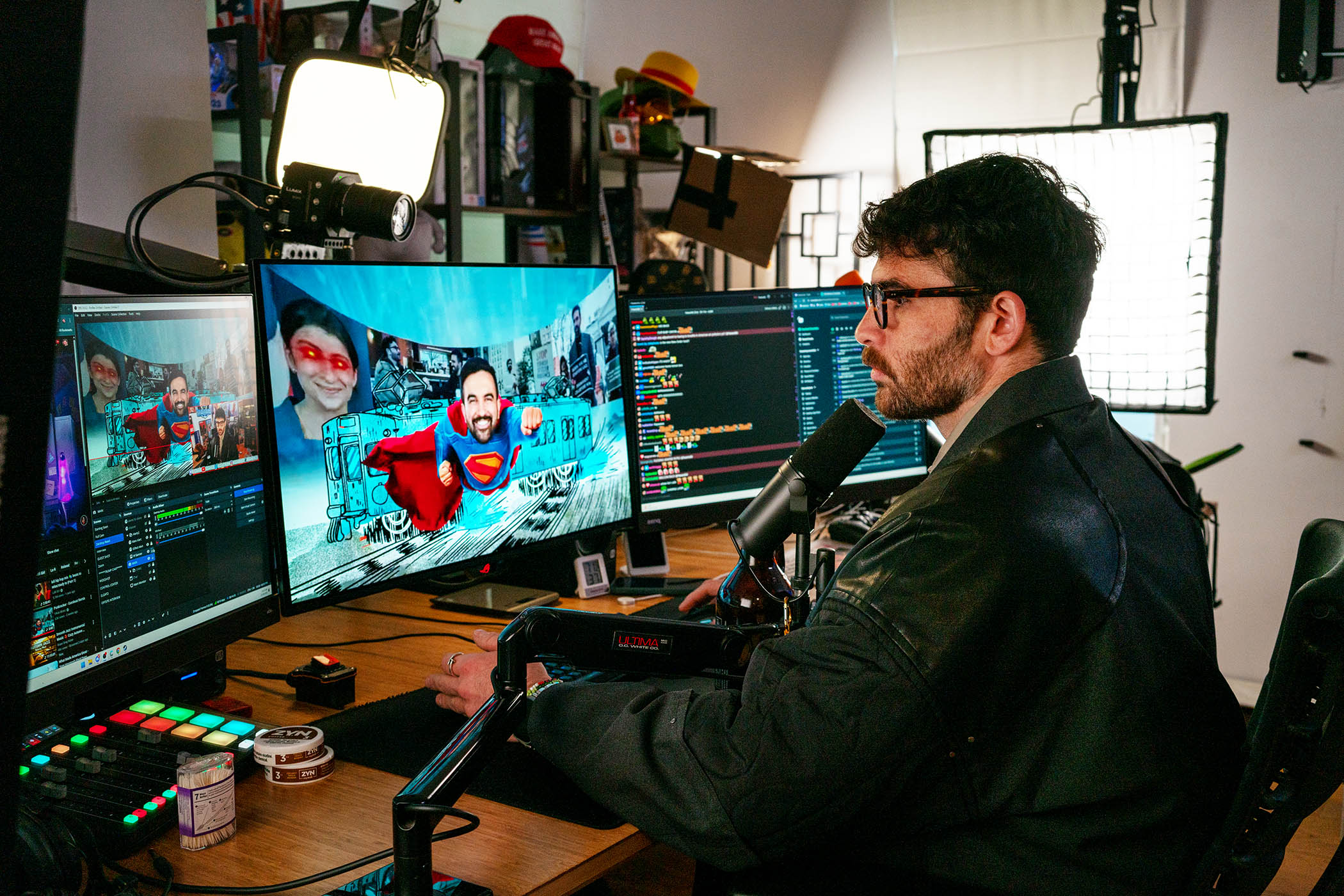
Hasan Piker has three million followers on Twitch
In Minneapolis, it wasn’t just the cold that was getting to Piker: the gravity of the situation seemed to be tempering his responses. The following day, he planned to join local organisers on “ICE watch”, to witness an immigration crackdown first-hand, but that morning the 37-year-old intensive care nurse Alex Pretti was shot dead by ICE agents. Piker spent a few hours visiting the spots where Pretti and Renée Good, a mother of three fatally shot by an ICE agent on 7 January, had been killed and standing in respectful silence at the vigils. Later, he went out for Somalian food and the next morning he returned to the merciful warmth of LA.
Piker is taken seriously by many commentators and politicians on the left. Mamdani, Bernie Sanders and Alexandria Ocasio-Cortez have all appeared on his stream. His ability to switch seamlessly between obscene gags and articulate rants about American imperialism or the evils of tech billionaires pulls in an engaged audience, whose comments pour down the right-hand side of the screen faster than you can read them.
It’s also his dedication: Piker has been streaming more than seven hours a day, seven days a week, for the past six years. In 2020, as the world retreated to its screens during lockdown, he says he spent 42% of the year on camera, averaging more than 10 hours daily. As he eases into his mid-30s – ancient by Twitch standards – he’s cut back a bit.
Twitch seems a weird place for a politics junkie to put down roots, especially a self-described socialist. The platform is used primarily as a space to watch people playing video games – you can see the streamer and their shared screen in separate windows, along with the comments feed. When Piker signed up in 2018 it was a hotbed of bigotry. Not much has changed. So what made him want to spend so much time there?
“Well, I’ve always loved video games,” he tells me, “and I felt like the politics of the gaming sphere was very one-sided, very far right, even though I knew that there were people like myself out there who did not have this worldview. So I thought: ‘Why not play video games and talk about politics at the same time on Twitch?’”
It was, in large part, an outreach opportunity. “Leftists and progressives had a very bad rap in that sphere, where people were like: ‘Oh, you’re a woke scold. You don’t know how to have fun.’ I wanted to show people that that’s not the case.”
He didn’t do it by halves. It wasn’t just the marathon sessions; it was the vibe he cultivated. The humour was edgy by progressive standards – the word “retard” cropped up a bit in the early days – and Piker’s bulging biceps and playboy looks seemed designed to confuse anyone whose mental image of a Marxist involves spindly limbs in corduroy. (Piker has his own clothing brand called Ideologie, selling T-shirts and hoodies with heavy metal-like designs referencing disaster capitalism and austerity.)
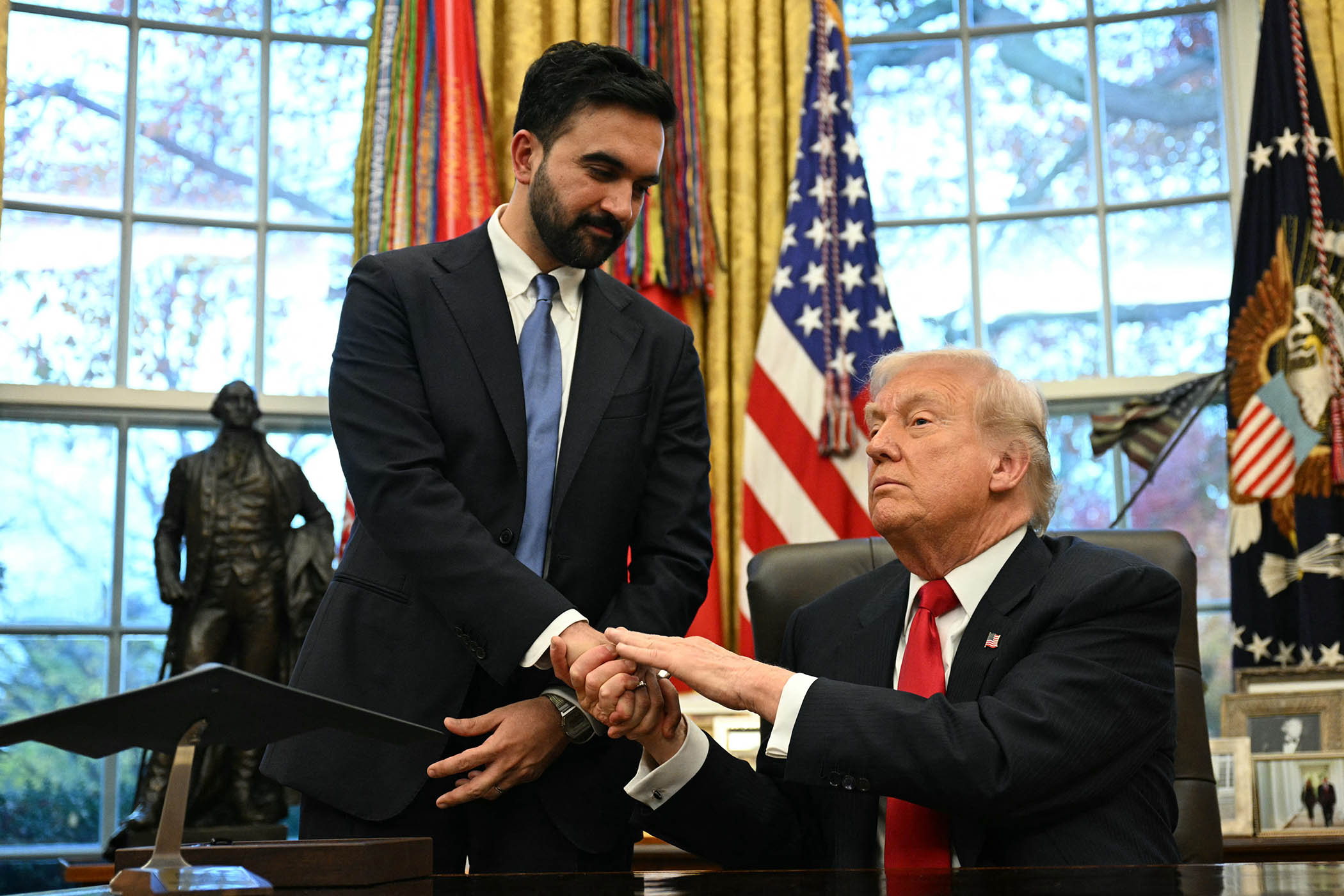
Zohran Mamdani, pictured with Donald Trump, appeared on Hasan Piker’s Twitch stream before becoming New York mayor
He quickly built a following. The interactive nature of Twitch – Piker spends much of his time riffing on viewer comments – allowed him to forge an intense bond with his audience (predominantly 18 to 35s, and 62% male). Some Piker fans refer to themselves as “parasocialists”. As Joe Rogan and other US podcasters, streamers and online comedians drifted rightwards in the wake of Covid, Piker was talked about as the “Rogan of the left”.
He was certainly ahead of the curve. By the time the 2024 presidential election came around, it was clear that the Democrats had neglected the online spaces where disaffected young men hang out – live streams, conspiracy-oriented podcasts – with catastrophic results. The demographic that Joe Biden had won convincingly four years earlier swung almost 30 points towards Trump, who had spent the months leading up to the election shooting the breeze with the likes of Rogan and Theo Von. The need for progressive voices in the manosphere seemed more urgent than ever.
When I first spoke to Piker in October, he was leaving the dog park near his home in LA and getting ready for yet another day on camera. He and his team had just been filming material with Kaya, Piker’s giant Bernese cross, which usually lounges in the background of his streams. In a broadcast a couple of weeks earlier, Piker had snapped at the dog and she’d suddenly yelped, leading to a flurry of allegations online that Piker was using a shock collar to restrain her. Piker had denied the accusations, which were clearly spurious, but may have felt that some Kaya-centred content was needed to redress the balance.
Piker’s stream usually begins around 11am. He eats his lunch on air, and if he needs a toilet break, he’ll set a video playing and step out of shot. Otherwise, the chat is constant and, it must be said, pretty baggy. Sitting down to watch one from start to finish feels, at least to me, like an endurance test. I suspect that most viewers have it on in the background, dipping in occasionally when something snares their attention.
But Piker can be very coherent, delivering mini lectures on universal healthcare or the importance of organised labour. I can imagine being a young gamer at odds with the world, but without a clear understanding of the root causes of my discontent, and finding the whole thing – the cool-older-brother attitude and the outre dress sense as well as the consciousness-raising – pretty compelling.
Piker traces his interest in politics back to his childhood. He was born to Turkish parents in New Jersey but raised in Istanbul, in an affluent household, before returning to the US state for university. “I was always into politics in the sense that every Turkish person is into politics,” he tells me. “I was not a big fan of [Recep Tayyip] Erdoğan growing up. Coming to America, I would say that my radicalisation probably stemmed from American healthcare. Experiencing an emergency room visit was life-altering. I could not believe how expensive it was.”
I love working out, I love playing basketball, I like playing video games. I also have left politics
I love working out, I love playing basketball, I like playing video games. I also have left politics
He graduated from Rutgers and moved to LA, working on the online news show The Young Turks (its co-creator Cenk Uygur is his uncle). He helped expand the show’s online reach and hosted his own attention-grabbing segment, before going solo at the start of 2020.
“It’s something I really love,” he says when I ask him how he keeps it up day after day – the podcast appearances and the social media churn as well as the relentless streaming. “And I see it as a necessity. There’s so many atrocities happening all around the world, there’s so many awful things happening in America, and I feel like there isn’t a clear voice on all of these things that can attribute them back to systemic factors. And so I feel like I have this necessary role to play.”
He looks at himself “as almost like a gen-Z NPR [National Public Radio],” he goes on. “If NPR one day stopped broadcasting, I would feel confused and maybe a little discouraged, right? That’s something that I think about when I’m doing what I’m doing. It’s a responsibility that I carry with me.”
He tells me that one of his main jobs is sifting through misinformation, but a hazard of pumping so much live content into the world is that, sometimes, you end up adding to the fake news. He doesn’t deny it. “Of course there are times when I get something wrong, but I very quickly correct myself and take ownership over it.”
But it’s not just factual errors. During a stream last February, Piker suggested that if Republicans really cared about Medicare or Medicaid fraud, they might want to “kill Rick Scott”, the Florida governor implicated in defrauding both programmes while in charge of a healthcare company. Twitch banned Piker for 24 hours and he walked back his comment, calling for “max punishment” for the senator instead of outright death.
“All criticism is fair,” Piker says when I mention the various eruptions over things he’s said. “I think, for the most part, it’s outrage manufacturing, and the right does a very good job at it. I think the left should do a better job at it, honestly.”
He’s raised a lot of hackles over his coverage of Gaza and sustained criticisms of Israel – he said that Hamas’s attacks on 7 October were “inevitable” in the context of Israel’s “violent means of maintaining an apartheid” – but he feels the tide is turning on that issue. “A lot of people who were not as aware of how Israel operates were very quick to disparage what I was saying, and many of them have now realised that perhaps they were wrong, but it took a while for them to get there.”
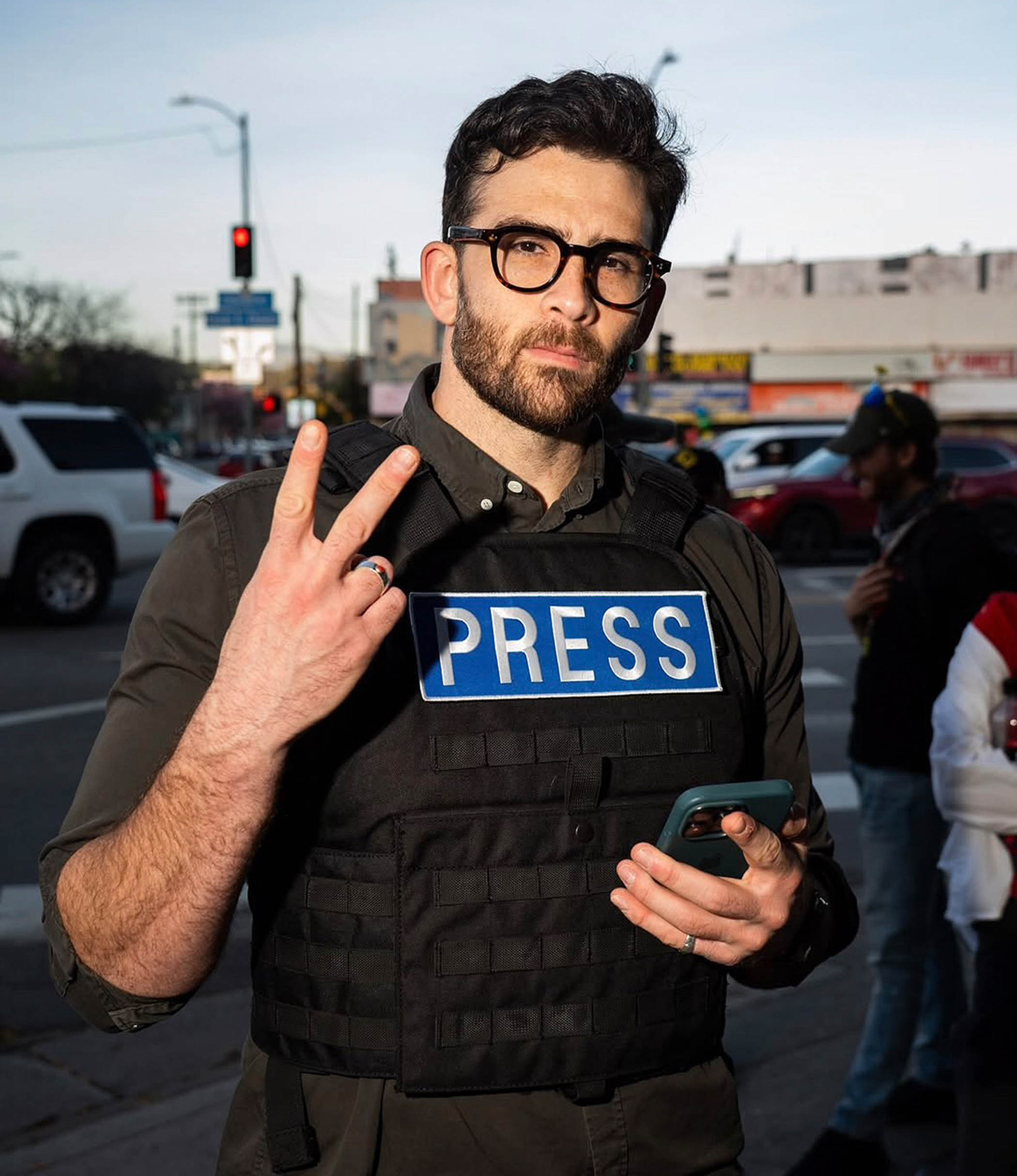
Piker at an anti-ICE protest
Still, he’s routinely branded an antisemite and terrorist sympathiser for his comments. “It’s a vicious smear,” he says, “and it’s almost ironic, because I’ve spent every single day of the last 12 years combating antisemitism. I just also happen to be an anti-Zionist. And given my Muslim background, I think that smear sticks a little bit harder.” But, he adds, “there’s a lot of young Jewish men and women in my audience, and they would not be in my audience if I was antisemitic”.
The online pushback can metastasise into something much darker. “Oh yeah, death threats galore, all the time, nonstop,” he says. “And cyberstalking. I’m at the intersection of two very parasocial fields, being a Twitch streamer who talks about politics. People can become massive haters and then they just spend every waking moment tracking your steps and trying to destroy you.” The threats tend to stay online. “It could be because I’m a big dude so, thank God, I don’t really have that many negative experiences in the real world.”
Not all the flak is coming from the right. Some on the left hate the fact that he’s made a fortune from streaming about social inequality: he owns a $2.7m house in West Hollywood. Depending on which profile you read, he drives a Mercedes or a Porsche. “People will go: ‘Oh, you’re rich and therefore you’re a hypocrite,’” he says. “All these attitudes play a role in undermining the commentary that I’m doing.”
Then there’s the edginess factor. Trying to appeal to a young male audience with shock-jock humour while maintaining progressive principles is a delicate dance. He shrugs. “I have a lot of comedian friends” – he mentions Stavros Halkias and Gianmarco Soresi, who have both appeared on Piker’s stream – “and these guys have edgy jokes but they’re not being racist. They’re not making fun of minority groups by pointing the finger at them and being like: ‘Look how weird they are.’”
When I speak to Soresi afterwards, he says that when Piker first started popping up on his feeds, he found his output refreshing. “He was speaking about politics with a comedic harshness that is so lacking in a lot of the liberal circles that I used to get my intake from.” He acknowledges the need for respectfulness in public discourse. “There’s certainly times where I see Trump call a reporter a ‘piggy’, and I go: ‘This is not good.’ But on the liberal side, there was this appeal to propriety that failed so miserably, and so to see someone come in and challenge some of those things felt good.”
When I ask Piker if his macho vibes – the weightlifting, the shit-talking, the enthusiasm for guns – are a Trojan horse for smuggling his political views into these spaces, he sounds genuinely aggrieved. “No! People always say this, but no, it’s just who I am, unironically.” Actually, he says, the way he looks and carries himself can be an obstacle. “People on the left write you off, like: ‘Oh, this guy’s a bro. He’s a misogynist.’ But no, it’s not a facade that I’m putting on. I love working out, I love playing basketball, I like playing video games. I also happen to have left politics.”
Newsletters
Choose the newsletters you want to receive
View more
For information about how The Observer protects your data, read our Privacy Policy
His audience has “changed dramatically” since he started livestreaming on Twitch. “The first couple of years, there were a lot more conservatives and liberals, and over the last four or five years, it’s mostly become socialist.”
Doesn’t he feel like he’s preaching to the choir? “Um, no, because leftist infighting is a constant. Nobody hates the left as much as the left does. Marginal ideological differences become massively consequential differences that have to be addressed.”
So what does he hope all this endless talking on the internet will amount to? His answer is nothing if not ambitious. “I think my most realistic, foreseeable impact would be to successfully transform the Democratic party to a workers’ party,” he says.
The politician in the US who gives him most hope at the moment is, unsurprisingly, Mamdani, who he had on his stream last April. “Zohran is a brown, Muslim, socialist, anti-Zionist politician, and yet people love what he’s about,” says Piker.
“I think more and more Americans are comfortable with the moniker socialism. Polls say that there’s almost the same number of Americans overall that self-identify as socialist as self-identify as Maga, which is crazy, right? Zohran is not advocating for seizing the means of production; he’s advocating for a modest expansion of pre-existing social safety nets. That’s bare-minimum social democracy. I don’t think Americans are afraid of that.”
Last weekend, as the US and Israel started bombing Iran, I tuned in to Piker’s stream to hear his reaction. In contrast to his mood in Minnesota, he’s very animated. Unsurprisingly, Piker is not a cheerleader for the strikes and has many derisive things to say about the US and Israel’s actions. He describes the unfolding conflict as “world war E” (for Epstein). He says that, even compared with previous attempts to justify attacking Middle Eastern countries, “the Bush administration makes the Trump administration look like fucking savages” – at least the former “had a sophisticated propaganda apparatus that tried to package [an] illegal and unjust war”.
He mocks Israel for killing an 86-year-old man, Ayatollah Ali Khamenei, “who was in his fucking home, tending his flower garden or whatever”, and he feels that Israelis in cities being targeted by Iranian missiles are getting a taste of their own medicine. In response to a meme about enlisting Trump’s youngest son to fight Iran, he yells: “Send Barron! Strap him to a fucking JDAM [joint direct attack munition]!” At one point, while my attention is elsewhere, I hear him shouting: “[Nikita] Khrushchev was a fucking lion,” referring to the Soviet Union leader.
When a commenter asks Piker if he thinks any good will come as a byproduct of all this violence, he says: “Maybe one day, if the American empire falls as a consequence of … spreading itself too thin all around the globe as it tries to maintain its dominance.” It will be very painful for those both inside and outside “the imperial core”, he acknowledges, “but eventually change will come. One can hope.”
Photographs by AFP, @hasanpiker