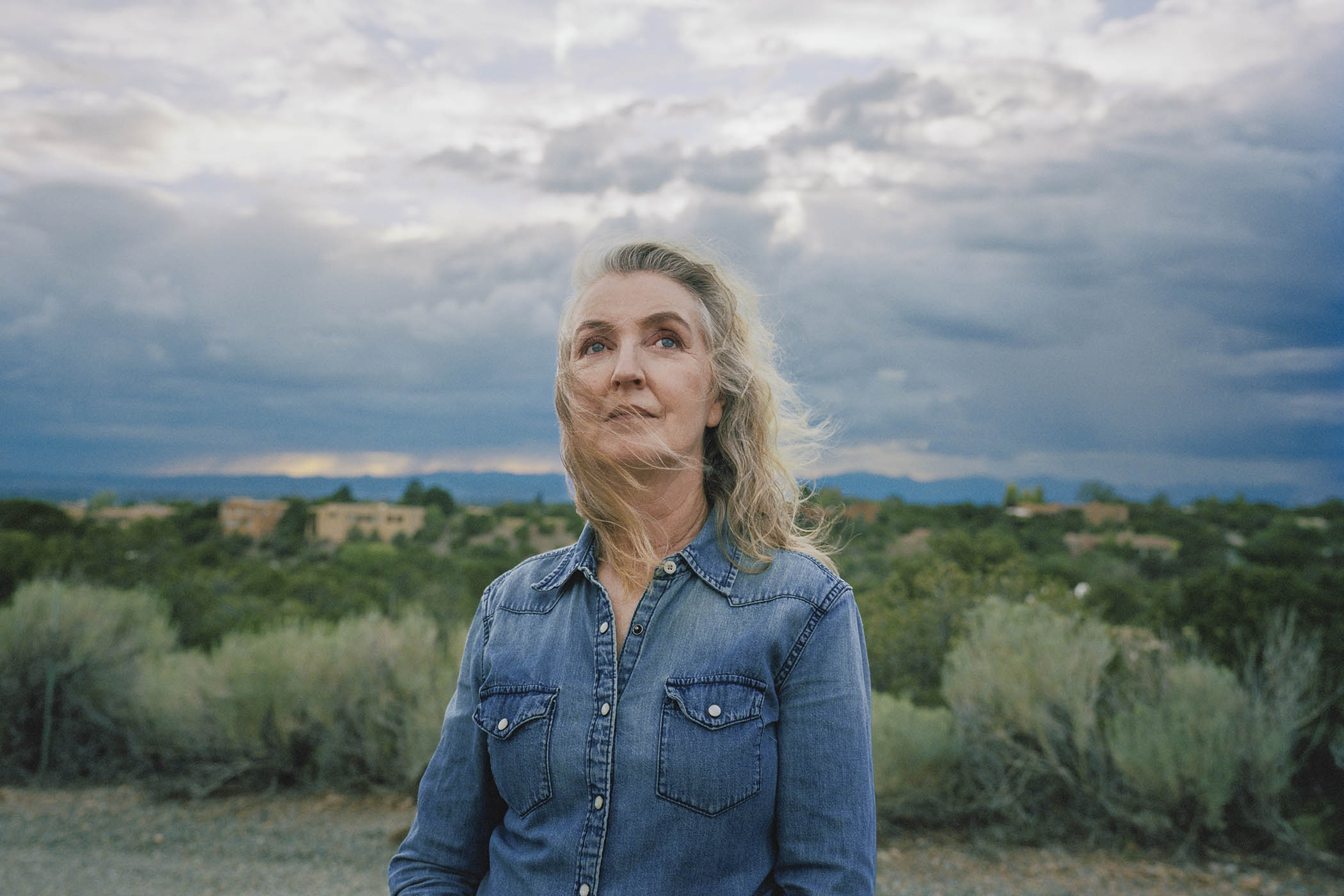


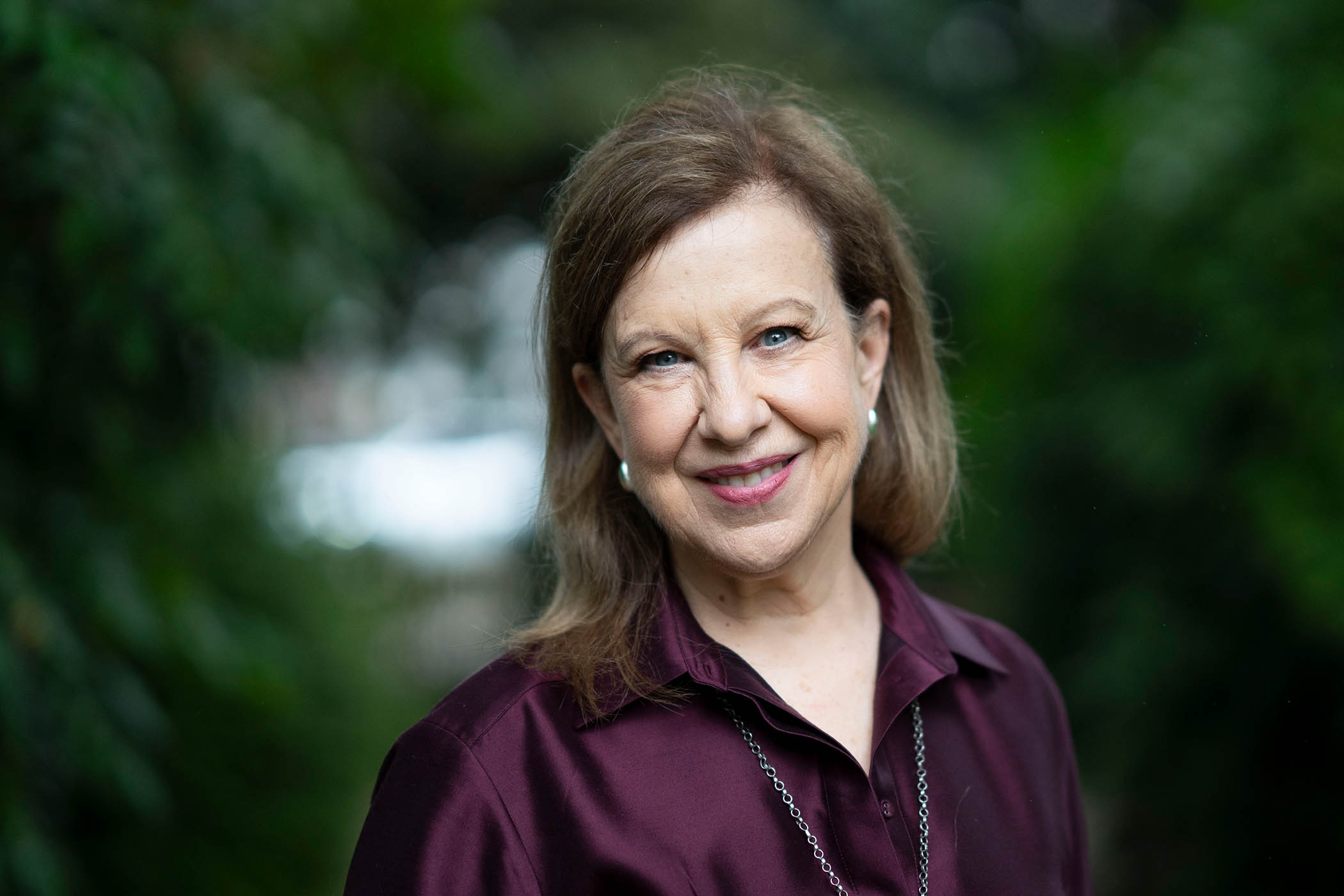
Rebecca Solnit is the author of more than 25 books, including Orwell’s Roses, Men Explain Things to Me and A Field Guide to Getting Lost. She has been awarded two National Endowment for the Arts fellowships for literature and a Guggenheim fellowship. Her book Call Them by Their True Names: American Crises, won the 2018 Kirkus prize for nonfiction. A climate and human rights activist, she serves on the boards of Oil Change International and Third Act. She lives in San Francisco. Her new book is The Beginning Comes After the End, a manifesto for hope in difficult times.
How are you, Rebecca?
I joke that I’ve been trying, since 2016, to find the phrase that more or less says: “I’m OK personally, but I am not indifferent or oblivious to the horrific things going on around me.” The Trump drama seems to be getting more ridiculous and extreme: I think everyone’s waiting for, I don’t know, chunks of him to fall off as he decays. The runaway car has to hit a wall one of these days.
The Beginning Comes After the End is a reminder of what progress we’ve made even when things seem dark. What prompted this book?
I like to say that Dante had Beatrice, but Orwell had Stalin. I think for political writers, a lot of what motivates you to write is not what you adore, but disagreement and opposition. If you understand how radically different the world was 50, 60, 70 years ago, you can recognise how it has actually changed profoundly and for the better. If you lack that knowledge, the world seems a lot more chaotic and inexplicable. You don’t recognise, first of all, that we have a lot of power, and that we have changed a lot in terms of progressive human rights and environmental activism.
The title comes from a wonderful description of how a caterpillar becomes a butterfly or a moth. Why did you choose that image?
I was influenced by a passage by the novelist Pat Barker that I quoted long ago in A Field Guide to Getting Lost. She points out that we want to think there’s some beautiful balletic transition from caterpillar to butterfly, but in fact it’s violent and messy: a caterpillar literally dissolves itself inside its chrysalis and in that goo or slurry is the template to turn the raw material into something radically different. Things are melting down, going sludgy: but the beginning comes after the end. In some sense, the violence we’re seeing is an attempt to hang on to that old world of patriarchy, colonialism, white supremacy, the dominance of fossil fuels, but the majority of us want to see a democratic, decolonised world that actually addresses the climate crisis.
You remind us of the power of a book such as Rachel Carson’s Silent Spring. Published in 1962, it exposed how pesticides thought to be beneficial to farmers were destroying wildlife, and is now recognised as one of the most influential books of the 20th century.
Most victories happen because people didn’t give up when they were told things couldn’t change ... You can see people who persevered even beyond hope, because they thought it was the right thing to do – and there were remarkable consequences. Carson taught people to understand that we live in a system where everything is connected. People had thought you can poison the things you don’t like, but what she pointed out is that these poisons will keep on killing. They get into the water, they kill the fish, birds eat poisoned insects, the birds die, the birds stop doing their important work in the system… people drink the contaminated water, eat the contaminated food and get cancer. What I hadn’t grasped before is what Carson was saying is that we can’t use these toxins because everything is connected to everything else.
I have to ask about your 2014 book Men Explain Things to Me and title essay, seen as the origin of the term ‘mansplaining’. How do you see it now?
The sad thing about that essay is people find the opening [in which a man explains Solnit’s work to her] very amusing. But people never talk about the second story, which is about when I found myself in a suburb full of nuclear bomb-makers in Livermore, California. A scientist told me how a neighbour’s wife in this community ran out of the house naked one night, screaming that her husband was trying to kill her. He told it to me with a chuckle. This was when I was a really young woman in my 20s. I asked him why he saw it that way and his answer, in essence, was that among upper middle-class white people it is perfectly reasonable to believe women are so crazy you can’t take anything they say seriously. But the most logical explanation for a woman running out of the house naked in the middle of the night screaming is that her husband is trying to kill her. He found that unbelievable.
You’ve spent time working with Indigenous people on land rights and environmental activism. What has that taught you, and what can we all learn?
When I was younger, people routinely talked about nature and culture as two separate and equal spheres, and saw human beings as existing in a culture that was separate from nature. The story was so often told that there was beautiful, perfect, flawless nature, and then there was a human fall from grace. But Indigenous people have radically changed our understanding of nature as something human beings were never separate from, and that changes our sense of human nature. I think also, as they’ve re-emerged to take back land rights, culture, language, ceremony and their proper place in public discourse; they’ve also been the force leading us to a viable future.
The world is a difficult place right now. What gives you joy, at this moment?
I see all these young people in [the US] coming forward, modelling a different way to be, a way that is generous and joyful. I’m here in San Francisco, but across the country there’s Mayor Mamdani, with his whole-hearted smile. He’s not smirking or grinning; he has real joy, I think. I look at the way people showed up in Minneapolis – Renée Good and Alex Pretti were killed, but even afterwards people were willing to risk their lives to come out to the street. I see what I think is a new understanding of the world, beyond divisions of race and religion. And you know, the US will be a non-white majority country in about 20 years. There’s nothing white supremacy can really do about that, no matter how much they persecute brown people and black people. Despite everything, I see action around politics, around climate. So I see these remarkable young people, and they are hope embodied.
The Beginning Comes After the End: Notes on a World of Change by Rebecca Solnit is published by Granta, £14.99
Photograph by Trent Davis Bailey
Newsletters
Choose the newsletters you want to receive
View more
For information about how The Observer protects your data, read our Privacy Policy