

John Paul Brammer can pinpoint the exact moment when he knew his advice column days were over. “I had this situationship guy. I went into his bedroom and he was using a stretchy bed sheet as a curtain for his window. I was like: ‘This is a mess. I’m taking off the sombrero for ever.’ I knew I either needed to get it together or stop writing advice. I chose to stop writing advice.”
Pocket sketches of Brammer tend to dwell on certain characteristics. He is 34, gay, Mexican and from Oklahoma. “There were more cows than Latinos,” he tells me from a coffee shop near his hometown of Cache. But Brammer doesn’t think reductiveness is very helpful. “Latino identity itself is this murky, ill-defined thing that has so many nuances,” he says. “So many nooks and crannies in which to hide.”
Where Brammer hid as a child was in words. “I took to writing and reading as a way to pass my time,” he says. “My mom was my ninth-grade English teacher and she was always throwing books in front of me. I read David Sedaris before I read Harry Potter.”
After being bullied in middle school, Brammer moved to where his mother taught in the city. Under the guidance of an English teacher called Doc, he began winning poetry and essay contests. “When something starts working, and you start getting positive reinforcement, you fall in love with it. You develop an allegiance to it. I was like: ‘Yeah, this is what I’m going to do.’ Thankfully, it clarified life quite a bit for me.”
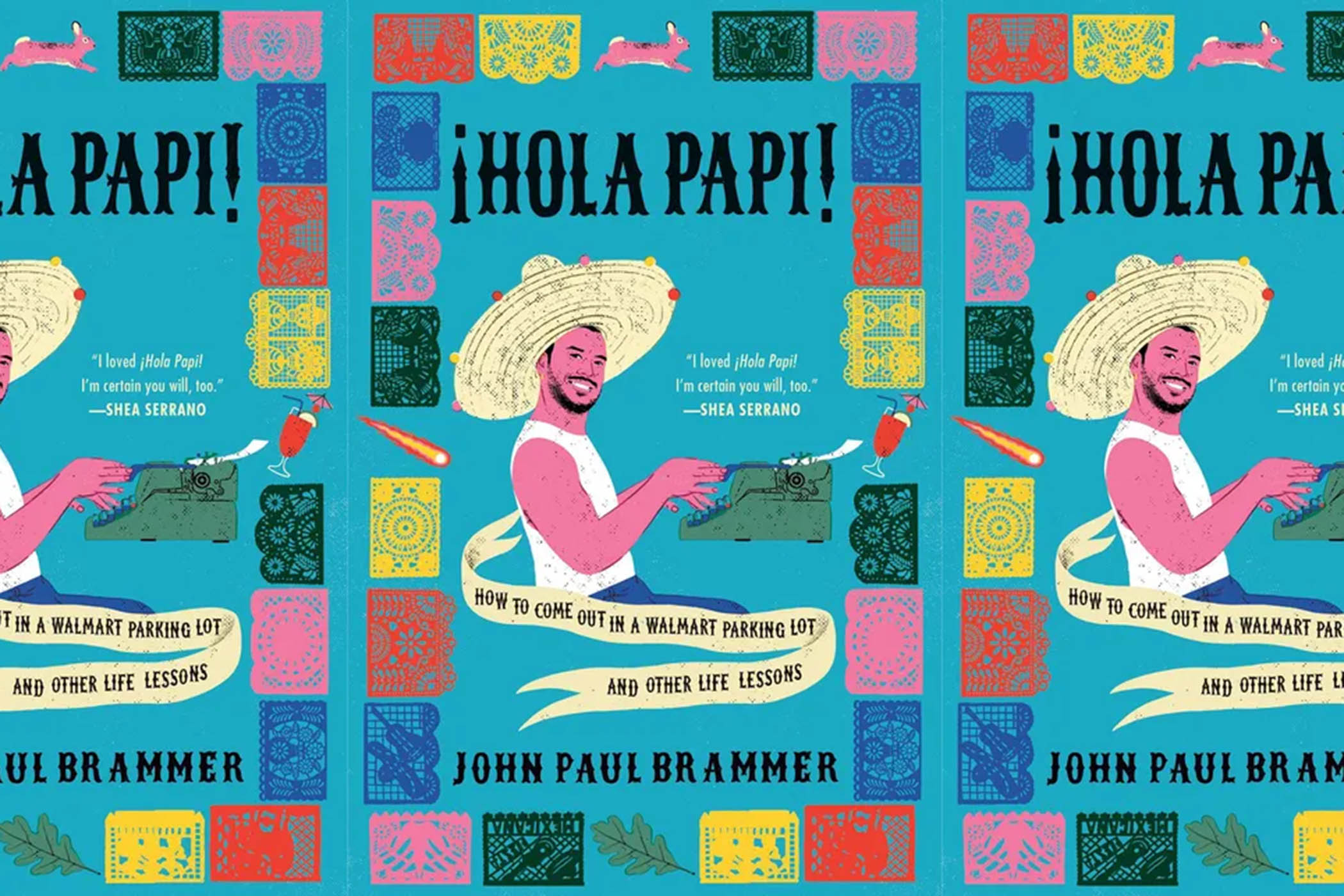
But Brammer’s professional career has been defined by neither poetry nor essay contests but an advice column. ¡Hola Papi! began as a joke on Grindr, a dating app for gay men, but evolved into a vehicle for conversations about love, loss and the spaces in-between. At its peak, it had tens of thousands of readers and rode the 2010s wave of digital agony aunts and uncles. It even birthed a memoir-in-essays, called ¡Hola Papi!: How to Come Out in a Walmart Parking Lot and Other Life Lessons, published in 2021. Cut loose from the rigid didacticism of Dear Abby, still the most syndicated advice column in the world, ¡Hola Papi! and its upstart peers injected personality and permissiveness into an established form.
This was a golden age, Brammer believes, that is now coming to an end. In February, he said goodbye to ¡Hola Papi! after eight years. He did so in a long post that included one particularly arresting sentence: “I no longer believe in advice.”
'Latino identity is this murky, ill-defined thing that has so many nuances, so many nooks and crannies in which to hide'
'Latino identity is this murky, ill-defined thing that has so many nuances, so many nooks and crannies in which to hide'
John Paul Brammer
Advice has been around since cavemen recorded hunting techniques in stone carvings, but the first dedicated column was the Athenian Mercury, a periodical published in London in the late 1600s. Obscene questions were banned, but that left plenty of room for philosophical dilemmas (“What is time?”), biology (“Why does a horse with a round fundament emit a square excrement?”) and romance (“How shall a man know when a lady loves him?”).
The respondents cared as much about anonymity as many modern-day scribes. They called themselves the Athenian Society and presented themselves as a council of 12 sages. They were, in fact, an English printer by the name of John Dunton and his two brothers-in-law. While the trio were sympathetic to their communicants, a puritanical streak ran through their advice. Sexual misbehaviour was a no-no.
Over the next 300 years, the advice column tried to keep step with society. In the 18th century, it became a largely female preserve due to the popularity of Eliza Haywood and other writers. In the 19th century, it crossed class strata as mass literacy took hold. In the 20th, it even gave a job to Martin Luther King. His nine months as an agony uncle reveal more about his inner life, including his social myopias, than any of his speeches.
By the time Brammer entered the fray in 2017, advice columns were no longer bound to physical formats. They became catnip for digital media organisations, which saw that the internet was full of opinion-seekers and determined there was money to be made from being an opinion-giver. Brammer fell into the latter camp by accident, after he was asked by a friend to contribute to an online publication launched by Grindr. He chose the pen name “Hola Papi”, because it was how white men often greeted him on the app. It appeared to offer easy concealment too.
Newsletters
Choose the newsletters you want to receive
View more
For information about how The Observer protects your data, read our Privacy Policy
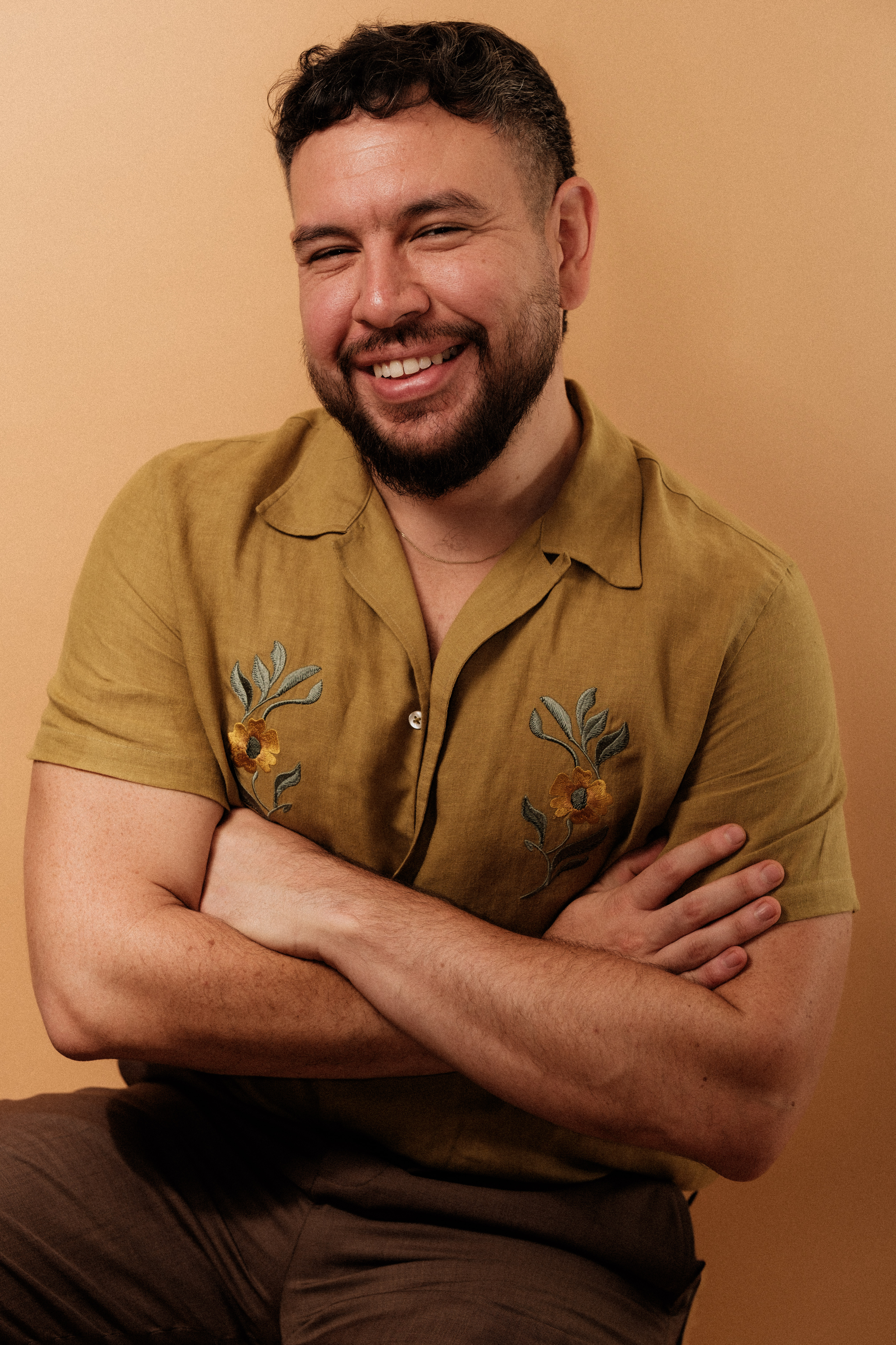
John Paul Brammer: ‘I thought it was going to be a satirical exercise’
“I thought it was going to be a satirical enterprise, and I was going to make fun of people for writing in for advice on Grindr,” he says. “The whole thing had this kind of cruel aspect to it that went away very quickly.” His first piece of advice, responding to someone asking if it was racist for a white person to be attracted to Latinos, was read widely. “It reached people in places that aren’t super accepting of gay people. I got an avalanche of letters almost immediately. I panicked because I was like: ‘Oh this formula that I worked out is just not going to work here.’”
Brammer knew then that his advice had to be serious at its core, even if it was laced with humour. Grounded in his own life experiences, ¡Hola Papi! connected with minority groups seeking solid earth in a world in freefall. One commenter on his last column wrote: “Rumour has it that if you were a young Mexican American in a podunk town, ¡Hola Papi! saved your life.” For some, this is surely true.
But the column also reached people outside its target demographic, especially after it was syndicated in New York Magazine. I’m a straight white man who came across it during a bad bout of Covid existentialism in 2021. A column entitled “I Want A Different Life”, in which the letter writer mourns the paths he could have taken, calcified a tangle of emotions I was experiencing at the time. I was grateful for what I had but obsessed with counterfactuals. And in Brammer’s response, I found care but not pity. I was not the intended recipient of his words, but I needed to read them.
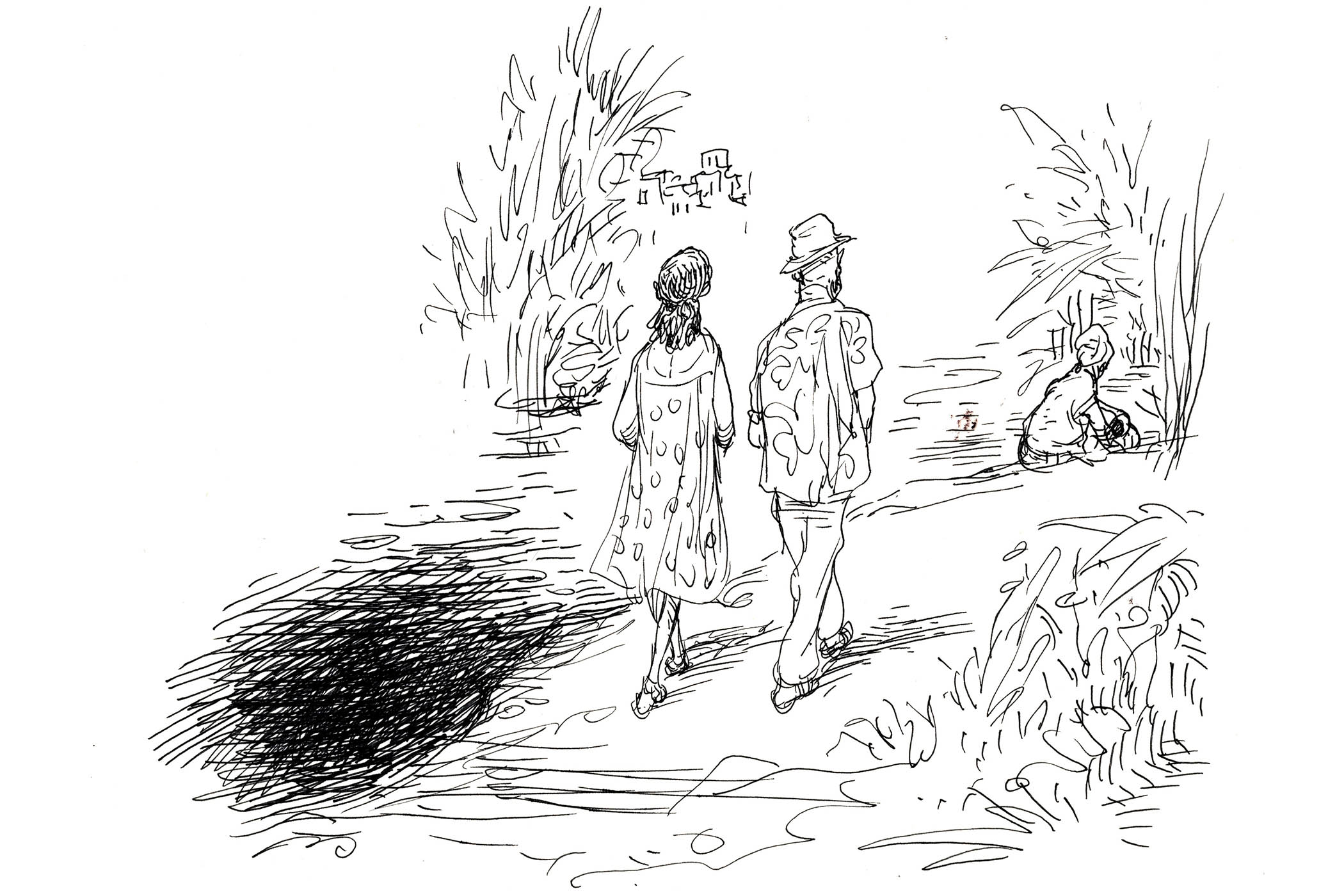
"Let us not underestimate the human capacity for making the most of things. We do adapt in time. The snow falls, and we break out the shovels, and what once felt like for ever eventually collapses back into the circular shape of everything – snow and not snow, bad and better, quiet and music."
Brammer’s advice columns also provided succour to him. He was able to define himself during a cultural moment in which the arbiters of identity politics demanded clarity. “In 2017, there was this ongoing probe into whether people were who they said they were, who’s faking it, who’s getting away with it, debates over interracial dating, whether queer people belong in x or y queer spaces. There was so much interrogation going on that touched on a lot of my insecurities at the time.
“There’s a lot to wrestle with in terms of the interior and defining yourself as a Latino. Being in the diaspora, you ask: ‘Am I Latino enough?’ ‘Do I have enough traditions?’ ‘Do I speak Spanish well enough?’ There are so many similarities between that and wondering if you’re queer enough. ¡Hola Papi! was this way for me to say bluntly: ‘I am a gay Mexican American.’”
But this self-assurance gave Brammer no more confidence about his own appointed role as an advice columnist. “There was always this aspect of: ‘Who am I to be telling people anything?’” he says. Brammer would constantly ask himself whether he was giving a response that was “true, or true to me, or neither”.
The truth of our own opinion can be hard to discern if we know that others are listening. When a person writes a letter to someone, they have the recipient in mind. The advice columnist of old is likely to have considered two audiences: the addressee and those expected to read the interaction. But its digital equivalent, at least in 2017, had to presume that there were at least three, when they include the readers who only find the column once it has been shorn of any context.
“I felt like I was self-censoring,” Brammer says. “Twitter [now X] is no longer this vector for monoculture… Back in the day, if Twitter didn’t like something, if Twitter said, ‘Oh this is harmful’, it was very difficult for someone to shirk that. I think so much of the work published in those years was this uneasy collaboration between what a writer wanted to say versus how they knew it would look in a screenshot.”
Now Brammer has said goodbye to his advice column. I can understand why he began it. He writes in his final post that he was seeking an “ordered, contained universe”, a way to be understood and to be helpful. What I struggle to understand is why he ended it. Identity politics is no longer as intense as it used to be, he suggests. So, surely he should feel as if he has more rather than less space to give advice freely?
But, as we talk, it becomes clear that freedom is the point. It’s just that Brammer wants it put to a different use. “Elon Musk bought Twitter and this shattering took place,” he says. “Now there are a bunch of enclaves. Part of my personal evolution mirrors those shifts in social media. There is not as strong of an entity out there telling me what I’m supposed to say and not say. I want to take advantage of that.”
Brammer’s issues with ¡Hola Papi! were insurmountable because they weren’t strictly about the content. They were about the form. “It’s like when you’re taking a dog on a walk, and the dog just doesn’t want to go. So you find yourself really tugging it and you’re like: ‘Come on, come on, come on.’ A lot of the advice column as a medium, and me working within it, was like that. It was me yanking myself forward and saying: ‘No, this answer is fine. This answer is totally fine.’”
In this process, Brammer grew distrustful of those who promised easy answers. “A lot of people claimed to be the ones who were going to lead us through the chaos during Trump’s first term. They were going to be the ones who clarified things and who named what’s what. It turns out a lot of those people were in it for personal profit or to build platforms or to accumulate social capital – or capital capital.”
For Brammer, the price of identity politics was that it made identity a shibboleth. It demanded moral imperatives that proved futile when the US elected Joe Biden, “a zombie”, as president in 2020, and then when the nation re-elected Trump in 2024.
'I know where I come from, I know who I am. I can move on and make new things'
'I know where I come from, I know who I am. I can move on and make new things'
John Paul Brammer
“I had a lot of pain growing up and I fell into this brand of politics that told me: ‘What you experience is part of a system and that system can be named and it goes by many names. It’s homophobia, racism, xenophobia etc.’ It felt like a revelation that there were all these nefarious forces at play that led to what happened to me. People who’ve been harmed, people who’ve been abused, they tend to see the world in those terms. There’s always harm waiting around the corner.
“For a lot of people during Trump 1.0, social media was a way for us to launder those feelings; that paranoia; that hurt; that feeling of anger. We were able to sublimate it into something that could be called useful. And so it became very popular. It felt like a game: ‘Who can tell me why this new thing is actually harmful; this new TV show; this new movie; this new politician? Let’s figure out what’s wrong with them.’”
Perhaps it makes sense that Brammer’s next project is a work of fiction. A children’s book no less. “¡Hola Papi! was a way for me to affirm to myself that I was who I said I was. Now I want to say: ‘No, I don’t have anything to prove to anyone. I know where I come from, I know who I am, I can move on and make new things.’”
I revisited “I Want A Different Life”, my favourite advice column of Brammer, a few days after I talked to him. Since I first read it, I have married and converted to Judaism. I have made choices that at the time felt impossible.
It’s something I’m still processing, and, as I do, the words of Brammer take on new resonance. I think of that snow, collapsing back into the circular shape of everything. And I think of Brammer, no longer bound by the paths of his identity as I am not bound by mine. He is clear that he doesn’t want to give advice again – “ever, ever again”. But for all of his desire to move on, and for all he deserves to, he’s still in conversation with that tender world he created. He’s still in conversation with me.
Photograph by Simon & Schuster, Nico Fernandez Kiray