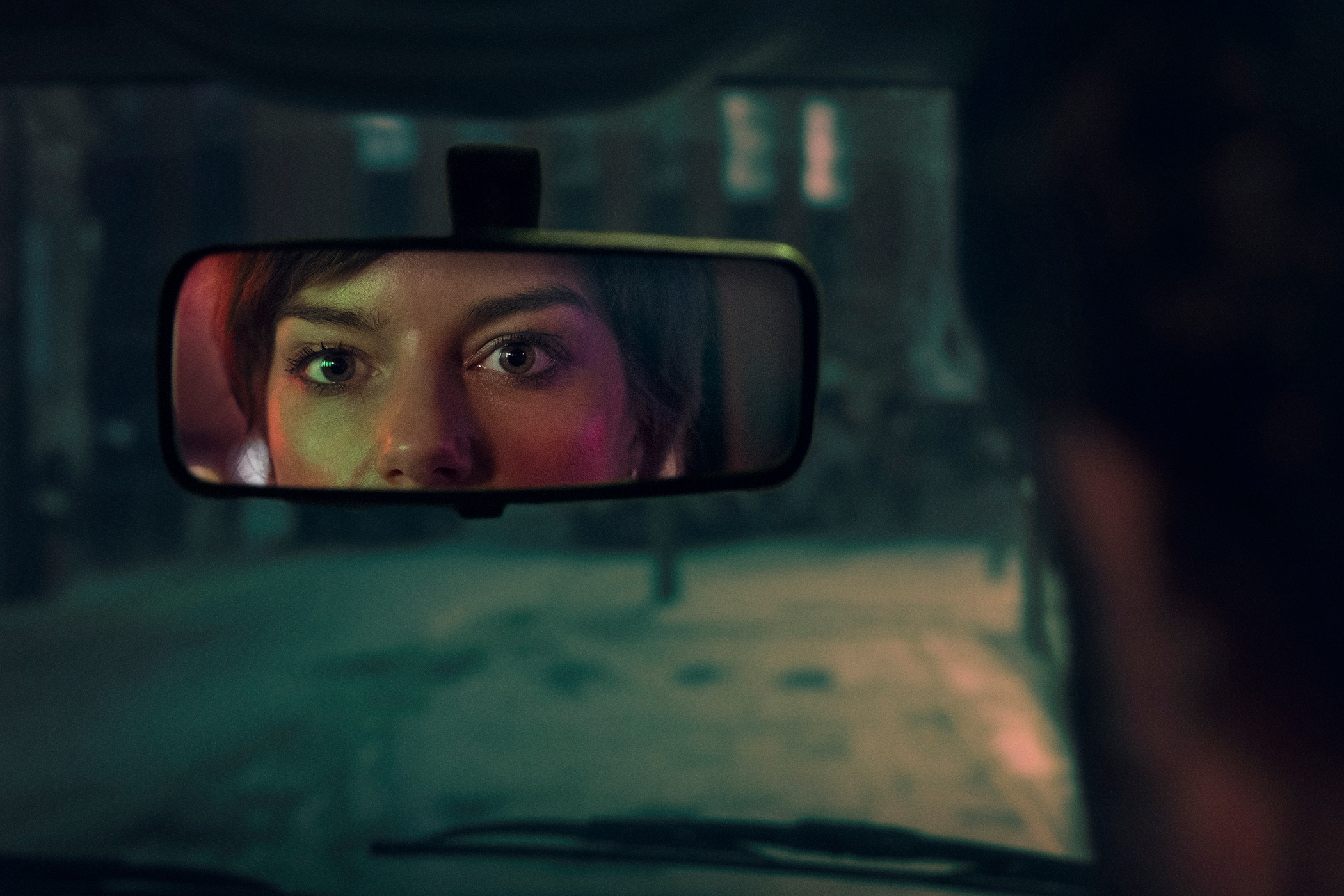
The four-part ITV true crime drama Believe Me reminds women they can’t feel safe anywhere – not even in a licensed black cab, that long-heralded beacon of legitimacy. Written by Jeff Pope (who, among other true crime series, produced 2023’s The Reckoning, about Jimmy Savile), it looks at the victims of John Worboys, the London taxi driver branded the “black cab rapist”. Played here by Daniel Mays, he was convicted in 2009 for attacks on 12 women and found guilty of four more attacks in 2019, but he’s suspected of having committed more than 100 rapes and sexual assaults.
His tactic was to pretend to celebrate a casino win and then compel female passengers into consuming spiked drinks, which throws into sickening focus the age-old conditioning that pressures women to appease men – even cabbies who’ve made sleazy remarks and even when the drink has been initially turned down. All this is depicted, as are Worboys’ victims “Sarah” (Aimée-Ffion Edwards), “Laila” (Aasiya Shah) and Boris Johnson’s future wife, Carrie Symonds (Miriam Petche), the only one here identified by her real name. (Symonds was drugged but not raped.) These scenes are agonising; the women reluctantly humouring the pushy stranger who urges: “Go on, knock it back!”
In this way, Believe Me becomes a study of how politeness can be weaponised. As the title suggests, it’s also about women not being believed, and being treated badly by the police, who miss links, mishandle cases, refuse to believe a cabbie is responsible (Worboys had the front to drop a victim at a police station) and judge women’s behaviour (drinking, promiscuity, red nail varnish). It also highlights the UK’s dire rape conviction rates: less than 3% of reported cases result in charges.
The actors are outstanding, particularly Edwards as furious, unstoppable Sarah, who was raped by Worboys on her first night out after having a baby and forced to deal with police more interested in her taking a dab of cocaine. Pope – whose next TV project concerns the 2021 murder of Sarah Everard by off-duty Metropolitan police officer Wayne Couzens – has made it clear he wants to focus on victims rather than sensationalise criminals. But even when filmed in shadow, Mays conveys the clammy menace of the manipulative predator who later “finds God” in prison.
True crime has had to clean up its act in recent times. The most graphic moment here involves a hazily filmed scene with another drugged victim in which Worboys wields a sex toy. Elsewhere, the “chilling music” goes overboard. The final episode depicts the women’s fight for justice: the successful suing of the Met, setting the vital legal precedent that rape must be taken seriously, and the overturning of a Parole Board decision that Worboys could be released. As important and well done as this is – the cast includes Philippa Dunne and Rachael Stirling – it did not need to take up the entire episode. All told, however, Believe Me is taut, prestige true crime drama that puts women first.
The first series of Rivals, which landed on Disney+ in 2024, was a naughty triumph. Produced by Dominic Treadwell-Collins, and based on the late Jilly Cooper’s 1988 novel set in the fictional, toff-infested Cotswold-esque Rutshire, it was a winningly preposterous confection of inveterate bonking, bird’s-nest hair, studs in tight jodhpurs and Dallas levels of ambition concerning a rivalry between local TV stations. It included enough political incorrectness to stun a polo pony, and a spot of naked tennis.
The show returns as former Olympian Tory MP and lady-killer Rupert Campbell-Black (Alex Hassell) rescues television executive Cameron Cook (Nafessa Williams), who was last seen bashing a gold statuette over the head of dastardly TV supremo Tony Baddingham, played with profane, cigar-chomping gusto by David Tennant.
Naturally, Baddingham survives to scheme again. Sample dialogue: “You can make television without being a cunt, Tony.” “It’s not nearly as much fun, though, is it?” Sex-wise, prepare for a swimming pool romp (a famous naked bum fills the screen), staircase nooky, full frontals, closeted gay love and a shower-sex “orgasm face” from moustachioed Declan (Aidan Turner): a kind of Edvard Munch’s The Scream but through Imperial Leather soap suds.
Elsewhere, lovestruck Taggie (Bella Maclean) still moons over Rupert, while the doe eyes (and then some) continue between Danny Dyer’s nouveau riche Freddie and Katherine Parkinson’s Lizzie – surely the greatest small-screen love story since Anna and Mr Bates yearned below stairs in Downton Abbey. There’s feuding, scandal, libido, unplanned pregnancy, Anneka Rice-style jumpsuits and boil-in-the-bag cod in butter sauce.
The first series succeeded because it turned up the colours of the 1980s – sex, excess, Thatcherism – until they saturated the senses. Having seen four episodes (there’s a total of 12), this second season seems just a tad more serious, but still seduces with its silly charm.
Newsletters
Choose the newsletters you want to receive
View more
For information about how The Observer protects your data, read our Privacy Policy
Over on BBC Two, there’s Jack Warrender’s feature-length documentary Children of the Blitz, made to commemorate the 85th anniversary of the end of the blitz in May 1941. Instead of focusing on the 800,000 evacuees, the documentary speaks to some of the 2 million children who stayed in towns and cities with their families.
The film is filled with wartime detail: air raid sirens, the “lightning” of the Luftwaffe’s bombs laying waste to London, Coventry, Belfast, Liverpool, Sheffield, Hull and more. But it’s the interviewees that make it vivid. In Cardiff, Ted Bush’s family returned from the cinema to find their house reduced to charred rubble. In Sheffield, Jean Whitfield’s mother was killed by a bomb while hanging out washing. And so on.
Children of the Blitz emerges as a truly remarkable document: a reflection on not just “blitz spirit”, but also on loss and grief (an estimated 43,000 lost their lives). It serves as a reminder, too, that these “children” – now in their 80s, 90s and 100s – are the last remaining witnesses.
Simon Ridgway/ITV