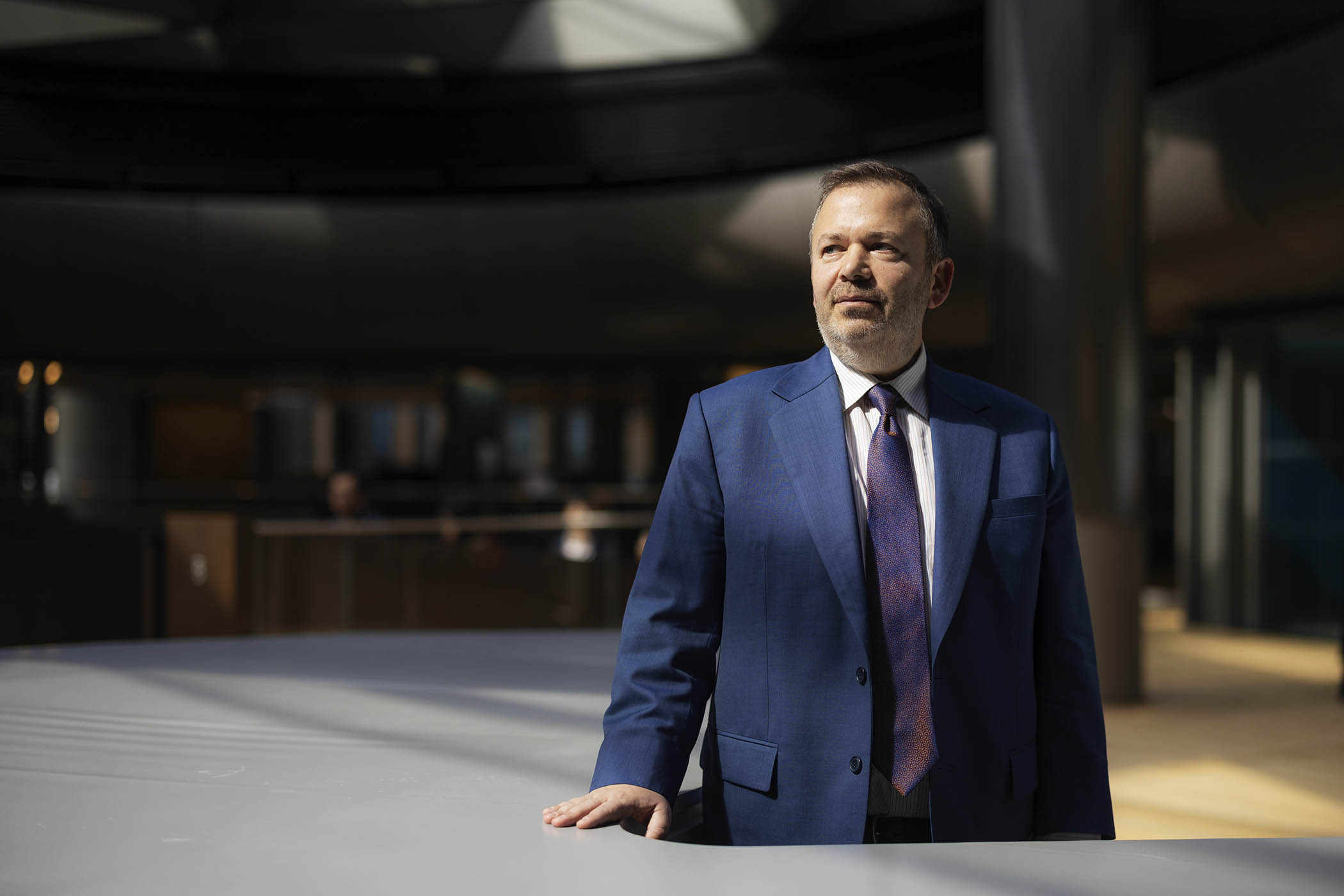



After a successful boardroom coup at an Edinburgh-based investment trust, Boaz Weinstein, the pugnacious US investor and founder of Saba Capital, has a new target: UK real estate.
Saba, the second biggest shareholder in Workspace, a flexible office landlord listed on the FTSE 250, is calling for the company to start selling off 4m sq ft of London property and sack six of its board non-executive directors, including the chair, before its annual meeting in July.
The activist’s challenge comes at an uncertain time for commercial property as employers gauge how payroll costs and AI could affect headcount and the need for office space, while record numbers of listed real estate investment trusts (Reits) are being sold off to private buyers, often on the cheap.
Weinstein’s thesis for building a stake is that Workspace’s shares are trading at 45% discount to the book value of its portfolio, and that selling the assets, in parts or potentially whole, would unlock value. The bigger question, however, is whether Workspace’s biggest shareholder agrees that ousting the board is the way to get that done.
Nicholas Roditi, the publicity-shy former hedge fund manager for George Soros (“the man who broke the Bank of England”), holds a 29% stake in Workspace and now has to decide whether to call Weinstein’s bluff.
“He’s the kingmaker. If he joins forces with Saba, [the voting motion] almost certainly carries,” says Oli Creasey, head of property research at Quilter Cheviot.
However, a source familiar with Roditi’s thinking said his interest in Workspace extends beyond pecuniary value to the company’s history as a landlord to more than 4,000 small-to-medium enterprise tenants. “Historically [they] have been more minorities, immigrants, people who may not be able to walk into W1 and secure an office,” said the source. “I’ve been told that Mr Roditi wants to maintain that heritage.”
After a series of upheavals – the post-Covid “work from home is here to stay” paradigm, followed by the charge “back to the office”, and now the uncertainty caused by AI – there’s concern that Workspace’s portfolio of “periphery” properties (outside the West End and the City of London) may not sell in the 12-month timeframe suggested by Weinstein.
“They’ve misunderstood what is realistically possible in the London real estate market today,” says Creasey. “You can sell a building in London in six weeks if you do it the right way, and by that I mean effectively a fire sale: you’ve got to just accept whatever price comes across the table.”
Still, Weinstein’s intervention has caused a stir. On 13 January this year, Saba went public with a letter announcing it had taken a 13.5% stake and was demanding capital returns to shareholders via sales. Six days later, Workspace’s chief executive, Lawrence Hutchings, resigned with immediate effect, to be replaced by Charlie Green, co-founder of Fora.
Newsletters
Choose the newsletters you want to receive
View more
For information about how The Observer protects your data, read our Privacy Policy
Weinstein became public enemy No 1 in the City last year after he launched a shake-up of the UK’s drowsy investment trust industry with campaigns at seven companies. “I love punching a bully in the nose,” he told the Financial Times. “That’s what I think I’m doing with closed-end funds.”
His first scalp came last month after Saba triumphed against Baillie Gifford’s Edinburgh Worldwide in a feud over the trust’s decision to sell down some of its shares in SpaceX – Elon Musk’s company that is planning to IPO at a near-$2tn valuation. Shareholders voted to oust the company’s chair and install three Saba-backed board nominees.
But property is a different beast. “Selling assets in today’s market is tough. Commercial property values haven’t moved for a number of years – in some cases they’re close to, not quite record lows, but they’re pretty low,” says Mat Oakley, director of commercial research at Savills. But he adds the caveat that more than 800,000 sq ft of office space has been leased to AI companies in London this year.
Photograph by Jason Alden/Bloomberg via Getty Images