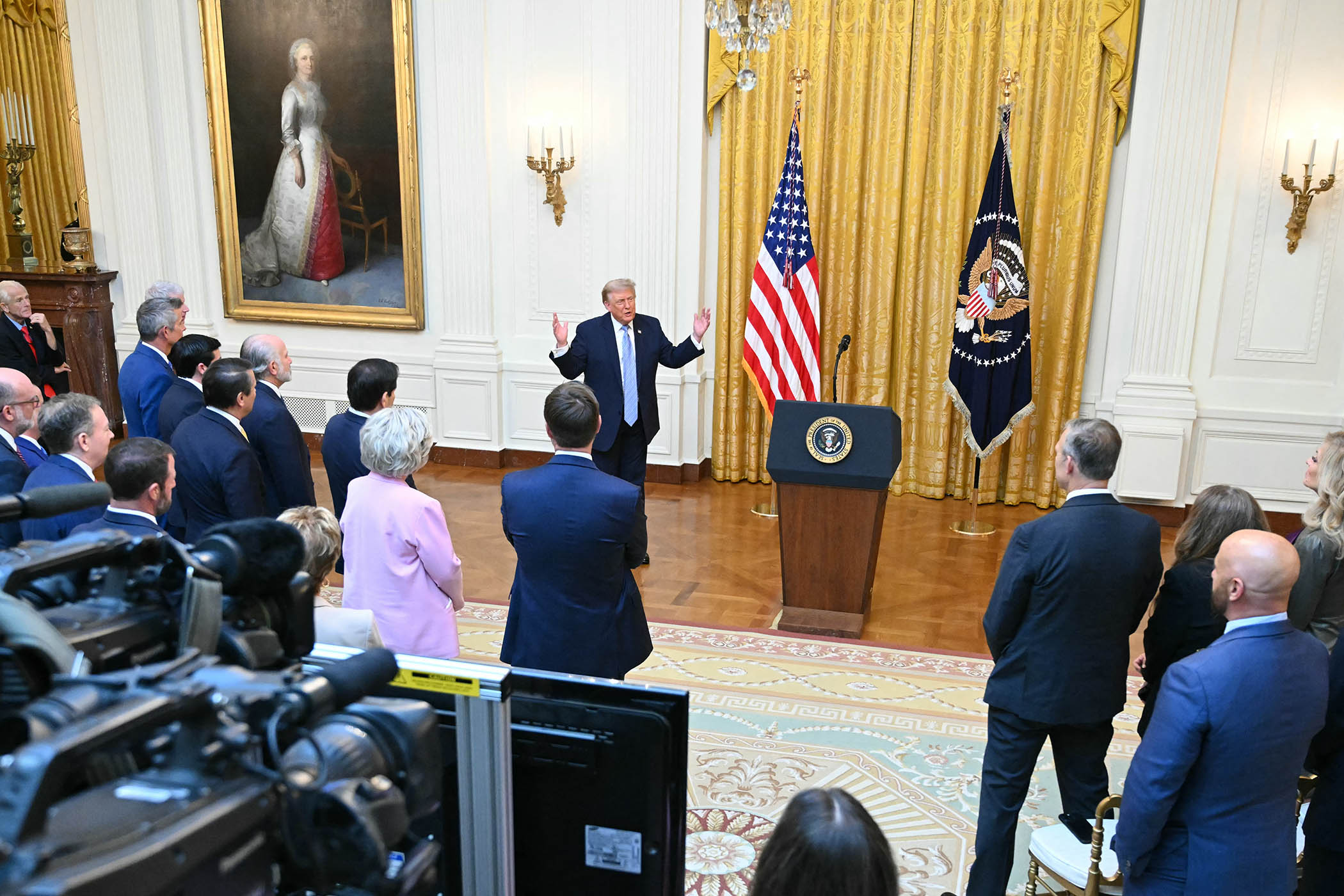
No one is asking “is Davos still relevant?” as the global elite gather this week in the Swiss Alps for the annual meeting of the World Economic Forum (WEF). With Donald Trump bringing many of his cabinet, and 65 heads of state, and most of the other G7 leaders also coming, as well as bosses of many of the world’s biggest companies and investment institutions, enough decision makers who can help “improve the state of the world” (WEF’s stated mission) will be there. Whether they can get their act together is another matter.
For much of 2025, relevance was a real question for the summit. The mood in Davos was as downbeat last January as it is expected to be electric this year. Among business leaders, conversation struggled to get beyond how much richer they would each become thanks to the pro-business instincts of the incoming Trump administration (on the widely held assumption that his threatened tariffs wouldn’t amount to much and his industrial policy would be hands-off). Heavyweight political leaders were scarce, with only a few upbeat appearances by Ukraine’s Volodymyr Zelensky to liven things up.
The vibe was even flat at the famously lavish Davos cocktail parties, fondue dinners and early morning piano bar singalongs, where conversation quickly turned to whether the outrageous cost of being at the meeting was worth it and the case for giving it all a miss in 2026.
The outlook for the WEF seemed even worse in April when its founder, Klaus Schwab, was effectively forced out after whistleblower allegations of misbehaviour of which he was eventually cleared by the board. The resulting power struggle threatened to tear the WEF apart, until order was restored with the appointment as interim leaders of two widely respected elder statesmen and longtime Davos regulars, Larry Fink, boss of BlackRock, the world’s largest money manager, and Swiss pharmaceuticals tycoon André Hoffmann.
They have done an effective job of persuading business leaders to give Davos another chance, while what the WEF says will be a record attendance by serving members of governments has been driven by the rapid rise in short-term geopolitical risk. As one WEF insider puts it, “the world being in a mess is actually good for the Forum”.
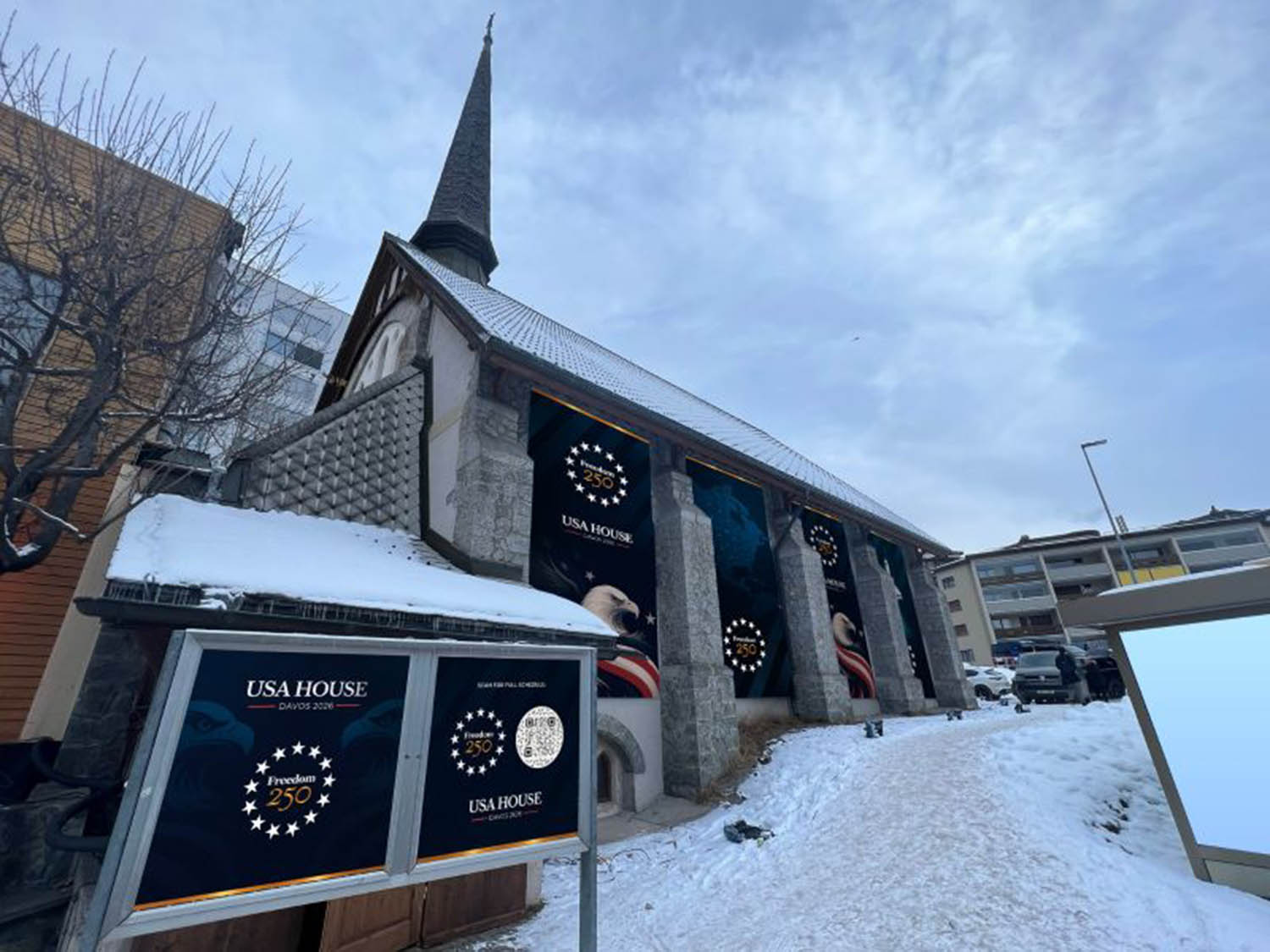
In Davos, a Swiss church has become USA house to make the president feel at home
Certainly, the need has never been greater for WEF to fulfil Schwab’s vision of being the part of the multilateral governance system, where leaders from the public and private sector can come together to find solutions to the world’s toughest challenges – however laughable that notion may seem to those not involved in Davos. Doubters include not only the conspiracy theorists, who have long seen WEF as behind all manner of nefarious schemes by the rich and powerful, but also the public at large: the annual Edelman Trust Barometer, released at the start of Davos each year to remind attendees of how the world sees them, is again expected to show very little faith in the global elite.
Inside the Davos Congress Centre, the absence of Prof Schwab for the first time in the WEF’s 55 years will leave a vacuum. The official venue may also be emptier than usual, except during key moments such as Trump’s speech on Wednesday. The days are long gone when the 3,000 official delegates hung around to plan collaborations and bump into interesting new friends (a philanthropic billionaire or a Nobel prize-winning economist, for example). Now their time is mostly spent on business meetings and speeches to the estimated 50,000 participants in the “unDavos” fringe.
The fringe now boasts hundreds of unofficial meetings, on topics ranging from “AI for good” and the future of food, to how mission-driven, market-minded organisations can fill the void left by the collapse of international aid.
The need has never been greater for WEF to fulfil Schwab’s vision of being the part of the multilateral governance system
The need has never been greater for WEF to fulfil Schwab’s vision of being the part of the multilateral governance system
Meetings take place in the many corporate or country pop-ups along the main promenade during an event that has become so big that townspeople want to limit it, despite many earning a large chunk of their annual revenues during this week. Modest hotel rooms can cost SF1,000 (£931) a night while the likes of Facebook and Palantir pay a fortune for their well-located venues.
This year, to make Trump feel at home and to celebrate his country’s 250th birthday, a church has been converted into USA House. Companies such as McKinsey and Microsoft reportedly coughed up $1m each to sponsor the venue, whose Freedom 250 agenda spans “faith-based initiatives” to “peace through strength”.
Newsletters
Choose the newsletters you want to receive
View more
For information about how The Observer protects your data, read our Privacy Policy
Getting Trump to Davos hasn’t been easy but it may prove to have been easier than having him there. His demands have included more intense security than ever, delivered in the in-your-face style he enjoys at home, rather than the lower-key Swiss way. He is said to have been refused a request to block mobile phone networks during his speech and to disrupt the local rail service. The WEF has also been under pressure to change its official agenda, to focus less on the stakeholder capitalism ideas championed by Schwab in favour of topics aligned with Trump’s belief in “patriotic capitalism” and resource nationalism. According to one WEF insider, the changes are mostly cosmetic: there are still lots of panels on climate change, but this year they are titled “the energy transition”, for instance.
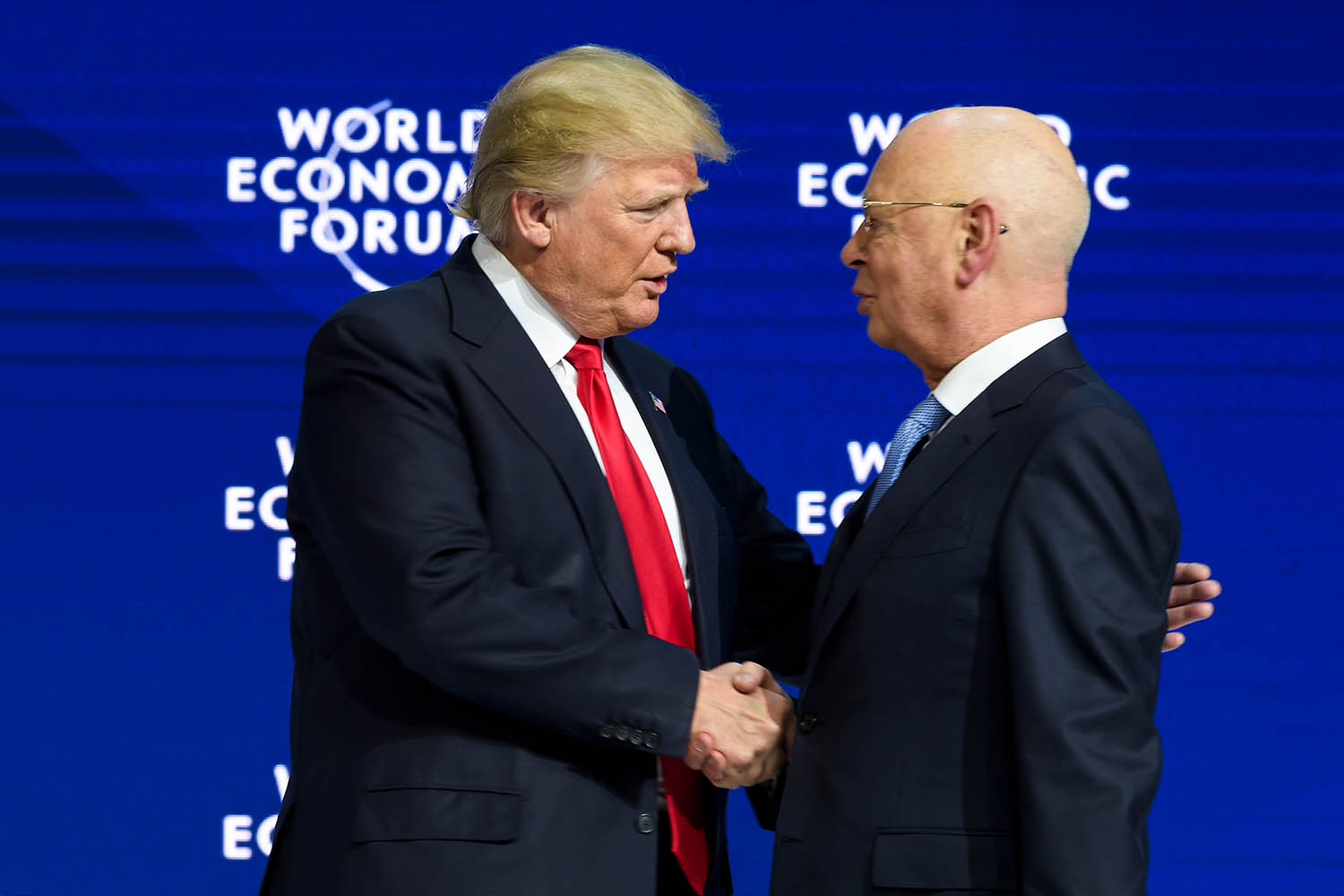
The overall theme is “A Spirit of Dialogue”, which is timely but not obviously Trumpy. The US president is the opposite of “Davos Man”, in the globalising multilateralist democratic capitalist sense in which political scientist Samuel Huntington meant it back in 2004. Trump is said to see WEF as the embodiment of the “woke capitalism” and liberal “loserism” he despises. Yet, during his two past appearances at Davos, Schwab – realising long before Keir Starmer, Fifa and Venezuela’s Maria-Corina Machado that Trump loves nothing more than to be buttered up – convinced him he was among friends. If Trump feels the Davos love again, perhaps he will be open to appeals from fellow leaders to ease up on his “might is right” imperialism. It is not known if the WEF is planning to give the president a prize.
Photograph by Fabrice Cofrini/AFP via Getty Images