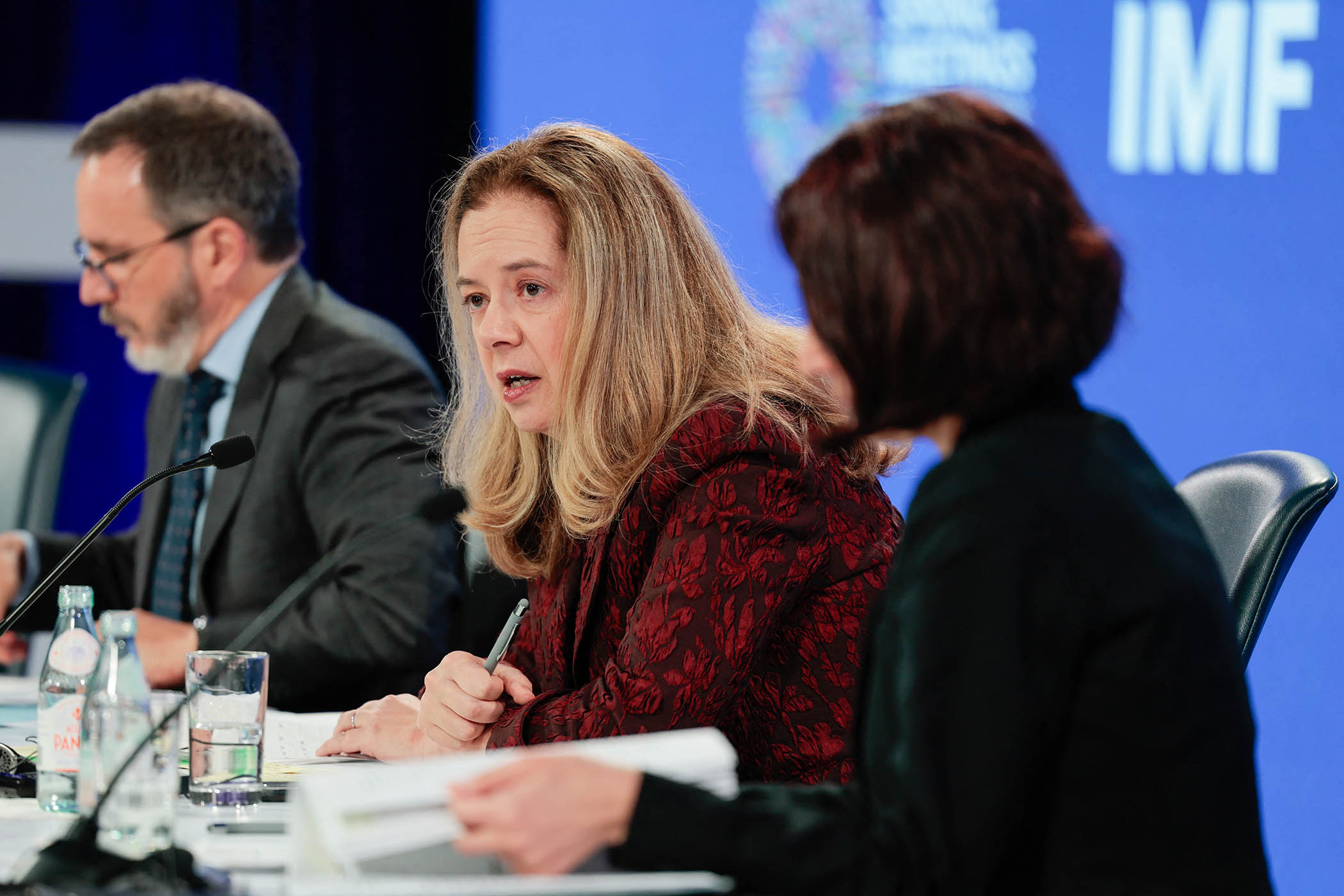



The UK was the only G7 country to have its 2026 growth forecast upgraded in the latest set of International Monetary Fund (IMF) forecasts, published this week. The UK economy is now expected to grow by 1.0% in 2026, up from 0.8% in the forecasts published in April. The growth forecast for 2027 was unchanged at 1.3%.
In its overall assessment, IMF staff said that so far “the world economy has weathered the shock from the war [in the Middle East] better than feared”. Some of the more catastrophic predictions from earlier in the year proved wide of the mark, as a decline in oil flows through the Strait of Hormuz was offset by increased production elsewhere and the release of oil stockpiles.
But the IMF stressed that those stockpiles are now approaching multi-year lows. Speaking on Wednesday, as the US-Iran ceasefire agreement was faltering, Petya Koeva Brooks, deputy director of the IMF research department, warned that “a renewed escalation in the conflict could reignite commodity price volatility, tighten financial conditions, strain policy buffers, and worsen food insecurity in low-income countries”.
Another factor contributing to stronger than expected global growth was the ongoing AI technology boom. South Korea, Thailand, Taiwan and Malaysia – the world’s biggest net exporters of AI hardware – were among the major beneficiaries.
Despite its exposure to the Iran war-driven energy price spike, the South Korean economy grew more than four times faster than expected in the first quarter of 2026, buoyed by soaring demand for memory chips from companies such as Samsung and SK Hynix. Kospi, the benchmark for the Korean stock market, has more than doubled in the last year, even after falling back by almost 20% from a record high in June amid fears that rocketing demand can’t be sustained.
The IMF cautioned that a “market correction driven by a reassessment of AI profitability” – that is, a crash in equity prices – represents a key downside risk to its forecast. Earlier in the week in its Financial Stability Report, the Bank of England warned that a sharp fall in AI-related equity prices could hit the UK economy, and potentially have disruptive consequences for the government bond market.
Photograph by Kent Nishimura / AFP via Getty Images
Newsletters
Choose the newsletters you want to receive
View more
For information about how The Observer protects your data, read our Privacy Policy