
One striking feature of last week’s meetings of the International Monetary Fund (IMF) and World Bank in Washington DC was the disconnect between two camps of attendees.
On one side are the geopolitical and energy analysts, who sounded genuinely fearful about the potential consequences of continuing disruption to passage through the Strait of Hormuz, and who fret about the possibility of recurring hostilities. Those who are paid to worry more about molecules than money are especially concerned about the potential for disruption to other shipping bottlenecks (such as the Red Sea, through which large volumes of Saudi Arabian oil still flow) and the extent of the damage to liquefied natural gas facilities in Qatar.
Those fears were echoed by IMF economists, who warned that extended dislocations to energy supply would cause deep damage to the world economy. In what the IMF called a “severe” scenario, European inflation would head up towards 5% while the economy teeters on the brink of recession. That would be a deeply unpleasant cocktail, with potentially lethal consequences for incumbent governments.
On the other side are the financial market guys, who seem extraordinarily relaxed about the whole thing. I attended a series of “fireside chats” with financiers and business executives at the Semafor World Economy Forum in Washington last week. One after another, the speakers declared themselves sanguine about the economic impacts of the war with Iran – if, indeed, the war came up at all. Nobody criticised the Trump administration.
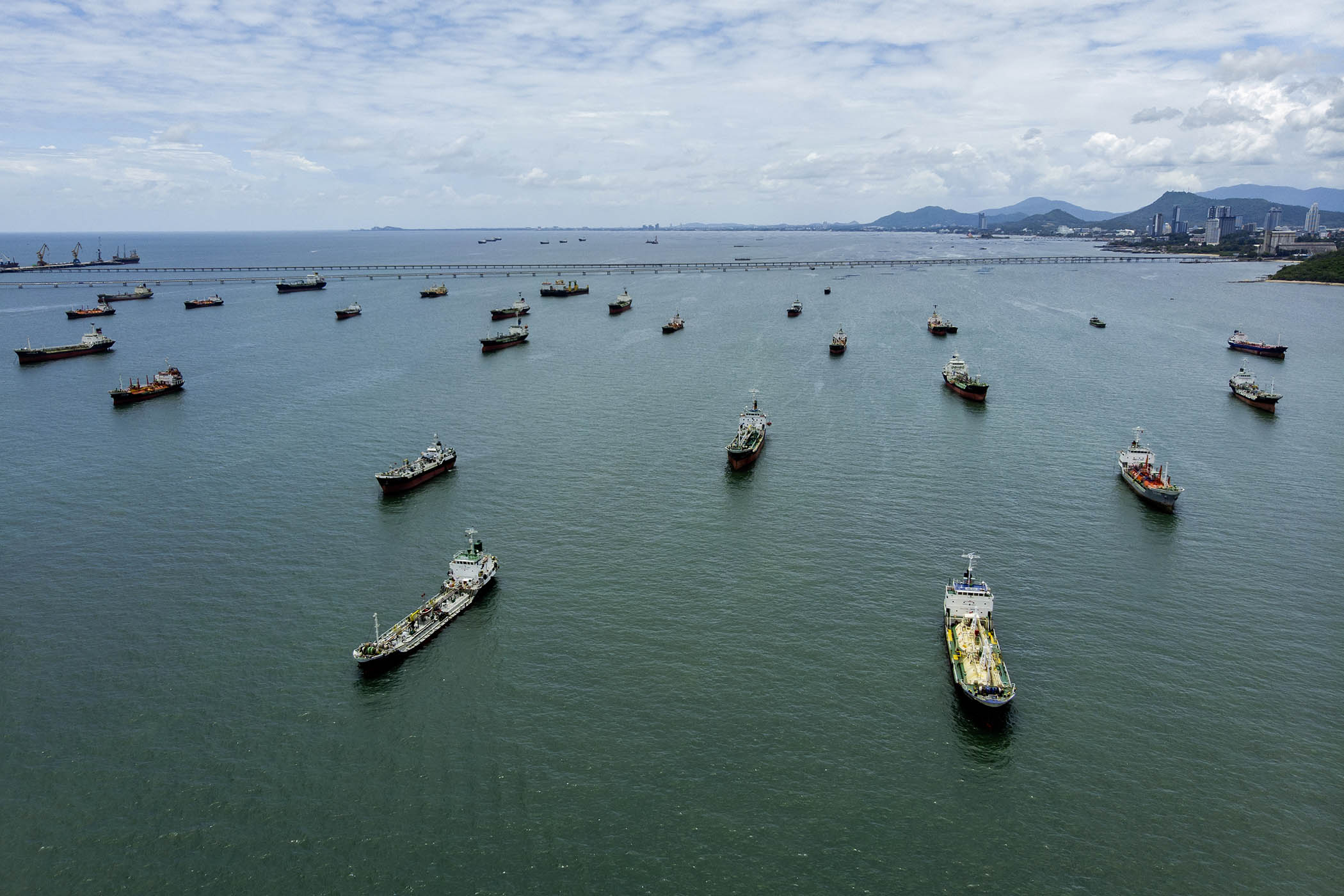
Those who are paid to worry more about molecules than money worry about potential disruption to other shipping bottlenecks
Those who are paid to worry more about molecules than money worry about potential disruption to other shipping bottlenecks
Their sunny optimism is reflected in market pricing. The S&P 500 stock market index hit an all-time high during the week, and pricing in energy markets suggests that traders expect the disruption to unwind quite quickly. They are certainly not pricing in an extended “no oil through the Strait” scenario, or a “lasting damage to gas and oil facilities in the Gulf that takes years to undo” scenario. They think this is just a blip, that it’s business as usual, that the energy doomsters are crying wolf, and that Trump will want to restore order and lower fuel prices before the midterms.
Now, these people are paid a lot of money to make such judgments, which may well prove far-sighted. Since the announcement of a ceasefire in Lebanon, Iran has indicated that ships will now start to pass through the Strait.
But the other camp worries that financial markets are being too complacent. The historian and commentator Adam Tooze described it as “escapism”. David Schwimmer, CEO of the London Stock Exchange Group, suggested at the Institute of International Finance Global Outlook Forum that it could reflect the experience and mindset of a generation of market traders “who have come to expect a government bailout… who have been trained to buy the dip” over the past 25 years. An extended stagflationary shock – with stagnant growth and persistent inflation – would force an adjustment in both mindset and prices.
The other factor, of course, is that these are largely US voices, and the US is a global energy superpower that exports, rather than imports, oil and gas. This doesn’t insulate American consumers and firms from soaring global energy prices, or mean there’s no cause for concern, but it does put their economy in a stronger position than those of the net importers of energy.
Which brings me to the UK. Once again, the UK finds itself at the sharp end of a global economic crisis, suffering more than our European neighbours. The IMF downgraded the UK’s growth forecast more than those of all other major economies: it expects the UK economy to grow by 0.8% in 2026, down from 1.3% before the war. UK government bond yields have jumped by more than elsewhere. If I were Rachel Reeves, I’d have been tempted to attend her meetings last week in a Mario Balotelli-style shirt, with “Why always me?” emblazoned across the front.
Why is it always us? On this occasion, there are two key factors.
Newsletters
Choose the newsletters you want to receive
View more
For information about how The Observer protects your data, read our Privacy Policy
The first is the UK’s energy position. The UK isn’t unusually dependent on energy imports; but the UK is unusual in its heavy use of gas, its limited amount of gas storage and, in particular, the extent to which the price of electricity is tied to the price of gas. Despite the growing use of offshore wind and other renewables, gas-fired power plants are often needed to meet demand for electricity (to provide the “marginal unit”) when those other sources aren’t available or sufficient. When that’s the case, the price of gas sets the price of power. That leaves UK households and businesses highly exposed to rising global gas prices. It is significant, therefore, that Reeves revealed on Thursday that she and Ed Miliband are exploring potential ways to “delink” gas and power prices – though she did admit that it’s easier said than done.
The second is that before the war started, financial markets were betting that the Bank of England would cut interest rates several times this year. The European Central Bank, in contrast, was expected to keep rates broadly flat. When the war started, and energy prices started climbing, these bets were unwound as traders instead started to price in multiple rate increases in the face of surging inflation. This was a sharp about-turn – sharper for the UK, where it manifested as a more pronounced increase in government borrowing costs (and big losses for the hedge funds that had been banking on rate cuts).
This is all a bit frustrating for the government, given that official data suggests the UK economy was starting to rebound in the first months of the year. Sanjay Raja, chief UK economist at Deutsche Bank, described “thumping” 0.5% GDP growth in February as having “smashed expectations”. The good news, he said, was that “the UK likely entered the energy shock on a stronger footing than many forecasters expected”. The bad news was that this momentum wouldn’t last, and that “this will likely be the growth before the energy squeeze”. It’s no wonder the chancellor sounds so cross with Donald Trump.
Photograph by Getty Images