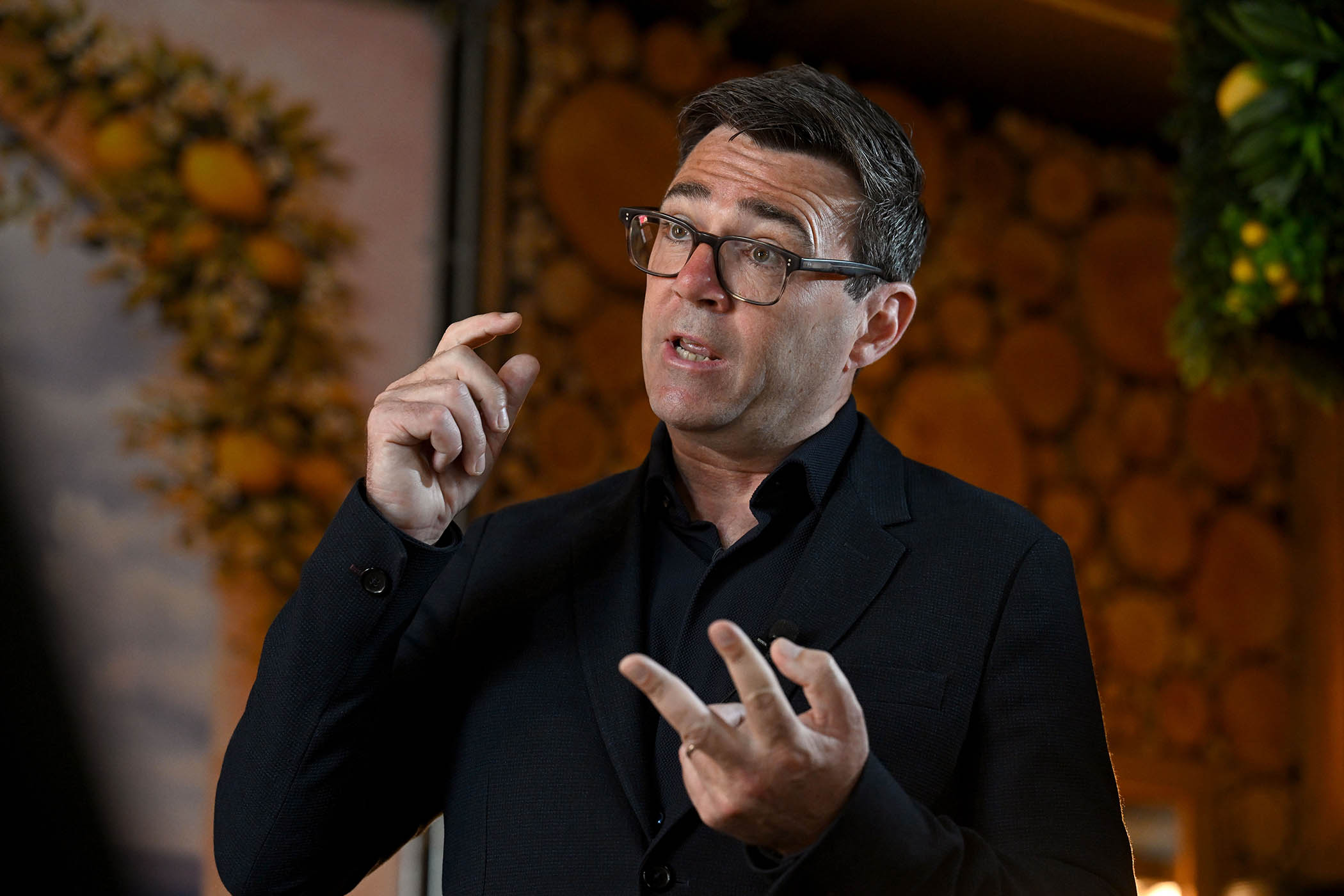

So, is Andy Burnham’s credo of business-friendly socialism a contradiction in terms – about to become hung around our putative next prime minister’s neck as an absurd oxymoron that betrays his shallowness? His enemies will certainly try to do just that: socialism, they will argue on his left, involves no compromise with business. And on his right he will be scolded that business friendliness can only be understood as the good, old-time Thatcherite religion. But the UK economy has hardly prospered after decades of scarcely-interrupted worship at the Thatcherite shrine. Nor do the ever-shifting definitions of socialism offer a feasible prospectus. In the face of these failures, the intellectual and political runes are changing.
One of the tragedies of Sir Keir Starmer’s premiership has been his avowed disinterest in ideas; witness his much-quoted, off-the-cuff line in opposition that there will be no such thing as “Starmerism”. In his world, progress is to be achieved by a diligent process of case by case reasonable compromises, and, as one insider once told me, so achieving socialism by stealth. Except it has worked neither as a political project nor as a compass for driving forward the fissiparous British state – let alone leaning into the intellectual zeitgeist to offer any kind of vision. Starmerism has become synonymous with indeterminacy.
Business-friendly socialism, like Keynesianism, Croslandite “middle way” socialism, monetarism, and the Third Way before it, is very definitely a viable political idea. Credit to Burnham for advancing it with all the attendant brickbats. Rather than an intellectual pantomime horse, it is a concept with a long pedigree trying to capture the necessary complementarity of the private and public sectors.
Business-friendly socialism is about holding capitalism’s reins firmly so it goes where we wish
Business-friendly socialism is about holding capitalism’s reins firmly so it goes where we wish
The quintessential liberal Tory Harold MacMillan wrote The Middle Way in 1938, emphasising the fulcrum nature of this vital inter-relationship of public and private, deploying it later successfully in government to deliver a Britain than “never had it so good” – a story now carefully forgotten by Britain’s right. Equally, Mario Draghi – or “super” Draghi – arguably the most successful European statesman since Jean Monnet and, as president of the European Central Bank, saviour of the euro – readily describes his beliefs as “liberal socialism”. The state, he says, is an engine of productive investment, provider of a social safety net, guarantor of less inequality and architect of the ecosystem in which markets, liberal institutions and competitive business flourish. Prof Philippe Aghion, last year’s joint winner of the Nobel prize for economics, describes it like this: “Capitalism is a spirited horse; it takes off readily, escaping control. But if we hold its reins firmly, it goes where we wish”. Business-friendly socialism is about holding capitalism’s reins firmly so it goes where we wish.
Obviously, that begs many questions; how in practice do you hold capitalism’s reins firmly? What is the right balance between promoting competition, directing activity and creating an ecosystem of support? Interestingly, in his important speech last week on economic growth and advocacy of “progressive capitalism”, Wes Streeting cited the same Aghion quote. Lazily described as a Blairite, he set out a persuasive social democratic story of promoting economic growth based on getting behind the UK’s innovation economy and tech scaleups, diffusing best practice into low-productivity firms and intense strategic public investment. The parallels with Draghi, Aghion and even MacMillan were obvious – and with Burnham, for that matter.
These are even more marked, judging by the panel of economists Burnham has invited to advise him informally, two with impeccable northern roots and accents, and similarly committed to real devolution and massive public investment in Britain’s regions. Andy Haldane, who hails from Sunderland, is former chief economist of the Bank of England and has cited the “Medici effect” of such a programme on our leading cities – incubating tech scaleups and creative industries alike, all supported by imaginative education, training and transport investment. This could lift regional productivity to match London’s so that by 2050 the UK economy could be £2tn larger. But all, including potential defence bonds to lift defence spending, must conform to fiscal rules. Britain’s fiscal position is too precarious to imagine otherwise. Indeed, he advises a powerful welfare reform or spending cuts package in his first 100 days to demonstrate that Burnham gets it.
Lord Jim O’Neill, the former chief economist of Goldman Sachs with a soft Mancunian accent, is no less an apostle of adhering to fiscal rules – but is as passionate as Haldane about the same levelling-up cause, which he actively advocates as chair of the Northern Powerhouse. As non-executive chair of the venture investment fund Northern Gritstone, he has spawned successful support of the innovation economy across the north and will advocate the process is turbo-charged. The third is Richard Hughes, a casualty of the budget leak that forced his resignation as chair of the OBR last year. He is the high priest of fiscal rules, which, if anything, he thinks are too lax. However, more progressively, he believes pension funds should lose tax privileges if they don’t commit to more investment in the UK, a view he shares with Haldane – and would certainly buoy up the stock market as a business-friendly growth trigger. This, along with radical moves on lifting capital gains and reshaping inheritance tax, look like racing certainties.
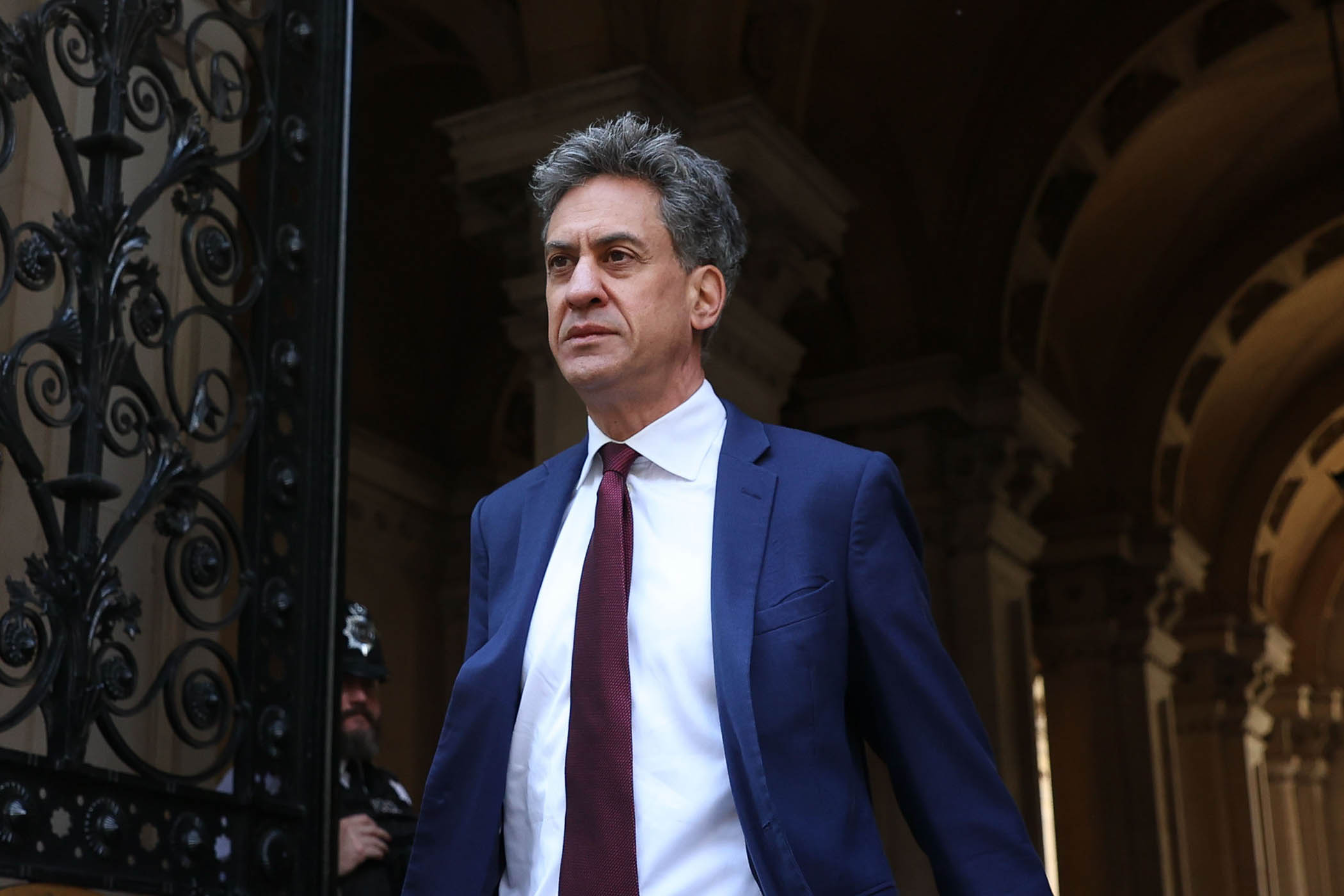
In fairness to Reeves and Starmer, they have laid partial foundations on which a Burnham government could build – but the current economic project has been undersold and too timid. Who will emerge as Burnham’s chancellor, with both Streeting and the ex-Treasury hand and very effective Ed Miliband, trusted by Burnham, the frontrunners, is anyone’s guess – a lot depends on whether the succession is a coronation or a contest.
The larger point is that the bulk of the Labour party is cohering around the cause of business-friendly socialism while respecting the imperative of keeping the bond markets onside. The right is busy predicting that it can only end in tears. But levelling up our country, embracing the innovation economy and taxing the wealthy to find the resources are economic and social imperatives. Burnham has no option but to try. It’s the only route to delivering hope.
Photograph by Anthony Devlin/Getty Images
Newsletters
Choose the newsletters you want to receive
View more
For information about how The Observer protects your data, read our Privacy Policy