Portrait by Tom Pilston for The Observer
Andy Burnham officially confirmed last week that if he wins the Makerfield byelection he will try to become Labour leader. Wes Streeting insists it will not be without a fight. “I went to the last coronation, and this is one coronation that I’m not feeling enthusiastic about,” he says. “I’m absolutely determined to be a candidate in the race. Politics needs to be a battle of ideas, and each of us needs to be tested. The question for all of us is: what’s the project? What’s the agenda? What’s going to be different? You don’t want to replace one vacuum with another.”
It is only just over three weeks since Streeting resigned as health secretary, criticising the government’s “drift” and “lack of vision”. He has no regrets. “I genuinely think that, unless Labour faces up to the scale of the challenge and heeds the warning given to us by the voters, we will wake up the morning after the next general election watching Nigel Farage walk into Downing Street – and I don’t want that on my conscience.”
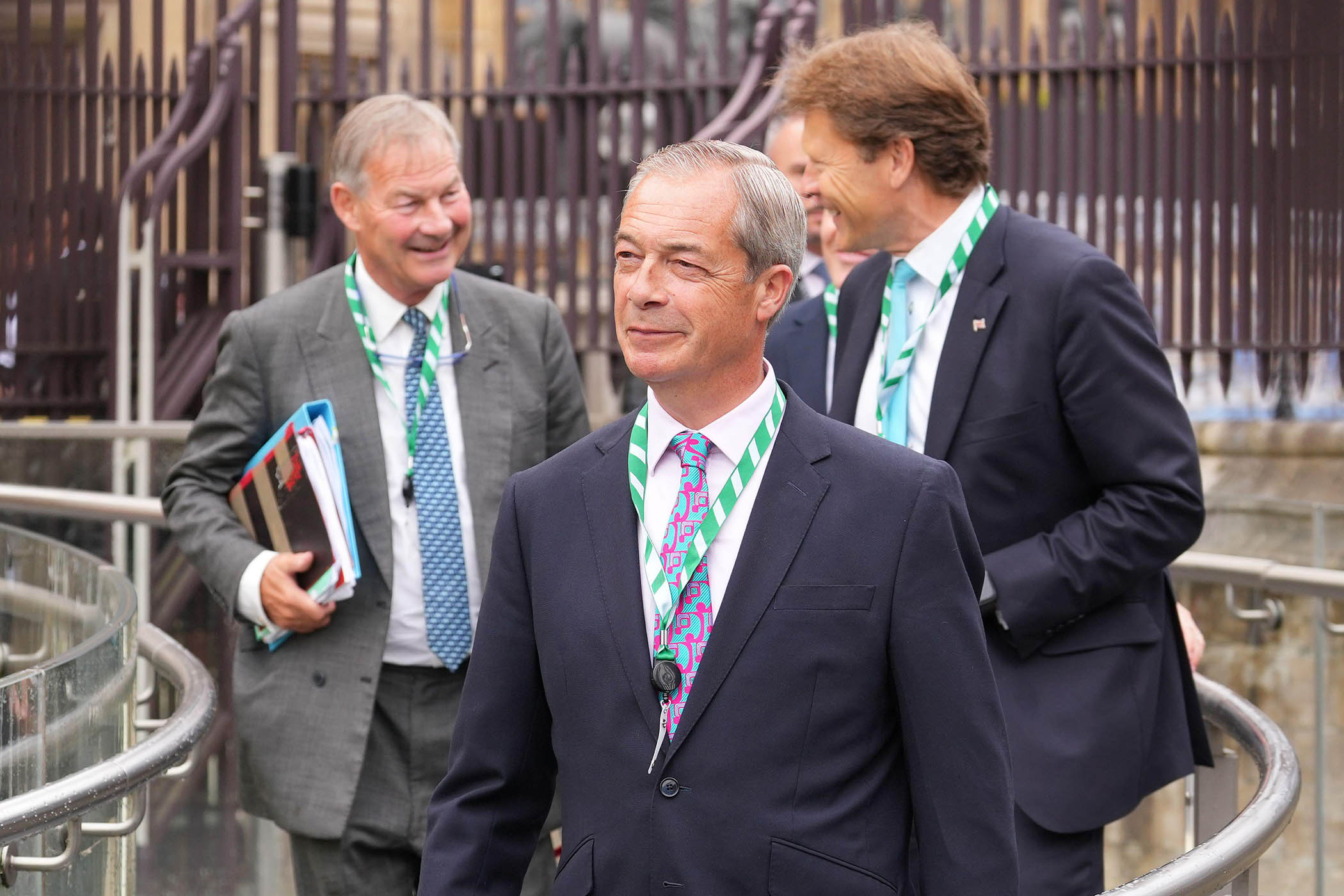
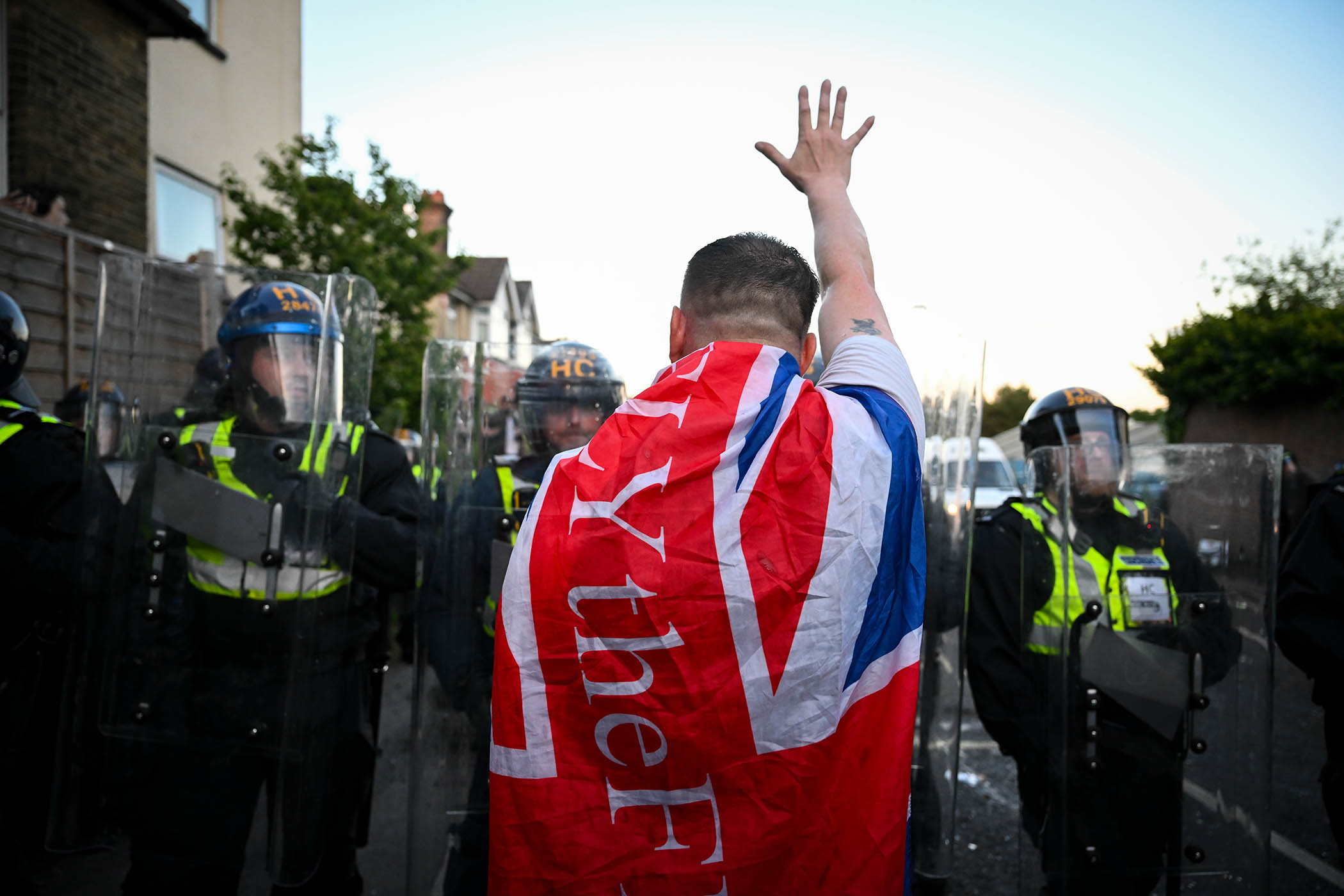
The last few days, during which the Reform UK leader called for people to respond with “pure, cold rage” to the killing of Henry Nowak – the 18-year-old Southhampton student who was seen handcuffed in police bodycam footage after being fatally stabbed by Vickrum Digwa – have only reinforced his decision to quit. “The way in which [Farage] sought to weaponise the appalling murder and catastrophic incompetence of the police sent shivers down my spine,” Streeting says. “We are seeing echoes of the 1930s. We are seeing the online whipping-up of the mob. That is not how justice is served.”
He was appalled by the “sinister” manipulation of Kemi Badenoch’s words in a Reform advert that suggested the Tory leader did not care about white lives. “That is the complete opposite of what she said. I think that is dangerous. I think it is repulsive, and it is the particular responsibility of those of us who are not Conservative to speak up in defence of Kemi Badenoch, and in defence of decency, civility and good grace in politics.”
The idea that Farage could become prime minister “because of Labour’s own weakness is utterly intolerable to me”, Streeting says. “I really think it’s time the prime minister put the country and the party before himself and did the decent thing to make way for an open leadership contest, so we can move forward.”
Over the weekend, Keir Starmer has spoken to key supporters on the phone. He told them he will not walk away from the mandate he secured just two years ago and that if a challenge is triggered he will fight it.
Streeting admits that the level of public hostility to Keir Starmer is in some ways “disproportionate to the man himself”, but says: “The common factor in Labour’s defeats in every part of the country was the deep unpopularity of our Labour government and the fact that people don’t understand our prime minister – they don’t connect with him, they don’t understand where he’s leading us.”
Politicians, Streeting says, need to have the courage of their convictions and “there have been too many occasions where our own people, Labour supporters, have been left asking not just what do we stand for, but have we lost our moral compass?”
He points to the prime minister’s handling of the Israeli assault on Gaza. “One of the reasons I had a near-death experience at the ballot box at the last general election was Keir went on LBC, he was asked whether Israel had the right to turn off water and electricity in Gaza, and he made a mistake. He said: ‘I think that Israel does have that right.’ That was allowed to go all over social media and to spread like wildfire through WhatsApp groups for days before it was eventually gripped and retracted in a ham-fisted and insincere way.”
Newsletters
Choose the newsletters you want to receive
View more
For information about how The Observer protects your data, read our Privacy Policy
The former health secretary says he heard from doctors working in Gaza with “harrowing eyewitness testimony of not just the slaughter of innocent people, but the calculated brutality”. Does he think there is a genocide going on? “I certainly think that Israel has to answer for war crimes,” he replies. “There is now a clear international legal opinion that Israeli settlements are illegal. I don’t understand why, therefore, we don’t respond in terms and sanction settlements.”
In WhatsApp messages released last week, Peter Mandelson accused Streeting of being “hysterical” about Israel and said it “reflects pretty badly on his maturity”. Streeting thinks the comments were “the epitome of blinkered and thoughtless politics on the right of the Labour party around the Israeli-Palestinian conflict”. Starmer “has the same blinkers”, he suggests.
“When I circulated a dossier around the cabinet that was given to me from British medics, highlighting to me, as the health secretary, what was going on in Gaza, I was accused of circulating a document that was designed to be leaked, of trying to be disruptive. I had my motives questioned, I had my integrity questioned by the prime minister. That document was never leaked, and it wasn’t designed to be leaked. It was designed to get the prime minister and colleagues to open their eyes and see what was going on.”
Streeting thinks the episode was symptomatic of a “barren political culture” in government. “You have good people raising legitimate concerns, and discussion is shut down,” Streeting says. “That is not healthy democratic debate. If you think through some of the mistakes this government has made, like the original sin of the winter fuel allowance, the hokey cokey on two-child [benefit] limit, the mess we got ourselves into on welfare reform; if there had been a more open, inclusive, and pluralistic conversation, and ideas had been tested, we would have avoided making those mistakes.”
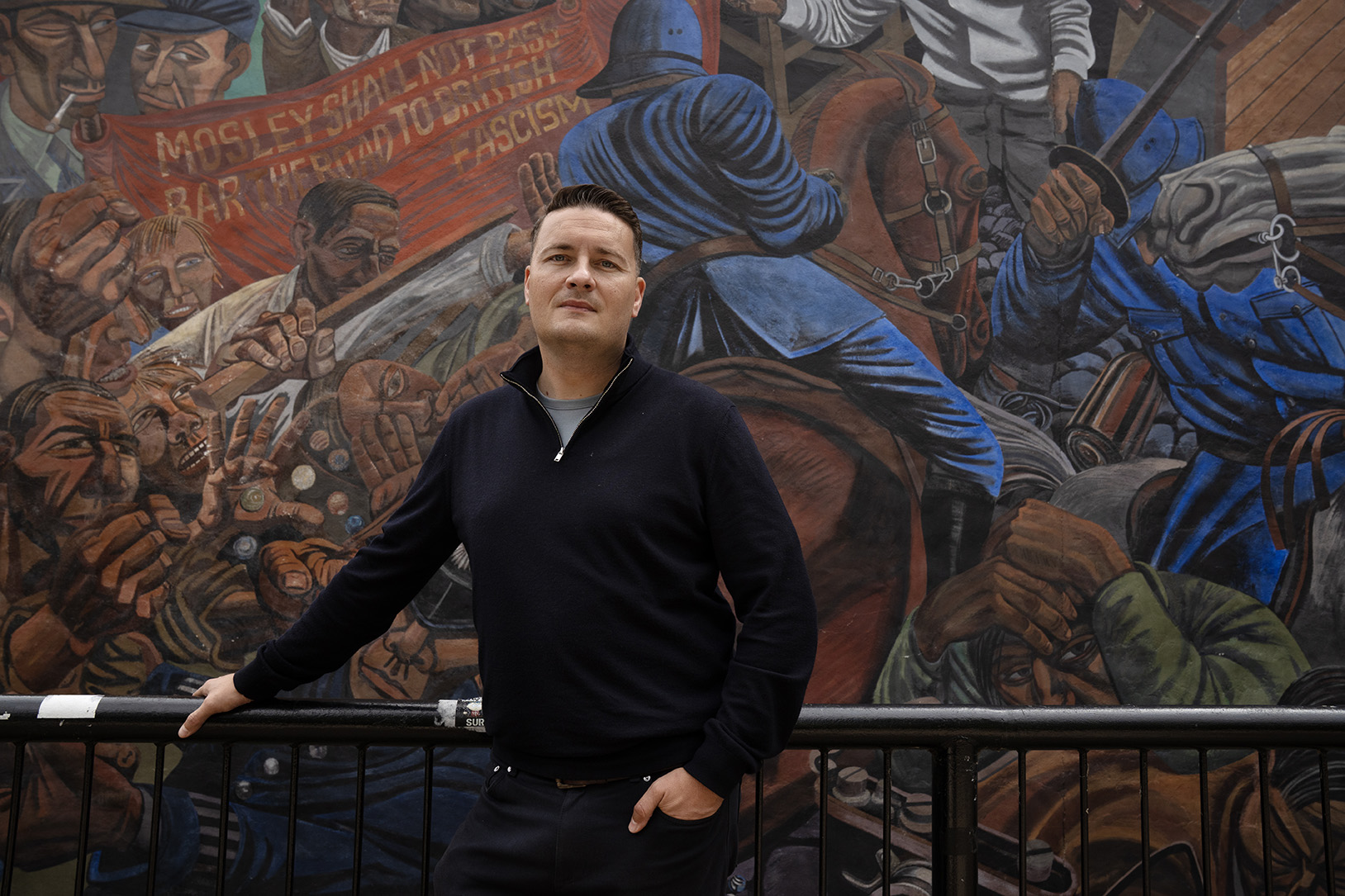
We meet in Stepney, east London, outside the council house where Streeting grew up, and walk to the mural commemorating the battle of Cable Street, where East Enders forced back the fascist leader Oswald Mosley and his Blackshirts in the 1930s. The former health secretary is a Londoner born and bred, so what does he think of Burnham’s suggestion that Labour has been run by “the London set” for too long? “When I think about the divide in this country, I do not see it as a north-south divide – I think it is a rich-poor divide,” he replies.
Burnham is promising to put Labour “solidly on the side of working-class people”. Streeting says the party has been at its best when “we have brought together working class, middle class, poor, wealthy, black, white, men, women, north, south”. The Greater Manchester mayor champions “business-friendly socialism”, while the former health secretary prefers to describe himself as a social democrat and favours “the marriage of wealth creation and wealth distribution”.
But Streeting agrees with Burnham that first past the post voting is “increasingly difficult to justify in this day and age of multiparty politics”. Like the Greater Manchester mayor ,he says: “I’d like to see electoral reform in Labour’s next manifesto.”
The former health secretary also favours swifter action on social care. “I fought really hard on this,” he says. “I was told that we’d have a royal commission in the manifesto, then it wasn’t there. I was told we’d be announcing it during the election campaign. It never was. I was told it was going to be the first big announcement in week one. It didn’t transpire, and in the end, I realised that I was being strung along,” he says. “Treasury orthodoxy and No 10 timidity won through.”
He thinks Burnham’s idea of replacing inheritance tax with a care levy is “potentially smart politics and a good practical solution. I’m keen to hear more detail on that, and that is exactly how I’m going to engage in the battle of ideas in the leadership contest.”
Polls of Labour members suggest Streeting would struggle to win. “I’ve been the underdog all my life,” he says. “Every hurdle I’ve encountered, every obstacle that’s been put in my way, I’ve grafted hard to overcome and this will be no different.”