“There is a reason why Russia has no incentive to test Finland,” the country’s president, Alexander Stubb, told The Observer last December. It was, he said, Finland’s “strong military”. He then listed those strengths: 900,000 men and women who have gone through conscription, 280,000 of whom can be mobilised if needed; 62 F-18s and 64 F-35s; plus the “biggest artillery in Europe”.
Europe is rearming and there is a consensus, from Whitehall to Brussels, that defence spending needs to be dramatically increased. Nato members, with the exception of Spain, have agreed that it should be 3.5% of GDP by 2030, part of a slightly more nebulous target of 5% of GDP spent on “national security”. (How nebulous? Well, Giorgia Meloni reckons a long-mooted bridge linking Sicily to the mainland counts as “national security”.)
In Britain, this debate intensified last week with a speech by George Robertson. The former defence secretary, ex-secretary general of Nato and co-author of the government’s recent strategic defence review accused Keir Starmer’s government of “corrosive complacency” on defence and, citing the threat from Vladimir Putin’s Russia, warned that “Britain’s national security and safety is in peril”.
But let’s return to Finland, a nation widely regarded as being one of the best prepared to defend itself against Russia. Over the past 12 years it has spent, on average, just 1.7% of its GDP on defence – half the target we supposedly now have to hit in order to achieve what Finland has already achieved.
There are three big problems with the current debate over defence spending. First, we’re mainly judging it on inputs not outputs. Most of the focus is on how much we’re going to spend, rather on what that spending will achieve.
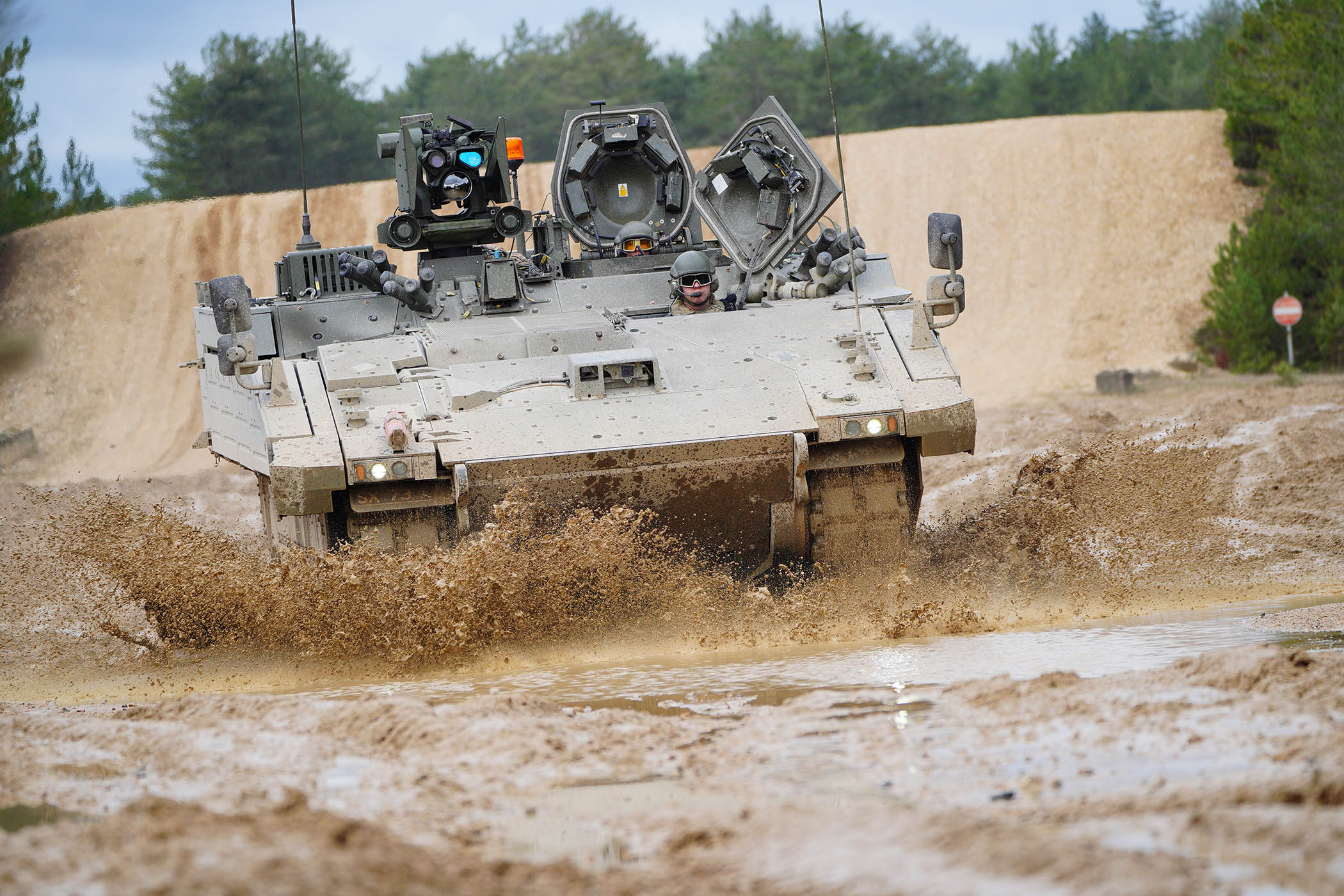
Secondly, there is little discussion of the Ministry of Defence’s shocking track record when it comes to spending that money. For instance, a £5.5bn order for almost 600 new Ajax armoured vehicles is eight years behind schedule, has been criticised by the National Audit Office for failing to demonstrate value for money, and is paused after the most recent training exercise left soldiers vomiting and shaking.
Finally, despite the UK’s membership of Nato, the vast majority of our procurement is done by us alone. Europe’s economy is 10 times larger than Russia’s, while its military spend is also far higher. Yet there is so little coordination between allies that much of that spending is either replicating capabilities other nations already have, or buying kit that is incompatible.
Again, Finland shows us the way forward. It is part of the five-nation Nordic Defence Cooperation group which does what it says on the tin.
Ah, but we’re not Finland, say defenders of the status quo. Britain is a global player, a member of the UN security council, a leader in Nato. It is vital, they say, that Britain can send an aircraft carrier to the Middle East or south-east Asia, and that it maintains a continuous at-sea nuclear deterrent.
Finland’s defence policy is more modest – defend the homeland and contribute towards European security. Perhaps Britain’s should be more modest too. Constrained by tight fiscal rules and low growth, the UK government has little money to spend. We have already made swingeing cuts to international aid, reducing the amount spent from 0.7% of GDP just seven years ago to 0.3% today. The Foreign Office is also going through a round of redundancies. It’s notable that many of those so keen on Britain being a global player militarily have been less vocal about our soft power.
Newsletters
Choose the newsletters you want to receive
View more
For information about how The Observer protects your data, read our Privacy Policy
Fourteen years of austerity have left this country’s public services broken. Most schools are in the red, leading to teachers, librarians and career advisers being sacked. Hospital waiting times are inching down but remain astonishingly high. From courts to prisons, homelessness to mental health, there is not a single policy area that isn’t crying out for more money.
In his speech, Lord Robertson suggested welfare cuts, without spelling out which area of social security he thought could be trimmed.
There was another speech worth watching back last week, one which received far less attention. Collecting his Olivier award for best actor in a supporting role, Paapa Essiedu spoke movingly about how he owed his entry into the industry to a programme run by a theatre company called Frantic Assembly.
“There are amazing organisations all over the country… which are doing such brilliant work,” he said, “but we all know their funding is being cut year on year on year.” He called on the government to make sure funding ensured “the next generation of theatre makers have the opportunities that I had”.
The military-industrial complex has a far louder voice than its cultural equivalent, let alone the lobbies for prison reform or children in care. But just because it’s loud doesn’t mean we should agree with it.
Photograph by Ben Birchall/Pool/Getty Images