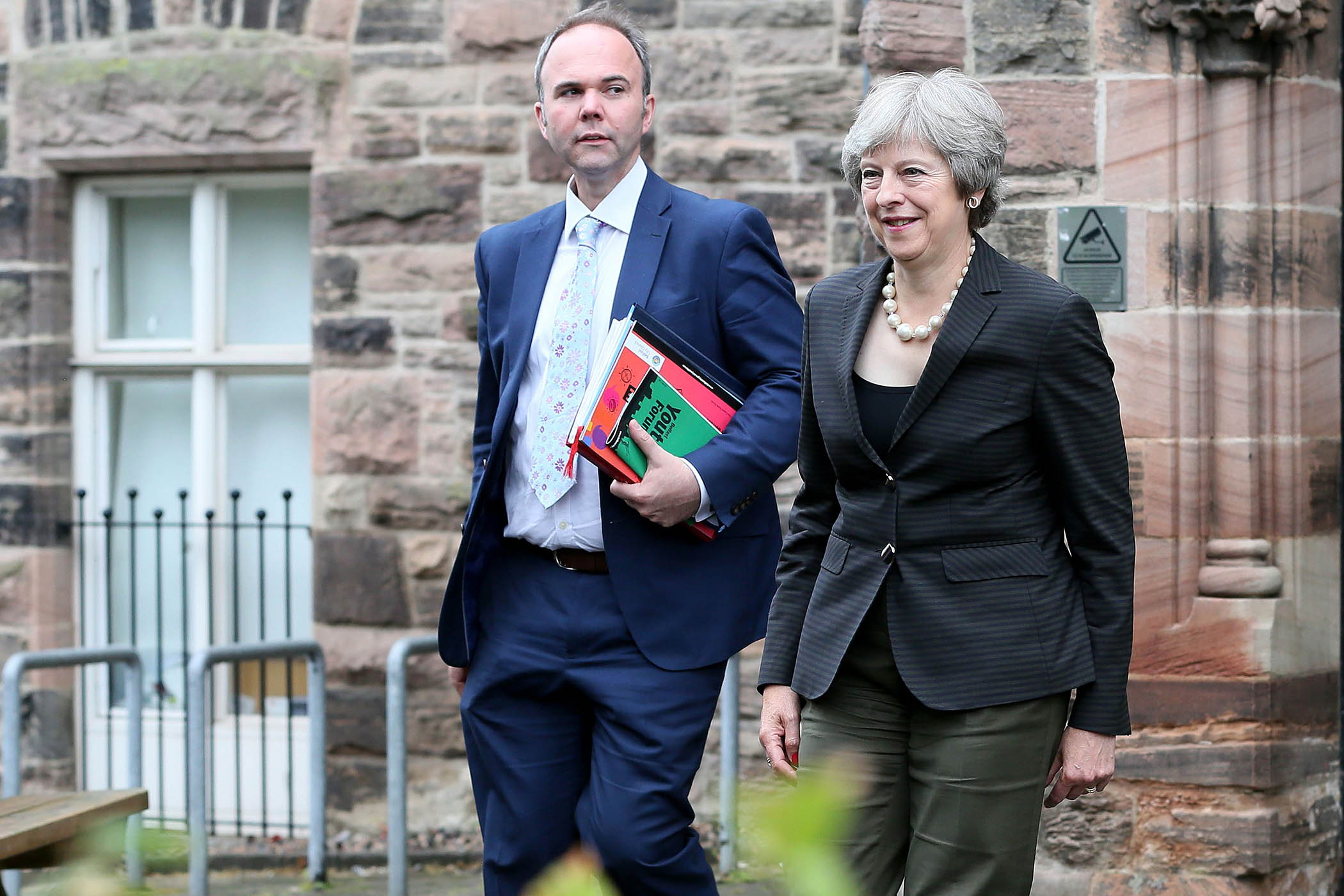



Around 5pm on Monday, Gavin Barwell began to receive messages from friends. As Downing Street chief of staff under Theresa May, he had been at the heart of the Conservative party. Now the Daily Mail was reporting that Barwell would no longer be permitted to hold the party whip in the House of Lords in what was being called “a purge of the Tory ‘wets’”.
Despite briefing the Mail, no one from the Conservative party had told Barwell the news directly, he maintains. His immediate crime appeared to be a criticism of Kemi Badenoch’s blanket ban on candidates who support net zero pledges on climate action. His broader fault was an indelible loyalty to the party’s centrist wing.
Few politics-watchers will focus this week on the latest internecine broils of the Conservative party. Tomorrow, Andy Burnham will officially become Labour’s eighth prime minister, after a week of frenzied briefing and counter-briefing about which of his allies will serve in the great offices of state. Yet this transition should not only define Labour’s next pitch to the electorate, but also that of the Conservatives. Burnham may be big on vibes, light on policies, but it is clear that he will shift his party to the left. As they vacate the centre, the Conservatives have a rare opportunity to occupy it. With her treatment of Barwell, Badenoch made clear she has absolutely no intention of doing so.
No one in the Conservative party has ever been able to agree on the definition of “wet”, except that it refers loosely to the left of the party. In the David Cameron years, you might find the term being applied with equal abandon to Greg Clark, a centrist technocrat, and Michael Gove, the bane of Whitehall bureaucracy, for the simple reason that both understood the need for the party to appeal to Britain beyond the shires and to lead on socially liberal causes like gay marriage.
Badenoch, however, has decided there is such a thing as a “wet” and that she can quantify it, with two litmus tests to weed out undesirables. The first is a clear commitment from every parliamentary candidate that they will back a British withdrawal from the European Convention on Human Rights (ECHR). The second is an agreement that the UK government should end its target of reaching net zero in 2050.
Barwell is not a candidate but he appears to have fallen foul of this second diktat. Shortly after Badenoch unveiled these new rules, he tweeted: “Blocking people who support targets to reduce carbon emissions wrong on multiple levels. Intolerant – party has always been broad church. Bad politics – out of touch with Conservative voters. And in midst of latest record heatwave on wrong side of history.”
At the time, he was preparing to return as a working peer after a leave of absence to work on professional projects. This required the chief whip, Baroness Williams, formally to return the whip to him. After his criticism of Badenoch’s new purity tests, Williams announced that she would decline to do so.
To win floating voters back, Badenoch will have to prove that the Tory party is a place that seeks to include fellow travellers
To win floating voters back, Badenoch will have to prove that the Tory party is a place that seeks to include fellow travellers
Despite gleefully briefing that Barwell’s departure represented a “purge of the ‘wets’”, the Tory press office later rowed back. Tory-adjacent journalists circulated the raw text of a letter allegedly sent to Barwell by Williams, which accused him more widely of “repeated public attacks on the party”. Barwell maintains that he had received no such letter. He also says he received no warning, has never refused a meeting with the chief whip and was planning to see her on his return to the Lords.
Whatever the procedural back-and-forth, it’s hard not to see the link between Barwell’s attack on the party’s criteria for candidates and his very public ostracism three days later. Badenoch has made clear that she will not tolerate colleagues who deviate from her red lines. She may be overestimating the extent to which it impresses anyone.
One Tory figure briefed this week that by standing up to Barwell, Badenoch was indicating her strength in the face of a wet Tory establishment. Another said of Barwell that he was a “hasbeen from a dead era, and nobody cares about his tweets”. These claims cannot both be true.
Newsletters
Choose the newsletters you want to receive
View more
For information about how The Observer protects your data, read our Privacy Policy
At stake are two competing understandings of where the Conservative party lost votes in 2024 – and where they can win them back. Badenoch’s outriders point to polling from the UK Onward thinktank, which shows that 23% of 2019 Tory voters who abandoned them in 2024 did so to vote Reform. Prosper, the centrist grouping of liberal Tory elder statesmen, prefers to point instead to the 23% of voters who moved to Labour, the Lib Dems or the Greens. Team Badenoch likes to believe it can recreate the Boris Johnson electoral coalition of 2019. Prosper, which includes Barwell, argues that this coalition was uniquely driven by hostility to Jeremy Corbyn and predates the Farage resurgence.
Badenoch is not wholly wrong. As Farage is forced to deny claims of sleaze and foreign influence, she is well placed to compete with him for voters for whom immigration is a dominant issue but who blanch at his populism or question his funding. There is, however, another group of former Tory voters – and in choosing Burnham, Labour has just put them all up for grabs.
This summer’s coronation of a man who did not even stand for election on the Labour manifesto in 2024 will appal many who lent their vote to Keir Starmer. Badenoch’s appeal to them need not be directly tied to her position on net zero, or even the ECHR. But to win floating voters back, she will have to prove that the Tory party is a place that seeks to include fellow travellers. In her red lines announcement, Badenoch condemned “failed politicians” with more in common with “Lib Dems than Conservatives”. If she keeps on telling her own former MPs that their interests are better represented by Ed Davey, chances are that her former voters will hear the same message too.
What are your thoughts on this? Send us a letter to letters@observer.co.uk
Photograph by Paul Faith/Getty Images