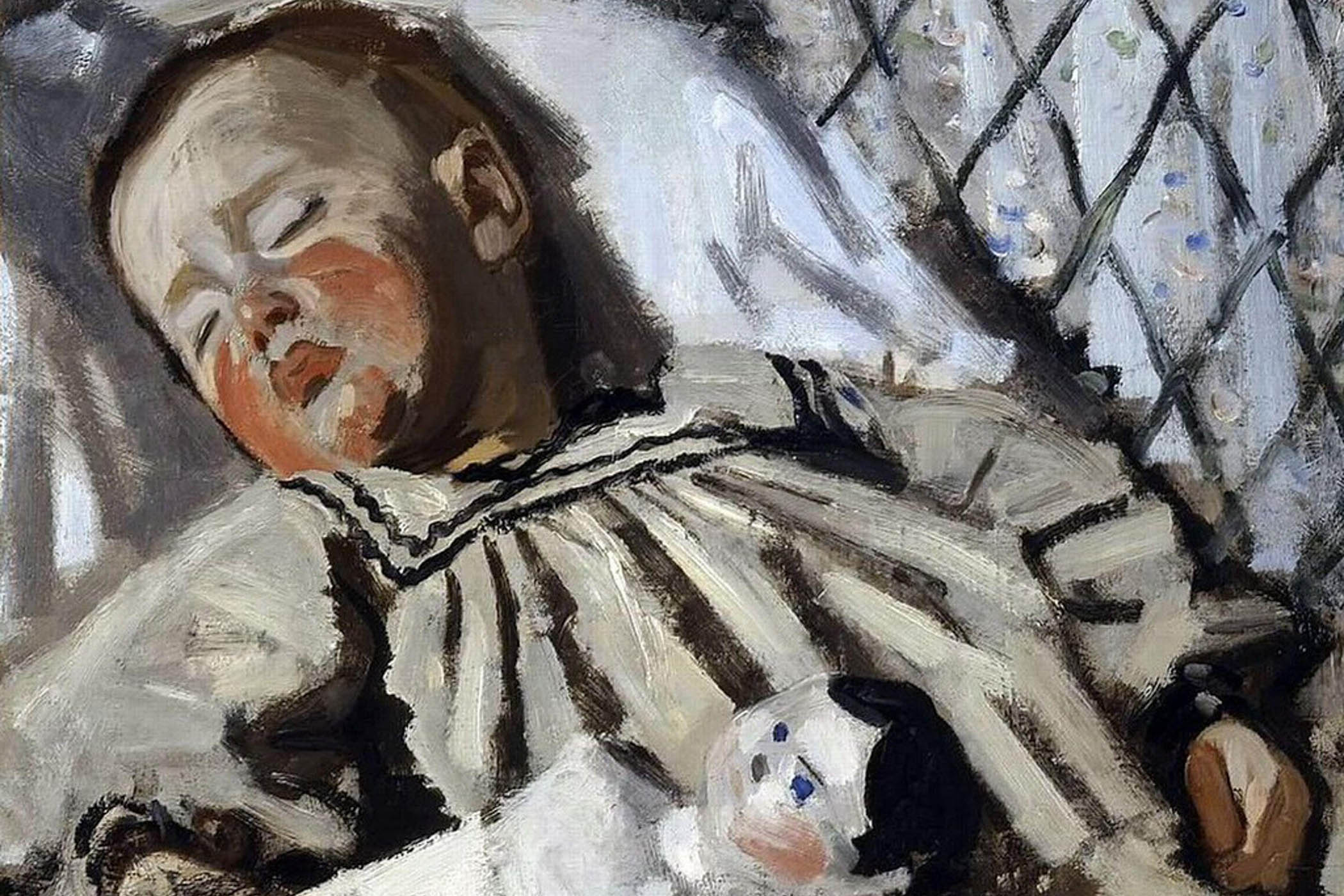

In Paris for a couple of nights, we nearly didn’t make our slot to see The Empire of Sleep, an exhibition of slumber-related works at the Musée Marmottan Monet, a 19th-century hunting lodge turned gallery that has a whole lotta Claude.
We overslept – on message before we’d even got there – thanks to our room being up in the roof of the hotel, with heavy velvet drapes blocking out every chink of light. Or perhaps it was the fresh air, a rarity in hotels in 2026. We had a window that, gasp, actually opened. So we rushed across town, with bed heads, from real linen to the painted article in 30 minutes where we found a room dedicated to le lit.
Sometimes themed exhibitions can feel tenuous but this one worked; it was at once tender (Monet’s painting of his rouge-cheeked son Jean snoozing) and desperately sad (the show turns to eternal sleep). Monet’s painting of his dead wife, Camille, is matched with Ferdinand Hodler’s portrait of his muse and lover, Valentine: gaunt, bedridden, dying of cancer. We left feeling we should use our time better and marched back to our attic room to… finish our books: Julian Barnes’s moving swan song Departure(s) and Sathnam Sanghera’s wonderful upcoming book about George Michael’s troubled life and death, which made me think again about the Wham! hit Wake Me Up Before You Go-Go.
It’s OK, there wasn’t just ennui on the menu. When in France my eye always lands on salade de chèvre chaud – I love the French for giving cheese on toast “salad” status, making it, officially, a healthy choice. Next up, salade millefeuille? Talking of rebrandings, one night we went to the bar of the hotel where Oscar Wilde spent his last days, now Wilde’s Lounge, of course. Still, they have a more contemporary cocktail: the “Tilda Swinton”. I guessed it would taste of Turkish delight, served with cruelty in a frozen glass, a nod to her greatest turn as the White Witch in the film The Lion, the Witch and the Wardrobe. But, no, the secret ingredient was a more prosaic violet liqueur, which smelt like your grandmother’s bath salts.
My nana, dead for two decades, might have been with us on our visit to Notre-Dame, our first since its reopening in 2024. For as we walked towards the altar we were greeted by a stern voice from above saying “shhh!” at volume. The reprimand, on a loop, is the only way to stop the tourists yabbering, and there is something about her tone that commands obedience. No matter, there was much to see and smell (in stony silence). Sniffing perfume samples in the boutiques of St Germain had made my nose open for business. Was that whiff of bonfires incense, or the trauma from the 2019 blaze coming out of the walls, like the warehouse conversions on the Thames that after the rain still stink of spices?
Nose twitching, I went to visit my favourite folk, hived off in their alcove prisons. Ever since I read Joan Windham’s Six O’Clock Saints as a child, I’ve been in love with this tribe, especially the women. I’m happy to report that my favourite, Saint Clotilde, blessed with the spirit of counsel – a proto-therapist – looked entirely unblemished; as did the grande Dame herself, technicolour rose windows and all. As a droll French friend, who likes her chic shabby, put it: “It’s OK, it will look really great again in about 300 years.” What fun if – with her, George and Clotilde – we can keep half an eye open and see its elegant decay, centuries on, from our place of eternal sleep.
Newsletters
Choose the newsletters you want to receive
View more
For information about how The Observer protects your data, read our Privacy Policy