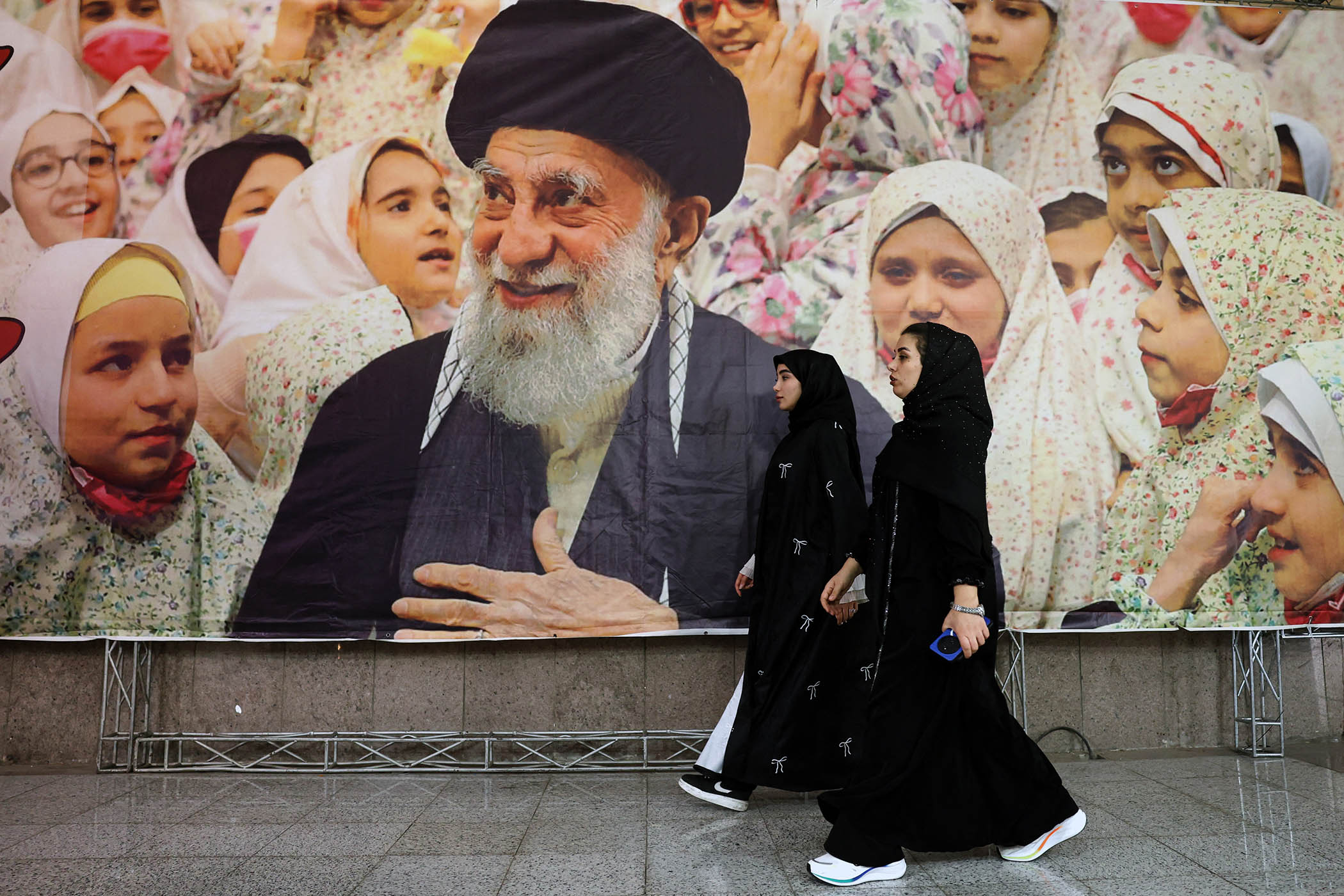

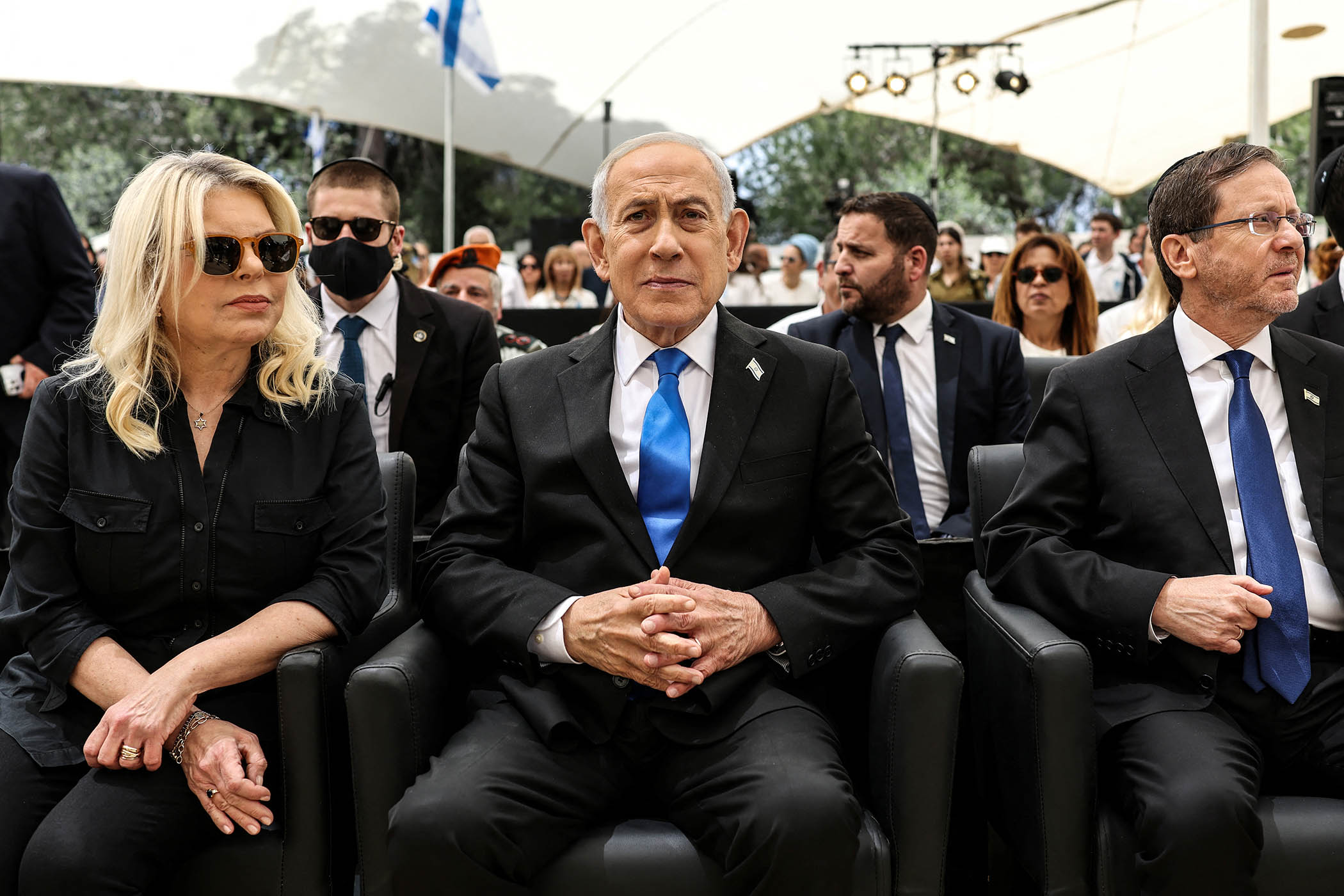
Israeli prime minister Benjamin Netanyahu declared that Iran's supreme leader Ayatollah Ali Khamenei was killed in an attack on his compound in Tehran after waves of Israeli and American strikes pummelled cities across Iran.
Israeli media circulated reports from officials declaring that Khamenei's body had been found. Netanyahu said that “all indications show this tyrant is no longer with us” and called on the Iranian people to “unshackle themselves from tyranny” and overthrow the regime.
All day, plumes of smoke had billowed across the skylines of major Iranian cities. Tehran’s military hit back by targeting Israel, launching attacks on US military bases, as well as striking civilian infrastructure across the Persian Gulf.
Donald Trump had earlier declared the American military had launched "a massive and ongoing operation”, intending to bring an end to the Iranian regime. “We are going to destroy their missiles and raze their missile industry to the ground,” he said. In a message to Iran's Revolutionary Guard Corps, he added: “Lay down your weapons and have complete immunity, or in the alternative, face certain death.”
Iran’s government had declared its readiness to fight and outlast the attacks. “The time has come to defend the homeland and confront the enemy's military assault,” the Iranian foreign ministry declared. “Just as we were ready for negotiations, we are now more prepared than ever to defend the Iranian nation. The armed forces of the Islamic Republic of Iran will respond to the aggressors decisively.”
Netanyahu said Israel and the US had acted jointly “to remove the existential threat” posed by the Iranian regime, warning of an operation set to last for several days; an image showed Netanyahu on the phone to Trump with a map of the Middle East on his desk and the book Allies at War.
Air raid sirens sounded across Israel as the country closed its airspace and the government warned people to take cover in shelters. Israel’s emergency services said two were injured by shrapnel, including from outgoing interceptor missile fire, as the population braced for retaliatory drone and ballistic missile fire from Iran.
Amos Yadlin, a retired Israeli air force general and military intelligence specialist, praised Israeli attacks on Iran’s “leadership, military leadership and IRGC commanders”, as well as strikes on targets intended to impede Iran’s response. The Mossad intelligence agency issued a request in Persian asking Iranians to send pictures of any government or security installations that were struck.
The Iranian Red Crescent said more than 200 people had been killed in the strikes. Officials blamed Israel for a missile that killed 85 and injured 93 more, according to state media, when it hit a primary school in Minab, a city in the southern province of Hormozgan. Video shared by a website linked to the Iranian judiciary showed hundreds searching among the rubble of a grey concrete building, with the sound of a woman screaming audible over the panicked crowd. Black smoke billowed from what remained of a two-storey building. A colourful mural was visible on what remained of the front of the building.
“From Tehran's perspective this moment really is existential,” said Dina Esfandiary, an expert on Iran and the Gulf at Bloomberg Economics. “They want to hit back and retaliate hard, or they believe it is the beginning of the end for them.”
Newsletters
Choose the newsletters you want to receive
View more
For information about how The Observer protects your data, read our Privacy Policy
The British maritime agency said it had received reports about Iran closing the Strait of Hormuz, an essential shipping lane, amid fears the closure could impact the global supply of oil.
Tehran pledged a sweeping and decisive response before a barrage of explosions were reported in Saudi Arabia, Qatar, Kuwait, the Emirates and Bahrain, all housing American military bases. One person was reported killed by falling missile shrapnel in Abu Dhabi and emergency services extinguished a fire at a luxury hotel in Dubai. Qatar and Jordan said they had shot down barrages of Iranian missiles over their territories, while Saudi Arabia condemned Iranian missiles targeting Riyadh and the east because it had publicly disallowed American use of its territory or airspace for an attack on Iran. A drone strike caused minor injuries to employees at Kuwait’s international civilian airport, while video showed what appeared to be a kamikaze drone crashing into a residential building in the Bahraini capital.
The attacks sparked alarm across the oil and gas rich nations of the Gulf, which have sought to ensure any nearby conflict does not reach their shores. “This is the Gulf states’ literal worst nightmare,” said Esfandiary. “They have been working intensively to avoid this outcome for months. The image they have been building for years, as a haven of stability in the middle of a region of instability, is getting blown to smithereens.”
The sudden and dramatic regional confrontation followed a last-ditch effort to avert military action by Oman's foreign minister Badr Al Busaidi, who flew to Washington to meet US vice president JD Vance and publicly issued pleas for diplomacy. Al Busaidi had spent weeks before the attacks mediating talks intended to curb Iran's nuclear programme, declaring a peace agreement was within reach just hours before the first strikes. “I am dismayed,” he said, pointing to the expected loss of innocent life as well as the impact on negotiations. “I urge the US not to get sucked in further. This is not your war.”
Andreas Krieg, professor of security studies at King’s College London, pointed to a lack of clear strategy to Washington’s objectives in Iran with its allies in the Gulf now caught in the middle of an attack they had long sought to avoid. “If Trump was able to present a clear and confident strategy, if the objective is regime change and the course of action is feasible, then the Gulf would rally around him,” he said. “The problem is that no one really knows what the US wants to achieve."
Krieg warned that the Gulf states would fear the spillover of conflict to key energy supply lines in the region, or worse should the regime in Tehran weaken or collapse entirely. “Regime change is likely going to fail as ways and means to achieve it are very few. But if it succeeds, you could see a splintering of the security sector and even civil war,” he said. “This is the opposite of stability – and what the Gulf states want is stability.”
Photograph by AFP via Getty Images