
Flying to Angola on the papal plane, Pope Leo XIV tried to calm the controversy that has dominated coverage of his 11-day, four-country tour of Africa. It was “not in [his] interest at all” to debate with Donald Trump, he said on Saturday after barbed exchanges that have pitted him against the US president. His preaching was not directed at Trump, he said, but reflected a broader gospel of peace.
Leo’s comments capped a turbulent week in relations between the old world and the new that have angered Catholic worshippers and turned the pope into a figurehead for growing global opposition to Trump.
In response to the pontiff’s criticism of the war in Iran, the president called him “weak”, while the US vice-president, JD Vance, who converted to Catholicism in 2019, urged him to “be careful when he talks about matters of theology”.
As the first US-born leader of the Catholic church, Leo had sought to avoid being cast as a counterweight to Trump. The role of pope does not allow for direct political engagement. His biographer Christopher White described him “a shy, reserved man” – very different from Pope Francis – and someone who tried to avoid direct confrontation.
Giovanni Orsina, a professor of contemporary history at Luiss University in Rome, said of Leo: “He is very uncomfortable in this role, and will try to get out of it.”
And yet, he has not wavered in his criticism of a war which the Trump administration has sought to cloak in the language of religion.
Days after the US and Israel attacked Iran, Leo said God “does not listen to the prayers of those who wage war”. He was one of the few world leaders to criticise Trump’s threat to Iran that “a whole civilisation will die”.
Asked about the US president’s criticism, the pope addressed the furore directly. “I am not afraid of the Trump administration,” he said on his way to Algiers, the first stop on his tour of Africa. Leo yesterday downplayed the feud with the president, saying it was “not in my interest at all to debate Trump”, but that he would continue teaching the Gospel message of peace and justice.
Father Antonio Spadaro, undersecretary of the Vatican’s culture and education ministry, noted the pope had not addressed Trump directly, speaking instead in general terms “about the logic of war”. The exchange, in that sense, Spadaro said, “is not symmetrical”.
Vatican officials said Trump’s attack took them by surprise. One said the tone of Trump’s remarks was so “over the top” that some initially questioned whether they were authentic.
Newsletters
Choose the newsletters you want to receive
View more
For information about how The Observer protects your data, read our Privacy Policy
Others described the episode as “unprecedented” in modern diplomatic terms, noting that even periods of tension with past adversaries followed more formal lines.
“I don’t think it’s a coincidence that an American-born pope would be able to levy a critique of the morality of an American war with [such] force,” said Matthew Cressler, an independent scholar and author of the forthcoming book Catholics and the Making of Maga. “There’s something about him being American that gives that a force.”
Trump’s outburst last Sunday came hours after three leading American cardinals, among the most senior and powerful prelates in the US church, were interviewed on CBS’s 60 Minutes saying the war was not just. In a post on Truth Social, Trump said: “Leo should get his act together as Pope, use Common Sense, stop catering to the Radical Left, and focus on being a Great Pope, not a Politician.”
Within hours of the broadcast, Trump publicly berated the pope, describing him as “terrible” on foreign policy.
The growing row has not just pitted the president against Leo; it has also divided American Catholics across the political spectrum. Interventions by the House speaker, Mike Johnson, and Vance have stoked the rift with the Vatican – and at home.
“A direct attack is unacceptable for many Catholics in the US, even those who were benevolent towards Trump,” said Spadaro.
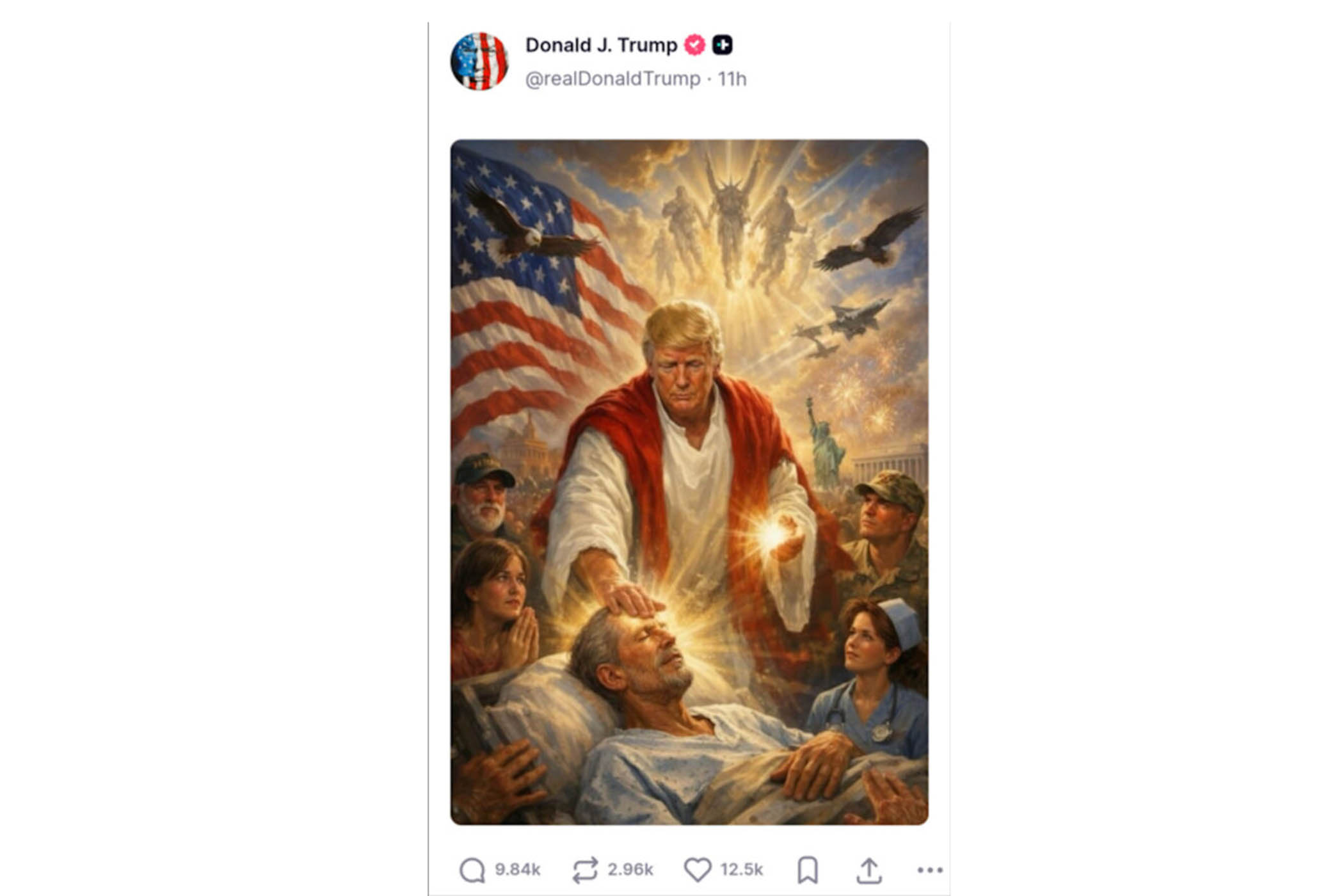
At the same time, Trump has offended some of his most stalwart evangelical supporters who back the war with Iran. An AI-generated image likening him to Christ went too far even for some of them, portraying Trump healing a sick man, with beams of light emitting from his hands.
Facing a backlash, Trump deleted the image while insisting it depicted him as a doctor. Prominent Christian evangelical Franklin Graham gave the president the benefit of the doubt, saying he did not believe he would knowingly depict himself as Jesus Christ. “That would certainly be inappropriate,” he said, downplaying the controversy as “a lot to do about nothing”, and noting the image didn’t contain any spiritual references such as a halo, crosses or angels.
Most Christians, however, were less credulous. Doug Wilson, the pastor who recently led a prayer service at the Pentagon and founded the network of churches to which the US defence secretary, Pete Hegseth, belongs, denounced it as blasphemous. So did prominent conservative Protestant Christian writer Megan Basham, demanding Trump seek forgiveness from the American people – and God.
It was not Trump’s first brush with charges of blasphemy. As the papal conclave approached last year, he posted an AI-generated image of himself as the pope, causing offence to Catholics around the world.
Undeterred by the latest controversy, Trump posted another image last week, considered divisive by some, in which Jesus holds him from behind in a loving embrace with a star-spangled banner flapping in the wind.
Responding to critical coverage of the Iran war, Hegseth once again drew on biblical scripture, comparing reporters to the Jewish adversaries of Christ, plotting “how to destroy him”. He said: “I sat there in church and thought: ‘Our press is just like these Pharisees’.”
The controversy could damage Trump’s ratings before the midterm elections. Until now, support among evangelicals has held firm above 80%. A majority of Catholics voted for Trump in both of the elections he won.
But the pope’s criticism of the war has struck a chord because the conflict was already unpopular with the wider American public, including Catholics.
Leo’s condemnation of the treatment of immigrants by ICE agents has not been seized upon in the same way by conservative Catholics, Cressler noted.
Equally, liberal Catholics have previously turned a blind eye to the position of more conservative popes such as John Paul II and Benedict XVI. “Catholics, at least since the 1960s, are very well practised in not paying too much mind to what a pope says if it doesn’t align with their political perspective”.
Now, however, opposition to the war is converging with the papacy’s views on its immorality.
“Woe to those who manipulate religion and the very name of God for their own military, economic and political gain, dragging that which is sacred into darkness and filth,” Leo said in a speech in Cameroon last week. The world was “being ravaged by a handful of tyrants”, he added. On Saturday, he clarified that the comments had been written two weeks ago – some time before Trump’s criticisms began.
An unholy row
‘Woe to those who manipulate religion and the very name of God for their own military, economic and political gain, dragging that which is sacred into darkness and filth’
‘Woe to those who manipulate religion and the very name of God for their own military, economic and political gain, dragging that which is sacred into darkness and filth’
Pope Leo XIV
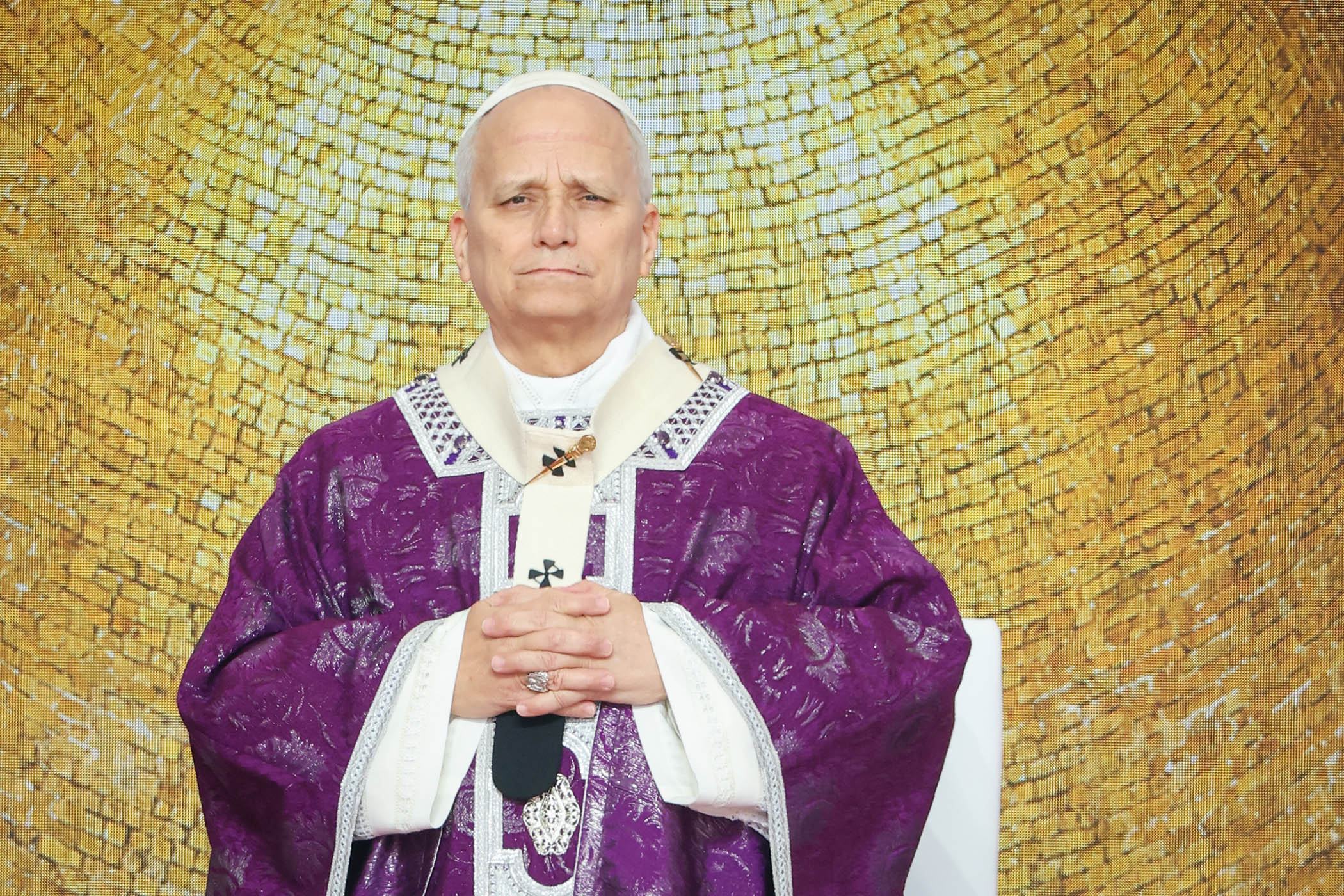
‘In the Catholic teaching, this is not a just war’
‘In the Catholic teaching, this is not a just war’
Cardinal Robert McElroy
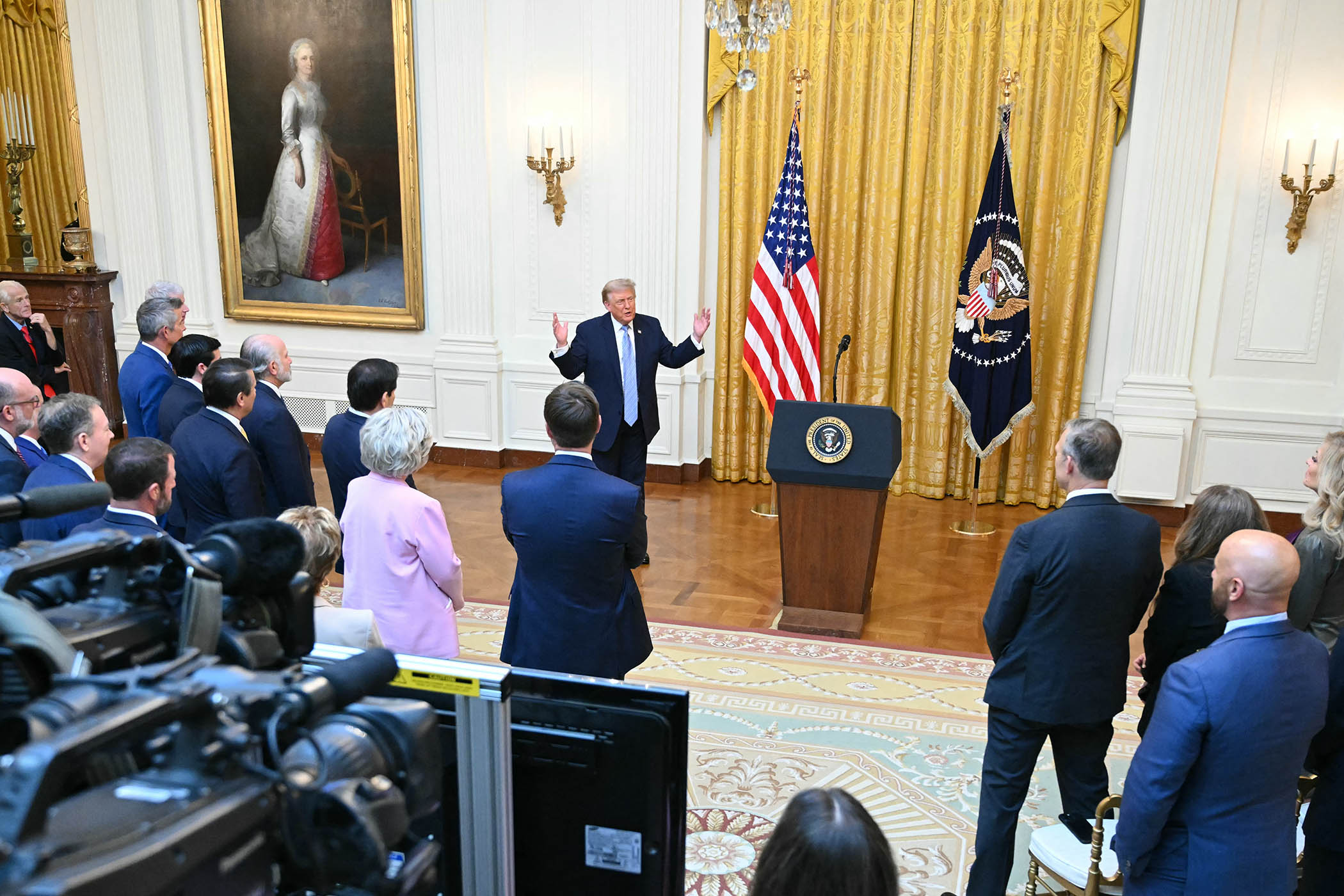
‘Leo should get his act together as Pope, use Common Sense, stop catering to the Radical Left, and focus on being a Great Pope, not a Politician’
‘Leo should get his act together as Pope, use Common Sense, stop catering to the Radical Left, and focus on being a Great Pope, not a Politician’
Donald Trump
‘It’s very, very important for the pope to be careful when he talks about matters of theology’
‘It’s very, very important for the pope to be careful when he talks about matters of theology’
JD Vance
Photograph by Stephane Cardinale/PLS Monaco Pool/Getty Images