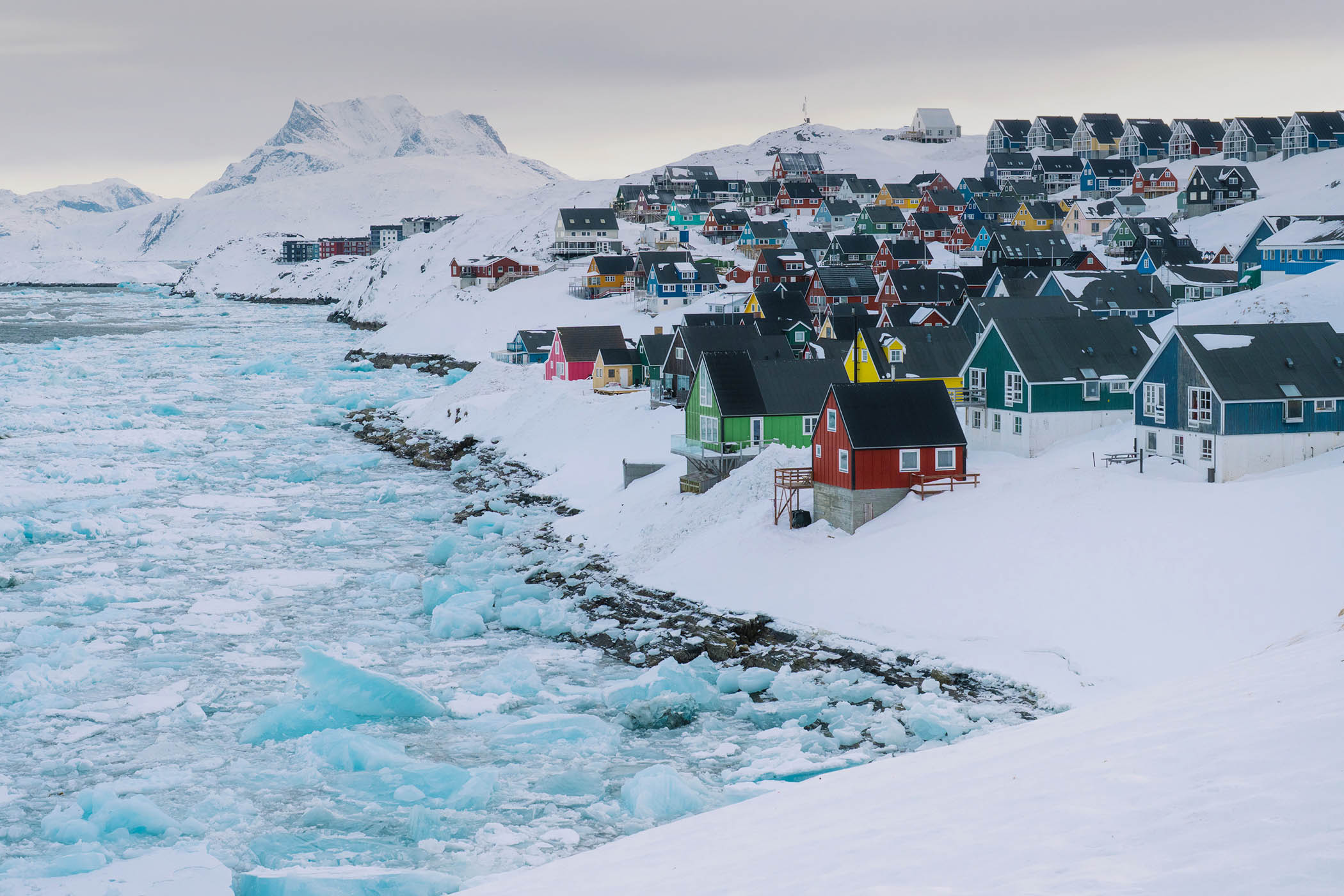


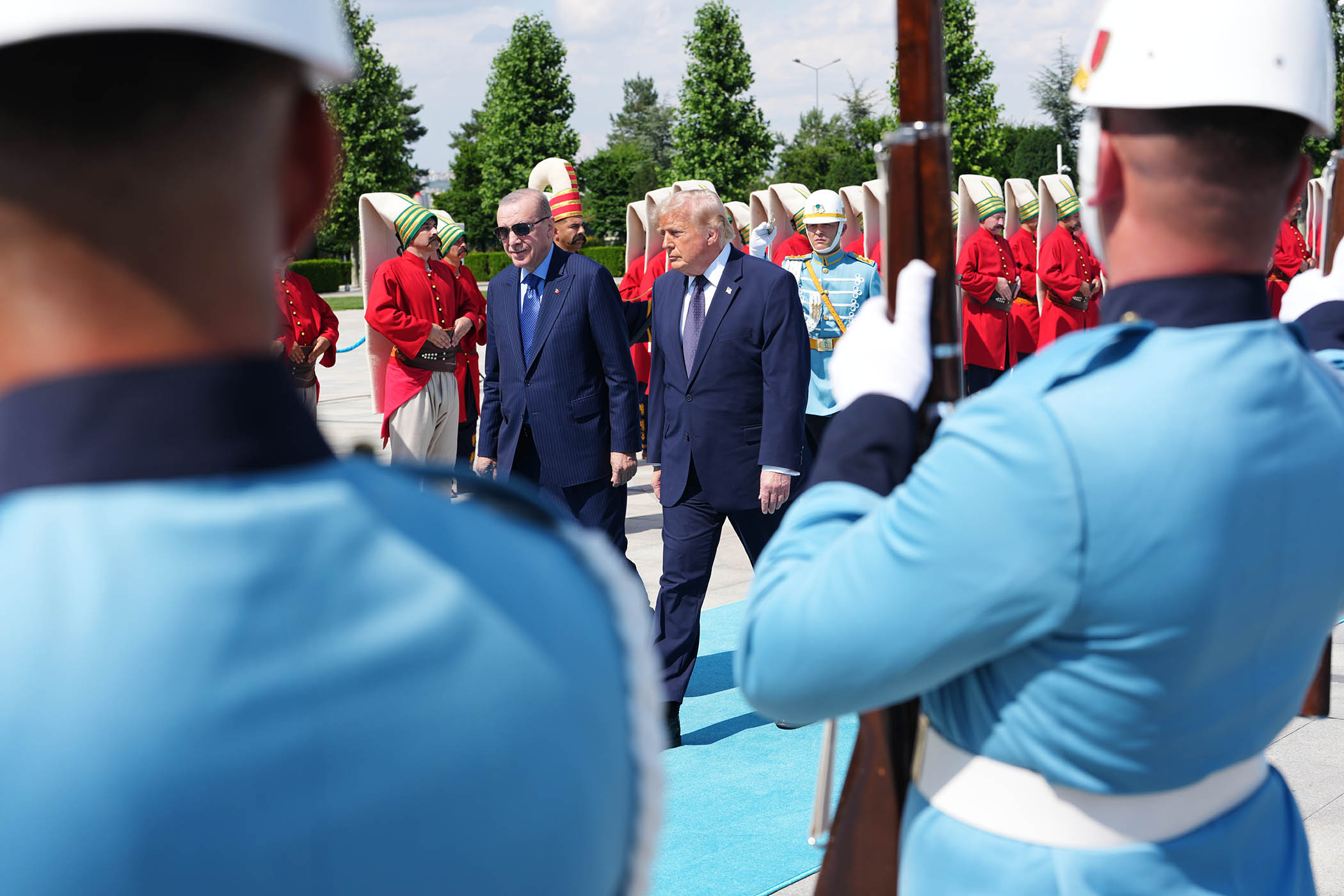
The American pressure campaign to wrest Greenland from Denmark will kick into high gear today when the US secretary of state, Marco Rubio, meets his Danish and Greenlandic counterparts.
From the outset, the Americans have tried to drive a wedge between Copenhagen and Greenland’s capital – a strategy that may be working.
A crisis meeting held on Microsoft Teams last week between Danish and Greenlandic officials descended into chaos, with the latter accusing the former of neocolonialism and threatening to bypass Denmark in future negotiations.
Politicians reportedly spoke in raised voices and wrote in all-caps, and the Greenlanders argued that they now want to seek dialogue with the US alone without Denmark, a suggestion that left the Danish representatives “shaken”.
Juno Berthelsen, of the Greenland opposition party Naleraq, said Greenlandic politicians should go on a “dialogue trip” to the United States “so that we have direct contact with American politicians, so that we can talk about what the thoughts are from the USA … without having a Danish ‘overcoat’.”
Since the meeting was not secure, several participants feared the Americans might have listened in, and that the conflict will play into Trump’s hands.
National security is Trump’s ostensible reason to annex Greenland. But Washington already holds military control over Greenland, thanks to an irrevocable agreement between Denmark and the US negotiated after the second world war. It currently operates a base north of the Arctic Circle that provides missile defence, space surveillance and satellite command. Just as it has withdrawn troops from the island in recent years, so could it restore them.
Some on the “tech right” have argued for establishing a crypto-empowered utopia on the ice-covered island. Praxis, a company whose purpose is “to restore Western Civilization and pursue our ultimate destiny of life among the stars”, according to a statement on its website, has shown interest in Greenland as a site for a new “privatised charter state”. Trump’s ambassador to Denmark, Ken Howery, co-founded PayPal with Elon Musk and Peter Thiel (Thiel is, among other things, an investor in Praxis).
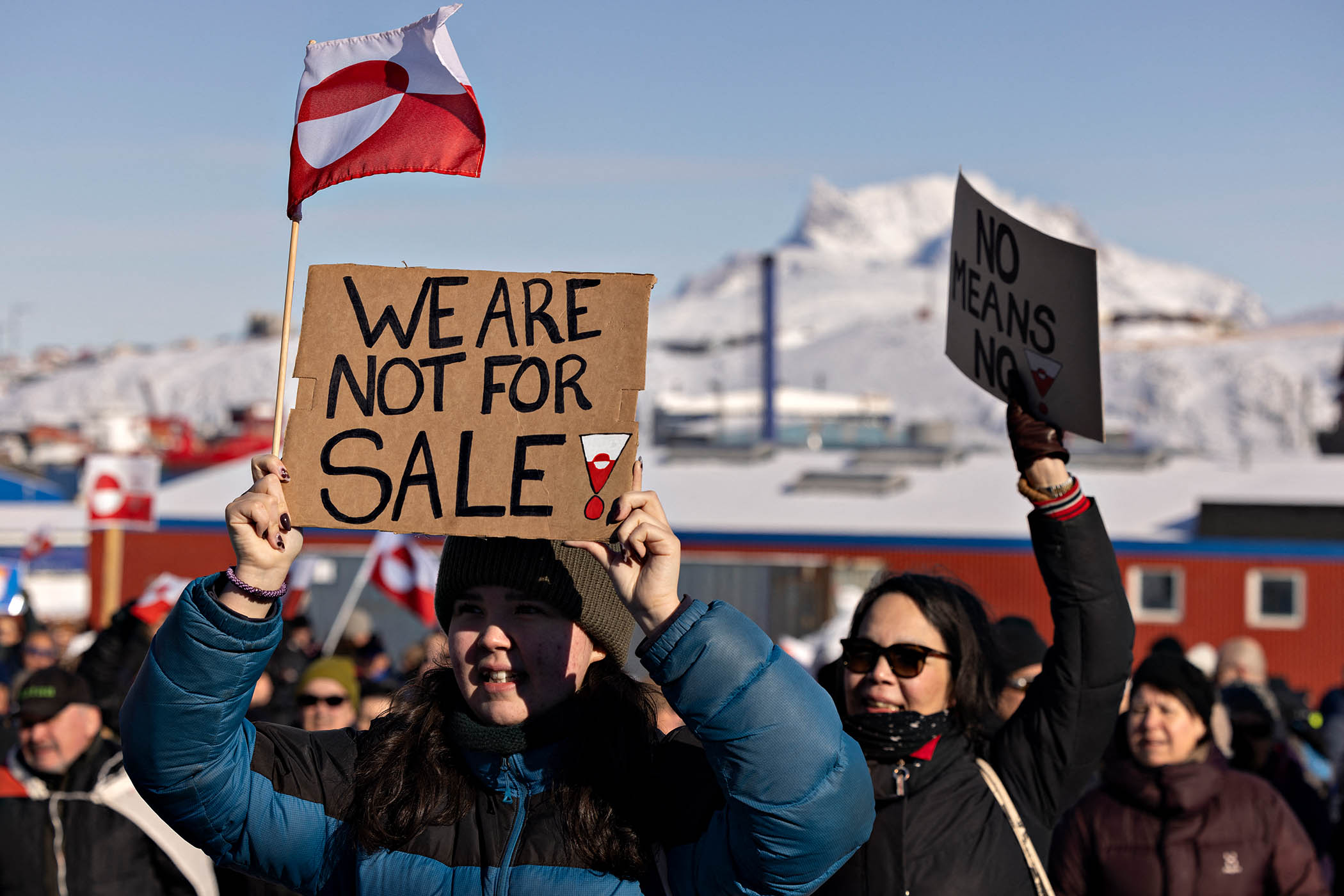
A protester holds a sign reading 'We are not for sale' in front of the US consulate during a demonstration, under the slogan 'Greenland belongs to the Greenlandic people', in Nuuk, Greenland, on March 15, 2025.
This is not the first time Washington has proposed taking over Greenland. In 1832, President Andrew Jackson suggested buying the island. Trump administration officials have made clear their atavistic yearning for the populist Jacksonian era, as well as for the late-19th-century colonial adventurism of President William McKinley.
“We live in a world … that is governed by strength, that is governed by force, that is governed by power,” White House adviser Stephen Miller said last week. “These are the iron laws of the world that have existed since the beginning of time.” On Friday, Trump once again threatened to take Greenland “the hard way”.
Newsletters
Choose the newsletters you want to receive
View more
For information about how The Observer protects your data, read our Privacy Policy
In Greenland, such bombast is now the cause of worry and sleepless nights, Masaana Egede, editor-in-chief of Sermitsiaq, the leading newspaper, told me. “With a population of 56,000 people, our only defence is international law.”
But American bellicosity suggests little concern for international law or the fact that all three parties are united by a mutual defence pact, the North Atlantic Treaty Organisation. “If the United States were to choose to attack another Nato country, then everything would come to an end,” the Danish prime minister, Mette Frederiksen, has warned.
“No one entertains the idea of Denmark defending Greenland against the US with military means,” Bo Lidegaard, a Danish historian and former diplomat, told me. “But obviously, any hostile US move towards the kingdom of Denmark will fundamentally erode trust in the US way beyond the specific issue of Greenland.”
The relationship between Denmark and Greenland dates back to 1721, when Greenland officially became a Danish colony with the founding of a Danish mission and a trading post in modern-day Nuuk. Even as Greenland has gained greater autonomy, Denmark has retained de facto control over foreign policy and defence, among other areas, and many in Greenland chafe at what they see as Danish paternalism. The Danish government forcefully removed Inuit children from their families for re-education in Denmark during the 1950s, and as late as the 1970s Danish doctors were inserting intra-uterine devices into thousands of Inuit girls and women, often without their consent, effectively controlling the birthrate in Greenland.
Among some Greenlandic officials, the Danish attitude still appears to be that of a colonial overlord or an overbearing parent.
Pipaluk Lynge, a member of parliament for the governing IA party and the chair of Greenland’s foreign and security policy committee, told the Danish broadcaster DR that the Danish attitude was frustrating. “We are adults in Greenland,” said Lynge, who participated in the Teams meeting last week. “We’re capable of talking to other countries without holding hands with the Danish ministers.”
Greenlandic officials made their position clear in a joint statement on Friday. The five parties in Greenland’s parliament, known as the Inatsisartut, said: “We don’t want to be Americans. We don’t want to be Danes. We want to be Greenlanders.”
In lieu of a military invasion, US officials have discussed offering Greenlanders up to $100,000 per person to persuade them to secede from the Danish realm, which would open the possibility of Greenland joining the United States in some form, Reuters reported last week.
When asked about such a scenario, Egede laughed, calling it “absurd.” “The Greenlandic people are not for sale,” he said.
Given Greenland’s legal status, it is hard to see who might strike a deal with Washington. Copenhagen cannot sell the island, which, under a 2009 law, has the right to self-governance; and Greenland, still part of the Danish realm, cannot sell itself. To get out of this bind, Greenland would first have to achieve independence. If anything, Trump’s latest overtures have snuffed out any nascent desire among Greenlanders to ditch Copenhagen for Washington, according to Egede.
“The theatrical gestures by the US at the beginning of 2025 and all the things that have been said since then have appalled the people of Greenland,” he said. “It’s not the type of courting we find attractive.”
Louise Bokkenheuser is an award-winning writer and editor based in New York whose work has appeared in the New Yorker and the Los Angeles Times, among many other publications
Photographs by Juliette Pavy/Bloomberg via Getty Images, Christian Klindt Soelbeck/Ritzau Scanpix/AFP via Getty Images