


When Russian troops start moving towards the Estonian border they could get a brief headstart. It takes about 90 minutes for US KH-11 spy satellites to circle the planet, and from certain angles the forests east of the Narva River will provide cover for tanks and armoured personnel carriers. But they won’t get far unseen. As soon as the first good images reach the US National Reconnaissance Office in Virginia, the game is up. Even from an orbital altitude of 400km, the satellites will show whether field hospitals and blood plasma are being brought up in support of the troops, indicating they expect to fight.
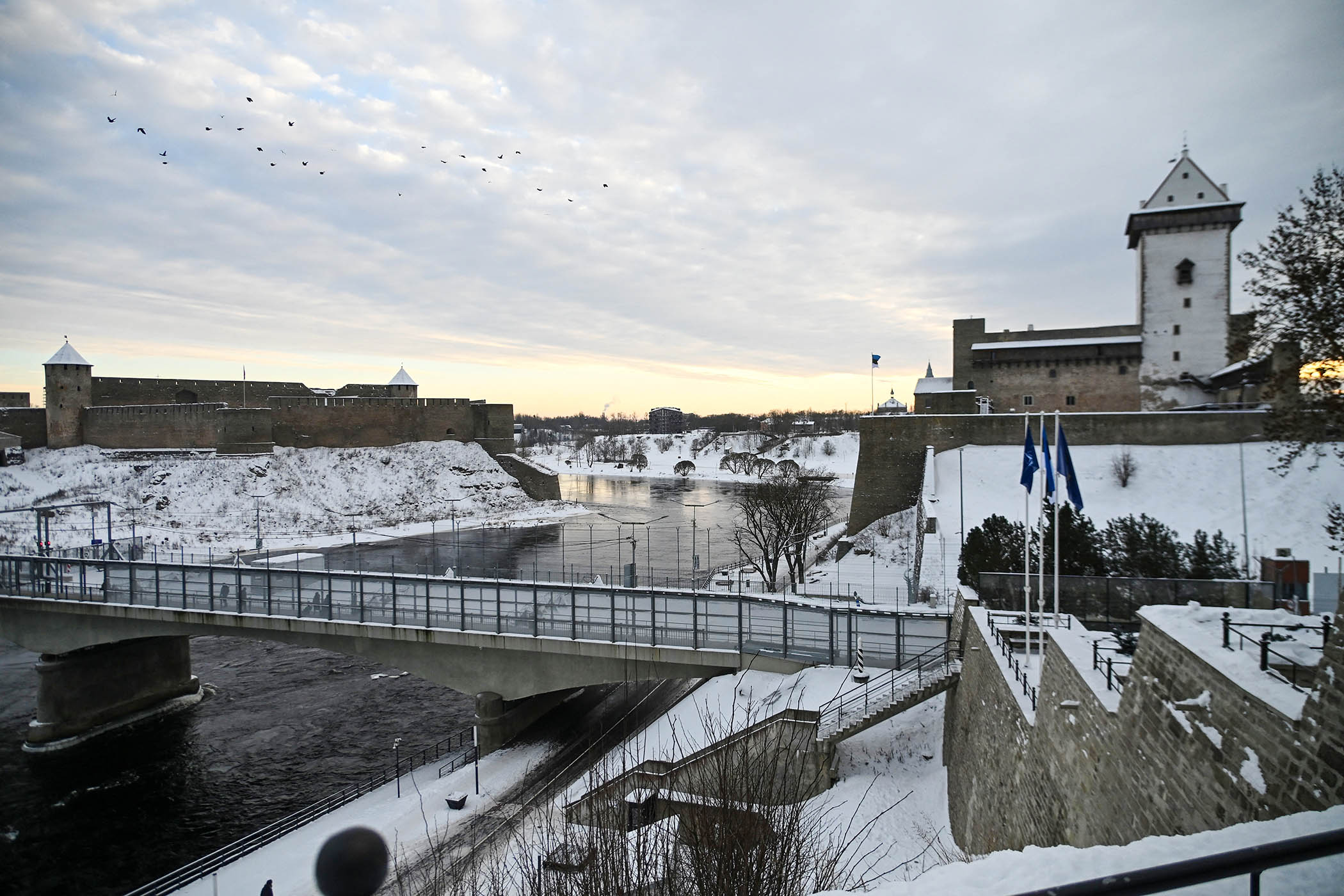
If they do, things will move fast. Estonia’s national guard will be mobilised at once. Reservists should reach Narva within two hours, many in their own cars. The first task for their commanders will be to blow up the four-lane road bridge over the river to cut off the most direct invasion route from the east. In Tallinn, the prime minister will convene the cabinet, but the war will already have begun.
Putin is a dictator, poorly advised, insulated from reality and reliant on war as a mechanism for holding on to power
Putin is a dictator, poorly advised, insulated from reality and reliant on war as a mechanism for holding on to power
“The Estonians will fight immediately,” says Glen Grant, a retired British army colonel who spent much of his 38-year career in Estonia and Latvia. Jonatan Vseviov, secretary general of the Estonian foreign ministry, says the response to any Russian attack will be “absolutely uncompromising”.
After consulting his government, the president will declare a formal state of war. Depending on the scale of Russian troop movements, this may trigger the evacuation of the capital – as many as 600,000 civilians along three main roads in two days. Hospitals will switch to crisis mode, preparing for mass casualties including blast and gunshot wounds, burns, amputations and head and spinal injuries. Critical care will be moved to basements. A network of 30 vital service providers will be activated to keep ports, airports and food and gas distribution systems working as long as possible. Ambulance crews will start wearing body armour.
In a scenario sketched out by the German political scientist Carlo Masala, Russia will be ready to go to war against Nato by 2028. It targets Estonia as one of only three former Soviet republics to have joined the Atlantic alliance, and because Estonia is small and easy to get to; it’s half the size of Portugal and only a three-hour drive from St Petersburg. A 2016 study found that the Russian army could take the whole country in 60 hours, and the lesson of the past four years is that western allies can’t take each other for granted. Even though it’s a Nato member, Estonia will have to hold the line alone until help comes.
The ‘Friendship Bridge’ over the Narva River that runs between Estonia and Russia has been reinforced with barbed wire
From a western vantage point in 2026 it is hard to conceive of a new war in Europe. The old one – 12 years old in Crimea and eastern Ukraine – has killed more than 300,000 Russian soldiers and wrapped the Russian economy in sanctions. Nato still patrols the eastern front. Putin is a pariah: a warrant is out for his arrest in 125 countries. But from where he sits, not in the Kremlin most of the time but in the walled Novo-Ogaryovo compound west of Moscow, the world looks different and the past tells a different story.
In 1956 and in 1968, Soviet tanks expanded the Soviet empire Putin is trying to rebuild. In the Baltics he sees vulnerable outposts of a Nato he yearns to expose as a dithering bureaucracy. He has been probing its defences and early warning systems for years with drones and cyber attacks. In October and again in December last year Russian foot patrols crossed the Estonian border in what seem to have been deliberate provocations. In November the head of Poland’s armed forces said “an armed attack on Poland is being prepared”.
It is possible that a ceasefire in Ukraine will have allowed Russian forces to regroup within two years. At the same time the end of the Russophile Trump presidency will be near, and a window of opportunity for Putin will be closing.
In these circumstances, experts tell The Observer, it is not alarmist to game out the descent to war between Nato and Russia. It would be complacent not to. Putin is a dictator, poorly advised, insulated from reality and more reliant than ever on war as a mechanism for holding on to power. He grew up in St Petersburg and feels instinctively that Estonia is the testing point for Nato. As he approaches his 29th year in power one question above all will intrigue him: will the large western powers really risk all-out war for 1.3 million Estonians?
The view from 2028
Narva, as Putin knows, has a large ethnic Russian population that can serve as a pretext for intervention. In this scenario, based on multiple defence sources and research papers, tensions have been rising throughout 2028 because of attacks on ethnic Russians that CIA analysts believe are a false flag operation by undercover Russian agents. To support this theory they have signals intelligence from the National Security Agency in Maryland and from British and American spy planes flying over the Baltic states. But the US refuses to declassify the signals to make its case. The Kremlin expresses outrage at Estonian behaviour and demands that Tallinn put a stop to the attacks.
Newsletters
Choose the newsletters you want to receive
View more
For information about how The Observer protects your data, read our Privacy Policy
Throughout November and December, the CIA’s satellites track the movements of Russian armed forces in the St Petersburg region. In Brussels, the North Atlantic Council, Nato’s most senior political decision-making body, receives twice-weekly updates on the evolving situation. With access to large amounts of intelligence, it can see Russia’s strategy playing out in real time. The question is where it might be leading and how Nato should react.
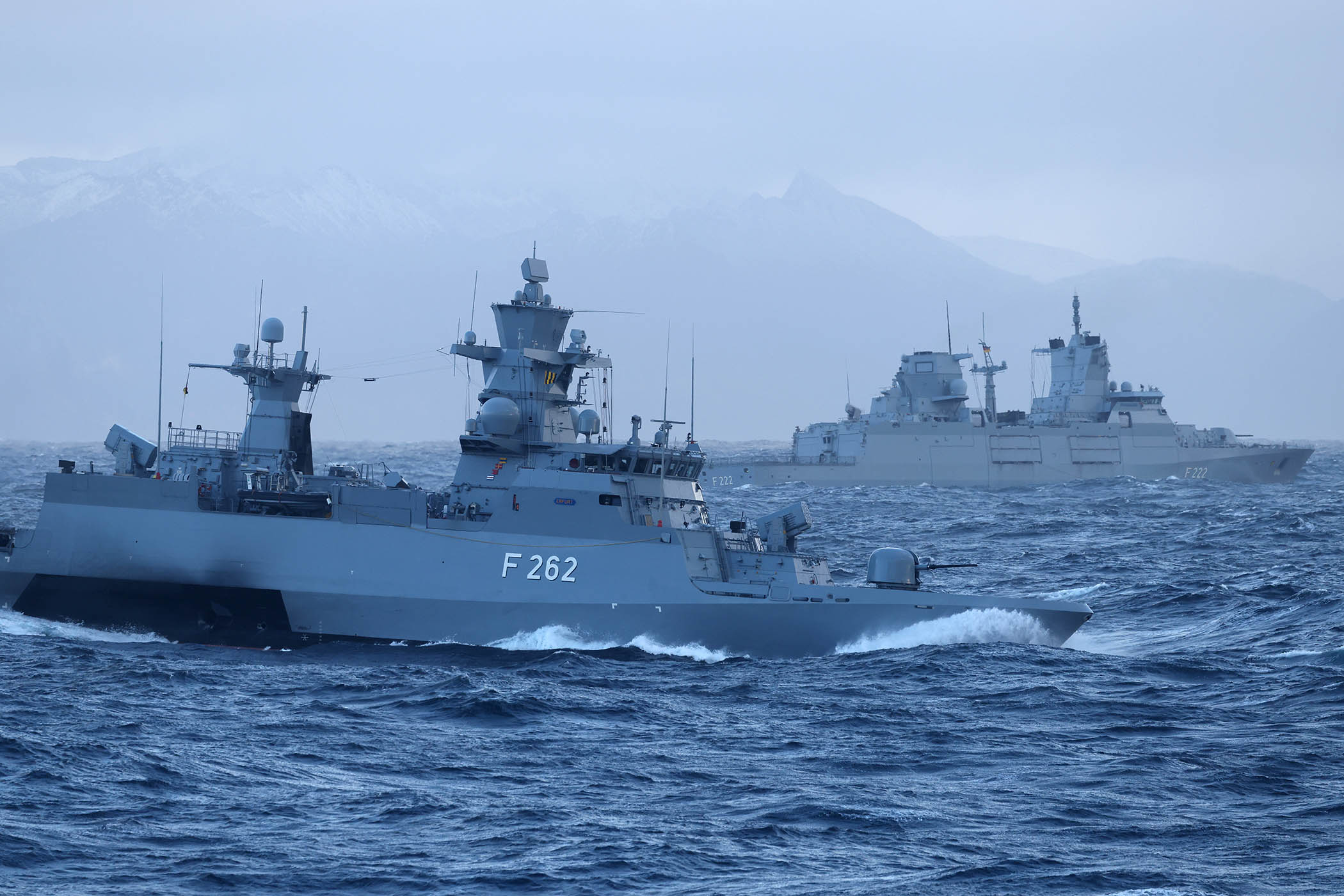
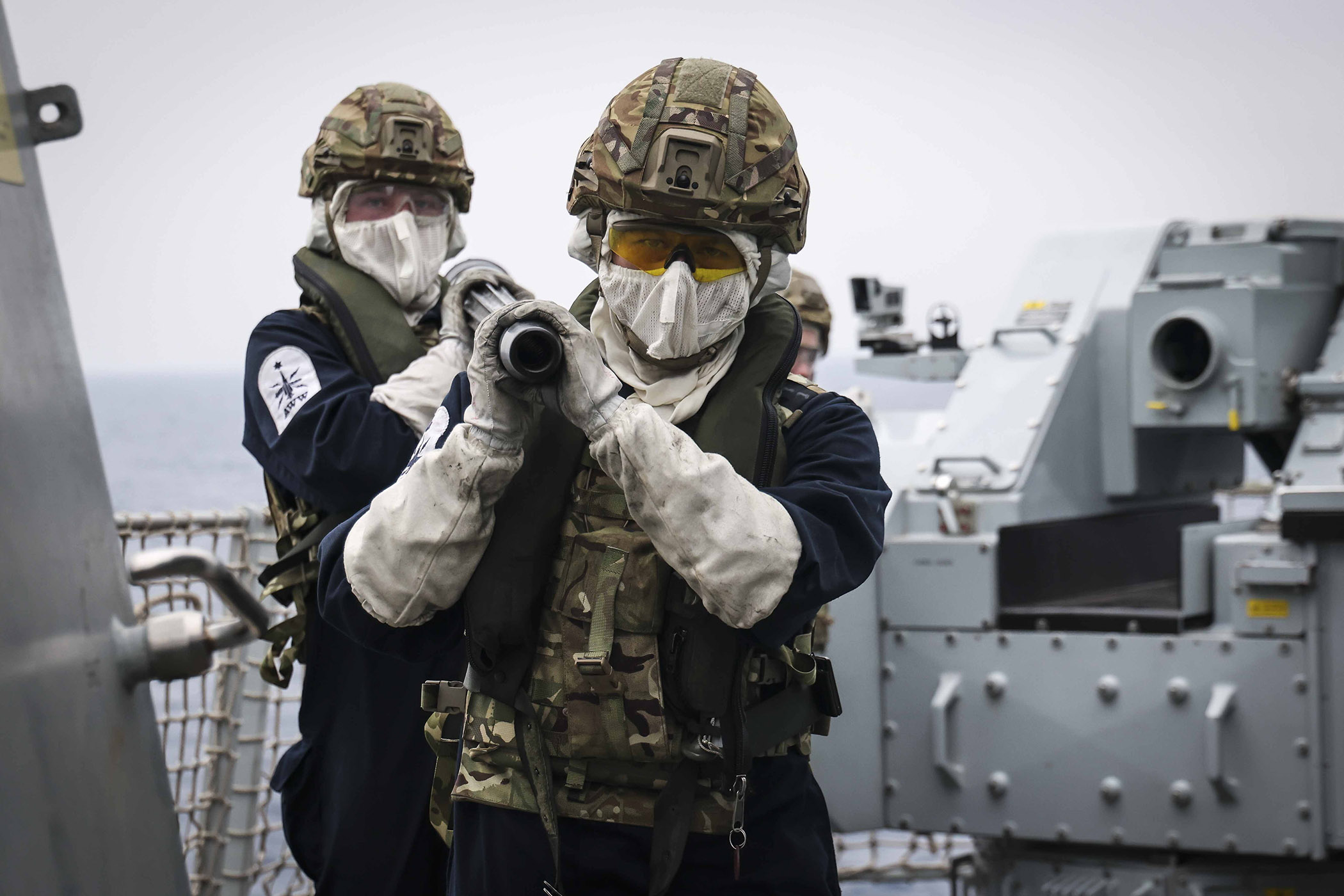
German warships take part in a military exercise in the North Sea last October, the biggest of its kind in 30 years
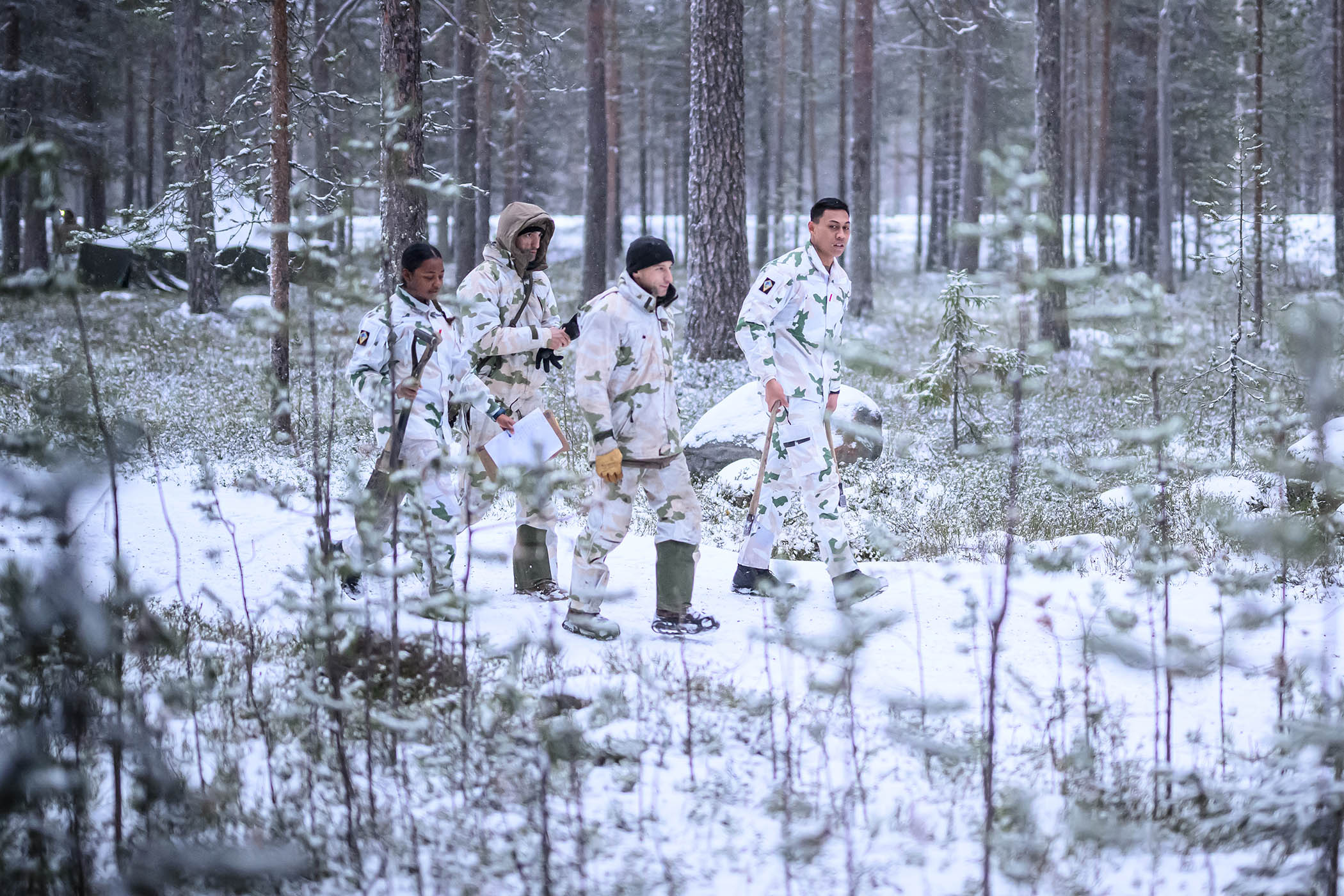
Article 5 of the alliance’s charter says an attack on one of its members is an attack on all, but in the gravest threat to global security since the Cuban Missile Crisis it is of surprisingly little help. When the NAC meets on Boulevard Leopold III in Brussels, differences of opinion are clear. Some members, including Hungary, argue that Russia is right to be concerned about the fate of ethnic Russians in Estonia. Others, including the UK, support the idea that it is a deliberate provocation. The US is cool on getting involved in what might be a local spat.
As Christmas approaches, satellite imagery shows Russia’s 6th Combined Arms Army mobilising in its bases close to the Estonian border. Increased activity is noted at the 76th Guards Air Assault Division near Pskov. There are signs further east of Belarussian and North Korean troops being moved by rail closer to the border. Vigilante protection squads start to patrol in Narva, with no insignia and with their faces covered, claiming they are protecting the local ethnic Russian population.
Over Christmas sustained rioting breaks out in Narva, and a thinly staffed Nato HQ in Brussels is trying to decide what rules of engagement should apply if Russian troops cross the Narva River. Nato ambassadors can’t agree. Hungary formally objects to the idea that Nato’s Enhanced Forward Presence – 1,000 soldiers led by British officers – should be allowed to advance and engage the Russians. Several more countries, including the US, say that until the situation deteriorates further they would be reluctant to agree to Article 5 being triggered.
Moscow senses the division it has been looking for. It now has options, though not all of them are good. The Narva bridge has been destroyed. Russian troops could attempt a river crossing with barges and inflatables but the last time they tried that – in eastern Ukraine in 2022 – a whole battalion tactical group of nearly 500 soldiers was lost. Nato’s advance guard “will be delighted to fight off the [Russians] crossing the river and everything else,” Colonel Grant says.
The Russians could skip Narva altogether and attack further south. More than half Estonia’s border with Russia is water: it crosses two big lakes and a stretch of low hills and marshland between them that is crossed by a few roads, but they would give defending troops a home advantage.
A third option is for Putin to take the Suwalki Gap between Belarus and the Russian Baltic enclave of Kaliningrad. On paper it looks irresistible to any Russian war planner – 100km of low farmland crossed only by an open border between Poland and Lithuania. Seize that border and all three Baltic states are isolated and Kaliningrad is reconnected via friendly Minsk to the motherland.
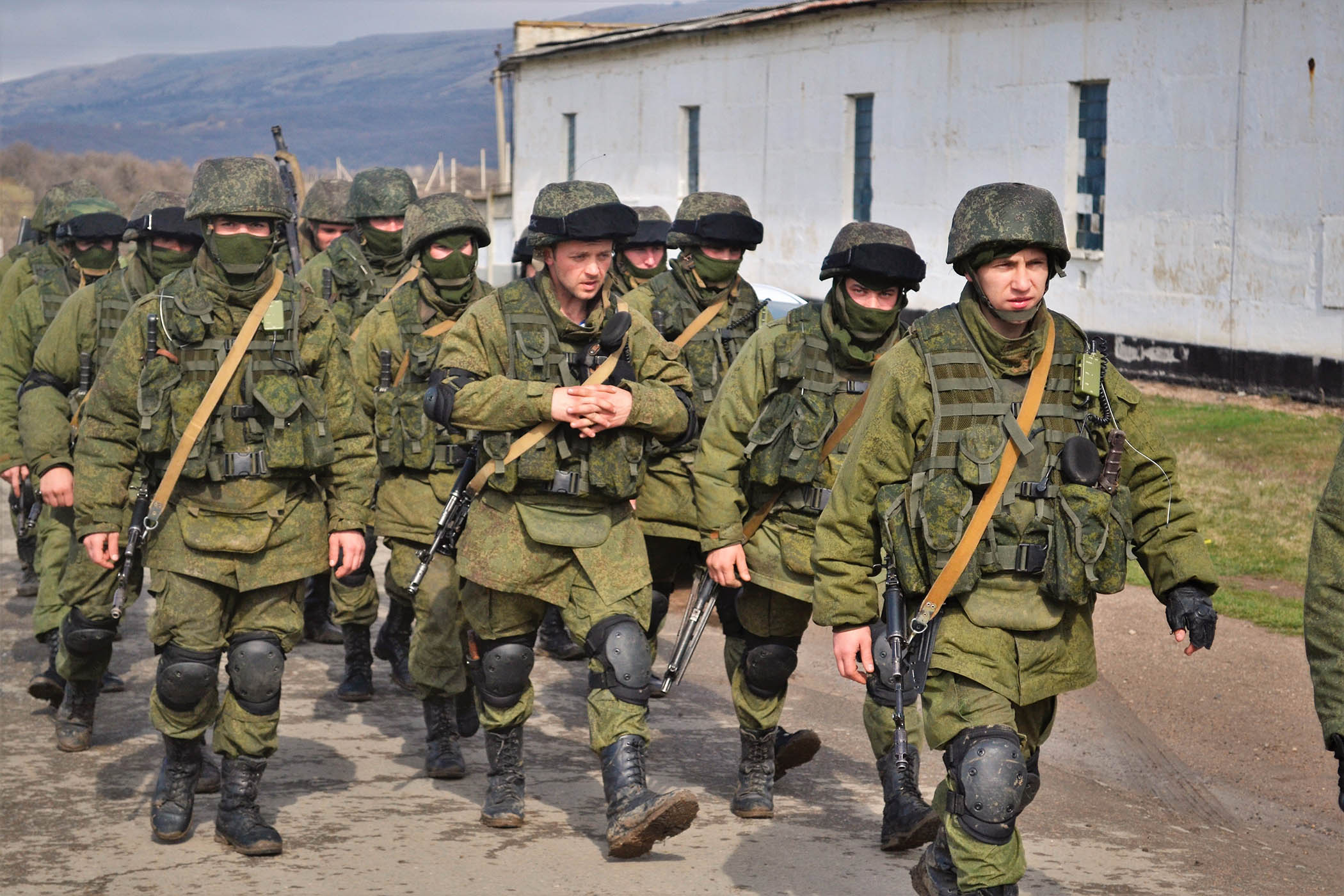
Military base at Perevalne during the 2014 Crimean crisis
“If Russia wants to link up with Kaliningrad, it will,” says Donatas Kupčiūnas of the Cambridge Centre for Geopolitics. “And then Nato can’t bring in troops because of geography.” There is another view, though. The gap “will eat Russian soldiers,” Grant says. Having been there many times, he calls it a horrible piece of land to fight over.
So why would Putin bother? He is 73, in search of a legacy less catastrophic than the meat-grinder of Ukraine. Humiliating Nato would suffice. So he orders a detachment of paratroopers to take control of central Narva, calling it a police action to save the lives of both ethnic Russians and Estonians.
Estonia moves its own brigade forward to confront the paratroopers as Russian army engineers behind them start building a pontoon bridge. In London, the chief of the defence staff briefs the prime minister on what orders to give the British colonel in charge of the Estonia battle group. The PM faces an unenviable choice between risking 800 British troops to defend Estonia or keeping them in barracks and being humiliated.
On 1 January 2029, as Nato hesitates, heavy Russian armour moves across the bridge. Only a full invocation of Article 5 and a massive and immediate Nato deployment against the invading army will save Estonia now.
Photographs by AFP via Getty Images, Leon Neal/Getty Images, Sean Gallup/Getty Images, Anton Holoborodko