
Photographs by Fabricio Atilano for The Observer
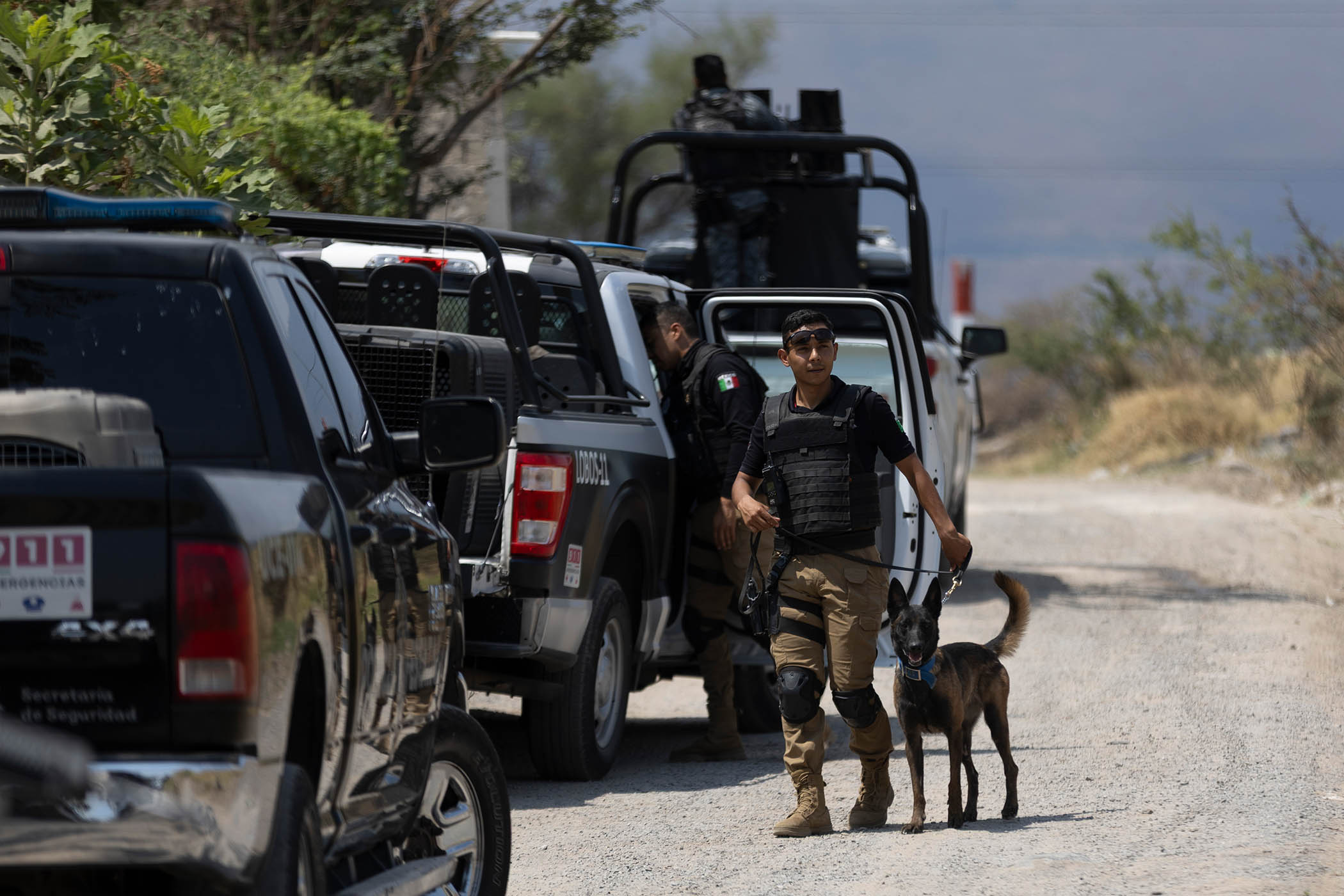
Just south of Guadalajara, in the Mexican state of Jalisco, a squad of soldiers sets up a perimeter on the edge of a rundown, near silent neighbourhood.
The last time Héctor Flores came here to look for his missing son, two cartel lookouts emerged to tell him to leave. This time he and his collective of relatives of the disappeared, Colectivo Luz de Esperanza – Light of Hope – had come in a heavily armed convoy, like an expeditionary force.
Flores holds out hope that his son might be alive somewhere. “But the authorities told me that, if he is dead, he might be here,” he says, looking at the piles of half-burnt rubbish.
Flores’s son is one of more than 130,000 people registered as missing in Mexico. And no state has more than Jalisco, which is home to the Jalisco New Generation Cartel (CJNG) – one of the most powerful organised crime groups in the world – and whose capital, Guadalajara, expects to welcome millions of visitors for its four World Cup football matches.
Fabricio Atilano
The city is abuzz with anticipation for the tournament. Public spaces have been spruced up and adorned with giant footballs. Freshly painted murals run along the roads. 50,000 fans packed the Akron Stadium to watch South Korea take on Czechia on Thursday.
But if the visitors pause for a moment, they might notice things that jar with the excitement: the panic buttons on street corners, or the walls covered with posters for missing people. They may even have seen the headlines from February, when the city was shut down by cartel gunmen.
It happened after the Mexican military killed the leader of the CJNG, Nemesio Oseguera Cervantes, known as El Mencho. His sicarios engaged soldiers in gunfights across the state, leaving the streets deserted as people hid at home. Roughly 70 were killed in the fighting. “The fact the cartel paralysed the whole city tells you about its strength,” said Denisse Montiel, co-director of Cepad, a human rights organisation in Guadalajara.
Then the cartel released its grip, as its leadership turned to the matter of succession. Within days the city was seemingly back to normal, while the government was at pains to reassure Fifa that it was, in fact, safe to host matches, including hosts Mexico v South Korea on Thursday 19 June. It is true that such outbursts are rare. Instead, the CJNG relies on quieter forms of violence to control the city.
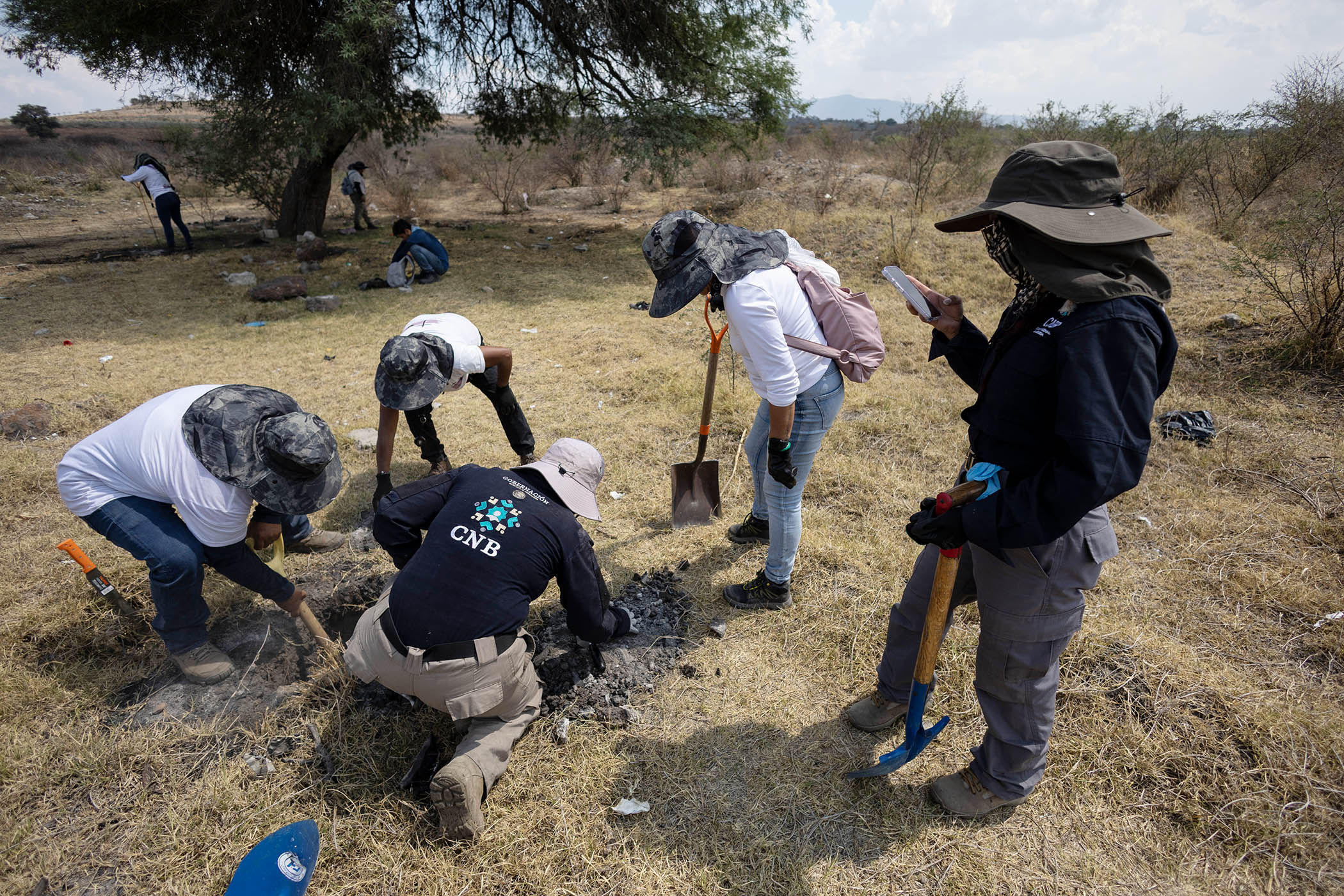
In Jalisco, a disappearance can mean many things. Perhaps the victim is dead, but the cartel chose to bury or burn the body to destroy the evidence. Or perhaps they were recruited by the CJNG, even by force, and are fighting in one of its countless conflicts with other criminal groups across the country. It’s the uncertainty that tortures their relatives.
Newsletters
Choose the newsletters you want to receive
View more
For information about how The Observer protects your data, read our Privacy Policy
On the drive to Tlajomulco de Zúñiga, about an hour south of Guadalajara, the colonial architecture and smart office blocks give way to row after row of abandoned houses. About a decade ago there was a construction boom, but the developments were left isolated and lacking basic services. Then the CJNG moved in.
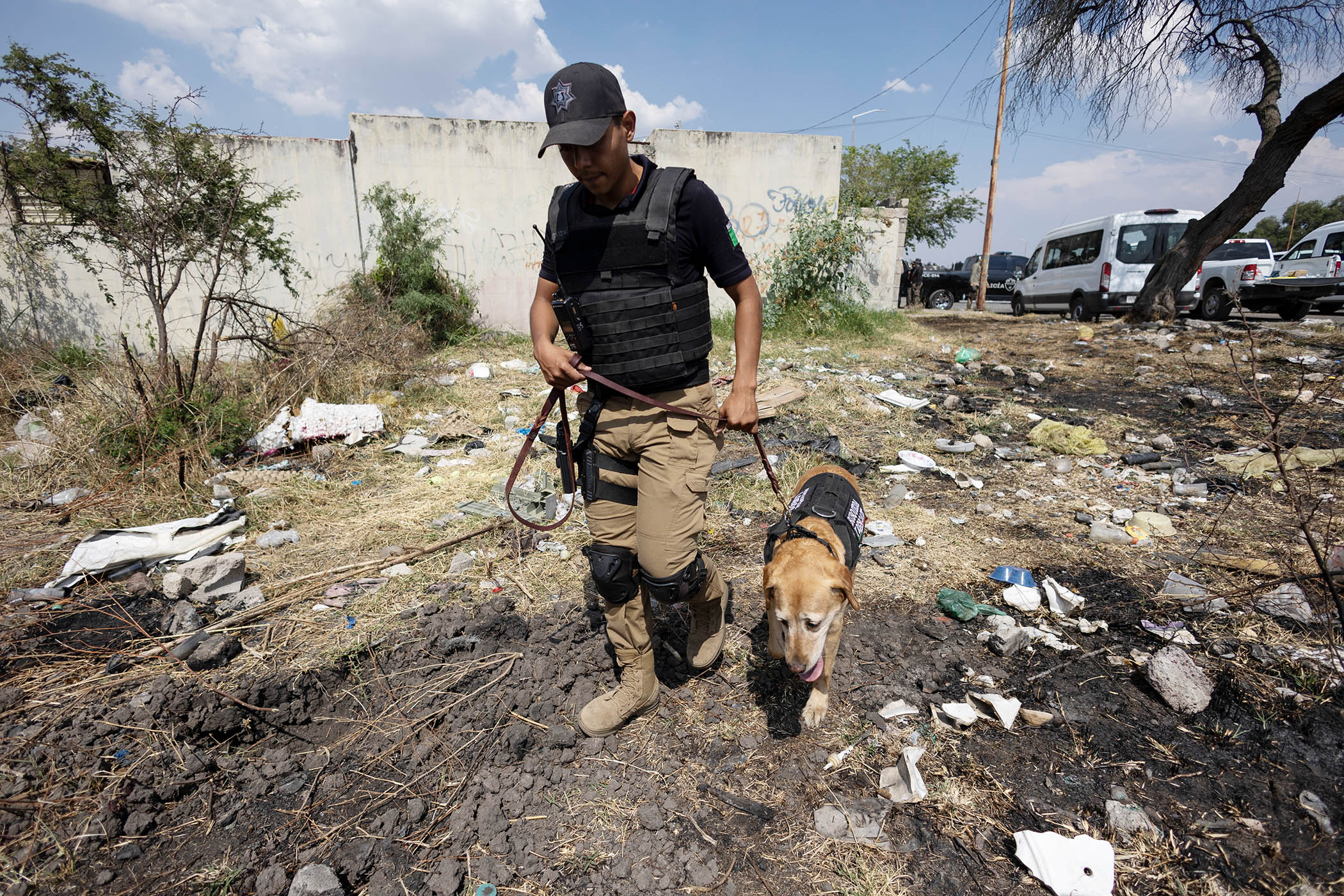
Between December 2018 and February 2025, according to official data, 1,882 bodies were found in 186 clandestine graves across Jalisco. Almost half of those graves were in Tlajomulco.
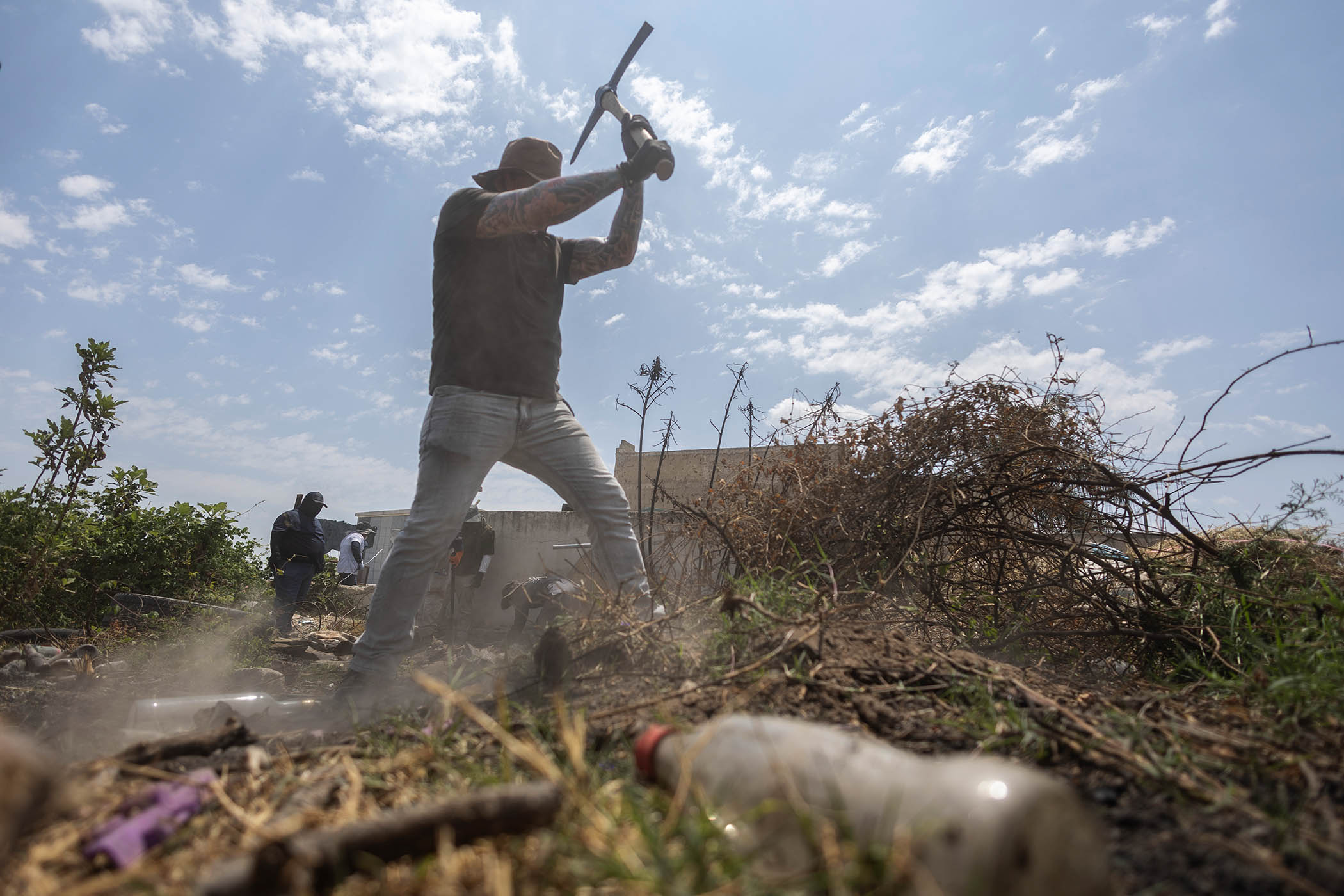
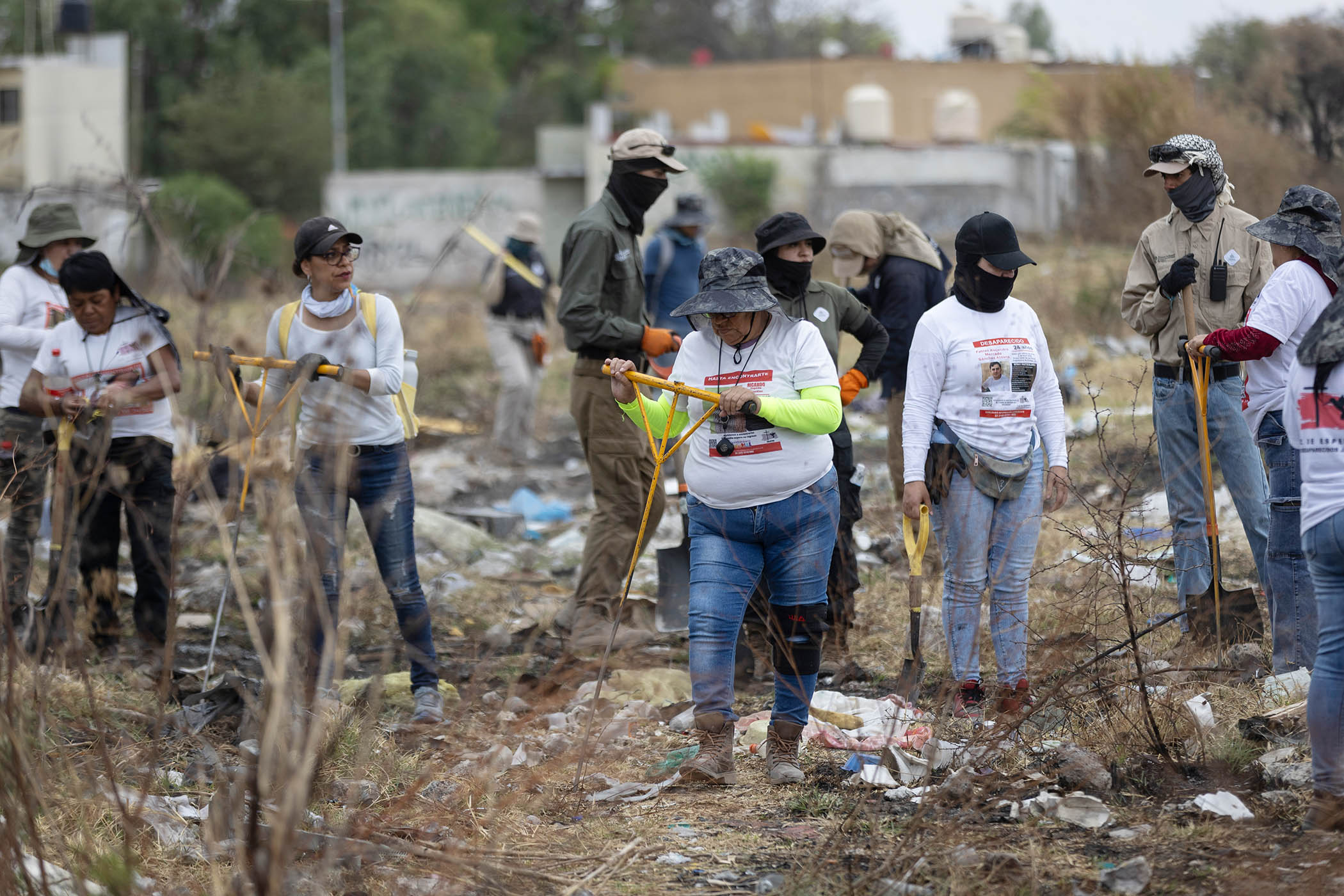
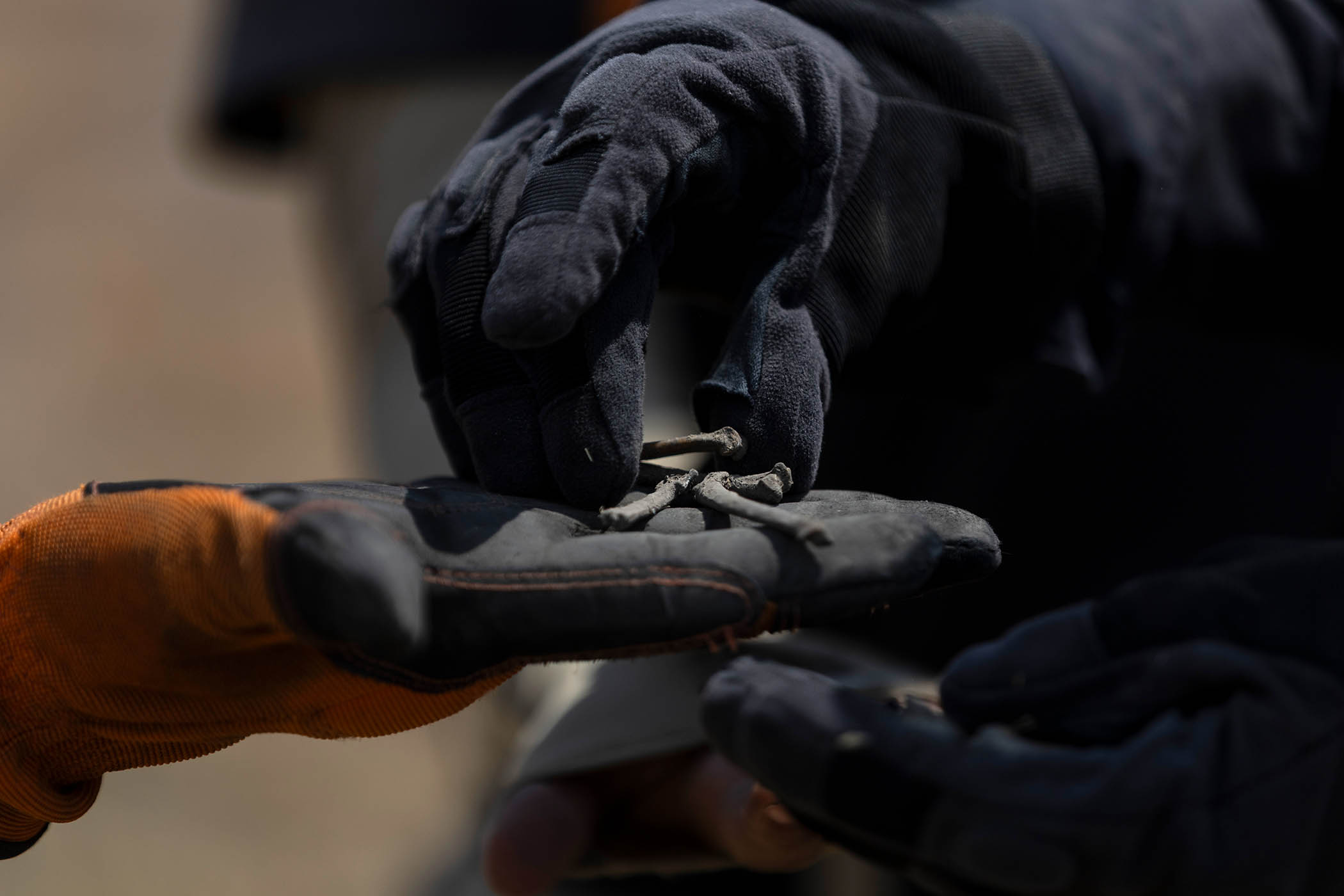
With the soldiers in place to deter any interference by cartel operatives, Flores and the collective set to work with pickaxes, shovels and a thin metal rod that they stab into the earth to see how far it sinks. If it goes deep, the soil is soft, and might have been dug up recently. When they pull it up, they hold it to each other’s noses to smell.
Flores’s son, Daniel, disappeared on 18 May 2021. Soon after, Flores co-founded the collective, which today counts 500 members, of whom a few dozen are regulars on the field searches. Most of those in Tlajomulco were women – mothers and grandmothers – from Guadalajara. One wore a knee brace; many struggle in the heat.
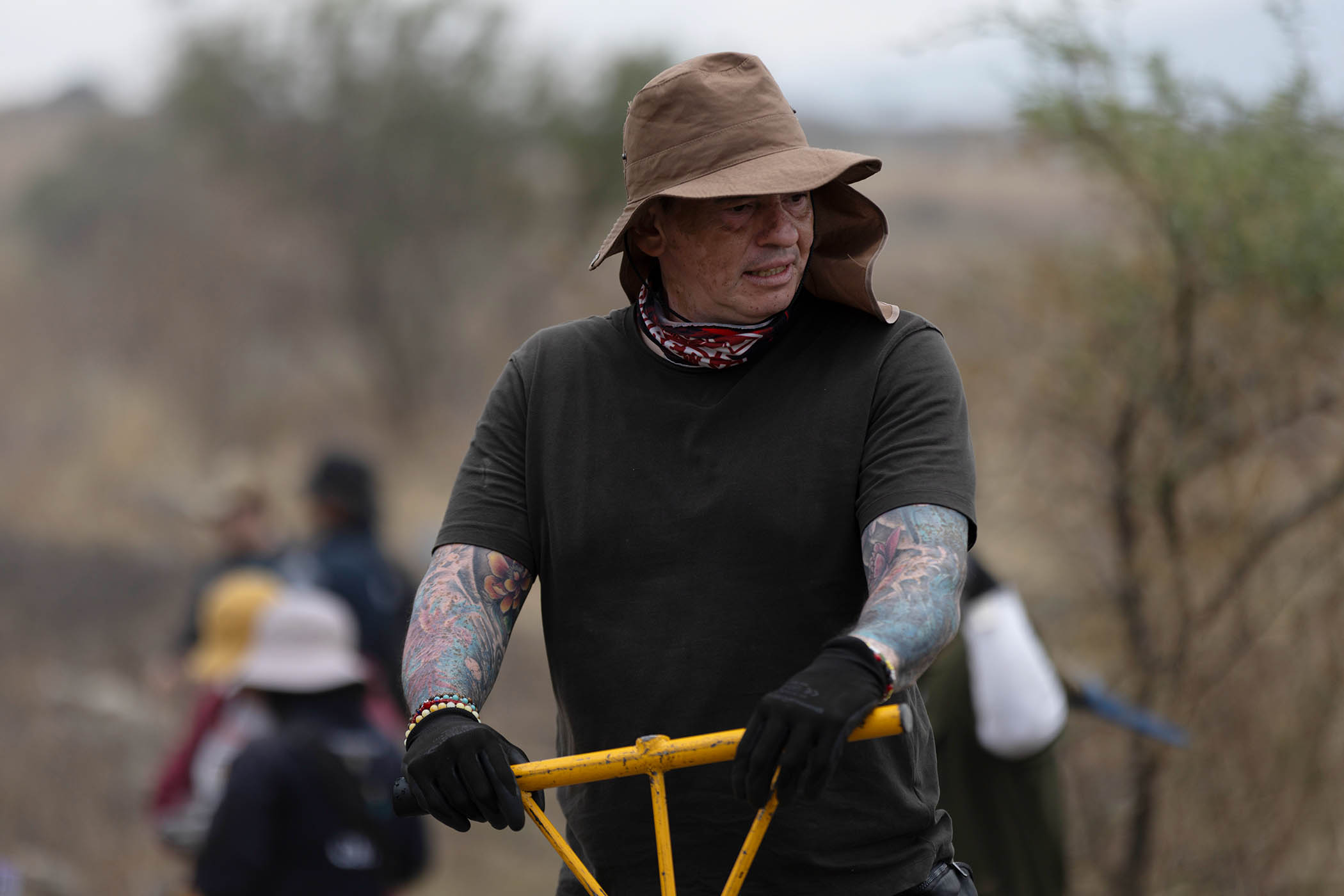
Flores himself is relentless: he only stops digging to smoke cigarettes, and even then he can hardly stand still. He had trained as a lawyer, but was drawn to the bustle of the kitchen and more often worked as a chef. Daniel worked as a waiter in the same restaurants. But Flores hasn’t worked in a kitchen since his son disappeared. “To be honest, since what happened to my son, I’ve struggled to connect with it again,” he said.
Flores and Daniel’s mother separated long before their son disappeared, and Flores has no other children. But he does have a grandchild. When Daniel disappeared, his partner was pregnant. She was at home with him when he was taken. The trauma and the stress of the investigation caused her to leave Guadalajara. “I know she had a little girl, but I haven’t been able to have contact with her,” said Flores. “I don’t know where they are.”
As for his son, Flores received one tip a month after he disappeared. Someone contacted him anonymously to say they had been held in a safe house in Guadalajara with his son for 10 days. “They said [the cartel] were killing everyone who refused to go to a recruitment camp outside the city,” says Flores. “And they said my son had agreed to go.”
One such camp – Rancho Izaguirre – was discovered last year. Members of another search collective, led by Indira Navarro, filmed as they found what appeared to be an obstacle course and a shooting range, but also ovens dug into the earth, with burnt remains, and the harrowing image of a pile of hundreds of shoes.
It became a scandal. At first the authorities tried to minimise the discovery, but people who had passed through the ranch contacted Navarro and some are now testifying in court about their experience: how they had to kill or be killed. “They described the abduction, the training, the things they were made to do,” said Navarro. “All of it is real. We did not invent it.”
In fact, Izaguirre is just one of dozens of such camps in Jalisco and its neighbouring states, often identified by the collectives. No one knows the true scale of the phenomenon. But the CJNG has a constant need to replenish its ranks, especially with young men, even boys.
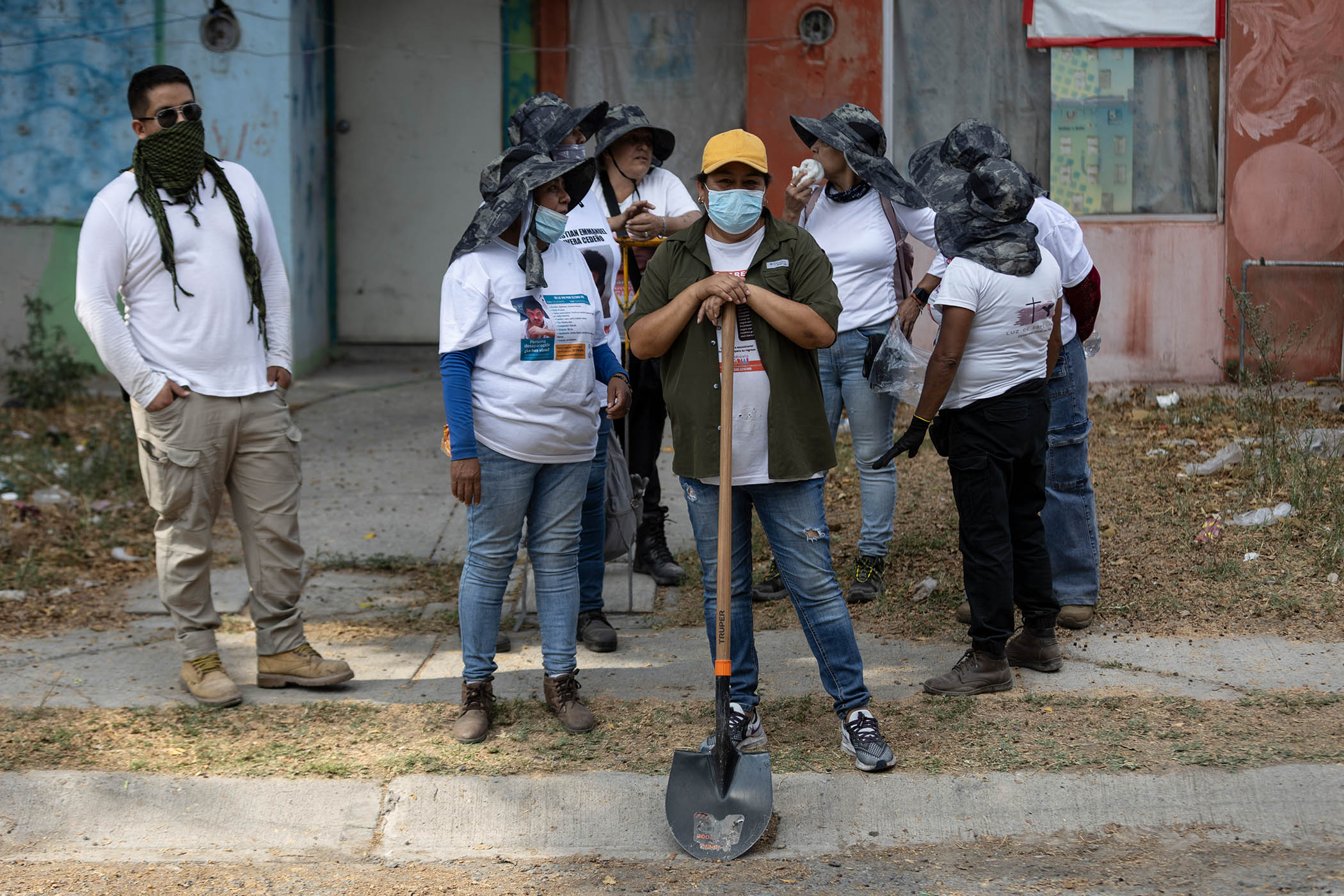
There are by now 16,000 people registered as missing just in Jalisco. But the true number could be higher. Families might not report a disappearance if they suspect their relative was involved in crime. They may fear retaliation from the cartel. Or they may simply think it won’t make a difference. “There is pressure to forget,” said Dr Jorge Ramírez Plascencia of Guadalajara University.
‘It’s terrible. The very people who took our children are the ones we have to trust to do the investigation’
‘It’s terrible. The very people who took our children are the ones we have to trust to do the investigation’
Liliana Meza, mother of Maximiliano Romero Meza, a disappeared
Dozens of arrests related to Izaguirre have since been made. But it became clear that local authorities had known about the camp for years – and allowed it to operate. “Everyone nearby knew about that place,” said Dr Rogelio Barba Álvarez, a criminology expert at the university. “The silence is extraordinary – and obviously it was paid for.”
A UN committee recently went further, saying there were indications that state security forces were systematically involved in Mexico’s disappearances, and that these may constitute crimes against humanity.
In part this reflects the militarisation of the so-called “war on drugs”, which began when then president Felipe Calderón sent the army to take on the cartels in 2006. This saw units that were trained for warfare, not policing, crack down with extrajudicial methods: detaining suspects without warrants, interrogating them, and in some cases disappearing them.
But it also reflects collusion between the state and organised crime groups. There are many cases where state security forces, far from protecting citizens, are partners in their victimisation. This happens everywhere in Mexico, but is most prevalent in the places where criminal groups are powerful and the state is weak. Places like, for example, rural Jalisco.
The Mexican government rejected the UN report as “biased”. But when Flores’s son disappeared, agents of the state prosecutor’s office were involved. And when Maximiliano Romero Meza, the son of Liliana Meza, the collective’s co-founder, also disappeared, it was the municipal police. Such cases are far from exceptional.
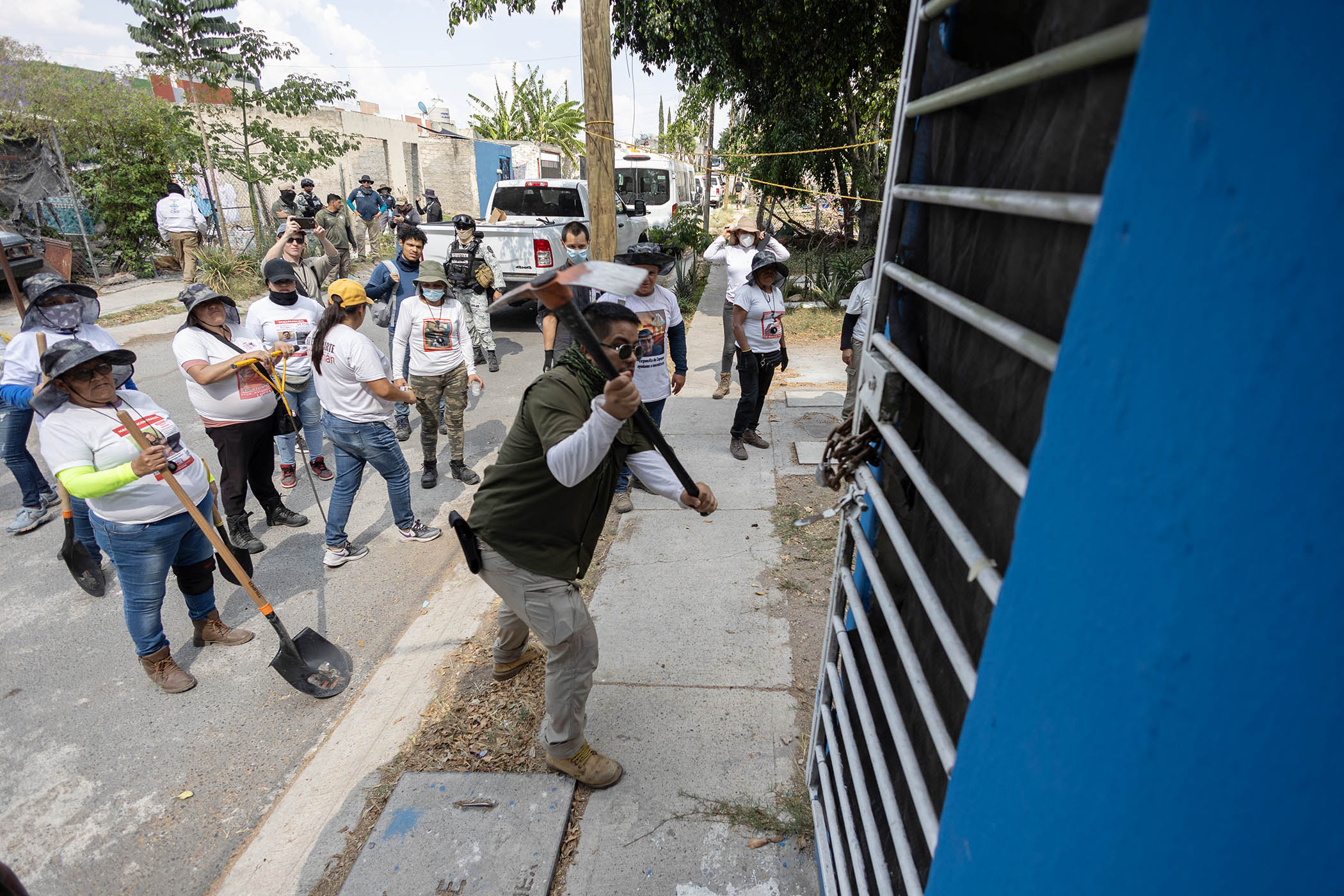
“It’s terrible,” says Meza, glancing at the security forces around. “The very people who took our children are the ones we have to trust to do the investigation. Why haven’t they arrested anyone? Well, if the authorities really investigated, they would find themselves at the end of it.”
In truth, the relatives often do their own investigation, at great personal risk. According to Artículo 19, a human rights organisation, at least 44 of them have been killed or disappeared since 2010. “And we shouldn’t even have to do this,” says Meza. “We should be observing the state do it.”
Meza is interrupted by the appearance of an old woman. She had seen the convoy arrive and wanted to ask for help: her stepson had just disappeared, but she was afraid to report him missing herself. She discreetly pointed to the local police. “They were involved,” she says. She gave Meza the address of the CJNG stash house where her stepson had been taken – and from which, she said, he had never come out.
“People know, people know,” says Meza, as the woman walks away. “It’s all an open secret.”
The address led to an abandoned two-storey house, painted royal blue, on a strangely silent street. As the convoy arrived someone whistled and a minibus rushed off. One neighbour, asked if she knew who owned the house, stares back and shrugs. A block away there was a school, with dozens of children playing on a scrubby patch of land.
Inside, the house was almost bare. But the lights worked, and there was a wifi modem. On a table there were bottles of soft drinks – still fizzy – and scrunched up crisp packets. The old woman had said teenage boys were always coming and going. Graffiti on the wall read: “We’re born to die, he who lives is on borrowed time.” And above it: “NG” – New Generation, shorthand for the cartel.
At the back of the house, there was a room with a tiled floor and a patch of bare earth to one side. The collective begins digging in a frenzy, filling the air with dust. Flores pulls his mask down from time to time, breathing deeply through his nostrils, hoping to smell bodies.
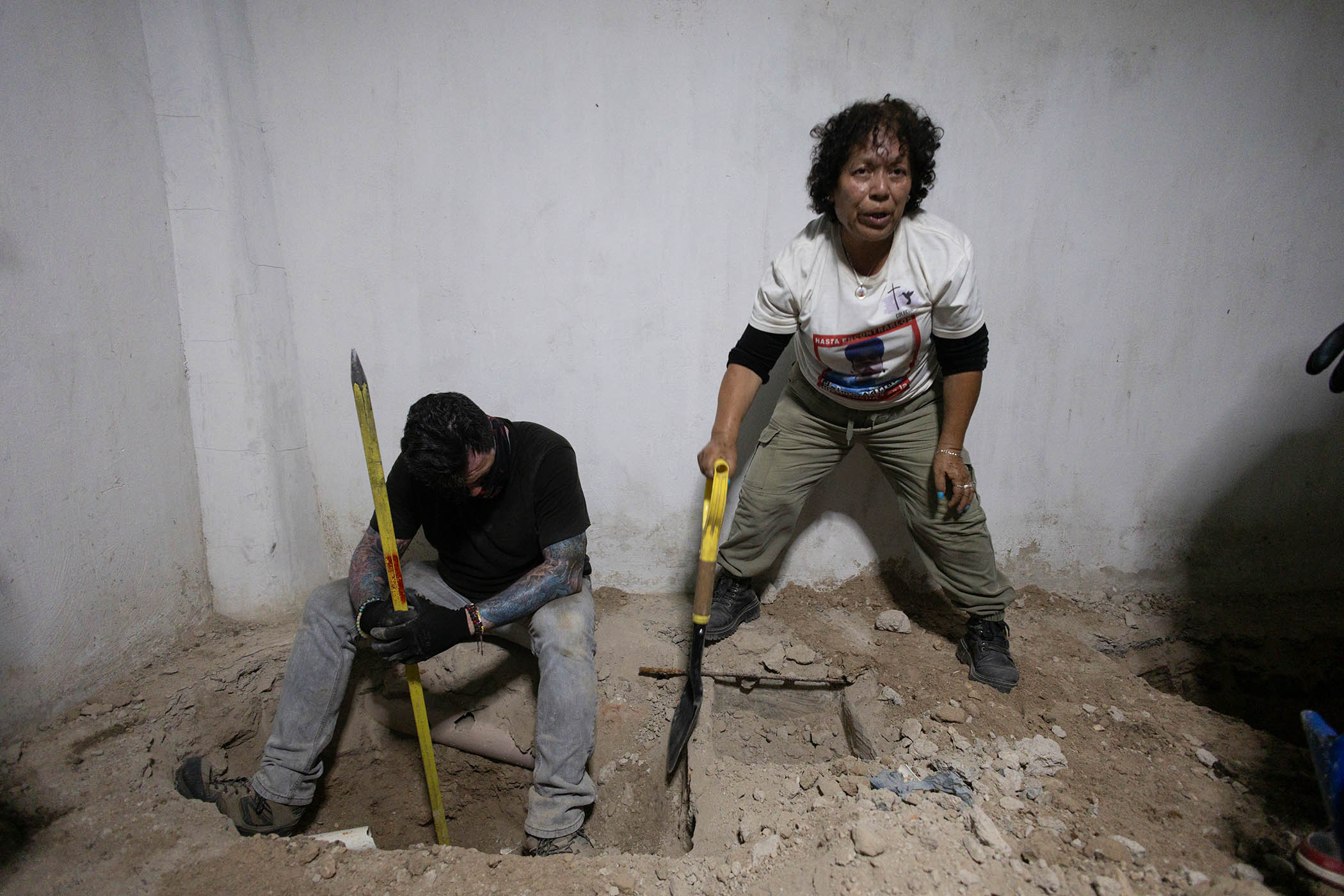
As they dug down, there were broken pipes, suggesting someone else had dug there since the house was built. Then they found a single sock. “They bury deep under houses,” says Flores. “We’ve found bodies four metres down before.”
But about a metre and a half down, they hit hard ground. The energy is sucked from the room.
Flores sits on the edge of the hole. His head bowed, his chest heaving, his tattooed forearms covered with sweat and dust. There were seconds of silence as everyone turns inwards. Then Flores gets up. “OK,” he says. “Let’s go.”