Will Samuels is spending this weekend with his young family in the desert south of Dubai.
Last Sunday was not so restful. He was out for the evening with his wife when their phones sprang to life. They were meeting friends near the Burj Khalifa, the world’s tallest building, which had been evacuated as a precaution. “We didn’t think much about it,” he said. “Then, at about 6.30, we got a message saying the Fairmont hotel had been hit.”
They live five minutes’ walk from the Fairmont in a villa on the Palm Jumeirah, the Dubai dream of beachfront luxury. Their three young children were asleep there, minded by their nannies. The Samuelses raced home through worsening gridlock and packed everyone into the car to head inland to a friend’s house and, they hoped, safety.
Minutes later, two ballistic missiles passed close enough for Samuels to see the glow from their rocket engines. “Within about a second, they hit something. There were two huge explosions, then we felt the aftershock.”
Back home that night, their phones went off again at 1am. Seven or eight more explosions followed within 45 minutes. In the morning, Samuels looked at his phone to see the port, the airport and the nearby Burj Al Arab hotel had all been hit. At 9.30am, from his balcony, he saw seven more missiles intercepted overhead.
“It was, like, fuck me, what should we do?”
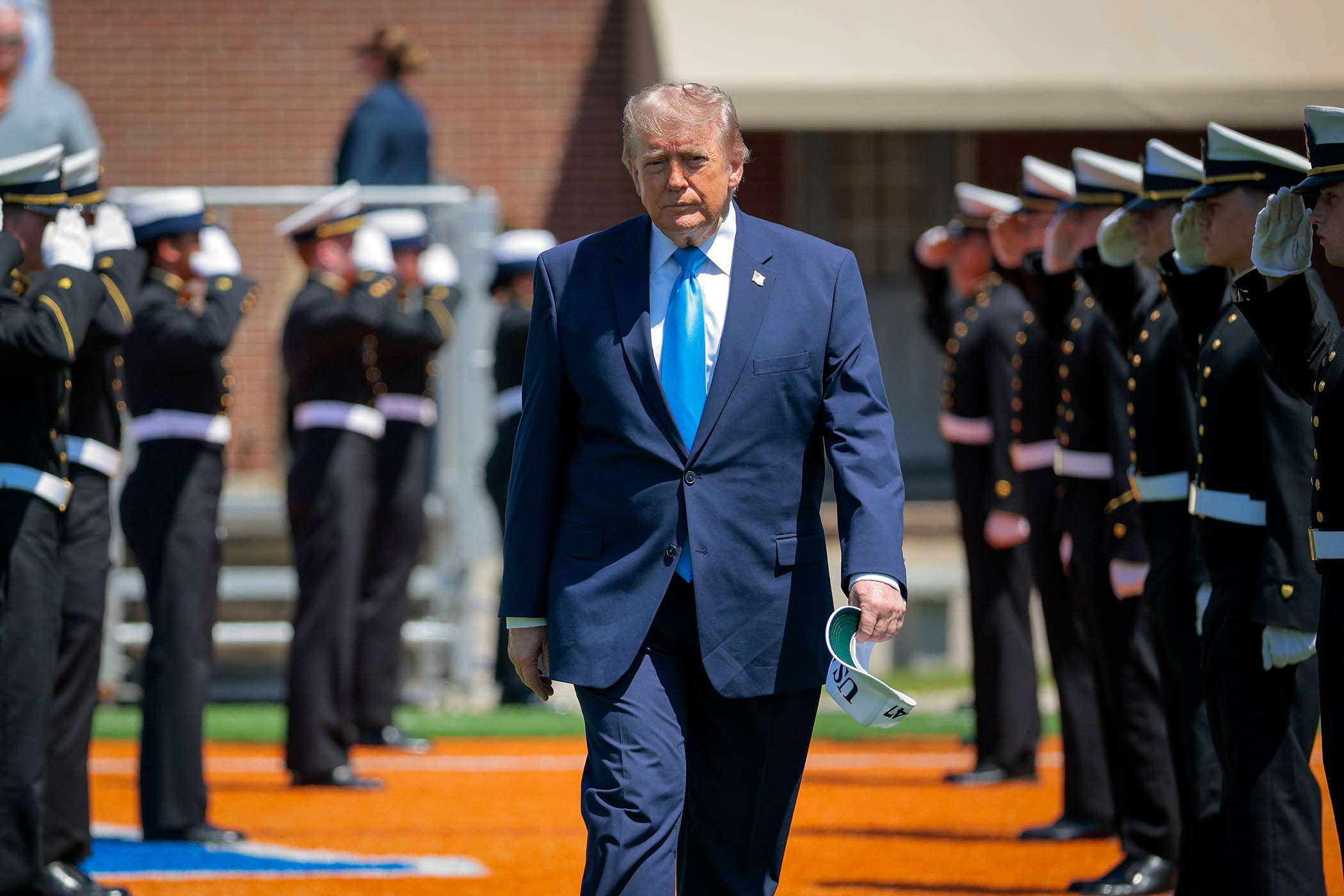
For 50 years, the rulers of the United Arab Emirates have been remaking the Middle East as a necklace of oases in steel and glass. Now Donald Trump is remaking it again with bombs.
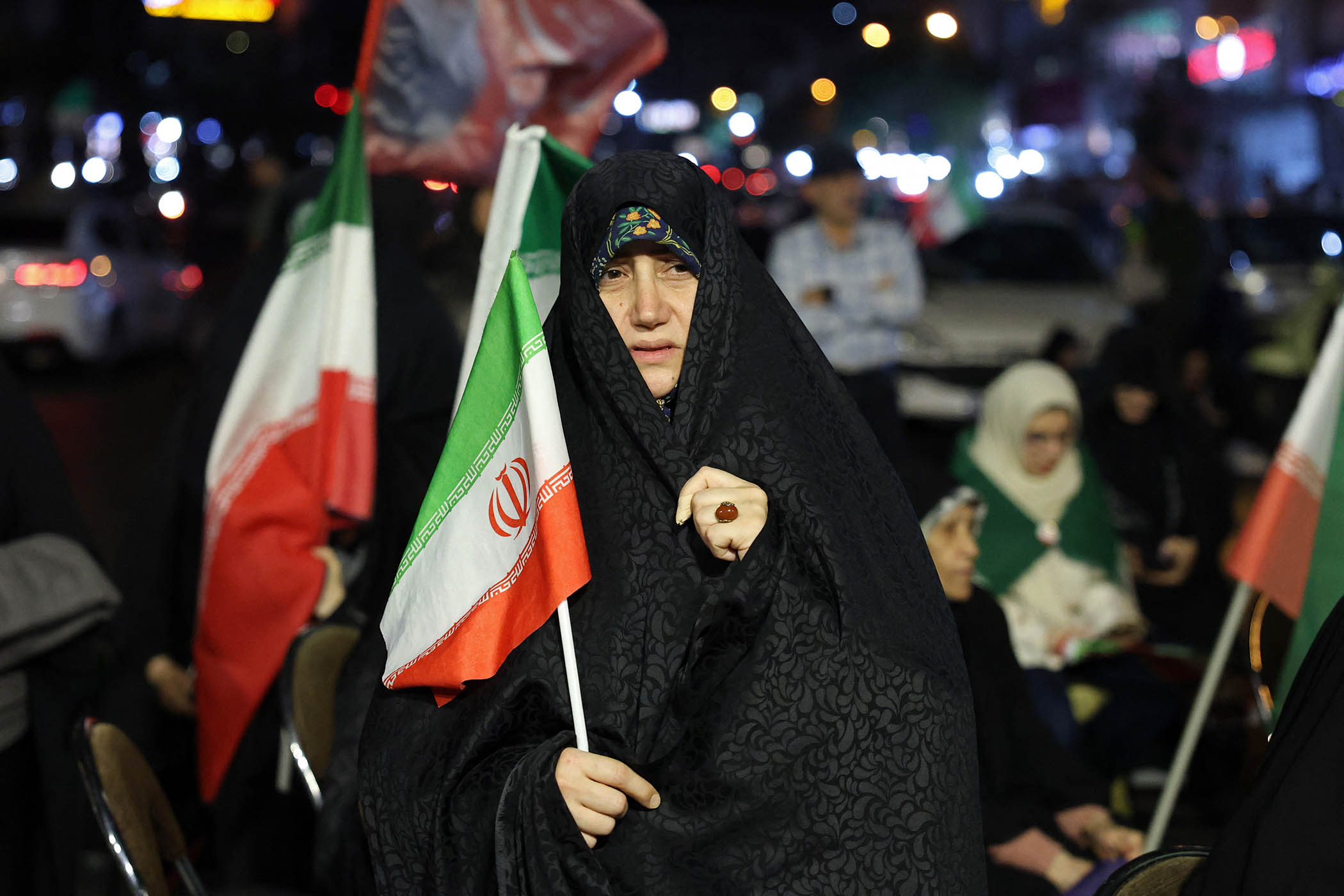
Iran apologised to its Gulf neighbours on Saturday for attacking them, and said yesterday it had chosen a new supreme leader. But his identity remains unclear and so does the meaning of the apology: hours after it was issued, a residential skyscraper was struck by debris from what was thought to be an intercepted drone, while in a separate incident a man was killed when hit after another drone was shot down.
On Saturday, the UK government said it was chartering a flight to get Britons out. On Sunday, Israel said it would target whomever was named Iran's new leader.
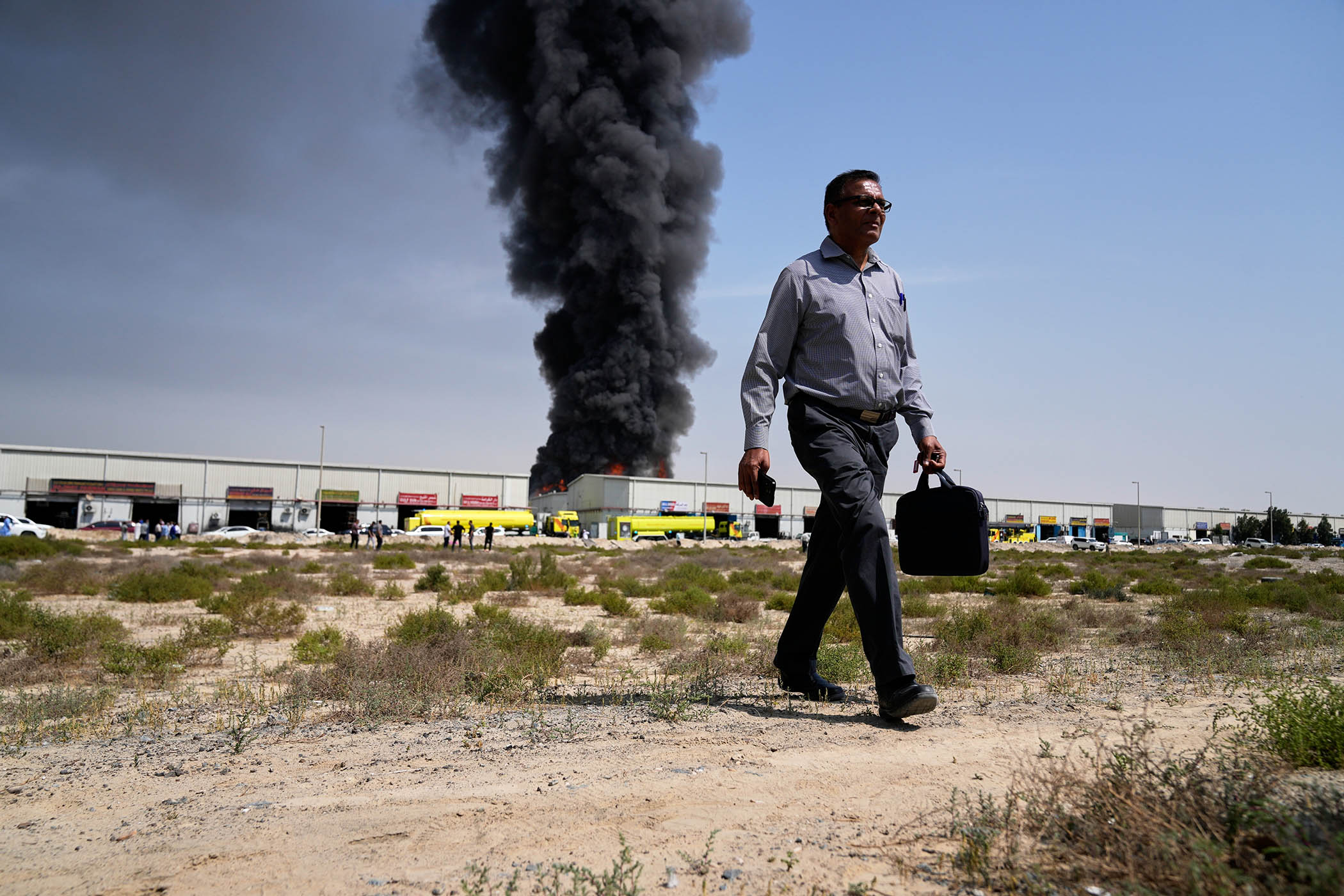
This much is clear: having sold itself as the safest city in the world, Dubai is recalibrating in real time. In the past week, the world’s busiest international airport has shut down and cautiously reopened. Millions of mobile phones have turned into mini air-raid sirens. Influencers have panicked. Millionaires have moved money to Singapore. The government has accepted it as a human reaction to fear, hoping that this too – like Covid and, before it, the 2009 property crisis and 2008 financial crash – will pass.
Newsletters
Choose the newsletters you want to receive
View more
For information about how The Observer protects your data, read our Privacy Policy
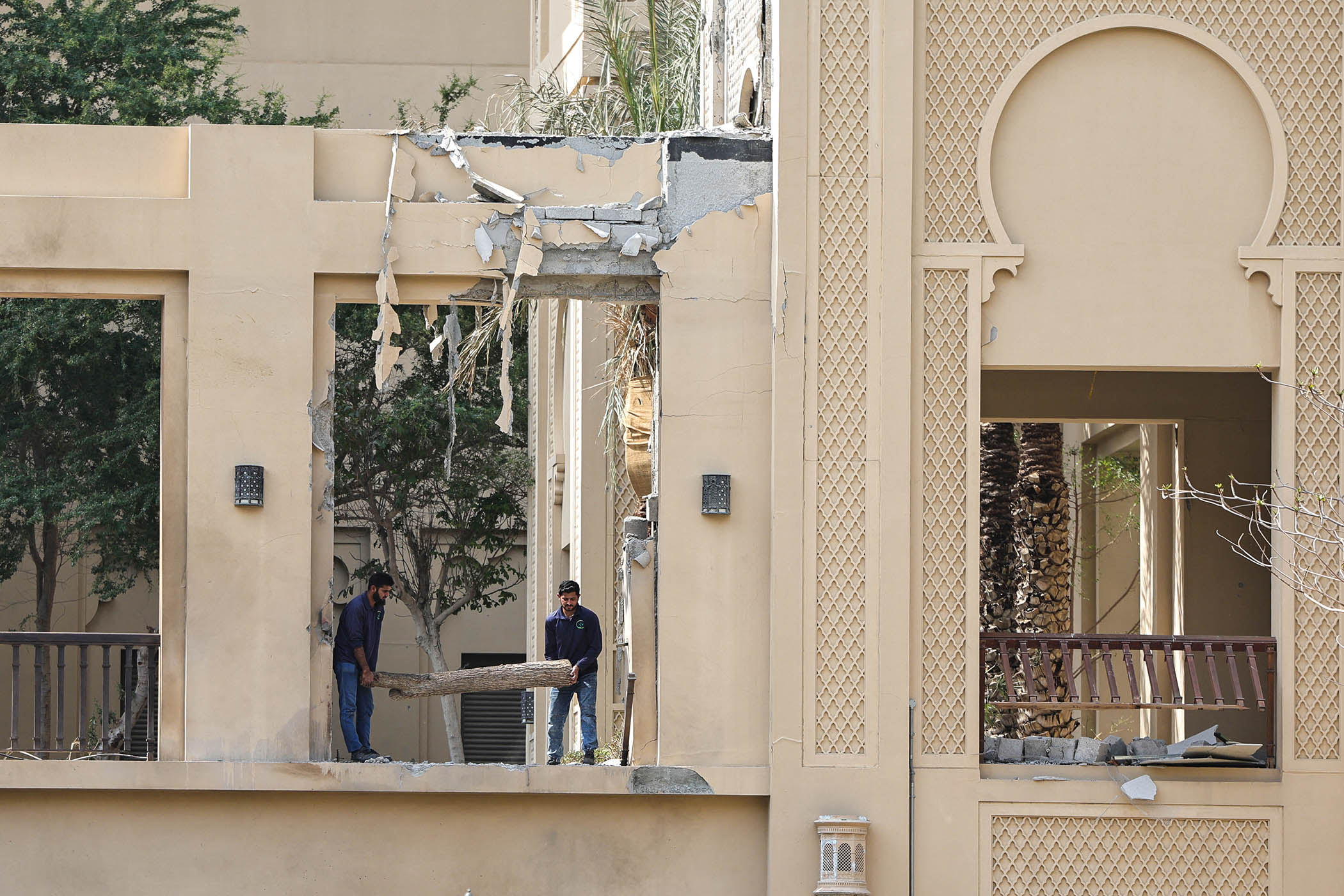
Workers clean debris after an Iranian strike at the Fairmont hotel in Dubai
It may. In London, there are plenty of MPs and columnists not so secretly hoping it doesn’t – that the Dubai bubble bursts. But for every one of those, there are thousands of expats who think of themselves as strivers, not tax avoiders, and want to go on living the dream.
“I know if I was sat in a newsroom in the UK, I’d be sneering at the place and saying: ‘Two fingers to you guys,’” said a muscled communications executive whom we will call Rob, who was once a journalist. “It’s like visiting Chelsea and screaming: ‘Shit club, no history.’ People love to criticise the vacuity of the influencers but this place attracts people who want to do stuff, and that energy is amazing.”
Another longtime British resident, who recently switched to AI consulting from media sales, spent much of Thursday seething that Ed Davey, the Liberal Democrat leader, had the nerve to mock Dubai’s émigrés in the Commons last Monday for expecting to be rescued at taxpayers’ expense. He does not want to be rescued. “We’re not in bunkers,” he said, heading home on the metro after a haircut. “This place is built for people who want to do well. You’ve got to graft. I’m not a millionaire and I don’t drive a Lamborghini but if that’s what you want to do, you can clearly do it here.” He prefers the neo jazz and heavy metal scenes.
By last Tuesday, the explosions had died down. The Fairmont turned out to be largely undamaged. A week into the war, Dubai is calm. But something has changed “and you don’t have to be a genius” to see it, said Samuels, who works in property. He tells the story of a deal for a villa in a gated community that was supposed to exchange for 6.6m dirhams (£1.3m) on the Saturday the US attacked Iran. The deal was scrapped and re-signed with another buyer the next day for 5.5m dirhams. “That tells me there is going to be a shift in mentality,” he said.
The share prices of two big developers fell sharply when trading reopened on Wednesday after an emergency two-day pause. On Friday, a private wealth lawyer in Singapore told Reuters a third of his 20 Dubai-based clients worth more than $50m had asked about moving money out. There are questions among influencers about where to go next – Malaysia? Bali? – and a senior media executive who does not want to give his name said the Dubai Hills, where ex-footballer Rio Ferdinand is the face of a huge new residential scheme, and large numbers of wealthy Indians have built comfortable lives and thriving businesses, is “dead”.
The numbers are stark. Iran has launched more attacks on the UAE since 1 March than on Israel: in excess of 160 ballistic missiles, at least eight cruise missiles and an average of about 100 drones a day, officials say.
Why did it target Dubai, in particular? The question is apt because Dubai is Iran’s Hong Kong, home to half a million Iranians and thousands of Iranian businesses; a vital portal to the world economy for the commercial empire of the Islamic Revolutionary Guard Corps; and a re-export hub for goods moving in the opposite direction through Dubai to evade US and EU sanctions.
The obvious answer is “to get Dubai to intervene with Trump and try to get him to call the thing off”, said Jim Krane of Texas’s Rice University, author of City of Gold: Dubai and the Dream of Capitalism. Trump has plenty of admirers and interlocutors in Dubai, including the billionaire developer Hussain Sajwani, but it is not clear what leverage, if any, they have with the White House.
And Iran is still a black box. In private briefings, senior UAE officials admit they do not know yet whether the decapitated Iranian regime attacked in desperation or in accordance with previously laid plans to transfer authority to surviving cadres in the event of a catastrophe.
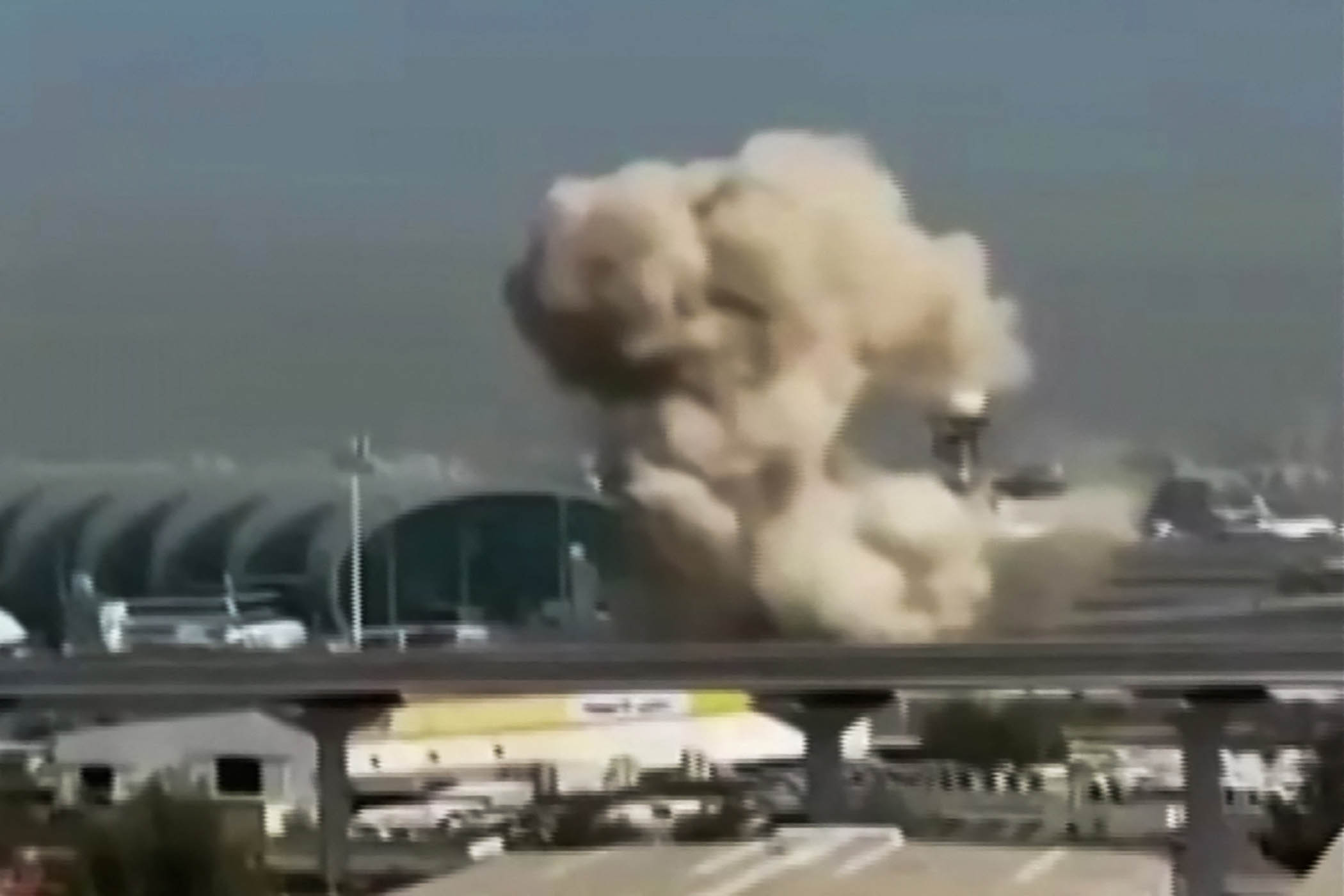
Dubai airport suspended operations on 7 March after an air defence interception in the area during attacks from Iran
“It’s almost like they’re using a kamikaze approach,” said Omar Al Busaidy, founder of a consultancy called Global Possibilities. “‘If we are going to lose, we are going to take others down with us.’ But Iran is not Libya. It’s not Egypt and it’s definitely not Venezuela. You think you are cutting off the head of a snake but there are layers upon layers upon layers, and you are never going to get to all of them. This is decades in the making. It’s like trying to peel an onion, and you cry because it costs you money.”
A six-layered missile defence system in the UAE has intercepted at least 95% of the incoming ordnance with the help of French Rafale fighter jets. But an estimated four people have been killed and dozens injured, and the aerial fireworks replayed endlessly on Instagram against a background of palm fronds and the Burj Al Arab hardly signal security.
Cue the fightback in the war of perceptions. On Monday, Dubai’s crown prince, Sheikh Mohammed bin Rashid Al Maktoum – better known as Fazza to his 17.6 million Instagram followers – took a stroll through the Dubai Mall with the UAE’s president, pausing at Cipriani for coffee and conversations with passersby. By Thursday, there was little sign of war except an eerily quiet airport and occasional phone warnings to seek shelter – to which no one seemed to bat an eyelid.
Diplomatically, Dubai is walking a tightrope. Officials dare not criticise team Trump in public or scrutinise its war aims too closely, but they don’t share its enthusiasm for regime change, and nor does the business community.
Busaidy’s best-case scenario is business as usual in two weeks. His worst is six months. The idea of a newly open Iran as a commercial opportunity barely registers. The closest thing I heard to an endorsement of the Trump strategy came from a British executive, who asked not to be named: “It has to get back to normal. It’s taken 50 years to build this brand and the whole thing could evaporate in a small matter of days. I’m hopeful they completely flatten Iran by the end of next week and we can move on.”
Officials speak more carefully of their hope that, once the fighting stops, “the fundamentals will kick in”; code for light-touch regulation and 0% income tax bringing investors back – albeit with the help of bailouts from Abu Dhabi up the coast.
The Emirates airline, the global symbol of Dubai as a melting pot, is lumbering back into the skies, although most inbound flights are still largely empty.
Rob, the communications executive, is more determined than ever to stay. He talks about Dubai’s “bouncebackability” and its place at the fulcrum of breakneck Asian and African growth. “As the Asian middle-class grows and African GDPs go up, these guys are the key point for a lot of that trade. That’s what people don’t think about when they see a picture of Andrew Tate [the misogynist influencer and Dubai fanboy] with a cigar.”
But the desire to stick it out is personal, too. “There are lots of people like me who owe a lot to this place and would never think of leaving. They’re building something, and if you’re here, you want to be part of it.”
A tad sheepishly, he gives me a lift to my next meeting in a canary yellow Porsche 911 GT3 that he likes to cane through the mountains that overlook the Strait of Hormuz. Traffic is lighter than usual. Billboards advertising the “personal lagoon” lifestyle fly by. And it is not just about lagoons. “There’s quite a big private zoo scene around here. I’m telling you, man, there are layers to this place.”
Photographs by Altaf Qadri/AP Photo, Fadel Senna, AFP via Getty Images