Zeinab, Zahraa, Malika and Yasmina were getting ready for Iftar with their grandmother, the quiet rituals of Ramadan unfolding as they chopped vegetables, cooked and waited to eat with their family. As the four sisters washed their hands and faces before kneeling to pray, the scream of a missile filled the sky.
The Israeli airstrike killed Zeinab, 14, Zahraa, 12, and Malika, 9, instantly. Their father, Mohammad Rida Taqi, had been sitting outside his parents’ house in the southern village of Irkay, enjoying the spring air with his brother and father, when the warhead slammed into the building without warning.
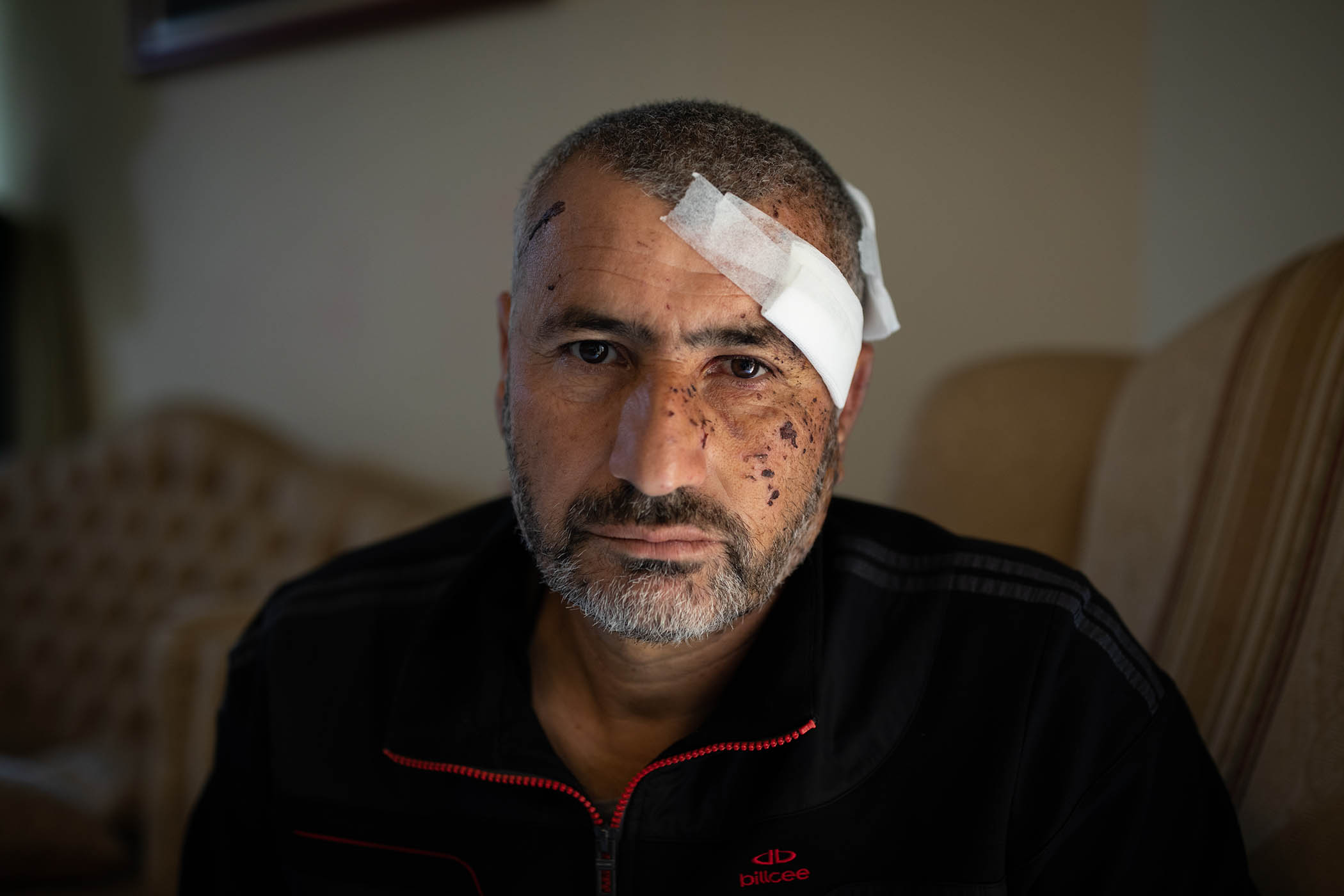
“We heard the rocket but didn’t know what it was targeting,” Taqi said, his bandaged face still peppered with shrapnel wounds. “Then suddenly I couldn’t feel anything.”
Taqi, 55, woke up with the explosion ringing in his ears. Not fully conscious, h e dragged himself to his feet and called out for his daughters. With blood pouring from his wounded head into his left eye, he searched for his family in the rubble. His wife lay under a wall in the room where she had been doing laundry at the time. S till conscious, s he told Taqi to find their children. He passed his mother, lying burned on the floor and brushed rubble off his father before entering the rest of their destroyed home.
When he found his youngest daughter covered in ash and dust, she was still breathing. He then found Malika’s lifeless body and knew she was gone. When he returned to Yasmina, she was dead. Aged six.
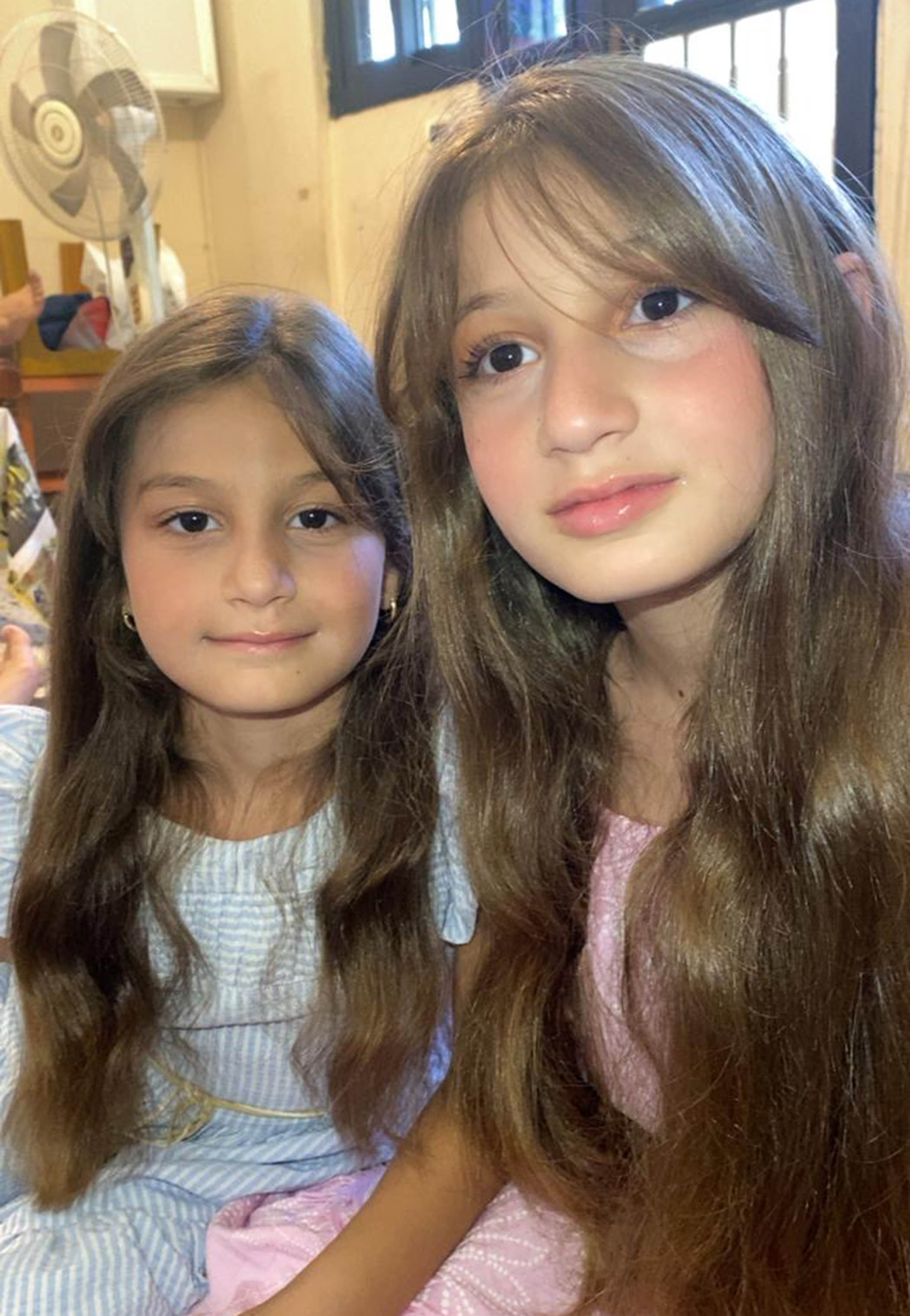
The daughters of Mohammad Rida Taqi, who were killed along with their two sisters by an Israeli airstrike on the family home in the village of Irkay in southern Lebanon
Taqi found no trace of his other two daughters before being dragged to hospital kicking and screaming after digging through the rubble with his bare hands. No one would tell the port customs officer the truth – that his “daughters were in pieces”.
Taqi was reunited with all four daughters at their funeral, their bodies laid alongside five other members of his family. The Israeli airstrike that day also killed his mother, Zeinab, his father, Rida, his brother Ahmad, his brother-in-law Shawki and his 12-year-old nephew Sadiq.
In the 20 days since the renewed conflict erupted between Israel and Hezbollah, airstrikes have killed 118 children across Lebanon, according to the country’s ministry of health. In total, 1,024 people have been killed and 2,740 injured.
Sitting in his uncle’s home in the southern city of Saida, Taqi held back tears as he described the tragedy that unfolded on 12 March.
“There is no reason. There was no Hezbollah military equipment next to us, no activity or weapons,” he said. “Why on earth would I keep my daughters at my parents’ home if I knew there was something dangerous nearby?”
Newsletters
Choose the newsletters you want to receive
View more
For information about how The Observer protects your data, read our Privacy Policy
The Israeli military said it had struck “Hezbollah terrorist operatives” in Irkay on 12 March. It accused Hezbollah of using civilians as human shields and said it invests “significant efforts” in assessing potential collateral damage when deciding what to strike. “The IDF [Israeli Defence Forces] regrets any harm caused to uninvolved individuals,” it said in response to a request from The Observer, adding that it operates in accordance with international law.
The Israeli military has stepped up its aerial bombing campaign in Lebanon since Hezbollah, the Lebanese Shia political and military group, fired rockets into northern Israel on 2 March after the assassination of Iran’s supreme leader, Ayatollah Ali Khamenei.
During the 2024 conflict between the warring sides, the majority of airstrikes were confined to south Lebanon and the southern suburbs of Beirut, known locally as the Dahiyeh. However, the renewed violence has seen the scope of the conflict expand. Central Beirut has come under fire, as have more targets in the country’s Beqaa Valley to the east. Many strikes come after Israeli military Arabic spokesperson Avichay Adraee issues evacuation orders for certain buildings, or in a first, for whole swathes of the country. Others arrive unannounced – often targeting individuals but killing families.
Christophe Boulierac, Unicef Lebanon’s spokesperson, believes children are being killed at a “horrifying” rate. “It is the equivalent to a classroom full of children being killed or injured every day,” he said. “It’s massive and it’s appalling.
“Some children have internalised the idea of their death. One child told me: ‘I want to wear a bracelet with my name on because, if I’m killed, I want my parents to be able to identify my body.’”
‘It is the equivalent to a classroom full of children being killed or injured every day. It is appalling’
‘It is the equivalent to a classroom full of children being killed or injured every day. It is appalling’
According to Niku Jafarnia, a researcher at Human Rights Watch and a lawyer, international humanitarian law requires parties to a conflict to “take all feasible precautions” to avoid or minimise the incidental loss of civilian life.
“The law also prohibits attacks if the anticipated harm to civilians – including children – is disproportionate compared to the expected military gain from the attack.”
Ghassan Abu-Sittah, a British-Palestinian reconstructive surgeon and professor of conflict medicine who has spent decades working with children in war zones, believes the conflict is “a war on children”.
On Friday, sitting close to the American University of Beirut Medical Center, where he manages the main referral clinic for all of Lebanon’s war-wounded children, he voiced fears that the trend in the tiny Mediterranean nation is fast catching up with Gaza. “In Ukraine, 12% of those wounded are children. In Gaza it’s 40-45%. Lebanon at the moment is somewhere between 25% and 30% of the total.”
In the first 18 days, he treated 18 critically injured children – those who survived long enough to reach him.
“Children have been existentially maimed,” Abu-Sittah said. “For a child, home is the safest place. It’s their world. So when the home becomes the place where they become wounded and they lose family members, that world view is shattered. That sense of safety disappears from that child’s life, and I think it disappears for ever.”
Back in the home of Taqi’s uncle, children played in the living room. Taqi’s nieces and nephews, who were all at his uncle’s house the day of the attack on Irkay, jostled for control of a Nintendo Switch in their fleece onesies, laughter briefly cutting through the noise of war.
While pulling up a video of his children, Taqi said that his daughter Malika was on the honours list at school this term, and that his eldest daughter, Zeinab, had top grades. His niece Zou Zou came running over and hugged her uncle.
“Now I have my brother’s five children to raise,” Taqi said, stroking Zou Zou’s hair as she leant into him. “I’m trying my best to be their dad after they lost their father and I lost my children, but I have nothing left.”
His voice trailed off as an Israeli jet roared overhead.
“I want justice but I don’t think Israel will be held accountable. God willing, they are, but I fear only God will give us justice.”