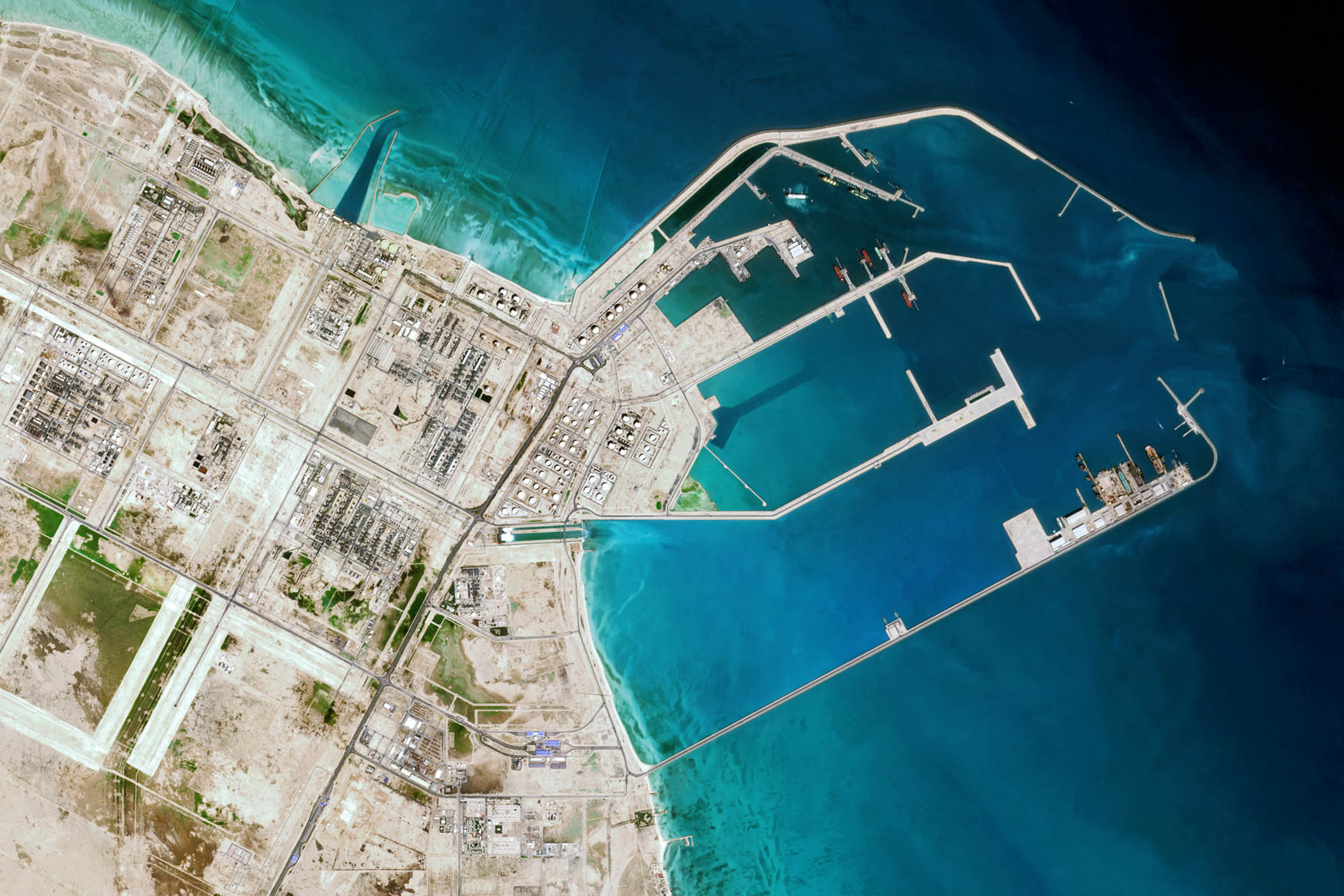
When an Iranian missile struck the Ras Laffan liquefied natural gas plant on the northern tip of Qatar, it was the worst-case scenario for the tiny emirate whose place in the world is built on its gas wealth.
Ras Laffan, a tangle of metal pipes on the edge of the Qatari peninsula in the Gulf, sits next to the single largest gas field on Earth – shared with Iran. According to one estimate, Ras Laffan supplies 4% of all global energy: it is the largest liquefied natural gas (LNG) production facility in the world, producing about 20% of supplies, as well as other essentials such as helium.
The consequences will be felt not only in disruptions to energy markets but through Qatar potentially pulling back from all kinds of global asset classes in which it has become a significant sovereign investor.
“This is the very thing that 30 years of Qatari diplomacy tried to ensure would never happen,” said Gulf expert Kristian Ulrichsen of Rice University’s Baker Institute for Public Policy in Texas. “For Qatar, the nightmare scenario is a hit on Ras Laffan – it's a gamechanger.”
Saad al-Kaabi, chief executive of QatarEnergy, told Reuters the damage had caused about $20bn in lost annual revenue while removing 17% of Qatar’s LNG supply for up to five years. The emirate was already suffering amid the closure of the Strait of Hormuz: it is far more exposed to financial losses than its neighbours and has no other routes to export LNG.
The long-term costs could be higher still. It may take up to five years to fully repair the damage at Ras Laffan and bring LNG export levels back to those seen before the war – as well as a year of delays now expected to a project expanding gas facilities at the adjacent North Field reserve.
“Once you include the foregone revenues as well as the anticipated revenues, which has underpinned a lot of expectation of economic growth, that makes the losses far bigger and harder to quantify,” Ulrichsen said.
Capital Economics estimated that Qatari GDP could take a 13% hit in 2026 due to the continuing attacks.
The impact on Qatar's sovereign wealth fund, whose global investments include the supermarket chain Sainsbury’s, is not expected to be immediate, said Diego López, a sovereign wealth expert at Global SWF. “It will take some time to assess the damage and run the fiscal books and see any potential deficit that needs to be covered, and how it will be covered,” he said.
The Qatari Investment Authority (QIA) offloaded a £270m investment in Sainsbury's late last year – leaving questions about whether it could further scale down its international investments given the crisis at home. The QIA owns an estimated £100bn in British assets that include the London Stock Exchange, Rolls-Royce, Heathrow airport and Barclays Bank, but has also sold down its stakes in LSEG and Barclays in recent years.
Newsletters
Choose the newsletters you want to receive
View more
For information about how The Observer protects your data, read our Privacy Policy
Analysts say it has adapted to past regional crises, notably a punishing embargo led by its neighbours the UAE and Saudi Arabia: the QIA repatriated $20bn in overseas investments in 2017 to cushion the blow of the blockade. López said it has continued investing even though Doha sits on the front line of the war in Iran.
The QIA’s Saudi equivalent, the Public Investment Fund, is also likely to move parts of its portfolio to domestic industries, particularly defence. It is seeking to convert half its $70bn-80bn yearly spend on military procurement into domestic capacity by 2030.
Every day that the volley of Iranian missiles and drones across the Gulf answer US and Israeli strikes on Iran, Qatar's losses balloon and another shift in investments looms. Last year Donald Trump announced deals with the emirate worth about $243.5bn. Qatari officials delivered a $400m luxury jet to Trump as a gift this year, but their other US investments could now face scrutiny due to losses from a war instigated by the White House. Last year Doha also signed a security agreement with Washington that treats any attack on Qatar as an attack on US soil, a pledge whose value was rapidly undercut by events.
“Doha might be re-prioritising its future investment decisions: a lot will depend on how long this lasts,” said Ulrichsen. “This has now gone on for three weeks, already the upper end of what many thought possible. Now it could go on for months.”
Photograph by Copernicus Sentinel 2017/ Orbital Horizon/Gallo Images/Getty Images