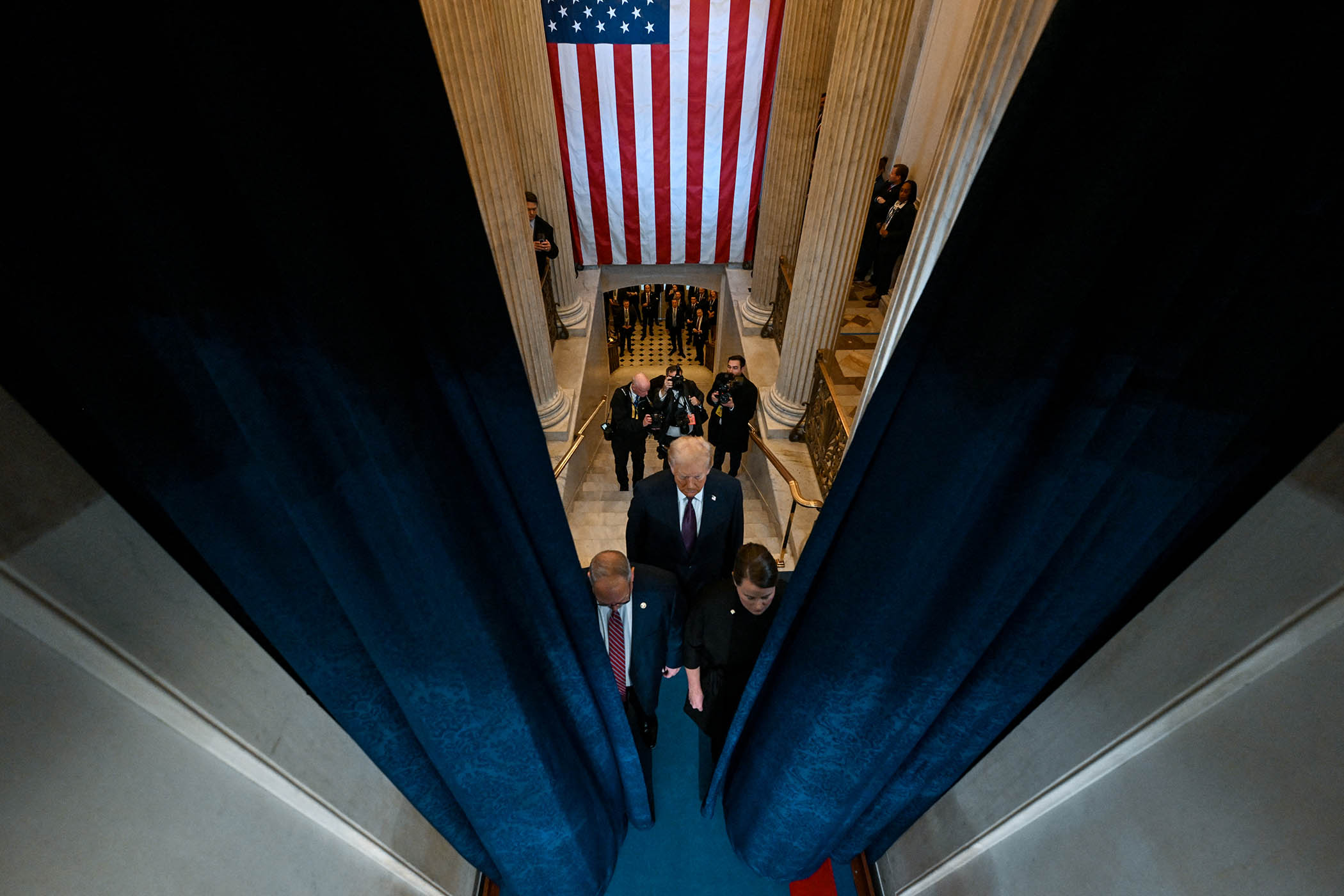


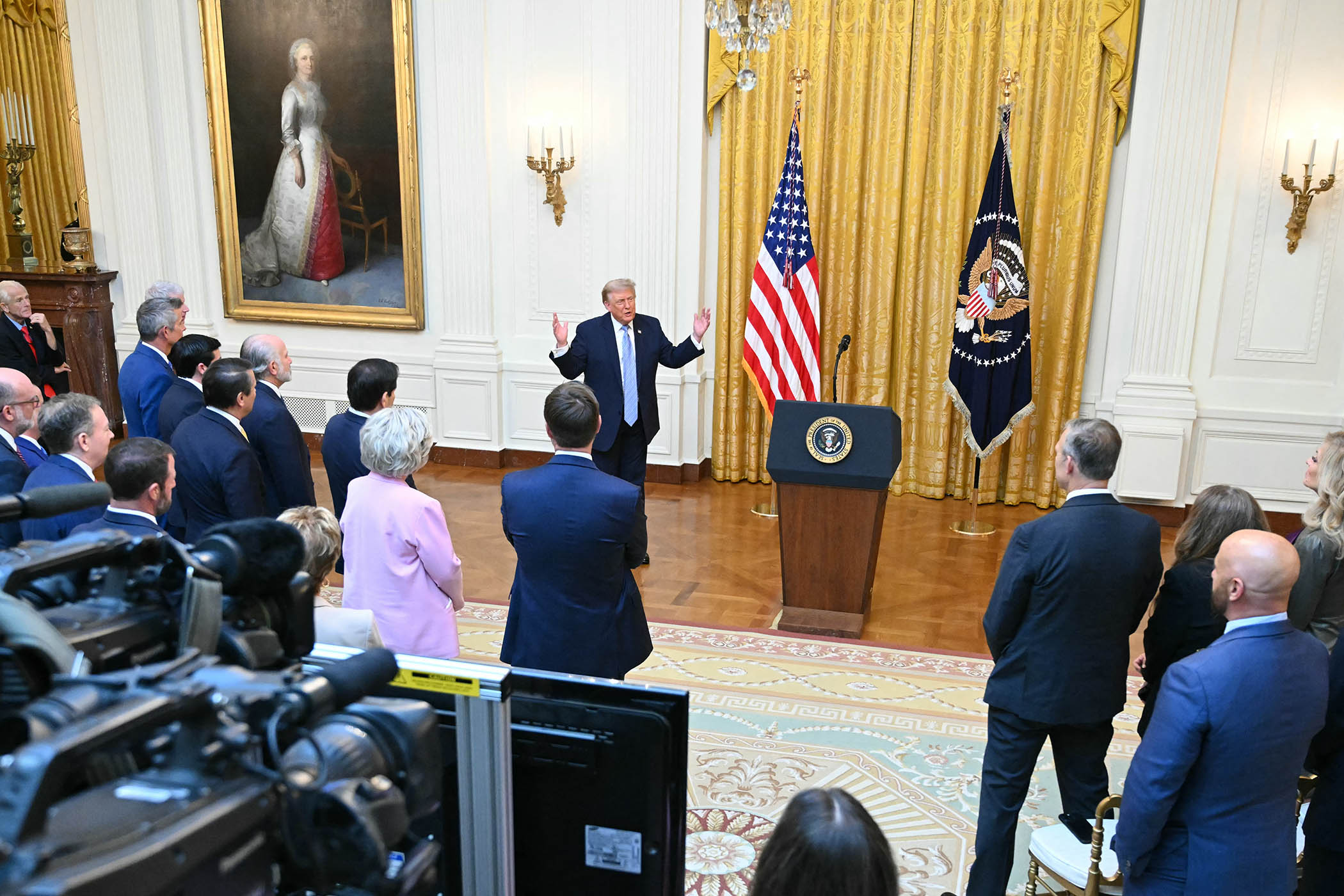

Don Bacon is bewildered. He served for 29 years in the US air force and represents the red state of Nebraska in the House of Representatives. He believes in the Bible, the constitution and America, and considers himself a loyal member of the Republican party.
But last Wednesday his Republican president warned Denmark that the US needed to own Greenland whatever the outcome of talks that day between their respective prime ministers and his vice-president. Worse still, for Bacon, Donald Trump did not take the military option off the table.
“That is despicable,” he says. “I don’t think he’s serious but we’ve got to address it. And if he used force I think it would be the end of his presidency.” Bacon will not be standing in this year’s midterm election s and feels free to speak his mind, but he says that in closed-door meetings last week with fellow Republicans there was broad agreement that threatening or invading a Nato ally were impeachable offences.
“The vast majority in Congress, except a few oddballs, know this is wrong,” he says. “All he’s doing is making enemies. It should bother every American. Threatening a Nato ally is the dumbest thing I’ve ever heard of.”
A day earlier, Trump had surged extra ICE officers into Minneapolis, a week after one of them killed Renee Good with at least three shots at close range. The next day the president greeted María Corina Machado, leader of Venezuela’s democratic opposition, at the White House. When she presented him with the Nobel peace prize she won last year, he accepted it as reward “for the work I have done” and as “a wonderful gesture of mutual respect”.
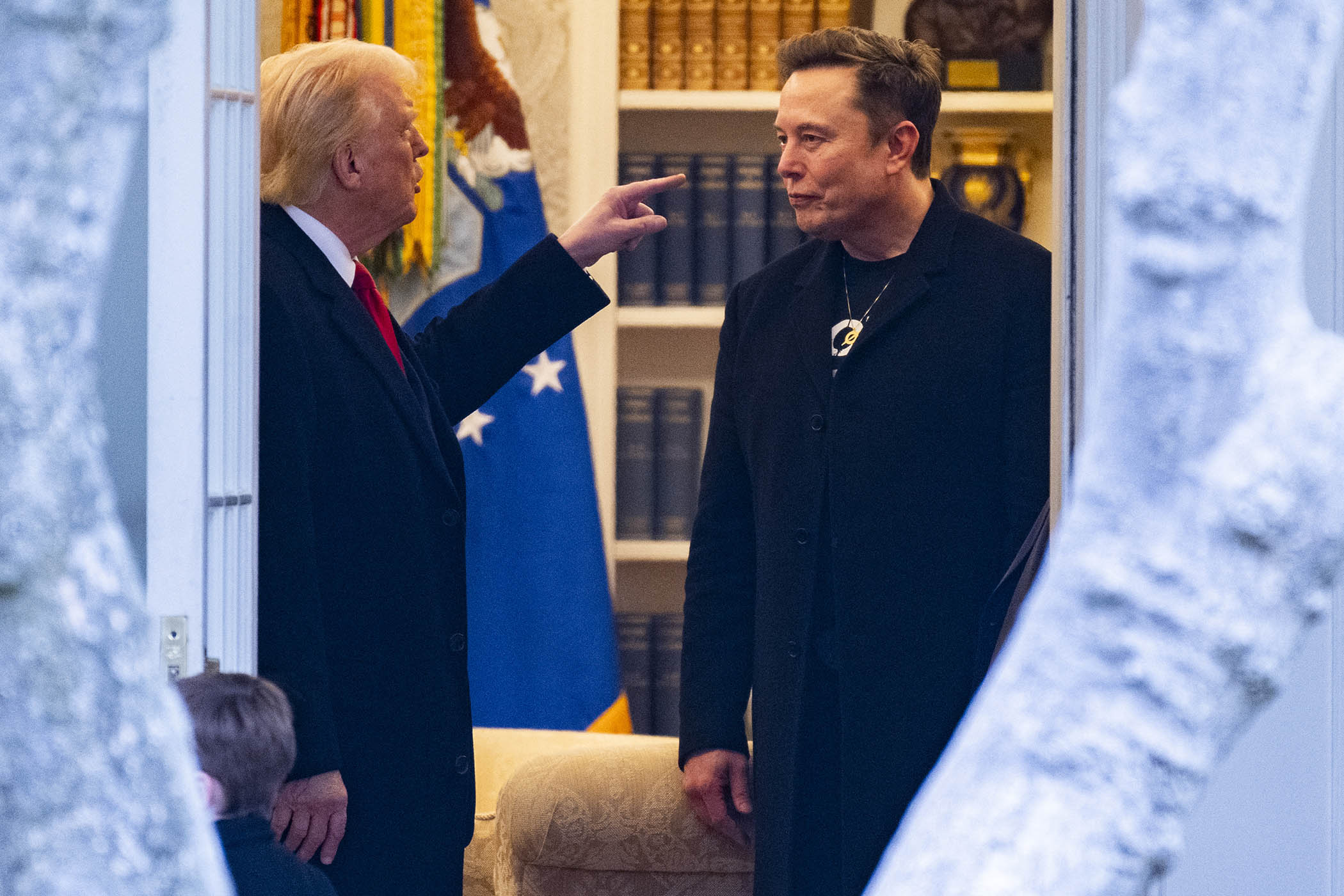
Trump and Elon Musk speak in the Oval Office in March, before their public feud began
A year into Trump’s second term he is not popular. At around 40%, his approval ratings are close to historic lows. But in the breakneck theatrics of this White House, conventional metrics can seem meaningless and all bets are off.
Trump has turned the machinery of American government into a rolling, 24-hour sound and light show viewed by believers as a five-star spectacular, and by others – including dozens of former Trump staff and high-ranking Republicans – as a dire threat to American democracy.
How dire? He has forsworn a third term and sober heads in Washington still believe the midterms will not be overtly rigged. But elsewhere platoons of masked ICE agents are already changing the behaviour of entire communities in ways that could amount to voter suppression on polling day. A well-connected Trump-watcher in Chicago says ICE is everywhere, even if largely invisible to the rich: “You hear about them in dinner parties with people who have young children. White parents are taking their brown housekeepers’ children to the playground so these kids don’t turn around and find their parents have been taken.”
Trump’s first year back has been a blitz of autocracy within a democratic system. Largely ignoring Congress, he has torn up the rules of free trade and replaced them with tariffs. He has menaced independent countries as if the concept of sovereignty did not exist, politicised the US military by sending marines into Los Angeles and co-opted the Justice Department with criminal indictments of his adversaries. He has intimidated once-formidable TV networks with spurious lawsuits, insulted allies, flattered dictators, turned a blind eye to the history of Ukraine, tamed the titans of tech and dived into morally corrupt crypto schemes with the zeal of the newly converted.
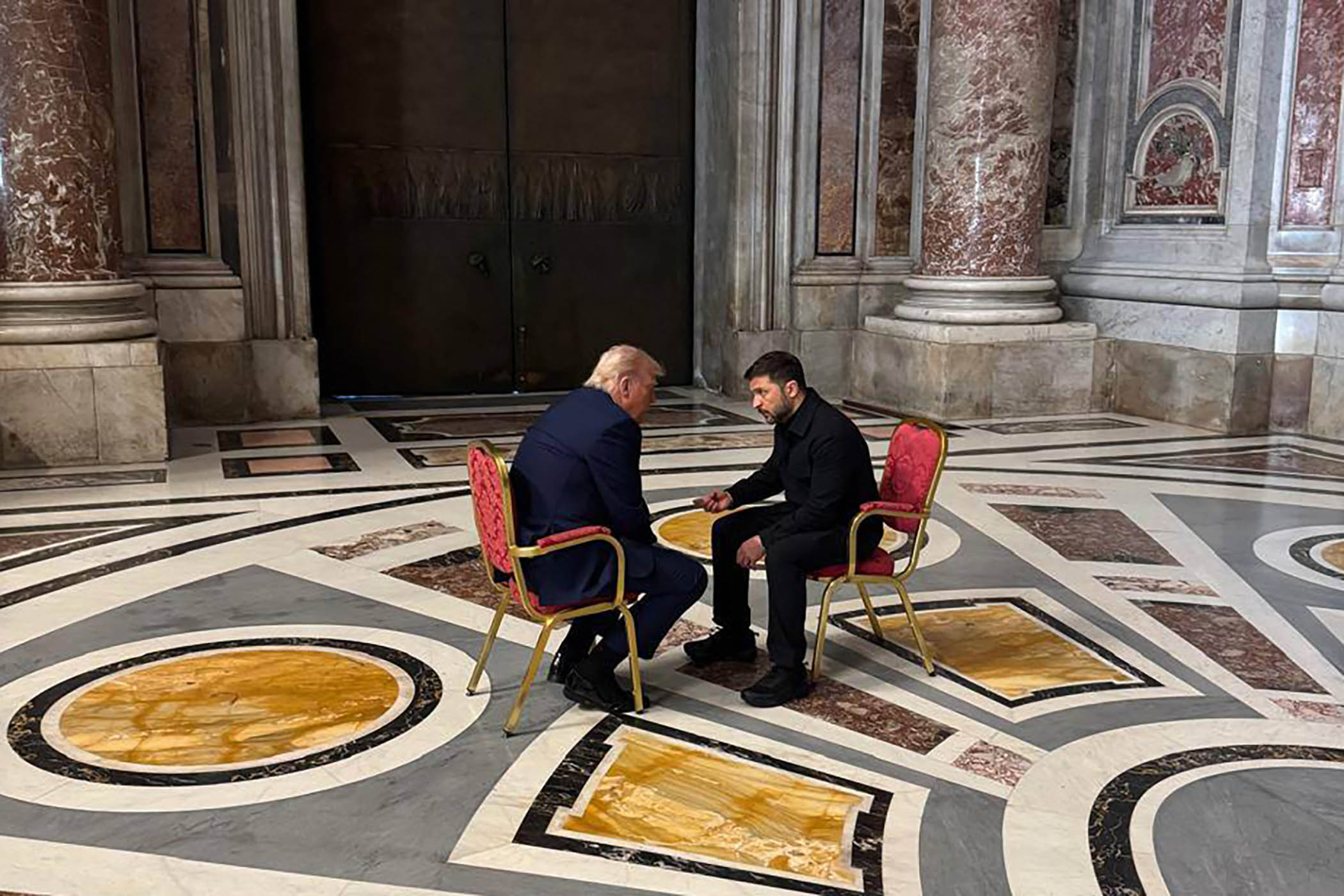
Trump and Ukraine‘s president Volodymyr Zelensky at Pope Francis‘s funeral at St Peter‘s Basilica in April
How should it be described? General John Kelly served as White House chief of staff during Trump’s first term and afterwards called him a fascist. William Kristol, a neoconservative Republican who founded the Weekly Standard, said the same in September.
Newsletters
Choose the newsletters you want to receive
View more
For information about how The Observer protects your data, read our Privacy Policy
Another Republican dissident, Trump’s former national security adviser, John Bolton, says the president’s obsession with the Nobel peace prize is real and revealing: “It tells you what he focuses on – himself.” A third, the former congresswoman Liz Cheney, who sacrificed her political career by daring to condemn the 6 January insurrection, has said of the Trump spectacle: “None of us can be a bystander.”
And yet much of the US establishment is standing by. Congress has not tried to intervene against the administration’s tariff regime even though tariff-setting is explicitly its own responsibility. State and federal courts have acted to halt or delay implementation of some of Trump’s blizzard of 227 executive orders, but always in the knowledge that they can be overruled by a six to three conservative majority in the supreme court.
Law firms accustomed to lucrative work for the federal government have quietly dropped or declined cases that might mean taking it on, and a new sycophancy is creeping into coverage of the administration. Most big beasts of the US media landscape still land their punches as their customers expect. But CBS, under new management since Skydance bought its parent company with money from the Trump-aligned software king Larry Ellison, has a new nightly news anchor in Tony Dokoupil. Last week he ended a hagiographic profile of Trump’s secretary of state with the line: “We salute you, Marco Rubio.”
The story they are trying to keep up with can be sketched out in numbers. Tax cuts approved last year are expected to add $3.4tn to the $38tn US national debt over the next decade. That includes a current annual budget for ICE of more than $27bn, up from $8bn last year and roughly equivalent to Canada’s defence budget. It does not reflect much in the way of savings in federal spending as a result of work by Elon Musk’s so-called Department of Government Efficiency (Doge), which set out to find $2tn in waste but, according to the Partnership for Public Service achieved cuts of only $2bn, while net public spending grew. At the same time Musk axed 17 inspectors general, senior federal oversight officials who by one estimate saved the government more than $70bn in 2024.
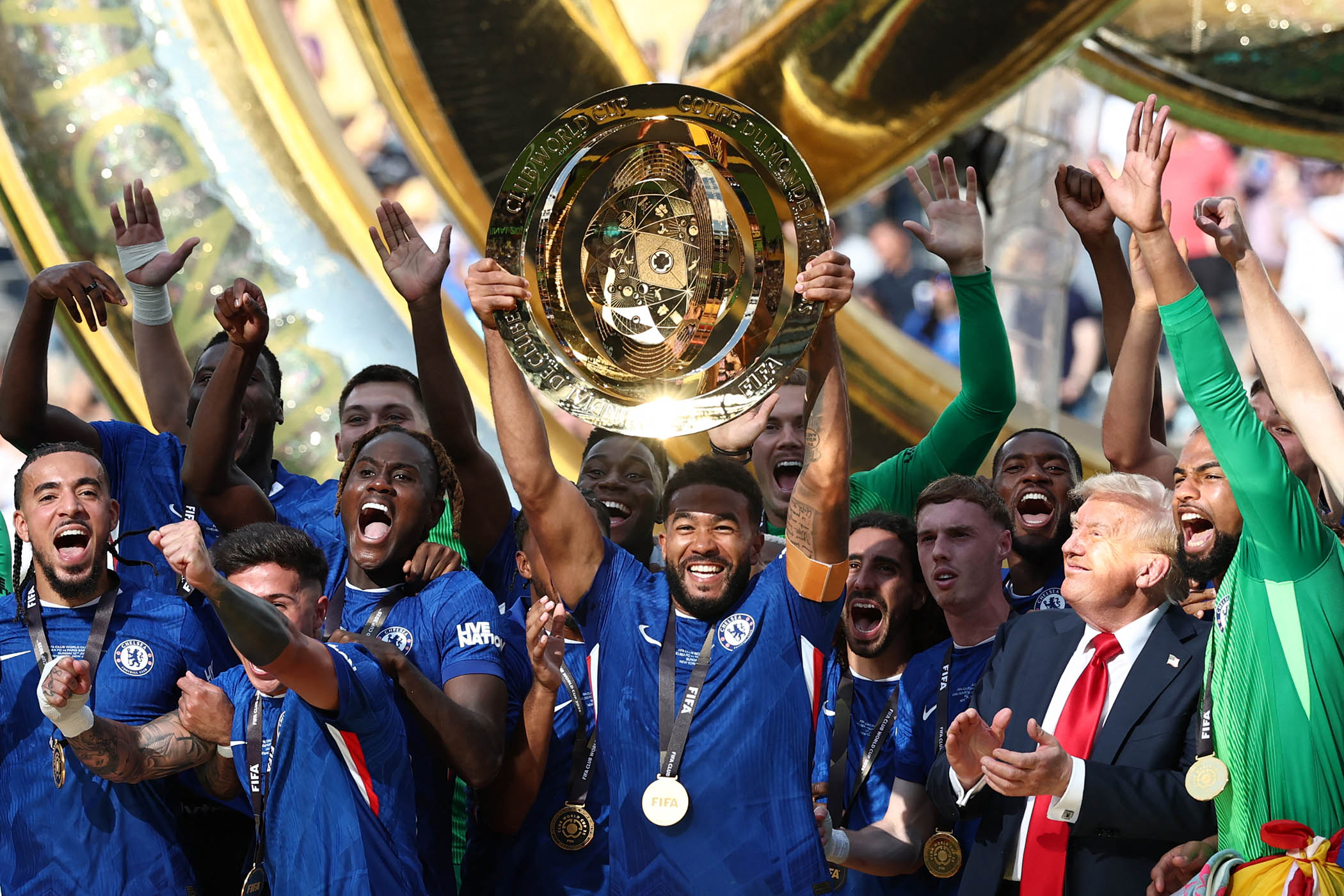
Trump walked off the pitch with the Fifa Club World Cup after Chelsea‘s victory ceremony in July
ICE has so far deported 600,000 undocumented immigrants – a record for any administration. Doge did fire at least 200,000 civil servants and force the closure of 160 advisory committees and 380 clinical drug trials. A report in the Lancet in July said that by ending drug distribution and other public health programmes in the developing world, Doge’s closure of USAID – the US Agency for International Development – put as many as 14m lives at risk.
At the same time the S&P 500 is at a record high. The US has never had more millionaires (one in five households has a net worth of more than $1m) or billionaires (935, according to Americans for Tax Fairness). Annualised growth of 3.84% is more than double the European average. Nine of the world’s 10 biggest companies by market cap are American. The US and world economies have proved much more resilient than expected given a roughly sevenfold increase in average US tariffs – which are fuelling inflation but have enabled the US Treasury to collect nearly $300bn in tariffs, three times more than in 2024.
The numbers give a sense of the scale of the disruption, but not the pace or planning – or the strange priorities. “The first time these guys came to town it was a party,” says Raheem Kassam, a British-born Trump acolyte who edits the National Pulse, a conservative news site in DC. “They couldn’t believe their luck. They kind of just wanted to fit in, and they lived it up every night. It was raucous and it was unsober and it was unserious in many ways. This is the polar opposite of that.
“This time they are laser-focused. They understand every lever of power, every single bit of trickery that they have up their sleeve, from an executive authority perspective, from a legislative perspective.”
“They”, in this analysis, is a team hand-picked at leisure during the Biden administration and led by White House chief of staff Susie Wiles. Its ideological rocket fuel comes from her deputy, the ultra-nationalist Stephen Miller. Its bible is the 900-page Project 2025 manual assembled by Russell Vought, now director of the Office of Management and Budget. Published a year and a half before the 2024 election, it has served as template for an assault on the federal government that Vought said should leave its bureaucrats “traumatically affected”.
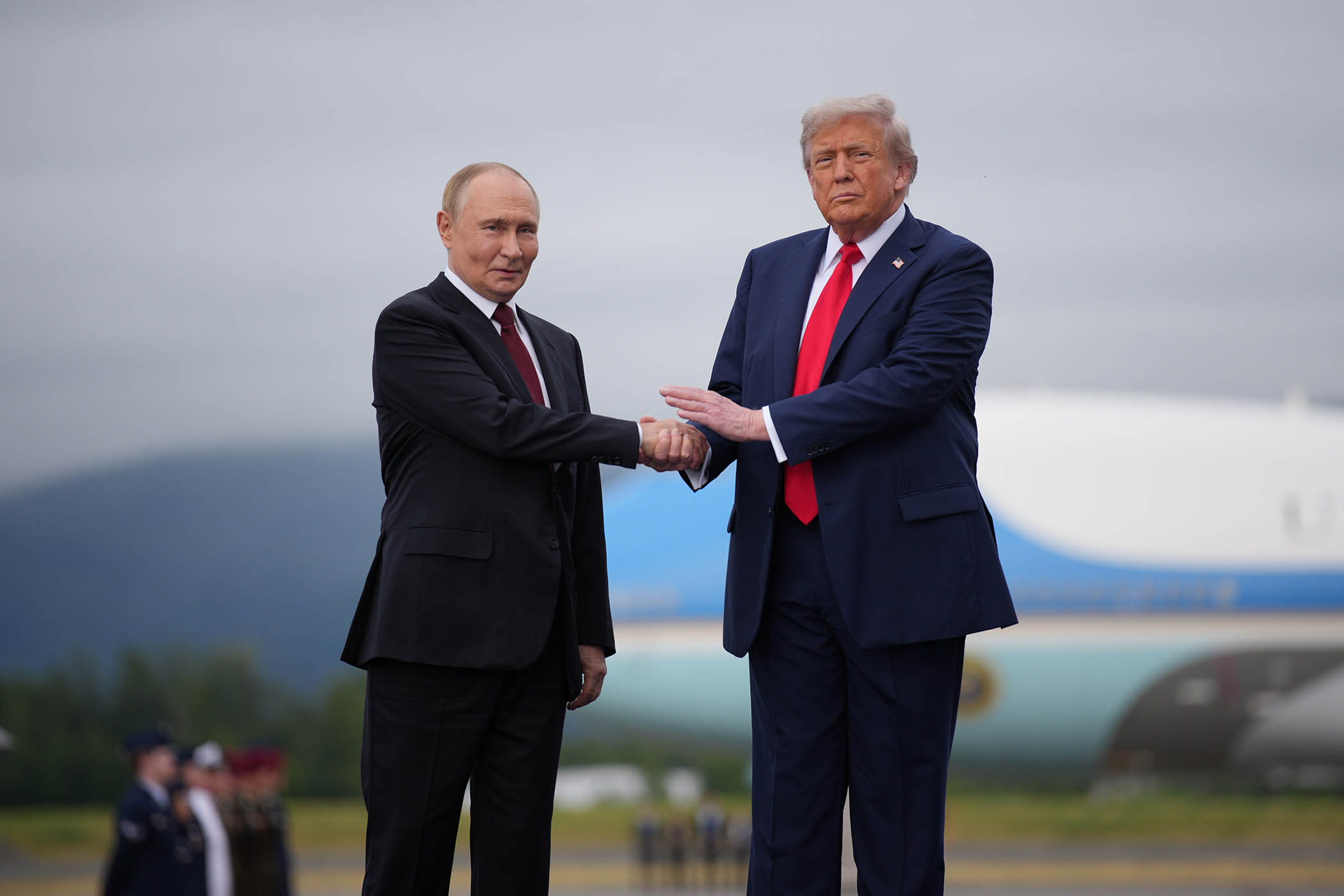
Trump and Vladimir Putin meeting in Anchorage, Alaska, in August
Impatient with Congress too, Vought and his co-authors alighted on the presidential executive order as their main weapon. All they needed was Trump’s signature, which they have used to wrong-foot any sort of opposition from day one. The 26 executive orders he signed on that day included renaming the Gulf of Mexico, leaving the World Health Organization and declaring a national emergency at the southern border.
Trump’s agenda, however eccentric, now leads the world’s agenda. One Maga consultant says the defining theme of Trump’s first year back in office has been “restoring American deterrence, at home and abroad”.
European allies were naive to imagine that a second Trump presidency would simply pursue the “feckless” foreign policy of Joe Biden, this person says, drawing a through-line between Vice-president JD Vance’s incendiary appearance at the Munich security conference last year and the current standoff over Greenland.
“The Europeans were free-riding on Nato. The United States effectively underwrites Europe’s defence and much of its economy. That had to change. This realignment has caused tension, but it’s consistent with the Trump doctrine,” the consultant says.
This is a doctrine based on putting Trump and America first, and on the exercise of raw power. And one person who has felt its impact at home is Elon Musk.
White House sources cite Trump’s showdown with Musk as a landmark moment of his first year back in office. In the early weeks of the new administration, Trump was surprisingly willing to share the limelight with the billionaire who bankrolled his 2024 election victory. The pair appeared for a joint interview in February, lavishing praise on one another. But inside the White House, Musk’s unchecked power and thirst for attention and influence became a growing source of tension with other senior officials.
“A lot of people around Trump couldn’t stand him,” one insider says. “Musk was always there, and he had an opinion on everything.”
The tipping point came last summer as Musk stepped back from government and launched a scorched-earth assault on Trump’s flagship tax bill and the president himself. As the feud escalated, Musk claimed that Trump was named in the “Epstein files”. For a moment it seemed that Washington was set for a titanic struggle between the world’s most powerful person and the richest. Instead, Trump brought Musk swiftly to heel by threatening to cancel his government contracts
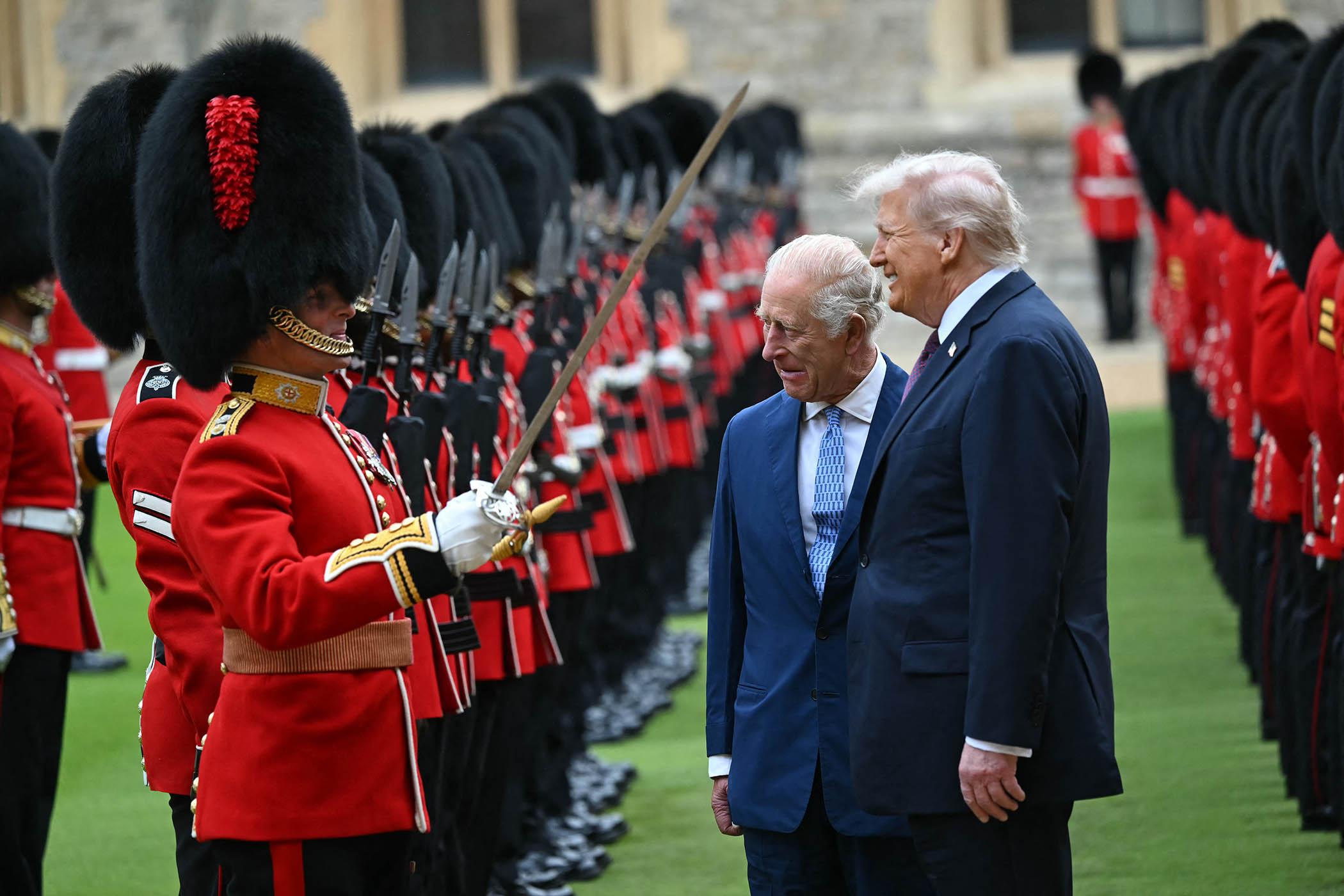
Inspecting the guard of honour with the king during a state visit to Windsor Castle in September
Late one night last July, the BBC’s Gary O’Donoghue got a call in his apartment. It was Trump. At first a sleepy O’Donoghue didn’t believe it and hung up, but the White House called back. He’d been asking for an interview for weeks to mark the anniversary of the assassination attempt Trump survived on the campaign trail, but had more or less given up. When eventually they spoke, Trump was candid and disarming. He said he didn’t like to think about the shooting in Pennsylvania and preferred “the power of positive thinking, or positive non-thinking”. He said he trusted “almost nobody”, was frustrated with Vladimir Putin for continuing to bomb Ukraine, and considered King Charles “a great gentleman”.
A number of better-known journalists have Trump’s personal cell number. When Fox’s Bret Baier called it in the middle of a marathon interview Trump was giving to the New York Times this month, Trump picked up and said he was being interviewed “by a group of the most brilliant people you’ve ever seen”. He told Baier to take care, and said he’d call back later.
“He has the capacity to be gracious, no doubt about it. In the service of Donald Trump,” says John Bolton, who knows him well and fell out with the president during his first term. Bolton was indicted under the Espionage Act after an FBI raid on his home in August as Trump turned the Justice Department on his political opponents.
He has the capacity to be stunningly ungracious too. He humiliated Ukraine’s Volodymyr Zelensky in the Oval Office last February brazenly siding with a tyrant over freedom and justice. When the director Rob Reiner died last month Trump called him “tortured and struggling” as a victim of “TRUMP DERANGEMENT SYNDROME”. When a Ford factory worker yelled at him in Detroit last week for “protecting” the convicted paedophile Jeffrey Epstein, Trump gave him the finger.
Contrary to the conspiracists’ view, the Epstein papers are still being released by the Department of Justice and it’s unclear whether they will hurt the president who boasted he could shoot someone on New York’s Fifth Avenue and not lose any voters. But the lesson of the past year is that anything is possible. That includes losing control of the House of Representatives in the midterms, which is one reason Trump is moving fast and breaking things.
Last week the non-partisan Cook Political Report revised its forecast to shift 18 seats in the lower House towards the Democrats, factoring in Trump’s low approval ratings, rising prices and broad unease about foreign entanglements that he promised to avoid. Poll after poll underscores mounting unhappiness among voters at Trump’s failure to tackle the rising cost of living, the issue he was elected to fix.
One veteran conservative operator who takes calls from Trump from time to time says that the president, having lost control of Congress in the 2018 midterms , is “laser-focused” on winning in November.
“He’s put together a $2bn fighting fund and the House speaker has raised a record amount in the last quarter,” says Grover Norquist of Americans for Tax Reform. More broadly, he says, outsiders shouldn’t mistake the smoke and mirrors for confusion about priorities: “He’s focused very clearly on economic growth in the US and views that as part and parcel of national defence.”
Which puts an interesting gloss on something Trump said in a huddle with reporters last week as the engines of Marine One roared behind him on the apron at Joint Base Andrews: “I want our country to be rich as hell.”
Photographs by Kenny Holston/The New York Times /POOL/AFP, Roberto Schmidt/AFP via Getty, @ermaka2022/AFP via Getty, Franck Fife/AFP via Getty, Andrew Harnik/Getty, Andrew Caballero-Reynolds/AFP via Getty