
Donald Trump signed a memorandum of understanding with Iran last week that he claims will guarantee the Islamic Republic never has a nuclear weapon. If only it was that simple.
The US president claims to have “obliterated” Iran’s nuclear programme last year, but now boasts forthcoming talks in Switzerland will put an end to Tehran’s nuclear ambitions entirely. His administration wants to oversee the complete removal of what he calls Iran’s “nuclear dust”: its entire supply of enriched uranium. But first, it has to find it all.
International inspectors knew where Iran kept much of its stockpile of highly enriched uranium a year ago. Deep underground in the tunnel network beneath the Isfahan nuclear complex, monitors kept watch on a shrinking stockpile of 20% enriched uranium that the regime was using to produce a growing supply of uranium enriched to 60% – a short step from weapons-grade. These efforts had gone into overdrive after Trump was re-elected, providing Tehran with enough nuclear material to make 10 nuclear bombs.
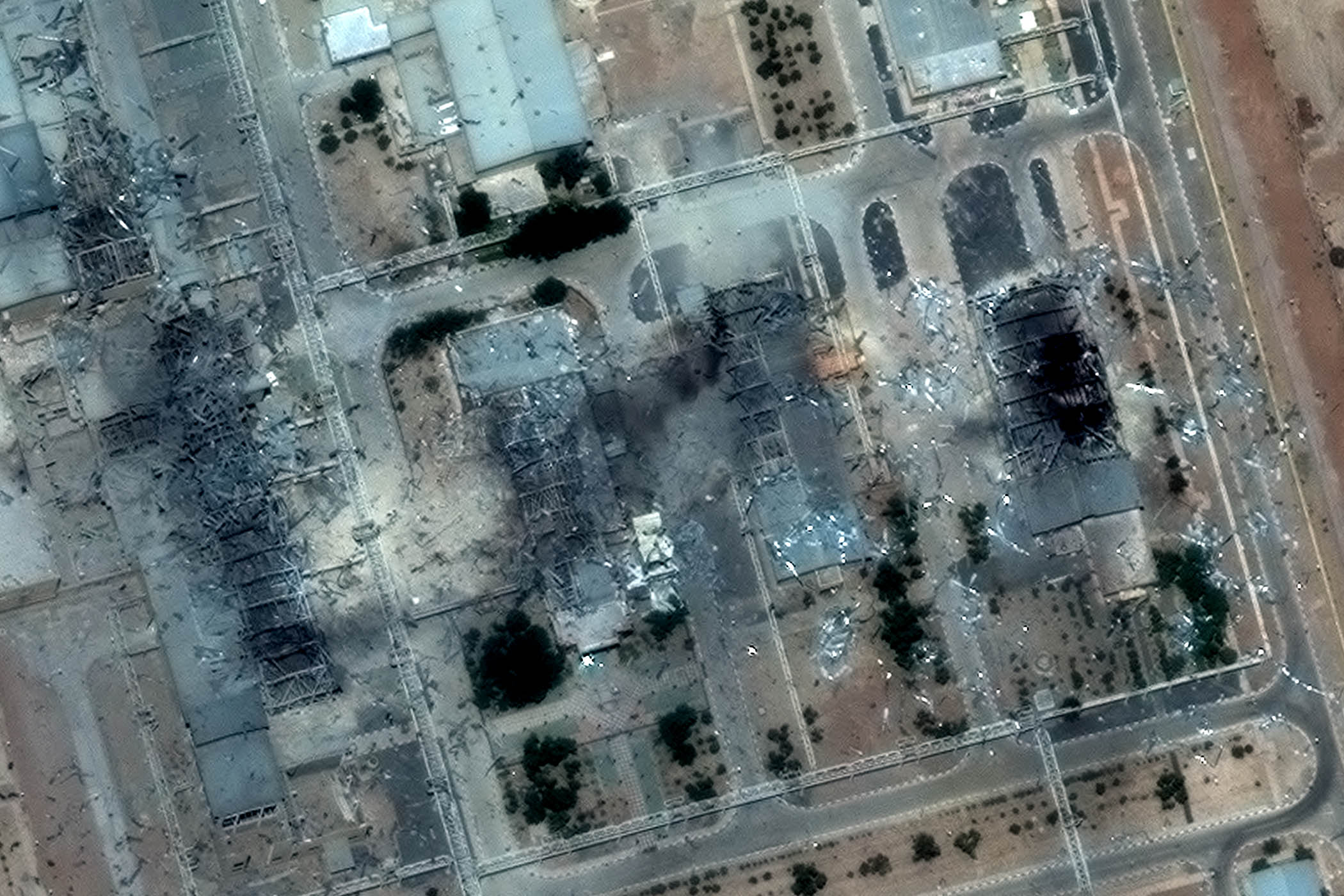
At the time, Iran was subject to intense surveillance by the UN nuclear watchdog, the International Atomic Energy Agency (IAEA), whose 120 inspectors were constantly visiting the country and had eyes on its nuclear stockpile. That all changed last June, when the US dropped more than a dozen bunker buster bombs on Isfahan along with two other nuclear facilities, Fordow and Natanz, also believed to hold enriched uranium. Tehran then halted IAEA inspections of any of its bombed-out nuclear facilities. The status and whereabouts of its 440kg (970lb) enriched uranium stockpile have remained a mystery ever since.
Yousry Abushady, a 25-year veteran of the IAEA, who trained its inspectors, said he is confident that most of Iran’s highly enriched uranium remains in Isfahan, citing a report issued by the IAEA’s chief, Rafael Grossi, the day before the US and Israel attacked Iran this year. “It is in different locations, mainly Isfahan, but the material is distributed between these three locations: Fordow, Natanz and Isfahan,” Abushady said.
The problem, experts say, is guaranteeing that the entire stockpile has been found. This needs transparency from Tehran, which requires trust. Washington has decades of experience in shipping highly enriched uranium overseas.
In 1994, US inspectors spent days packing more than 1,000 canisters filled with it into shipping containers in Kazakhstan, before loading them on to planes in a covert mission named Project Sapphire.
Last month, as part of the now friendly relationship between Caracas and Washington, US officials joined their Venezuelan counterparts and the IAEA to remove 13.5kg of enriched uranium from a nuclear reactor before shipping it to South Carolina.
Iran once trusted the US enough to do this too: under the 2015 nuclear deal signed by the Obama administration, Tehran diluted its highly enriched uranium stockpile to below the threshold of 3.67 % set by the agreement – the amount required to run its civilian nuclear power plant in Bushehr.
At that time, more than 11,000kg of enriched uranium was put on a boat and shipped to Russia. Former Iranian nuclear negotiator Seyed Hossein Mousavian said Iran had volunteered to dilute its stockpile of 60% enriched uranium again during talks earlier this year, in a show of compliance if the agreement on the table is “credible.” But during negotiations, the US attacked Iran for the second time. “The real challenge is rebuilding trust,” Mousavian said. “Reaching an agreement with Iran on nuclear non-weaponisation is the easiest part.”
Newsletters
Choose the newsletters you want to receive
View more
For information about how The Observer protects your data, read our Privacy Policy
Trump’s 2017 exit from the Obama-era Iran deal he disdained meant that Tehran’s nuclear programme expanded rapidly until the attacks last June. This, some international observers fear, means the regime could maintain hidden supplies or facilities to rebuild the stockpile.
While the missing 440kg of 60% enriched uranium is the main focus, there is several times that amount of low enriched uranium in Iran. “There’s close to 10 tons of enriched uranium, total, in the whole inventory – and Trump is asking to get rid of all of it. Because he wants zero enrichment, zero stock – all these zeros,” Abushady said.
With Iran’s known stockpile presumed somewhere under the rubble in the three bombed-out facilities, Abushady believes it was probably affected by the heat of the blasts; this could have vaporised some of the stockpile or left it in micrograms of enriched uranium that are both useless for building a bomb and all but impossible to extract from the rubble. “In the end, my belief is that this material still exists – but maybe not all of it,” he said. Better, he added, to simply bury the destroyed facilities and move on than to waste time trying to extract it all.
Others disagree. Jon Wolfsthal, once the most senior US government official setting nuclear nonproliferation policy under the Obama administration, agreed that the known stockpile is probably in Isfahan, and in theory could be shipped out of Iran within six months. Difficulties arise if Iran declines to identify the whole stockpile. “Iran might say: ‘We had 127 canisters – 43 were destroyed,’” Wolfsthal said.
Verifying that any amount of the stockpile was destroyed would require detailed onsite sampling to build up a forensic picture of how the blasts destroyed the material, which would mean letting US government experts in. “That is a massive undertaking. And there will always be uncertainty,” he said, especially if the Trump administration fails to hold Iran to an acceptable standard of disclosure.
Looming over the talks is the question of what happens to the stockpile if, and when, it is found. Iran’s foreign minister, Abbas Araghchi, recently dismissed the idea of sending diluted material overseas. “The only acceptable method is dilution inside Iran,” he told state television two weeks ago. This was to be addressed during 60 days of talks announced last week, he said – negotiations now delayed amid an Iranian boycott because of Israel bombing Lebanon.
Trump’s special envoy Steve Witkoff and his son-in-law Jared Kushner convened a group of nuclear specialists during a visit to a US government research facility in Tennessee earlier this month. But experts in the US and elsewhere doubt the Trump administration can navigate complex technical talks well enough to hammer out a stricter agreement than the Obama administration did in 2015 – even less likely within two months.
Farzan Sabet, an expert on Iran and its nuclear programme at the Geneva Graduate Institute, said any hurdles to locating the stockpile are ultimately political: an emboldened hardline regime in Tehran may remain reluctant to fully engage with inspections, particularly if the US insists on being present. Fears that Iran could covertly move towards nuclear breakout remain, although he doubts their chances of success.
Even so, Sabet said, regime hardliners are probably looking for new ways to deter future attacks beyond building a nuclear weapon. “Iran’s real nuclear option was closing the Strait of Hormuz – and it played that card,” he said.
Photograph by Maxar Technologies/AFP via Getty Images