The Cyrus cylinder, inscribed with the earliest form of writing, Babylonian cuneiform, demonstrates that Iran’s national story goes back more than two and a half millennia to Cyrus the Great. Now in the British Museum, it has often been referred to as “the first bill of human rights”. The Persian ruler’s benevolence towards the Jews is celebrated in the Old Testament in the Book of Isaiah.
While Cyrus did, at one stage, control almost half the known world, Iran’s history of at least the last two centuries has been that of one defeat after another, and of exploitation by foreign powers, principally Russia, the UK and the US. As a result, victimhood is powerfully embedded in the psyche of Iranians, both in terms of their religiosity and their pride in their nation.
I’m far from sure whether the US president, Donald Trump, or his advisers understand this: or the way in which this gives the people of Iran an unusual capacity for endurance.
The two are related, of course – but they are also separate.
Most Iranians are, formally, Shia. The term is a contraction of “Shiite Ali”, or “partisans of Ali”. On the death of the prophet Muhammad in 632, his followers split. The majority – the Sunnis – followed tribal practice and chose his father-in-law. The minority argued that the successor caliph had to be a blood relation.
There followed a long and bloody succession crisis. This ended in 680 when the Shias’ leader, the prophet’s grandson Husayn ibn Ali, was brutally cut down along with 72 of his followers. Victimhood – “martyrdom” – thus became a key tenet of Shia Islam.
The Shia doctrine became the state religion of Iran in the early 16th century. There are some parallels with the European Reformation in the same period, including a desire of the nations’ rulers to be rid of the supranational power exercised respectively from Rome and Mecca.
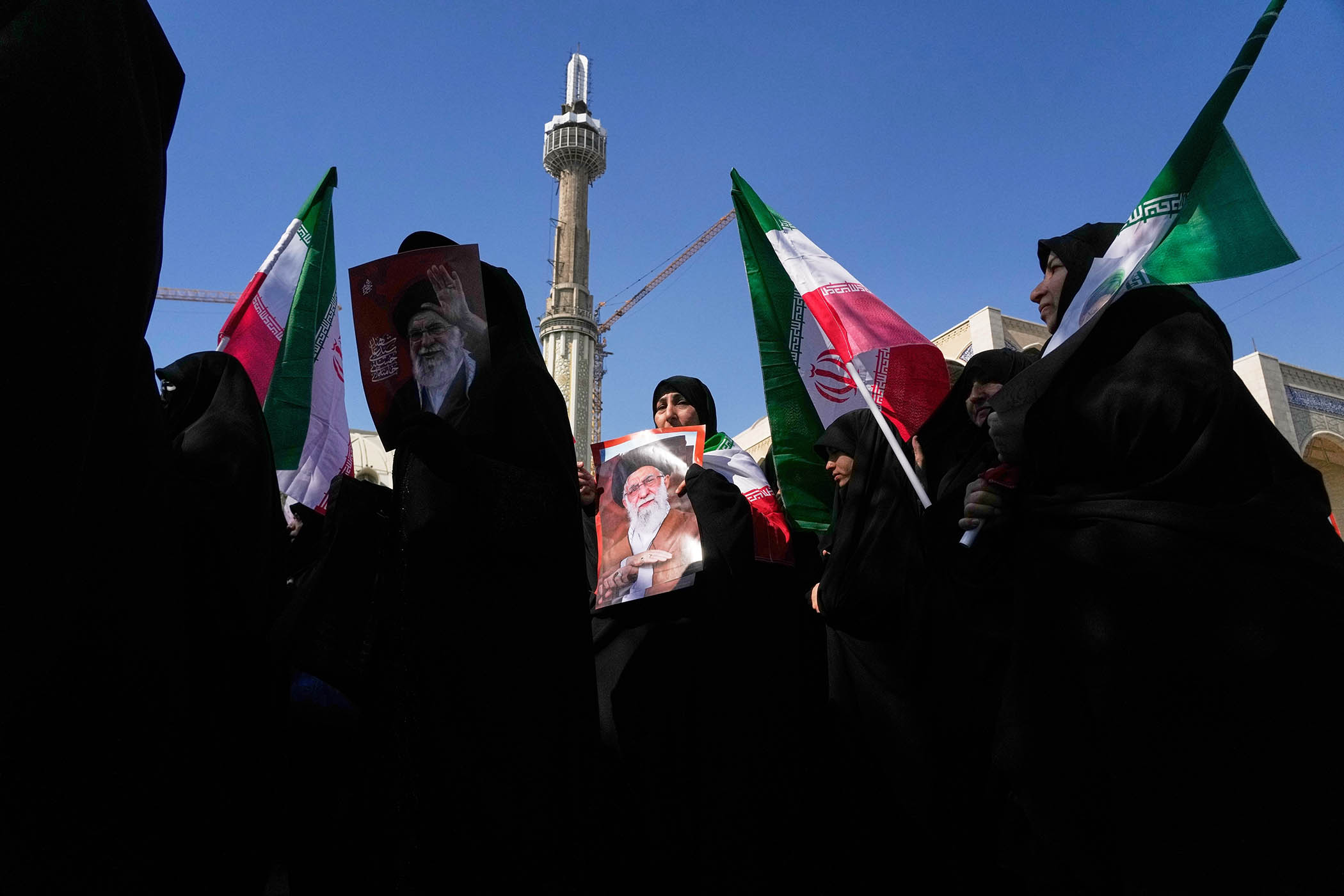
The Shia religion is completely embedded in the current Iranian constitution, including the extraordinary assertion in article 5 that, while waiting for the reappearance of its 12th imam, the country’s supreme leader will assume this role.
What binds both Iran’s faith and its modern history is a profound melancholy
What binds both Iran’s faith and its modern history is a profound melancholy
The number of true Shia believers has in recent decades declined precipitately – a reaction to the terrible behaviour of this theocratic regime. In contrast, Iranians of all beliefs and none do have a deep sense of pride in their nation.
What binds both Iran’s faith and its modern history is a profound melancholy. There exists an understanding that, one way or another, they will survive adversity, because that’s what their religion teaches them – and so does their national story.
Newsletters
Choose the newsletters you want to receive
View more
For information about how The Observer protects your data, read our Privacy Policy
Today’s aerial bombardment of Iran is, for sure, annihilating large parts of its nuclear programme, and its security and intelligence systems. But it is hard to see how this adds up to the “viable, thought-through plan” that the prime minister, Keir Starmer, had set as the UK’s pre-condition for involvement in the proactive stages of this conflict.
War is chaos. No one can tell exactly what will happen in Iran once the aerial assault is finished.
The greatest riches of Iran lie in the natural talents of its people. There are any number of experienced, intelligent Iranians still in the country. Many of the most senior have in recent years been excluded from office by the increasingly paranoid regime.
Former moderate presidents Mohammad Khatami (1997-2005) and Hassan Rouhani (2013-21) have been sidelined by the regime, while Mir Hossein Mousavi, the presidential candidate who unquestionably won the popular vote in 2009, when the election was stolen by the hardliners, has been under house arrest since 2011.
There are plenty of younger people – who could help run the country – for whom “loyalty” to the Islamic Republic is skin-deep and whose resentment at the system’s excesses is profound.
More likely is that the rump of the armed forces and clerical establishment, desperate to hold on to what they have – and petrified about the retribution that will be meted out to them if they lose power – will follow the Venezuela playbook and reach an accommodation with Trump, for which he will no doubt declare “victory”.
This rump will be joined by the whey-faced religious fanatics, many in the Basij, the irregular “volunteers” attached to the Revolutionary Guards. I’ve had encounters with these people. I’ve even tried to have conversations with them. It’s as hopeless as attempting a dialectical debate with Jehovah’s Witnesses.
There is, however, a big difference. These people still have the guns. You don’t need missiles to put down internal dissent, just small arms, as thousands of Iranians found to their cost in January.
My hope is that, in time, because the rump regime that will remain is so discredited and bankrupt of ideas, better people will replace it. The majority of Iranians have been victims for decades, going back well beyond the avaricious corruption of the last shah, whose misgovernment led in 1979 to the mullahs taking charge. But it’s likely to take years.
In the meantime, Trump will have moved on, and while the UK may not be burdened by an ill-thought-through war whose objectives remain unclear, the whole world will have to deal with the consequences for some time to come.
Photograph by Vahid Salemi/AP Photo