

The leaders of Israel and Lebanon could meet in the White House this week for the first face-to-face talks between the two nations in 33 years. But while the US president, Donald Trump, is confident that a deal can be struck to turn last Thursday’s temporary ceasefire into a more durable peace, the mood is less upbeat inside Lebanon.
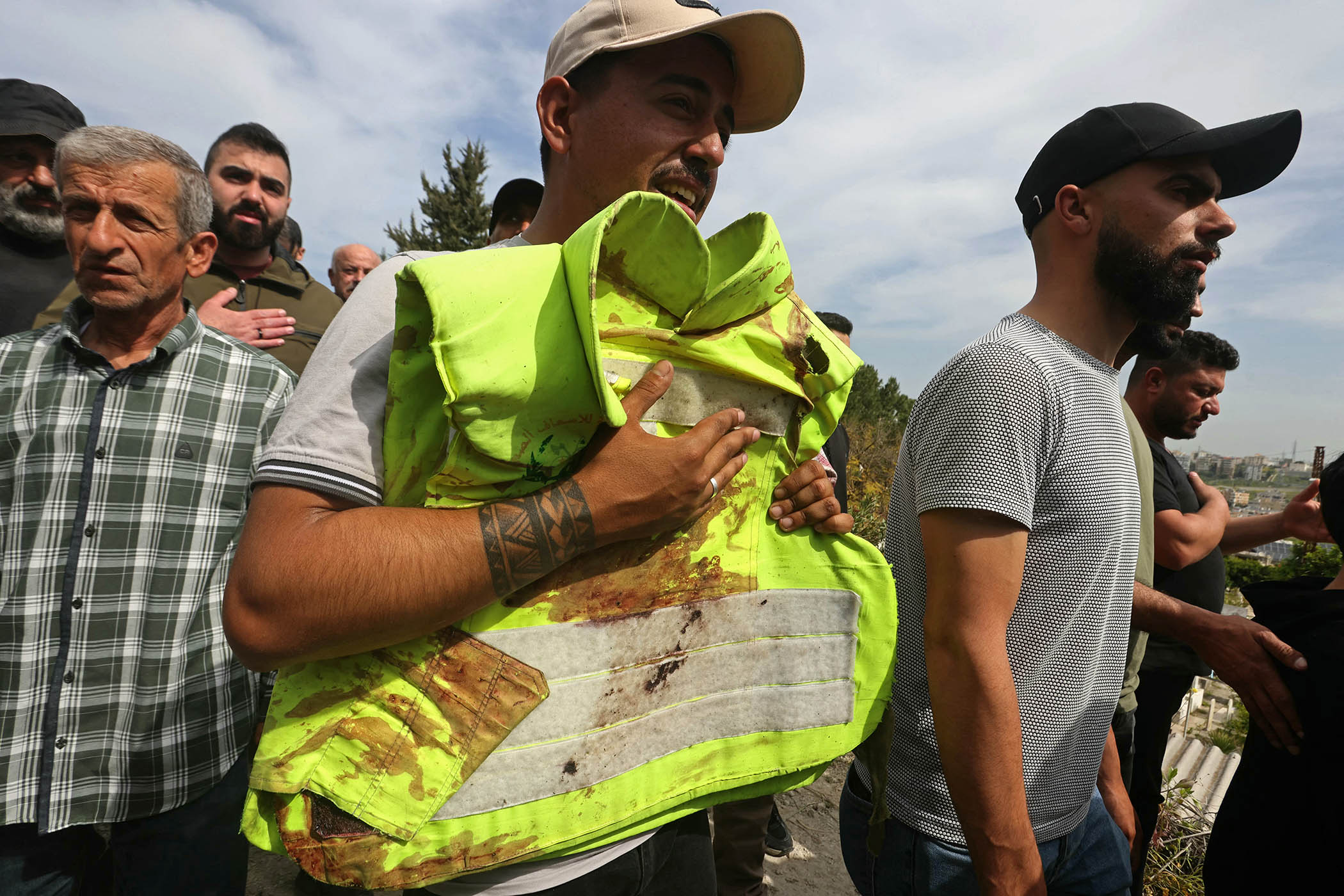
On Wednesday, Israel carried out a single attack that left the country reeling. After a strike in the southern town of Mayfadoun killed one person and left others wounded, two ambulances sped towards the site. As the paramedics helped the victims, a second Israeli airstrike slammed into them, killing one paramedic and fatally wounding another who died in hospital. Their colleagues screamed into their radios for help.
Another ambulance team answered the call, but as they loaded the dead and injured into their vehicle, they too were hit. Reeling from the third strike, they loaded the wounded, including one of their own, into their damaged ambulance and drove away before meeting two more ambulances that had rushed to assist.
A GoPro camera mounted on one of the paramedics captured what happened next. As paramedics administered first aid to their colleagues, another Israeli airstrike slammed into the scene, exploding among the parked emergency vehicles. The rear window of one ambulance blew inwards, sending shards of glass and shrapnel into the side of an emergency worker. In total, Israel launched four strikes, with three of them hitting emergency workers.
A “double tap” is the practice of striking an area or individual, waiting a period of time for emergency workers or help to arrive and then striking the same place a second time, maximising casualties and deterring further rescue attempts. On Wednesday, what amounted to a “quadruple tap” killed four and injured six others.
Ninety-three emergency workers have been killed by Israeli airstrikes across Lebanon since 2 March, according to Lebanese officials.
For some observers, the pattern is difficult to dismiss as incidental. Human Rights Watch (HRW) said it had documented repeated, apparently deliberate, attacks on health workers, including strikes on paramedics, medical staff and hospitals. Deliberately targeting them would amount to a war crime, it said.
“What we’re seeing differently is both a carelessness from the Israeli military towards abiding by the laws of war and principles of international law that they’ve been repeatedly violating, and an unabashed willingness to declare intention to commit more atrocities,” said Ramzi Kaiss, Lebanon researcher at HRW.
Israel rejects that characterisation. Israel Defense Forces (IDF) says that Hezbollah, the Iran-backed militia, is “using ambulances extensively for military purposes”, a practice it says justifies its attacks on the vehicles. The IDF’s Arabic spokesperson, Avichay Adraee, has repeatedly accused the Lebanon-based group of exploiting medical infrastructure, without providing any evidence.
The structure of Thursday’s ceasefire also reveals its fragility, however. Israel’s prime minister, Benjamin Netanyahu, accepted the pause, but not the conditions that may sustain it.
Newsletters
Choose the newsletters you want to receive
View more
For information about how The Observer protects your data, read our Privacy Policy
“One hand of ours holds a weapon; our other hand is extended in peace,” he said. Israeli troops, he confirmed, will remain in southern Lebanon, maintaining a “security zone” and continuing efforts to dismantle Hezbollah’s military capacity. Despite not being party to the talks, Hezbollah agreed to the ceasefire under pressure from Iran.
The group warned that the ceasefire should not allow Israel any freedom of movement within Lebanon and that it would treat any operations as a ceasefire violation, giving Lebanon and its people the “right to resist”.
Israeli leaders have said that a Gaza “yellow line” model will be applied to Lebanon and that the land between the yellow line, between two and six miles deep inside Lebanon, and the northern Israeli border will remain off limits to Lebanese civilians. The military has already destroyed bridges, schools and whole villages in the area.
However, a familiar catch-22 persists: Hezbollah will not disarm while Israeli troops remain, and the latter will not withdraw while the group retains its weapons. A similar ceasefire in 2024 was violated more than 13,000 times, according to the UN, largely by the Israeli military, which maintains it can strike Hezbollah if it perceives an imminent threat.
For the 1.2 million displaced civilians in Lebanon, the pause in the violence, despite reports of Israeli shelling in the early hours of Friday, offers a narrow window.
Families filled their cars at dawn and drove south, ignoring warnings from the government and Hezbollah not to do so. They waved flags and filled the highways as they went to check on their homes and bury their dead. Yet after months of devastating attacks, few are convinced that peace will prevail.
Photograph by Mahmoud Zayyat/AFP via Getty Images