

On stage in the Israeli settlement of Kfar Adumim, Benjamin Netanyahu kept his tone jovial and his white shirt sleeves rolled up as he broadcast plans to further occupy Gaza. “We now control 60% of the territory,” he said, pausing to shouts of “100%” from the crowd. “Go in order. First 70. Let’s start with that,” he said.
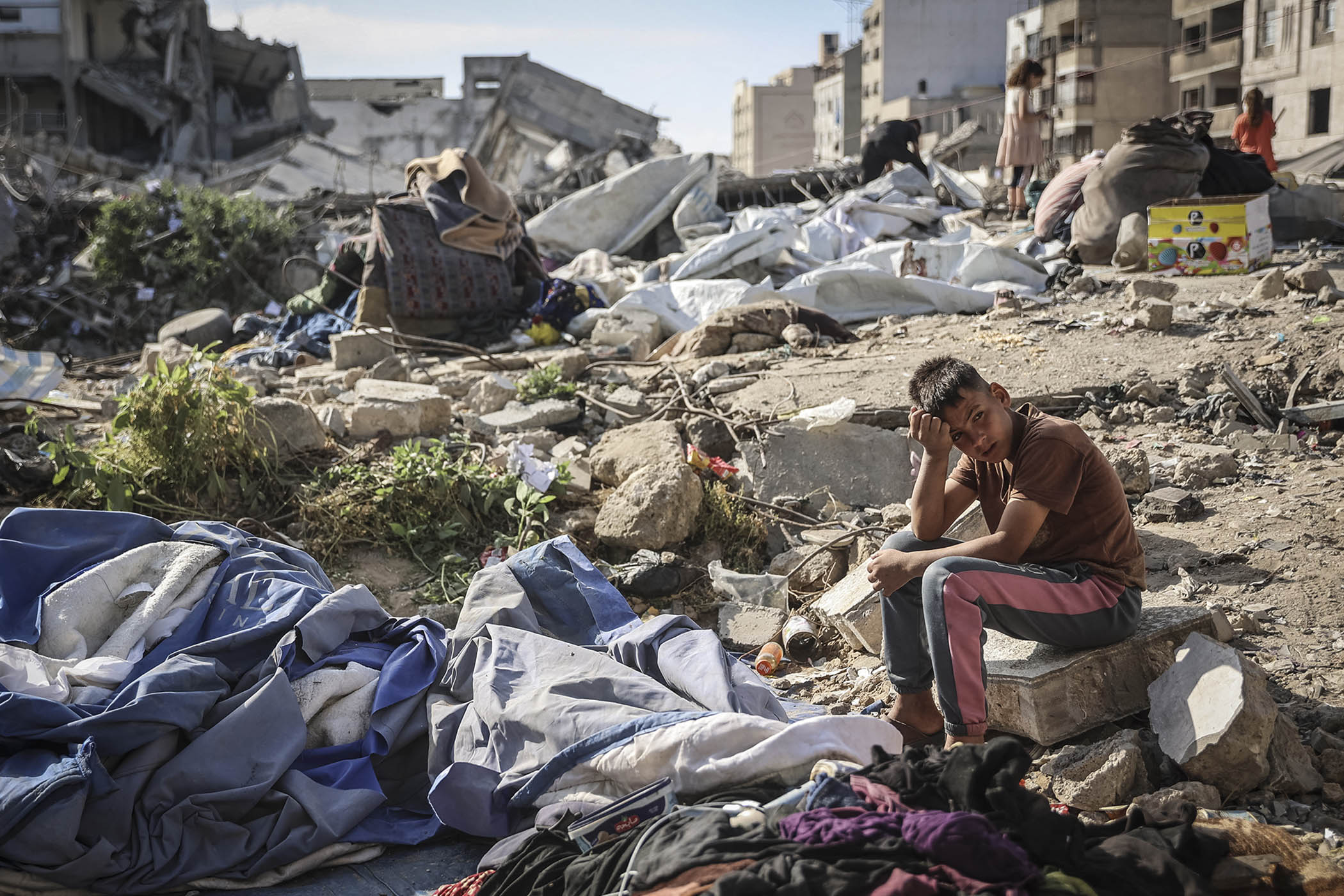
His pledge to deepen Israeli control of Gaza was an admission that the ceasefire deal hailed by Donald Trump as a key breakthrough last October has crumbled. Since the agreement was announced, more than 1,000 people have been killed in Israeli bombardments of Gaza, according to the Palestinian ministry of foreign affairs. A map recently distributed to aid groups by Israeli authorities shows a yellow line of control ringing far inside the territory, corralling about 2 million Palestinians into a shrinking sliver of land.
Two days after his speech in the occupied West Bank, Netanyahu visited Israel’s northern border to acclaim a deepening ground invasion of Lebanon, as troops crossed the Litani River and Israeli warplanes pounded swathes of land, striking big cities and the capital, Beirut. Israeli airstrikes have killed at least 3,000 people since early March, according to Lebanon’s health ministry – including 400 since a ceasefire was announced in mid-April.
The Israeli prime minister is eyeing a forthcoming election, with the security failures prior to the Hamas attacks on 7 October 2023 on the ballot. But Netanyahu hopes that Israel’s wars in Iran and Lebanon, its increasingly violent occupation in the West Bank and its expansion of control in Gaza will have a greater impact on his electoral chances. “He is trying to maintain a permanent state of war, and he couldn’t care less about the implications,” said Alon Pinkas, a former Israeli diplomat.
Meanwhile, Trump’s failures in Gaza are laid bare, alongside his method of diplomacy in the Middle East, heavy on big-picture initial agreements where the details and implementation are left for later. Earlier this year, his son-in-law and envoy Jared Kushner unveiled a masterplan at Davos showing gleaming towers and a marina, while Netanyahu’s statements undercut Washington’s pledges that no Palestinians will be forced to leave the territory.
Hamas’s chief negotiator Khalil al-Hayya, whose son was killed in an Israeli strike earlier this month, said Palestinians in Gaza are instead living in bombed-out buildings among rats and disease. Talks set out in the US president’s plan are stuck, with Hamas blaming Israel for failing to comply with the first phase of the deal that includes relinquishing control of Gaza. Board of Peace high representative for Gaza Nickolay Mladenov accuses Hamas of causing paralysis by refusing to disarm – a sticking point that al-Hayya indicated was meant to be under discussion in later phases. A promised international peacekeeping force for Gaza is yet to materialise: Indonesia, its largest backer, recently suspended the deployment of 8,000 troops citing worsening regional security.
If Israel implements the first part of the deal, al-Hayya told Al Jazeera, then Hamas is ready to move forward. But in the interim, he said, talks are futile, as Israel was failing to “comply even with the basics of life” in Gaza.
Daniel Levy, a former Israeli peace negotiator, pointed out that Gaza’s executive board within Trump’s peace board has yet to meet, while the UN remains diplomatically absent. “For Israel, this is a nice model to see how far they can go, where the UN has divested itself of a role and outsources its legality to a nonexistent entity whose board is packed with Trump cronies,” he said. Trump’s deal in Gaza, he added, “allows people to look away as, nominally, there is a ceasefire. So Israel can get on with engineering an Israeli future for Gaza and its displaced Palestinians.”
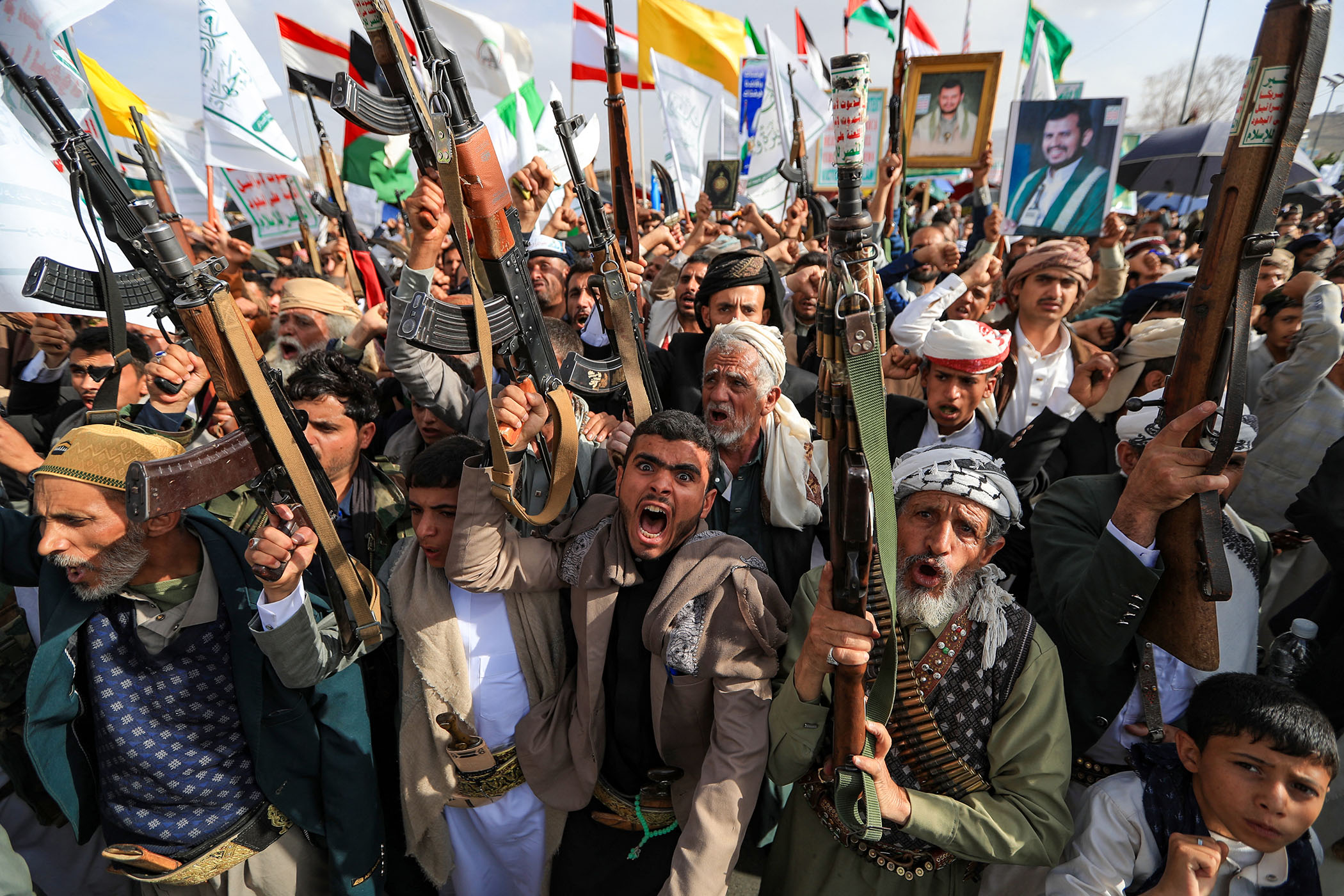
As Palestinians in Gaza suffer, Iranian negotiators appear wary of accepting Trump’s terms on a potential new ceasefire deal – with the US president seeking an agreement that will allow him to claim victory. “Iran will not be pushed back by Trump’s rhetoric from its red lines,” the Iranian lawmaker Ebrahim Azizi said last week on social media.
Danny Citrinowicz, a former Israeli defence intelligence analyst and an expert on Iran, warned that an unwieldy status quo may hold. “There is a good chance we will never see a final agreement,” he said.
Newsletters
Choose the newsletters you want to receive
View more
For information about how The Observer protects your data, read our Privacy Policy
If so, it is Netanyahu who stands to benefit, as he did from Trump’s deal in Gaza. Citrinowicz said Israel is hoping to prolong an ill-defined and shaky peace, where it can choose to attack Iran at will amid Trump’s threats of bombing, with little result. “It’s the negotiations that are problematic for Israel, and I think Israel is really hoping for no agreement.”
He added: “No agreement for Israel is better than a bad agreement, and every agreement with Iran is a bad agreement for Israel.”
Photograph by Omar Al-Qattaa /AFP via Getty Images