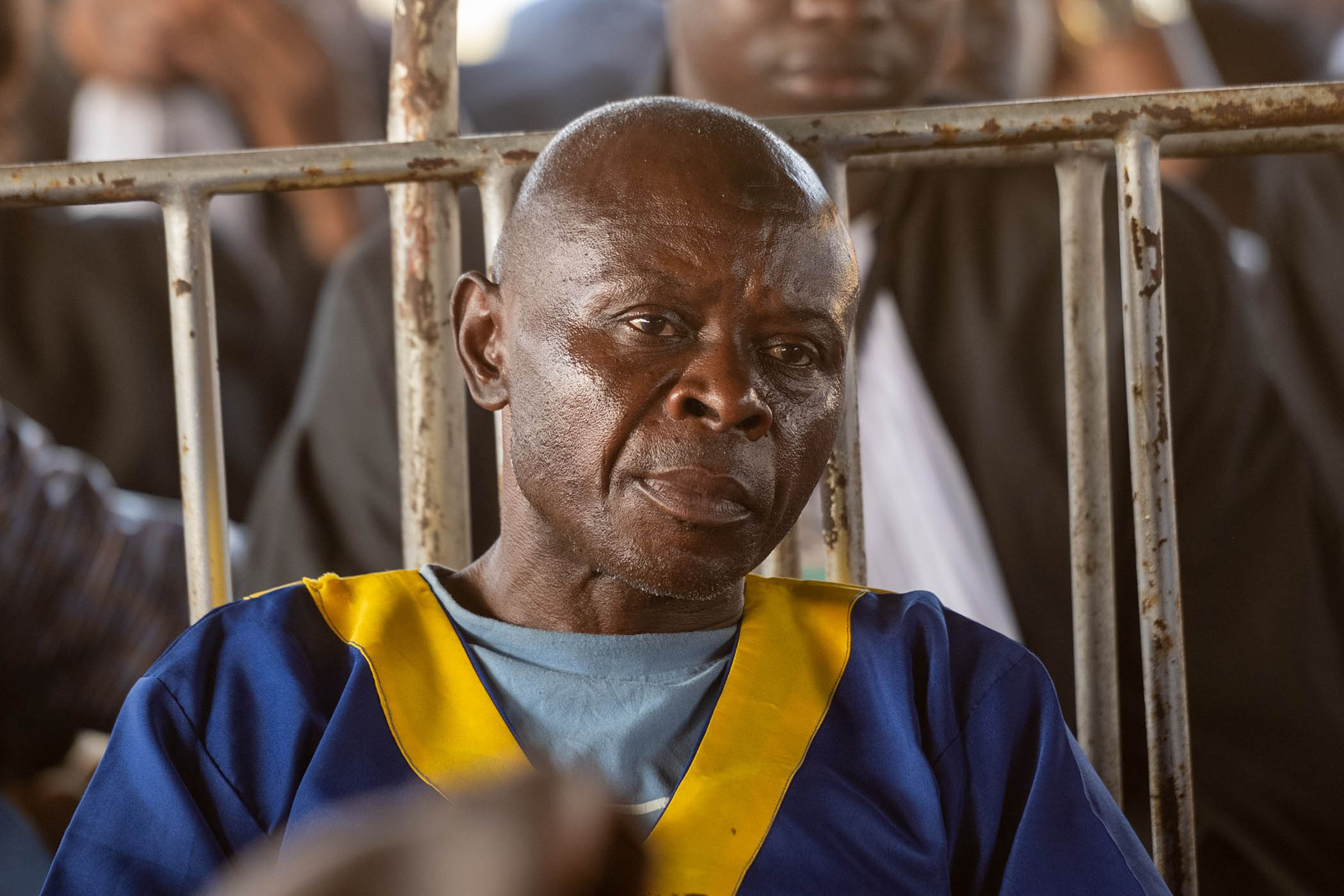
A former plumber from London who was sentenced to death in the Democratic Republic of the Congo for taking part in a coup has landed back on British soil.
Youssouf Ezangi, 56, was convicted in September 2024 by a military court in Kinshasa, alongside 36 others. He was among dozens of armed men who were accused of marching on the official residence of Congolese president Félix Tshisekedi in May 2024 in support of a little-known opposition leader. Six people were killed, including two policemen, during the attempt to overthrow the ruling party. Three were extradited to the US last year as part of a deal granting the US access to Congolese minerals.
Ezangi, who is a British citizen and lived in Tottenham, north London, moved to DRC in 2019. He was convicted of murder and conspiracy charges and, until 11 days ago, was held in a major military prison in Kinshasa. Now he’s in Belmarsh in southeast London.
Killian Moran, a solicitor working for the Death Penalty Project, a charity that advised the foreign office on Ezangi’s case, said his transfer back to the UK was justified on humanitarian grounds because of the poor conditions in the prison.
“There were 246 people in one room [with] no air-con,” Moran said. “We were told [Ezangi] gets out of that room for two hours maximum a day.” Prisoners in Ndolo military prison sleep on concrete floors and there has been a recent outbreak of mpox, previously known as monkeypox, which resulted in the death of an inmate.
As there is no official prisoner exchange treaty between the UK and DRC, the terms for Ezangi’s release had to be worked out from scratch, a process that took ministers from the Foreign Office and the Prison Service in the UK several months.
One of the key challenges was deciding what offences Ezangi would be held on once he arrived in the UK. As part of the agreement, Ezangi’s murder charge, which was a blanket charge covering him and 36 defendants, was downgraded to attempted murder.
But the decision to hold him in category A prison Belmarsh is “a statement of intent” from the government, said Moran, demonstrating its commitment to respecting the severity of Ezangi’s crimes.
“He’s committed attempted murder, an offence that is universally understood,” Moran said. The conspiracy charges were less straightforward as there are no exact equivalents in the English legal system. In the end the government decided on terrorism offences and unauthorised possession of weapons.
Still, it is possible that Ezangi could mount a legal challenge claiming that he did not receive a fair trial in DRC and that his conviction is therefore unsound. Otherwise he will have to wait up to two years before a judge formalises his life sentence, which is when he will find out how many years he will have to serve before he is eligible for parole.
Newsletters
Choose the newsletters you want to receive
View more
For information about how The Observer protects your data, read our Privacy Policy
Ezangi was held on death row in DRC with three Americans, a Belgian and a Canadian. One of the US citizens was Marcel Malanga, the son of Christian Malanga, who was thought to be behind the attempted coup.
Malanga Snr was born in Kinshasa but relocated to Utah in 1998 and proclaimed himself the president of a government-in-exile. He later returned to the DRC and was shot dead while resisting arrest during the 2024 attempt to overthrow the president and put him in power.
In April last year the DRC repatriated all three American detainees and their sentences were commuted to life in prison. The UK’s efforts to get Ezangi back have been far quieter. Even his family was kept in the dark about the possibilities of his repatriation for most of the negotiations.
Photograph by Chris Milosi/EPA-EFE via Shutterstock