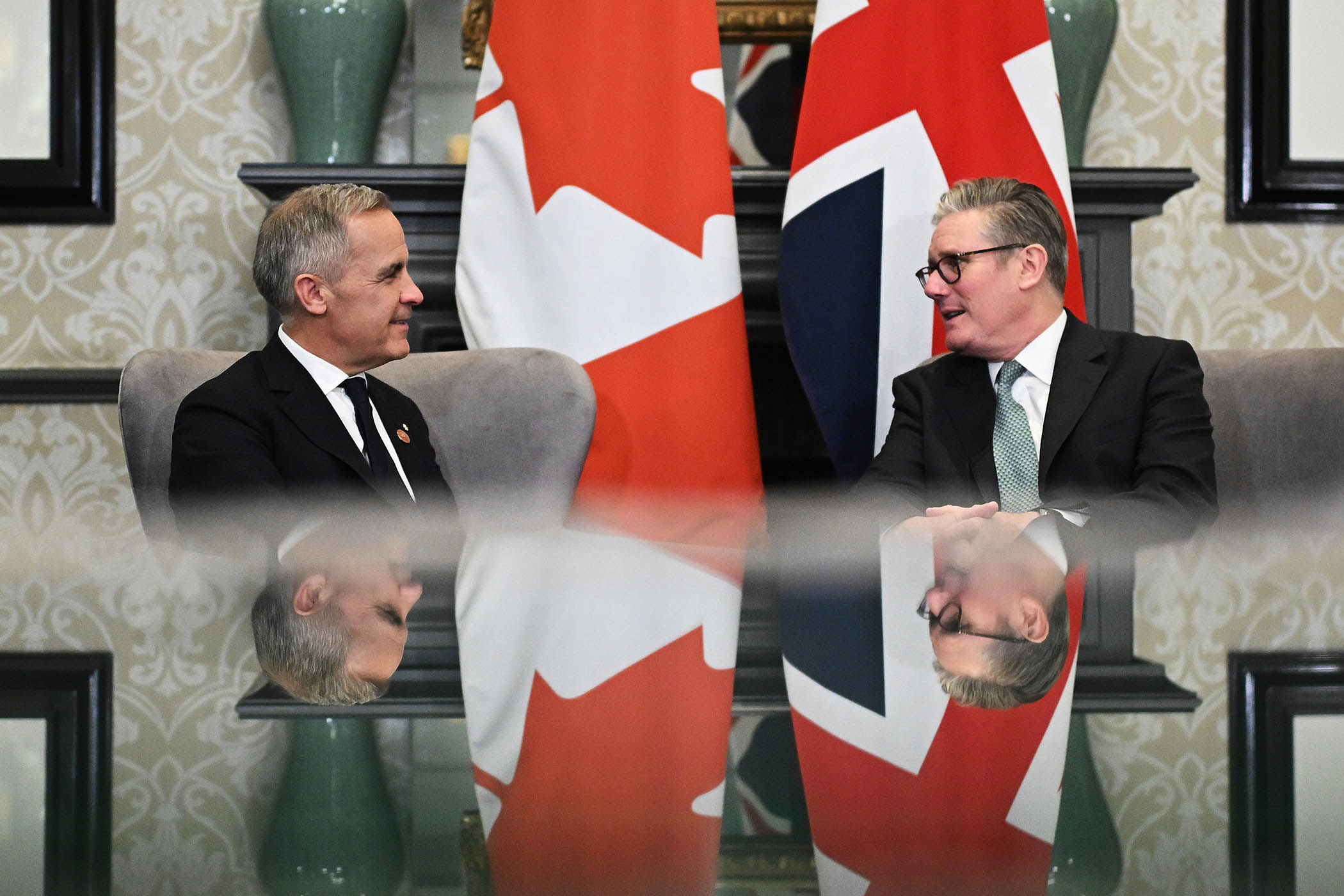

Mark Carney is stepping up efforts to persuade Keir Starmer to join a world bank for defence, as the two leaders face pressure to show how they will hit spending targets.
The Canadian prime minister is believed to be planning a trip to Downing Street, having spent the past few days touring global capitals, including Delhi, Tokyo and Canberra, where defence has been high on the agenda.
It follows a visit to parliament by a delegation from Canada last week. No 10 declined to comment.
Carney is leading the charge on creating the Defence, Security and Resilience (DSR) Bank, a multilateral, AAA-rated lender that would enable participating countries to borrow at relatively low rates to procure arms. He is expected to make an in-person plea to Starmer to join.
‘When it comes to unlocking the finance defence companies need … there is only one game in town’
‘When it comes to unlocking the finance defence companies need … there is only one game in town’
Alex Baker, MP
Sources told The Observer that invitations to join the bank’s charter negotiations – a process that will define its mandate – have been issued, with one being sent to No 10. Discussions are already under way about where the bank will be headquartered.
The concept is being championed by Rob Murray, a former British army officer and the head of innovation at Nato. During a phone call with Starmer last month, Carney emphasised “the DSR Bank’s potential to unlock private capital to fund defence and security firms across the supply chain – creating massive opportunities for workers and businesses”, according to the Canadian summary of the call.
The UK summary made no mention of the DSR. The campaign for the UK to adopt a world bank for defence has been running for more than a year, but the DSR model has been so far resisted by the Treasury in favour of a bespoke multilateral procurement mechanism which has been developed internally.
Sources told The Observer they were perplexed by the refusal to consider both options, as they address different issues within the system.
Advocates of the DSR noted that it would benefit smaller weapons manufacturers and enable firms to borrow more than twice as much because of the sovereign backing. It would also take any defence spending done through the bank off the books.
Speaking at the Munich security conference last month, John Healey, the defence secretary, highlighted the “creative ideas around a Defence, Security and Resilience bank”. At the same event Starmer said the UK was “stepping up work with likeminded allies on options for a collective approach to defence financing”, although he said his focus was to “build a joint European defence industry”.
Newsletters
Choose the newsletters you want to receive
View more
For information about how The Observer protects your data, read our Privacy Policy
The UK government’s promise to reach defence spending of 2.5% as a proportion of national output, as measured by gross domestic product (GDP), is not due until 2027, but the conflict in Iran has resulted in further political pressure for Starmer, with rivals – and Labour backbenchers – arguing the need to move more quickly.
Alex Baker, the Labour MP for Aldershot, who has long been pushing for the UK to join the DSR bank, told The Observer: “When it comes to universally unlocking the finance our defence companies need to expand and meet today’s security challenges, there is only one game in town. “The DSR Bank can help us to reach 3% of GDP on defence, which is so vital to our national security, without breaking our budget for schools and hospitals.
“By getting involved now, we can stand with our allies and shape this bank so it helps our defence industry to create more jobs and gets our armed forces the equipment they need to keep us all safe.”
Photograph by Leon Neal/Getty Images