
The Sign In The Window
‘In 1978, the Czech dissident Václav Havel, later president, wrote an essay called The Power of the Powerless. In it, he asked a simple question: how did the communist system sustain itself? And his answer began with a greengrocer. Every morning, this shopkeeper places a sign in his window: “Workers of the world, unite!” He doesn’t believe it. No one does. But he places the sign anyway to avoid trouble, to signal compliance, to get along.”
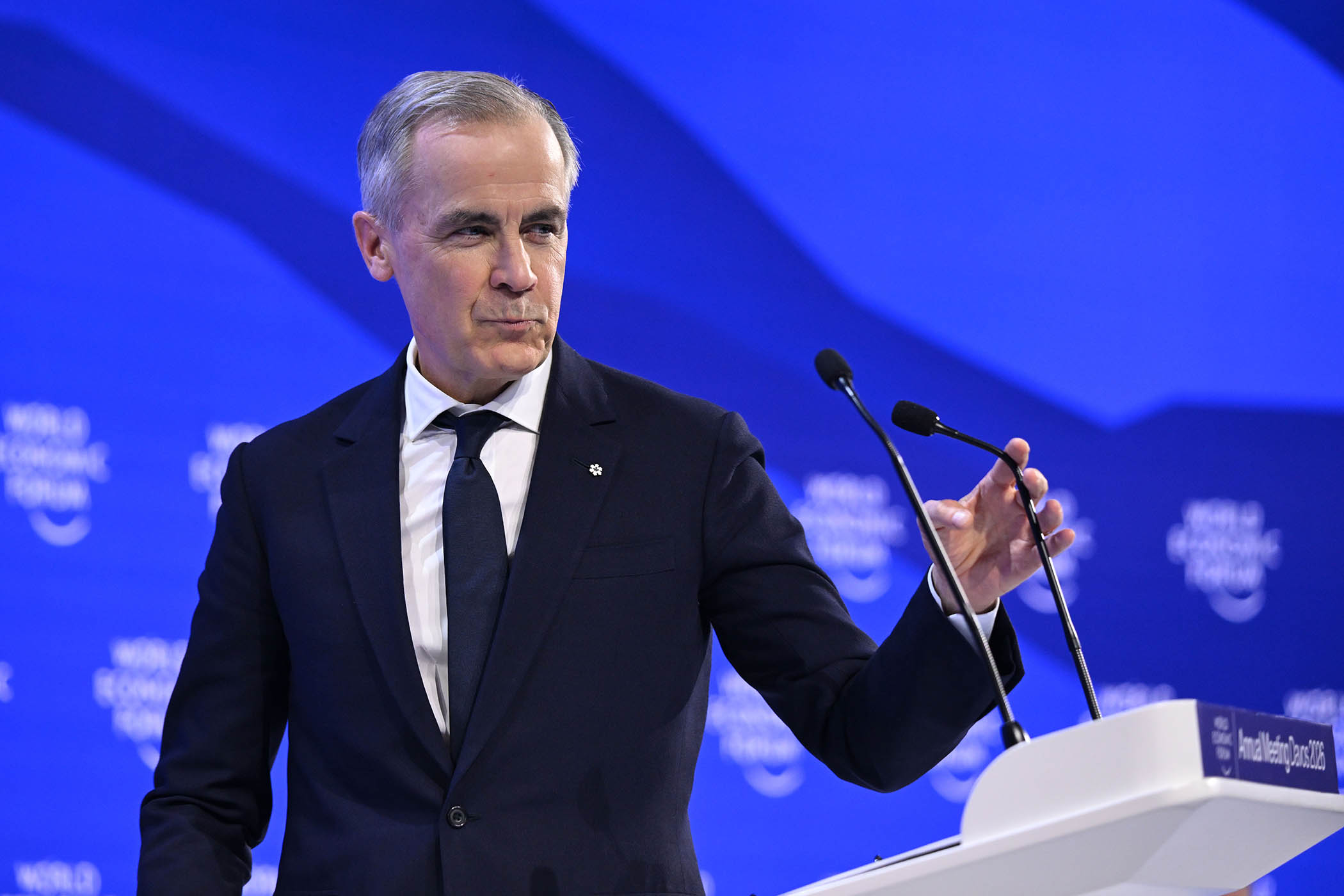
After a brief introduction setting out the problem the speech will address – “the rules-based order is fading” – Mark Carney tells the story that will give his speech rhetorical power. Too few leaders are prepared to allow space for what seems like a digression but then turns into a frame for the speech. The presence of the word “greengrocer” at Davos already has you listening. It says at once this is something unusual. The choice of Havel and dissidence also tells the audience, without spelling it out, that democracy is in peril.
Time To Take It Down
“Friends, it is time for companies and countries to take their signs down.”
And then comes the inevitable switch. The moment the metaphor is transferred from Havel’s story to Carney’s context makes the speech come alive. It is grave and moving. So much more effective than a more direct imploring to resist. As an audience, we see the sign and we see the action of taking it down. Think of the metaphor we use for understanding: “Ah, now I see what you mean.” That is why this works. It is a big subject and in one short visual statement, we see what he means. The metaphor means you get Havel and Carney combined, the second context lent historical weight by the first.
A World of Fortresses
“The multilateral institutions on which middle powers have relied – the WTO [World Trade Organization], the UN, the Cop – are under threat… But let’s be clear-eyed about where this leads. A world of fortresses will be poorer, more fragile and less sustainable… Hegemons cannot continually monetise their relationships.”
There are three notable things about this passage. The first is that Carney has the gift of a phrasemaker. But the second is that he does sometimes lapse into the jargon of the central banker he once was. There were other passages in the speech that do not live up to the standard set by Havel. Yet this instance is strangely effective because, third, Carney is discussing Donald Trump without once naming him. Who among the hegemons might regard diplomatic relationships as monetary transactions, I wonder?
Unwavering
“On Ukraine, we’re a core member of the coalition of the willing and one of the largest per-capita contributors to its defence and security. On Arctic sovereignty, we stand firmly with Greenland and Denmark and fully support their unique right to determine Greenland’s future. Our commitment to article 5 is unwavering.”
The thing that, in the end, makes this a memorable speech is the truth it tells. We all knew this to be true and that is why it counts. Finally, someone has declared the emperor to be naked. It is the unflinching nature of the truth-telling, the confident standing up to the bully that makes this work. Any speech is only as good as its central proposition and the case here needs to be made: “No, we will not consent to your nonsense.” Plenty think it; Carney says it out loud.
The Strength of Values
“Canada has what the world wants. We are an energy superpower. We hold vast reserves of critical minerals. We have the most educated population in the world… Canada is a pluralistic society that works. Our public square is loud, diverse and free.”
The technique of this passage is to dramatise an abstract point by locating it. This is not just flattery that will work back home in Canada, although it will. It is also a chosen list of the values Carney believes are under threat, which, as it happens, are all available in Canada. This, he says, is “what the world wants”. There is an unspoken contrast here – it is clearly not what the world’s leaders want.
Newsletters
Choose the newsletters you want to receive
View more
For information about how The Observer protects your data, read our Privacy Policy
The Value in Strength
“We understand this rupture calls for more than adaptation. It calls for honesty about the world as it is. We are taking the sign out of the window. We know the old order is not coming back… The powerful have their power. But we have something too – the capacity to stop pretending, to name reality, to build our strength at home and to act together. That is Canada’s path. We choose it openly and confidently. And it is a path wide open to any country willing to take it with us.”
This is not just a poetic diagnosis. The clarity and courage of its critique make it a good speech, but the addition of an optimistic coda makes it a very good one. Whether it turns out to be a great speech is always left to history to decide. Greatness will follow if “the middle nations” do indeed come together to protect liberal democratic values, as Carney here says they must.
Photography by Harun Ozalp/Anadolu via Getty Images