
With the west’s attention focused on Iran and Ukraine, a quiet but seismic shift is taking place in east Asia.
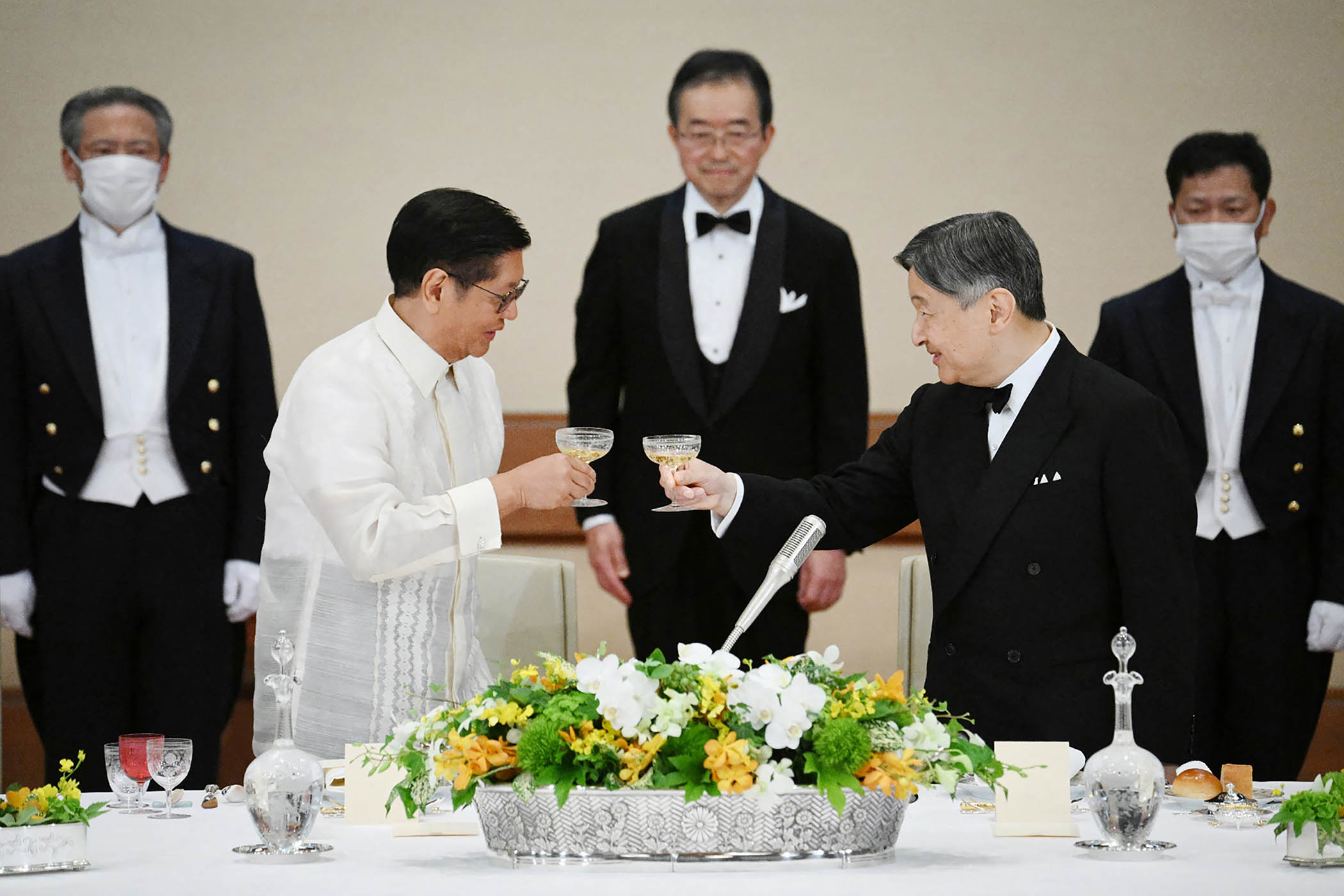
In Tokyo last Wednesday, Japan’s Emperor Naruhito and Empress Masako welcomed Philippine president Ferdinand Marcos Jr and first lady Liza Araneta-Marcos to the Imperial Palace for a state banquet. Marcos was in Japan for the remainder of the week, during which he met with the prime minister, Sanae Takaichi.
An increasingly belligerent China was at the top of the agenda when the leaders met. Both countries of about 120 million people face near-constant harassment by China’s merchant militia, coast guard and navy, among other challenges. Yet it is the Chinese threat to Taiwan, which sits between the three countries, that is the primary accelerator of the rapidly warming ties between the Philippines and Japan.
In the past six months, both Marcos and Takaichi have publicly acknowledged that, were China to attempt an invasion of Taiwan, their countries would inevitably be drawn into the conflict. Unlike Taiwan, the Philippines and Japan have mutual defence agreements with the US, which would be obligated to come to the aid of its allies if they were attacked. Beijing, which seeks to assert its territorial claims on the Japan-administered Senkaku islands and the Philippine-administered islands in the South China Sea, has accused Marcos and Takaichi of warmongering.
Yet the two leaders are almost certainly right, for purely geographical reasons.
While Taiwan is just off of the south-east coast of China, it is even closer to Japan’s south-western Ryukyu islands, and a similar distance to the Batanes islands in the far north of the Philippines. As a result, Japanese and Philippine territorial waters and airspace are less than 70 miles from Taiwan’s territorial waters and airspace. Both the Philippines and Japan are large archipelagic countries, and they know their closest islands to Taiwan would likely be subject to attack and/or occupation in a Chinese invasion attempt. Moreover, if Beijing were to seize Taiwan, that would put China’s military permanently on their doorsteps – forcing both countries to either fight or accommodate a triumphant Beijing.
Last November, in a tense exchange with a lawmaker in parliament, Takaichi spoke aloud what none of her predecessors, including Shinzo Abe, had been willing to say during China’s naval modernisation over the past two decades – the largest such build-up during peacetime.
“If battleships are used and a naval blockade involves the use of force,” Takaichi said of an attack on Taiwan, “I believe that would, by any measure, constitute a situation that could be deemed a threat to Japan’s survival.”
Takaichi’s wording was interpreted as sufficient to trigger the deployment of Japan’s military, which under the pacifist constitution imposed on it following the second world war is effectively limited to defensive actions.
Speaking to Japanese reporters in Manila last week, Marcos made a similar statement regarding whether his country might be drawn into the conflict if China made a move on Taiwan.
Newsletters
Choose the newsletters you want to receive
View more
For information about how The Observer protects your data, read our Privacy Policy
“We do not have a choice,” he said, “because Taiwan is so close to the Philippines and we have almost 200,000 Filipino nationals living and working in Taiwan.”
Marcos made his comments less than a fortnight after the conclusion of the Balikatan military exercises hosted by the Philippines. Meaning “shoulder to shoulder” in Tagalog, Balikatan began decades ago as small-scale drills between the Philippines and US militaries. But as more countries have become concerned about China’s activities in the South and East China Seas, especially around Taiwan, Balikatan’s size and scope have grown.
This year’s exercises featured unprecedented participation by Japan, which contributed about 1,400 personnel, mostly combat troops. Japan’s defence minister, Shinjiro Koizumi, attended the exercises. Koizumi and Philippine defence minister Gilberto Teodoro Jr witnessed the firing of two Japanese Type 88 anti-ship missiles. Six minutes after firing, the missiles struck and sunk a retired Philippine minesweeping vessel about 50 miles off the Luzon coast.
The missile test was a historical inflection point in bilateral relations between the island nations. In late 1941, the imperial Japanese army launched a bloody invasion and occupation of the Philippines. It began operations with a heavy bombing campaign launched just hours after the attack on Pearl Harbor. The Japanese bombers had taken to the sky from the closest airfields – in the Japanese colony of Taiwan.
Today those hostilities have been relegated to the history books. Case in point: in 2024 the countries entered into a reciprocal access agreement that facilitates the stationing of troops and military hardware in each others’ territory.
Under Takaichi, Japan has raised its annual defence budget to 1.9% of GDP, a record high that appears likely to increase going forward. It has also relaxed self-imposed restrictions on military sales to other countries. That is of interest to Marcos, who is keen to modernise the Philippine military, which could benefit from Japanese aircraft, ships, radar systems, and anti-ship missiles such as the Type 88.
This week Japan and the Philippines begin negotiations on an agreement that would allow for the exchange of classified security data. The signing of the general security of military information agreement, as it is known, would create a seamless intelligence-sharing triangle between Manila, Tokyo and Washington, which already has such agreements with its two Asian allies.
This would further raise interoperability between the three militaries, which only weeks ago conducted their first large-scale military drills together. The US has been urging the island nations to cooperate more since their first 2024 trilateral summit, during the Biden administration. For Manila and Tokyo, questions about US commitment to its allies under Donald Trump make their strengthening ties even more important – and urgent.
Marcos said last week that Japan’s more active role in regional defence “changes the playing field” in terms of deterring Chinese aggression. With nearly a quarter of a billion people between them, however, it is the budding alliance between Tokyo and Manila that could prove to be the real game-changer.
Chris Horton’s book Ghost Nation: The Story of Taiwan and its Struggle for Survival, is published by Macmillan
Photographs by Jiji Press/AFP/Getty, Franck Robichon/EPA/Anadolu via Getty Images