
Two of Hungary’s most influential figures came together in the mid-1990s at an intimate church wedding. Standing before the altar were a young opposition politician, Viktor Orbán, and his wife, Anikó Lévai. Nearly a decade earlier, the couple had married in a civil ceremony, back when the Soviet-backed regime still prevented them from doing so in a church. Now that Hungary was a liberal democracy, the Orbáns wanted their marriage sanctified in the eyes of God.
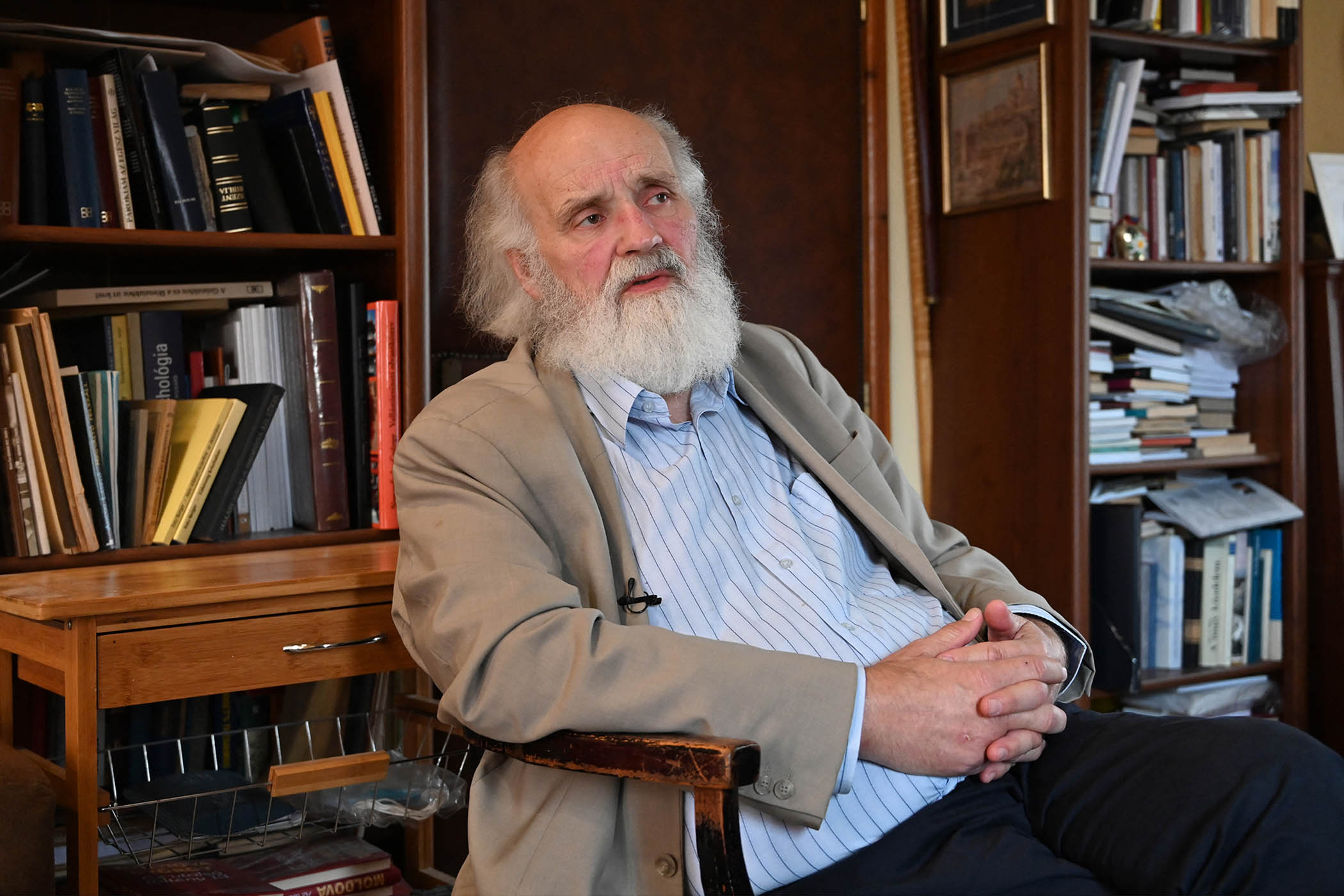
Behind the altar stood a bearded pastor renowned for his powerful oratory: Gábor Iványi. The pastor and the politician had been united in their opposition to Soviet rule. After the change in regime, Iványi not only renewed Orbán’s marriage vows but also baptised the politician’s children.
But in the years since, the two men have found themselves in opposition.
Orbán has built a self-proclaimed illiberal democracy, cutting back on free press and independent judiciaries. Citing Christian values, his Fidesz government has shut the country’s borders to refugees, curtailed the rights of LGBTQ+ people and cracked down on critics through financial and legal pressures and smear campaigns.
In turn, Iványi, founder of the Hungarian Evangelical Fellowship (MET) and a charity that runs soup kitchens and homeless shelters, has become one of the prime minister’s chief critics. Now, in the weeks before an election that could see Orbán’s rule come to an end, the pastor once entrusted with his family’s most sacred moments is one of the prime minister’s highest-profile targets.
In February, Iványi stood trial on charges of violence against authorities in a case that Orbán’s opponents consider politically motivated. Iványi pleaded not guilty; the trial is set to continue in May.
Before that happens, Orbán will face his strongest challenger yet: former Fidesz insider Péter Magyar, who leads in all independent polls. The outcome of the election could cement Fidesz’s rule or bring it to an end, and will test the resilience of the country’s democratic institutions. In the run-up to the vote, Fidesz and its allies have intensified their attacks on critics.
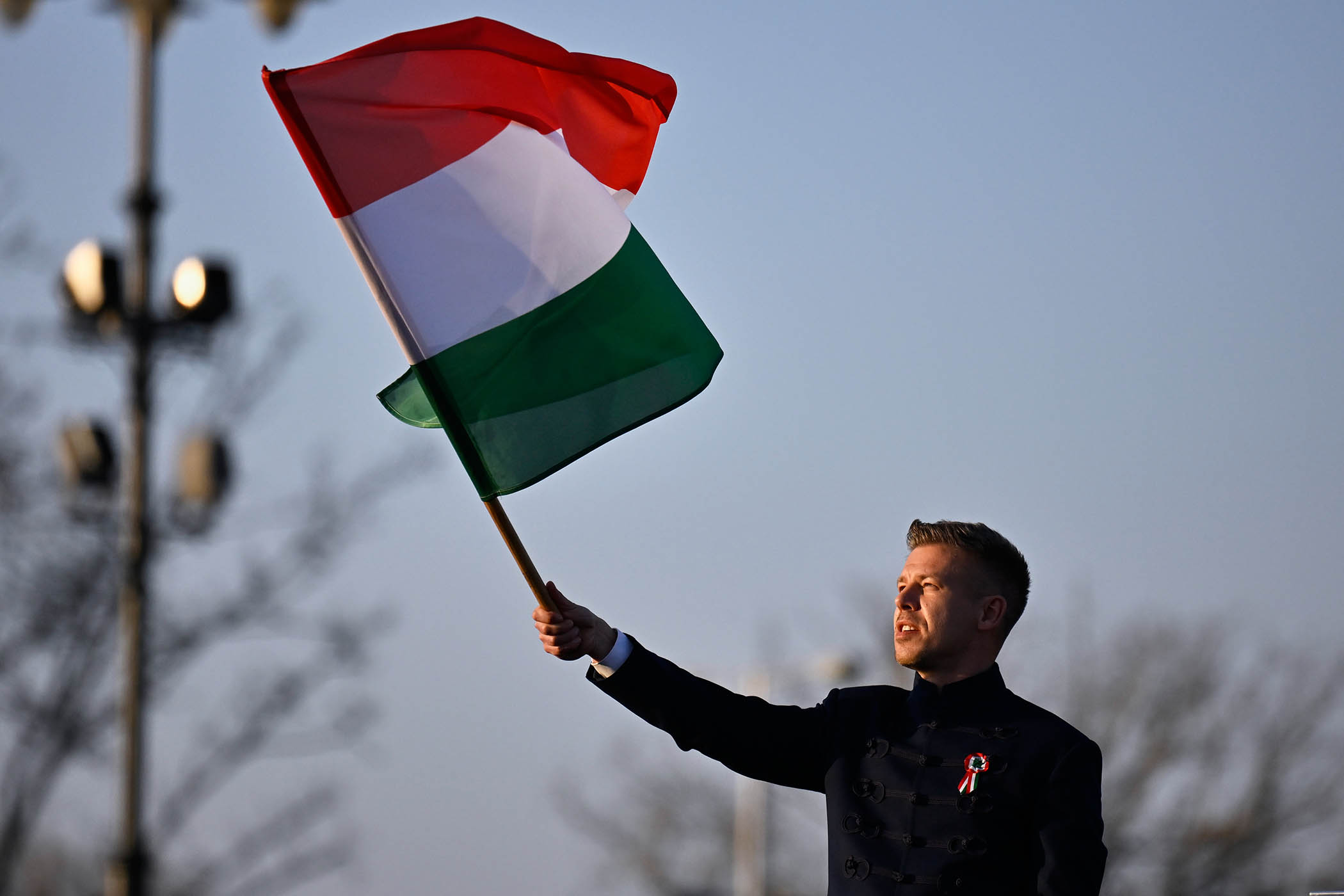
Opposition leader Péter Magyar. Photograph by AP Photo/Denes Erdos
A misinformation campaign, allegedly backed by Russian propaganda group Storm-1516 claimed Iványi was a “spiritual leader” for Magyar. The opposition leader appeared at one of Iványi’s protests in 2024, and called the prosecutor pursuing Iványi “soulless and cynical”. But Magyar has remained silent over Iványi’s recent cases, perhaps aware that overt support may damage his standing with rightwing voters.
“I’ve never gone looking for trouble,” Iványi told The Observer. “But in my view, remaining silent when the authorities overstep the law is a crime. And if one chooses to speak out, he must do so clearly and decisively.”
As a young politician, Orbán argued against the church’s influence over the state. Over his 16 years in power, however, he increasingly blended politics with religion, fashioning himself the protector of Christian faith.
Newsletters
Choose the newsletters you want to receive
View more
For information about how The Observer protects your data, read our Privacy Policy
Orbán uses Christianity as a way to shun his real or perceived opponents, says Garrett Martin, a Hurst Senior Professorial Lecturer at the American University in Washington DC, and the co-director of the Transatlantic Policy Center. He portrays his government as the righteous, Christian force and casts his enemies – refugees, LGBTQ+ people, political opponents – as threats to that.
“This is very effective, because one can’t even consider voting for [his opponents] who are fundamentally evil,” Martin added.
Orbán’s Christian-conservative rhetoric resonates across the Atlantic. “You have been great with respect to Christian communities,” Trump told Orbán in 2019. “And we appreciate that very much.”
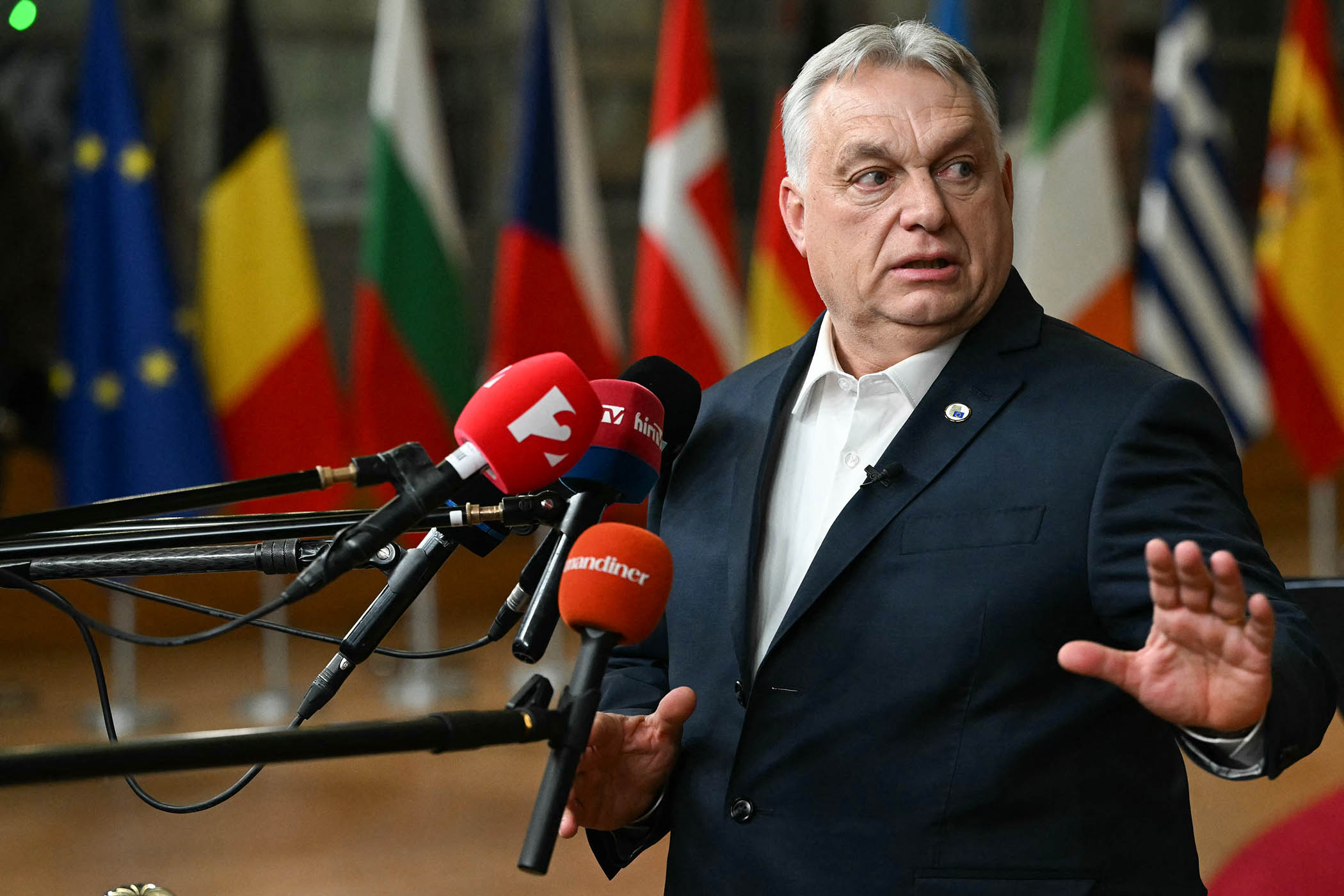
Hungary's Prime Minister Viktor Orbán. Photograph by Nicolas Tucat/AFP via Getty Images
The Fidesz government and allied organisations reportedly worked with the US Heritage Foundation thinktank on its conservative policy agenda, Project 2025, while Fidesz’s model of illiberal democracy has been cited as an influence on the Republican administration’s pro-natalist policies and media regulation.
In this sense, Iványi, a man from the world of Christianity who not only preaches but runs well-known charitable institutions, is a thorn in the government’s side, Martin says. “He’s a crack in the narrative.”
The son of a Methodist pastor, Iványi received a suspended sentence in the 1980s after his MET fellowship was deemed “undesirable” by Hungary’s Moscow-backed regime. He was forced to preach on the streets for years. “This taught me more than my theology studies,” he said.
“I’ve never gone looking for trouble but in my view, remaining silent when the authorities overstep the law is a crime.”
“I’ve never gone looking for trouble but in my view, remaining silent when the authorities overstep the law is a crime.”
Today he has a full grey beard and swollen ankles, making his walk laboured. He speaks slowly, out of deliberation rather than old age, though the years have taken their toll on his eyesight. His office is decorated with memories from his decades in service of God, including a large photograph of a homeless man on a bench in front of Hungary’s parliament building and a portrait of Queen Elizabeth, signed by the monarch on her 1993 visit to his homeless shelter.
When Fidesz came to power for the first time in 1998, Iványi also received a mandate to sit in parliament for the leftwing Alliance of Free Democrats party. He got a message from Orbán, he recalls: if Iványi signalled support for the Fidesz government, his congregation would receive generous funding. Iványi refused and their relationship soured. “I didn’t want their money,” he says. “And it didn’t help that I was critical of Orbán in my speeches.”

Viktor Orbán casting his vote for the first round of the Hungarian General Election in 1994. Photograph by Tibor Illyes/MTI/AFP)
Orbán’s Fidesz lost power in 2002 but returned to government in 2010. He passed a new constitution, emphasising traditional values, national identity and Christianity. At the same time, he unlawfully stripped MET of its official church status and of state funding. Today, Iványi claims that the state owes his congregation the equivalent of £3m. Short of this, and financed only by donations, he racked up huge debts, both to tax authorities and electricity companies.
On 21 February 2022, a few months before the election in which Fidesz secured another landslide victory, tax authorities stormed the office of Iványi due to suspected “fiscal fraud causing particularly large financial losses”. That summer, MET was forced to shut down its schools that provided free education for special-needs children from low-income families. By the next year, tax authorities began to seize funds from the bank accounts.
In March 2024, a few months before the European parliament elections, authorities sued Iványi, and four opposition politicians for alleged violence against official people at the 2022 tax raid. The case lay dormant for over a year before Iványi’s plea hearing this February.
“I am fighting and will fight with all means to create a [country] where something like this can’t happen,” he told the court in central Budapest before pleading not guilty, referring to the case.
The timing of the trial makes it hard to dismiss political motives. According to Anna Donáth, former member of the European parliament, and Iványi’s co-defendant, the state is setting an example. A former president of the leftwing Momentum party, she has also been the target of smear campaigns.
“It was enough to strip MET of their status for the other religious organisations to become footmen for the government,” Donáth said. “They have to destroy him, otherwise he will continue presenting an alternative. And they know that the best way to hurt him is by shattering his institutions one by one.”
In April, a record number of Hungarians are forecast to vote in the general election, following an intense and dirty campaign. Orbán’s Fidesz party has claimed that his opponent, Magyar, receives Ukrainian funding and would lead the country to war should he win. Magyar and his centre-right Tisza party have promised to tackle corruption and normalise relations with the EU, securing millions of euros in funding that the bloc has withheld due to concerns about the rule of law.
Magyar faces an uphill battle in an election deemed free but not fair. Orbán’s circle has a near-complete control over advertising and the media, delivering smear campaigns. Both the US and Russia have signalled support for the Fidesz government. Washington will dispatch conservative thinkers to CPAC Budapest in late March in a show of support, while the Kremlin is reported to have sent a delegation linked to state intelligence agency GRU to influence the vote.
Nevertheless, Magyar is confidently leading the polls. According to the latest poll by 21 Research Center, Tisza could receive nearly 60% of seats in parliament.
“This mob will leave in 28 days,” Magyar said of Fidesz at a rally in March. “Either to Chad or Moscow or maybe just from parliament. We’ll see.”
In late February, Iványi’s church, just outside Budapest, was left without power. According to Iványi, suppliers threatened 21 of his institutions, including those housing homeless and sick people, with shutting off utilities. Iványi says the attacks against him and his institutions have taken a toll on his health. “I have to stomach [them], and restrain myself from cursing [authorities],” he said.
But he has no regrets. “My goal is to live a full life, not a long life.”
More from The Observer