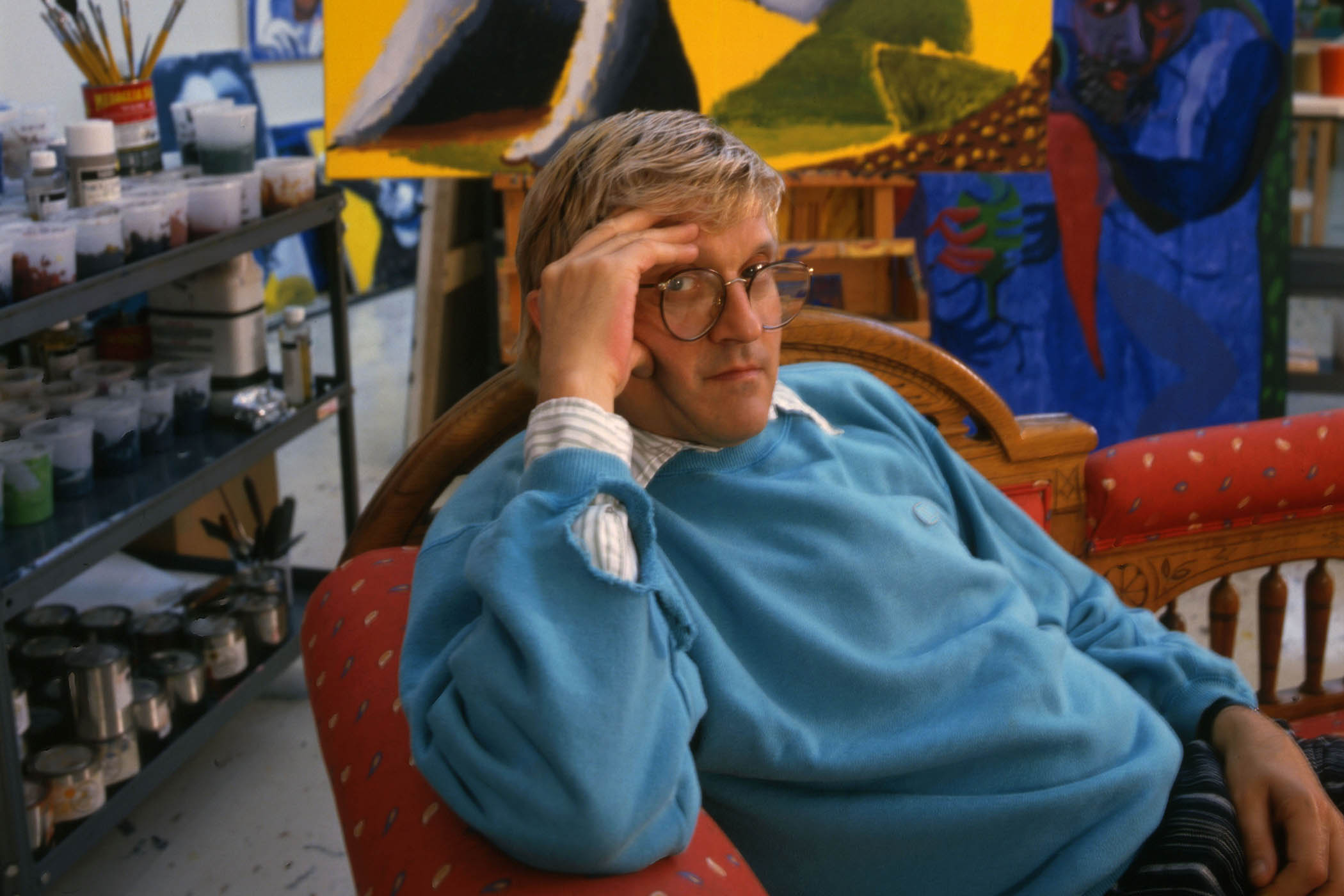

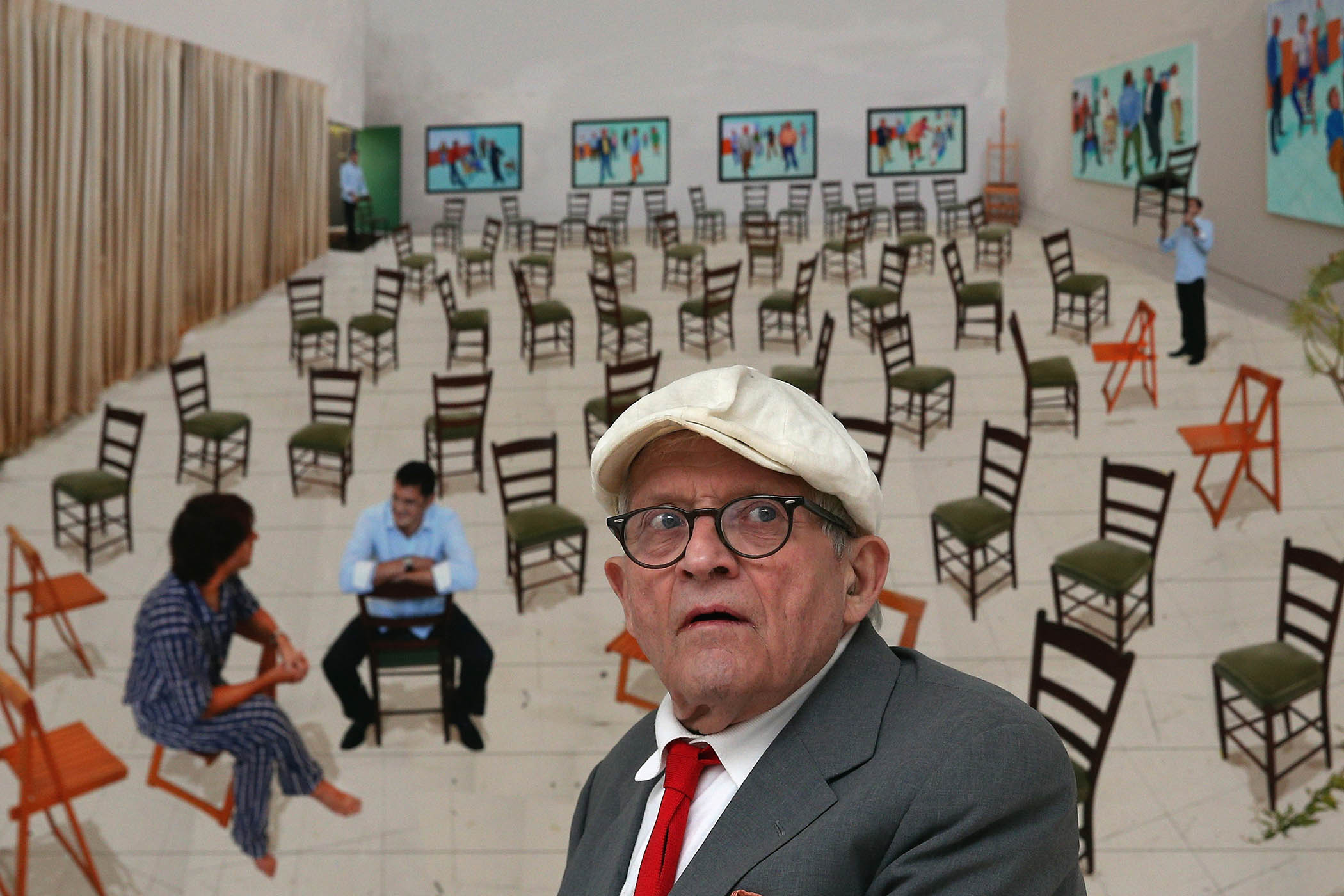
He was unashamedly, uncompromisingly, gloriously himself. And to me he was a hero.
David Hockney was born in Bradford in the working-class, industrial north of England – a key part of his story, as is his sexuality as a gay man. His work shows him to be amazed and invigorated by the life unfolding around him. Even a still life of flowers reflects the intense joy he took from the world.
But we can only understand his joy if we remember that Hockney came of age during the deprivations of the Second World War and then the drab, stifling society of the postwar period. He famously chose to settle in Los Angeles, a city of hope and possibility, a city of sunshine and vibrant colours.
I also see the joy in Hockney’s work as the joy of a gay man breaking free from repression and shame. In his early California swimming pool paintings, he revels in the beauty and sensuality of the male form, luxuriating in his gay desire.
Hockney came out as “homosexual” in 1960, while studying at the Royal College of Art – an act of incredible bravery seven years before decriminalisation. During this period, he painted an embracing gay couple and named it We Two Boys Together Clinging after Walt Whitman’s poem about gay love. This wasn’t just a political act, but shows that from the beginning Hockney was aware of queer cultural history and claiming his own place in it.
While his California pool paintings were radical in their celebration of gay desire, Hockney’s depiction of same-sex intimacy and everyday domesticity were arguably even more significant. “Come out, come out, wherever you are!” was the slogan of a 1978 campaign during which Harvey Milk argued that if all gay men revealed themselves to their friends, families and neighbours, mainstream society would realise we’re just like them and there was nothing to fear. Years before Milk, Hockney was doing this – and doing it in ravishing paintings that made him celebrated around the world.
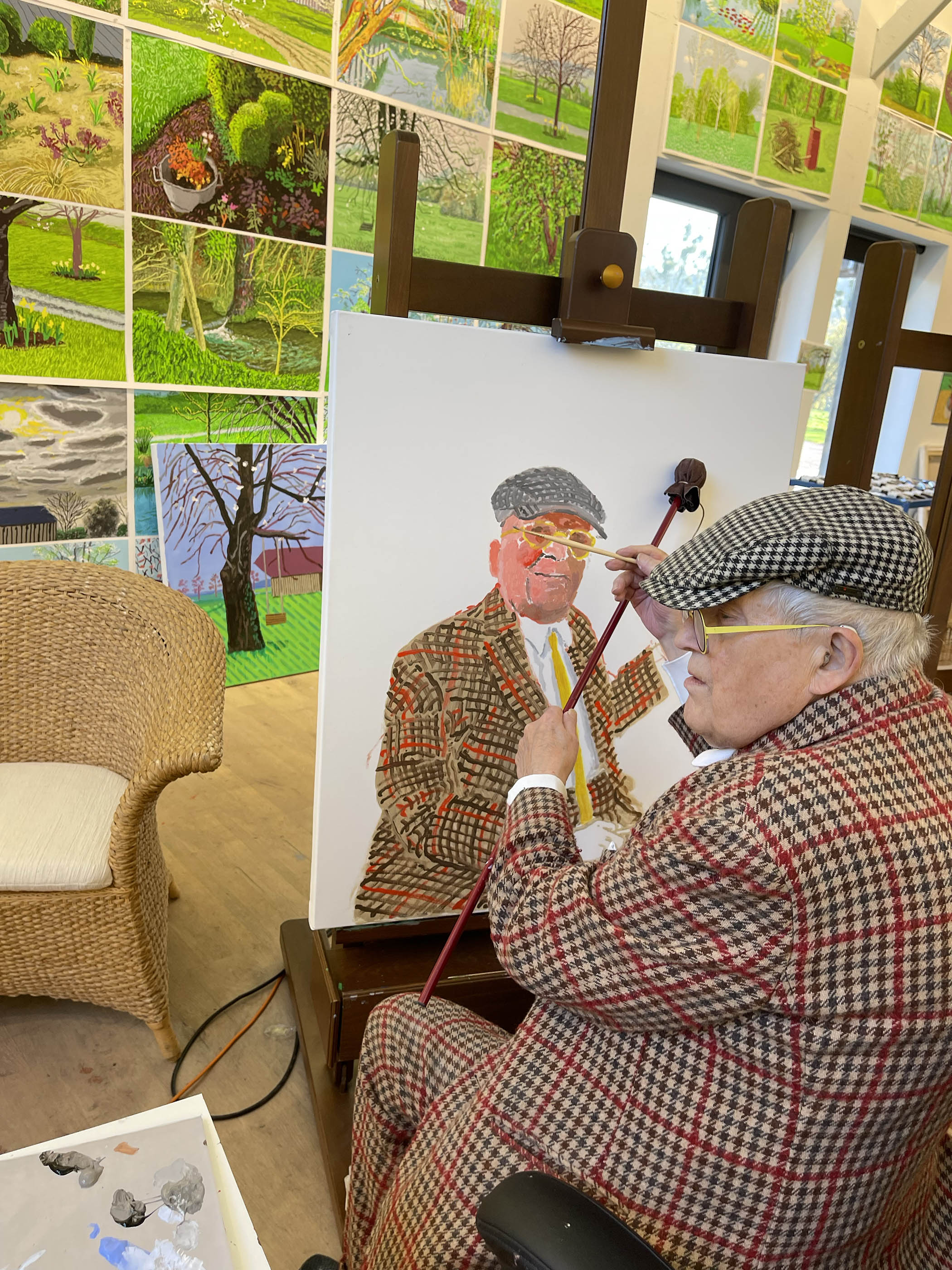
After 30 years in LA, Hockney returned to East Yorkshire – and brought the joyful approach he’d developed away from home to the landscape of his home county. His exuberant paintings of the changes of seasons, with their luscious greens, oranges and browns, take on an added poignancy when you consider that for years gay men were condemned as unnatural, “freaks of nature”. His later work, much of it created on an iPad, brims with a youthful dynamism, as if his irrepressible spirit was now breaking free from the declining health that comes with advancing age.
I first discovered Hockney in my youth, as a creative, sensitive gay child growing up in 1980s working-class Bolton and struggling to work out my place in the world. They say if you can’t see it, you can’t be it, and I saw very few artists working in any discipline who were from a background like mine, let alone ones who were publicly gay. But I could see Hockney – in all his glory.
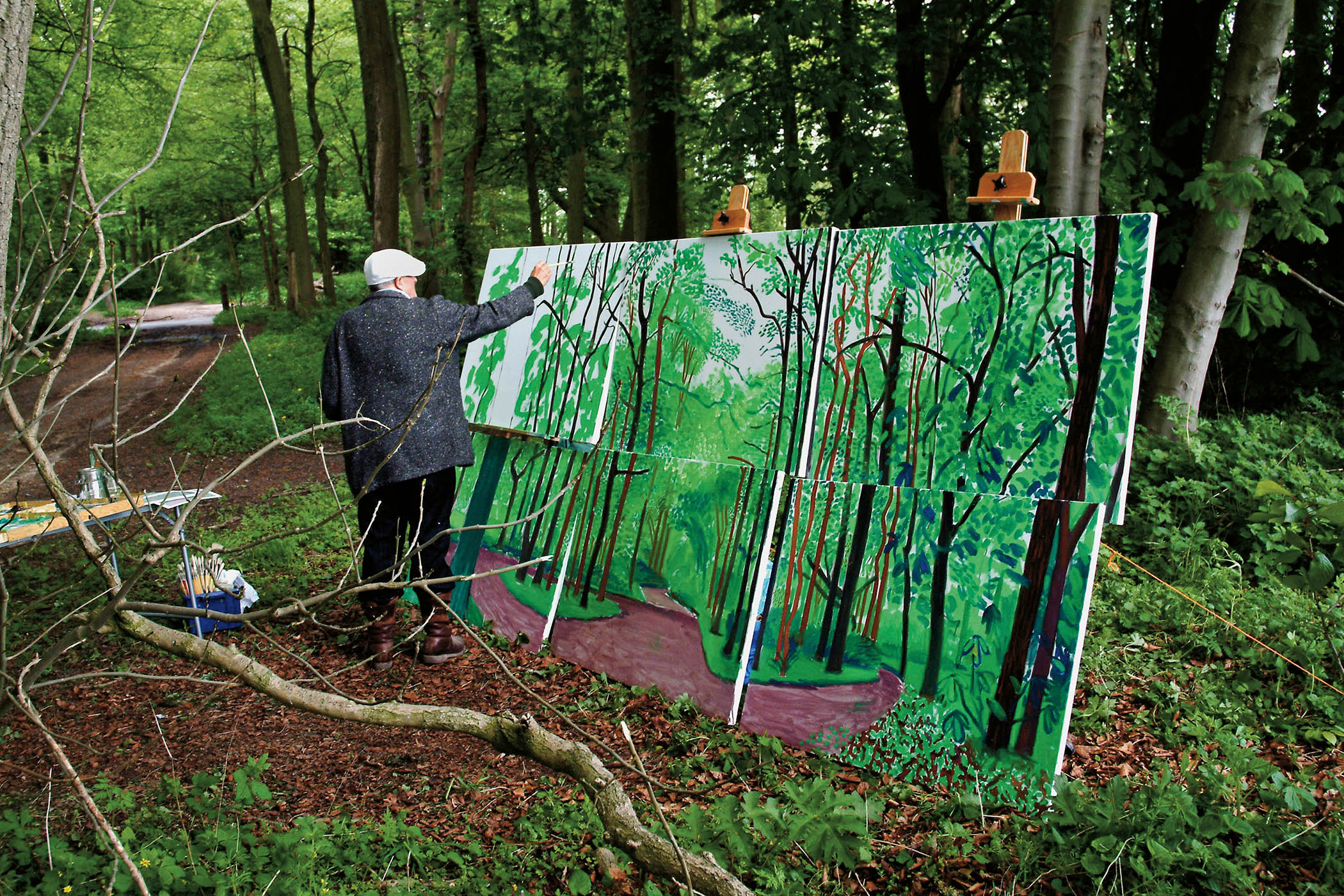
In 2012, I got to interview Hockney, as culture editor of Channel 4 News. He was opening a major exhibition at the Royal Academy of Arts. With a yellow rose pinned to his buttonhole, his eyes and smile twinkled with mischief. They say you should never meet your heroes but I liked him immensely.
Hockney told me that to be a painter you need the hand, the eye and the heart – and the last of these took me right back to his northern roots. Because we’re often told that northern people have heart. And I don’t think Hockney could have painted without it.
Newsletters
Choose the newsletters you want to receive
View more
For information about how The Observer protects your data, read our Privacy Policy
So the next time someone tells me my novels have heart, I’m going to remember David Hockney. The next time someone says they’re bursting with “queer joy” – the current buzz term – I’m going to thank him. Because he didn’t just invent queer joy – he invented northern, working-class queer joy. And he invented his own path through life, a path that would help me find mine. I don’t think I’d be here without him.
Photographs by Anthony Barboza/Getty Images, Jean-Pierre Goncalves de Lima