

It has been quite a year for Wes Streeting. The health secretary has abolished NHS England, gone to war with the British Medical Association (BMA), confronted a flu crisis and been given the all clear after treatment for kidney cancer. One hospital chief executive says the Department of Health is like “Game of Thrones without the dragons” because Streeting is always fighting on so many fronts.
To top it all, last month he was the target of what he calls a “bizarre drive-by” engineered by Keir Starmer’s allies who accused him of plotting against the prime minister. The attempted political assassination backfired spectacularly and left Streeting stronger and Starmer weaker than ever. “It’s water under the bridge,” he says. But the health secretary is now the person most mentioned by MPs when they are discussing who will be the next Labour leader.
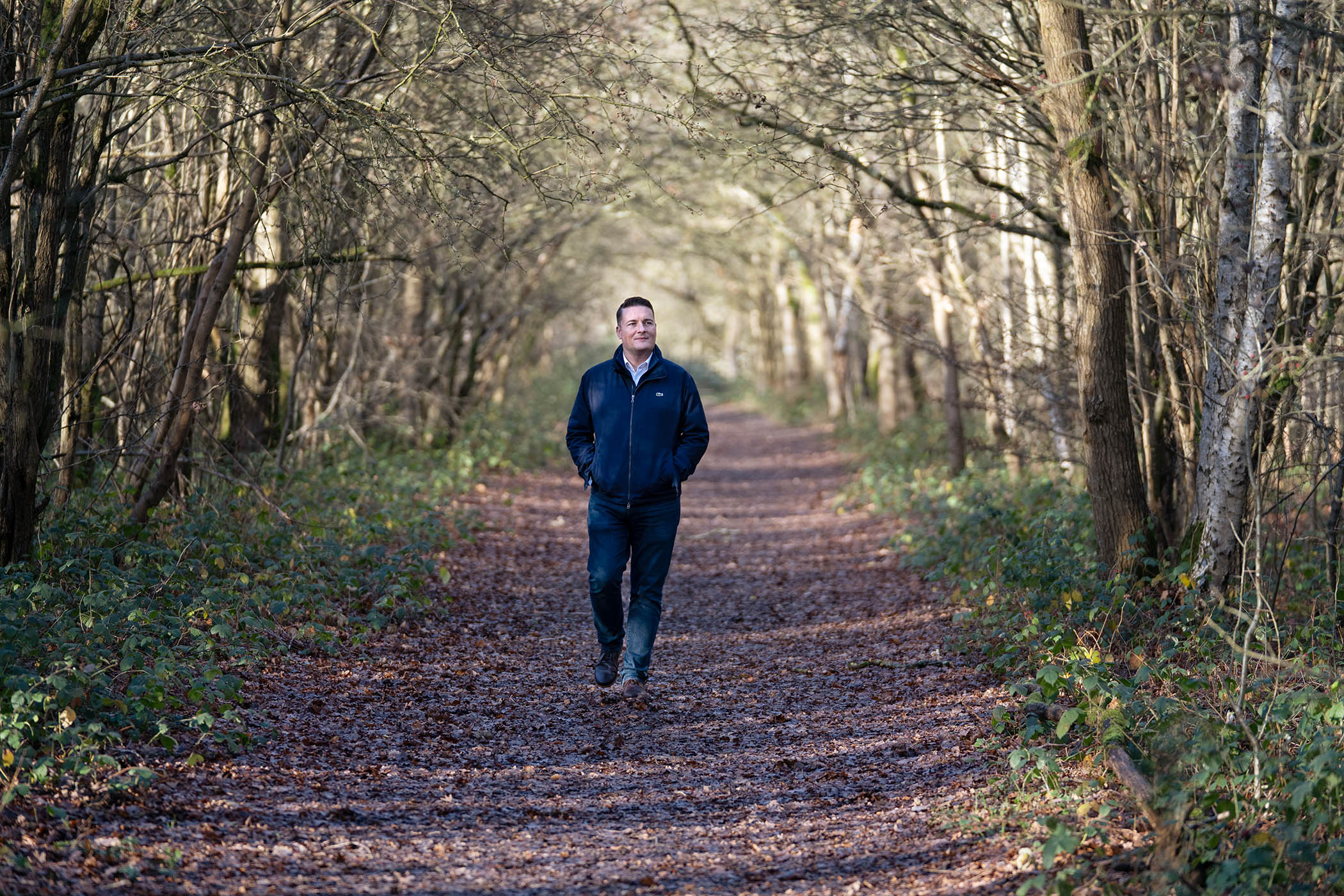
Our walk will take us through Hainault Forest, an ancient woodland on the border of London and Essex. This is Streeting’s “happy place”, where he goes to “decompress” from the stresses of politics. “I often come here with Joe [Dancey, his fiancé, until recently Labour’s director of communications] but I also quite enjoy the occasional solitary walk as well.”
We meet by the wetlands, where Canada geese are drinking from puddles next to a flock of black-headed gulls. The gleaming towers of Canary Wharf and the City of London are visible in the distance, beyond the tower blocks that surround the country park. “It reminds me of the estate I grew up on in Stepney,” Streeting says. “You’re sandwiched between two of the richest places on earth in an area of extremely high levels of child poverty.” We set off around the lake towards the forest on a cold, crisp winter’s day. “Throughout the year you see it change. In autumn it’s beautiful, in summer it’s glorious. When we had deep snow, I spent a good few hours wading through it.”
This woodland may be Streeting’s sanctuary but back at Westminster there are dangers all around. The resident doctors are on strike at a time of maximum pressure for the health service. “I think the NHS is coping,” the health secretary says. “The period that worries me more is the post-strike period when we have to try and recover the service. That now falls at a time of year which is the NHS’s busiest.” Yesterday the BMA warned of strike action through to next summer unless the government responds to its demands, which include an additional 26% pay rise. Streeting says he has a responsibility to all NHS staff, not just doctors. “I don’t think that doctors are selfish and don’t care about nurses and other healthcare professionals, but the BMA’s position can be quite hardline and uncompromising.”
We cross a bridge to the other side of the lake. The health service is already, he warns, being overwhelmed by mental health problems among the young. Australia has introduced a ban on social media for under-16s and Streeting has asked his officials to look at the research. “We need to think much more radically about how we support young people to navigate this new online world,” he says. “[It] has been a place of bullying, intimidation, sometimes misogyny, even radicalisation. I think about how difficult it was when I was a teenager to sneak myself into a 15 or 18 film at a cinema. Nowadays kids are able to access the most extreme content.” Children need to learn how to use technology but “the challenge of social media is that it’s increasingly antisocial media. That’s why I think what Australia’s doing is interesting and we should follow the results closely and see if that’s something we should consider doing here.”
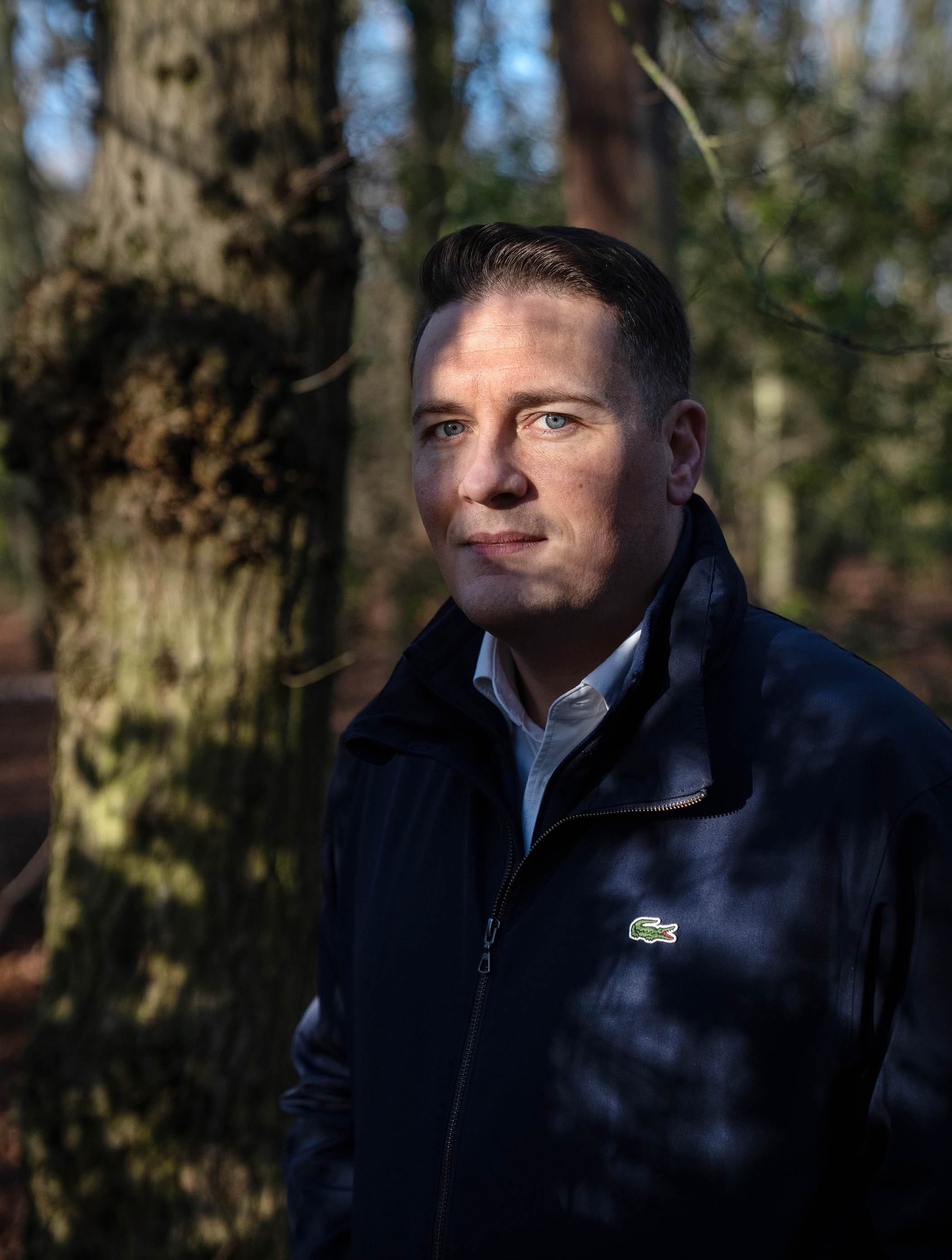
Wes Streeting in Hainault forest.
This is a strikingly different position to the prime minister, who told me earlier this month that he was against an Australian-style ban. But Streeting, while frequently expressing his loyalty to Starmer, is not afraid to strike a distinctive tone. As we enter the forest, he signals that he would like the UK to join a customs union with the European Union. “We’ve taken a massive economic hit leaving the European Union. I’m really uncomfortable with the level of taxation in this country. We’re asking a lot of individual taxpayers, we’re asking a lot of businesses. We’ve got a level of indebtedness that we need to take very seriously,” he says. “The best way for us to get more growth into our economy is a deeper trading relationship with the EU.”
The “reset” negotiated by the prime minister is a “good start” but Streeting would like to go further. “The reason why leaving the EU hit us so hard as a country is because of the enormous economic benefits that came with being in the single market and the customs union. This is a country and a government that wants a closer trading relationship with Europe.
“The challenge is any economic partnership we have can’t lead to a return to freedom of movement.” This red line, though, applies only to the single market, not a new customs union between the UK and the EU. “We’re not going to win the next election by trying to out-Reform Reform. That’s not who we are. Those aren’t our values and we’ve got to beat them, not join them.”
Vast oaks and beeches tower above us. What did he think about the suggestion in the Trump administration’s recent National Security Strategy that Europe faces “civilisational erasure”? “I couldn’t disagree more strongly,” says the MP for Ilford North. He thinks there is a reason why Donald Trump seems obsessed by Sadiq Khan, the London mayor. “There is an element in not just the American right but increasingly the British right that really – and potentially dangerously – misrepresents Muslims,” he says.
Newsletters
Choose the newsletters you want to receive
View more
For information about how The Observer protects your data, read our Privacy Policy
As a practising Anglican, Streeting worries that Christianity is being weaponised by the far right. “The idea that you’ve got people like Tommy Robinson running around trying to make themselves out to be martyrs of Christian persecution, it’s such bollocks.” He says he has “never worn the cross on my sleeve” but his politics are undoubtedly influenced by his faith: “Jesus stood for the poor and dispossessed.”
Streeting is gay and for years he found it hard to reconcile his religion with his sexuality. “I felt a disconnection from the church,” he says. “I’d love to get married in church, and it’s a source of sadness to me that I can’t.” I ask whether he wants to have children. “I don’t think so,” he says. “In some ways I’d love to but I’ve always thought, if I had children, I’d want to adopt, and recognising the particular responsibility of adopting and thinking about the realities of this job, I would feel very guilty if we took that decision and then Joe was the one left with the lion’s share of caring responsibilities. I hope I don’t regret it down the line.”
Streeting’s mother was only 18 when she became pregnant with him. He was, he says, “saved by a fry-up”. “My mum was encouraged to have an abortion but then in the run-up to it she had second thoughts and decided she wanted to keep the baby.” She had been told not to eat anything on the morning of the procedure. “So she cooked herself a full English breakfast.”
Having fought to keep her son, his mother did all she could to make his childhood better than her own, but it wasn’t easy. “There was one Christmas when my mum had had a bad time with her partner. We found ourselves staying in a caravan on a campsite in Kent. My present on Christmas morning was a satsuma and a Star Trek: The Next Generation mug.”
He would often come home from school to an empty fridge and the house would be plunged into darkness when the electricity meter ran out. “There was a normality to it growing up but there was also a self-consciousness about knowing that we were poorer [than other families]. I never ever felt able to invite friends from school round because I was embarrassed about where we lived.”
There was violence in the family too. “My grandad was a victim of both physical and sexual abuse at the hands of his father, and that, for me, explained how it was that the grandfather I knew, who was clever, witty and seemed to have so much going for him, had spent most of his life in and out of prison with a string of convictions for armed robbery. It doesn’t excuse his crimes, but it does explain his criminal life.”
Streeting’s mother “made sure that I always had books. She said ‘I don’t want you to ever be made to feel stupid like I was when I was growing up’.” He worked hard at school and got to Cambridge. Now he worries that the renewed emphasis on vocational education could disadvantage poorer pupils. “My fear is that we end up back to the days of social sorting. where working-class kids like me go to an apprenticeship and middle-class or upper-class students go to university. Apprenticeships are brilliant, I want to see more of them, but how many old Etonians go on to do apprenticeships? I want to make sure that young people are growing up to believe they can be whoever they want to be and achieve whatever they want to and can go as far as their talents and potential can take them.”
The left sometimes romanticises poverty, he suggests. “You’ve always got to be careful that you don’t end up having a middle-class saviour complex and thinking, ‘we’ve got to go and rescue these terribly poor people and give them some ambition and aspiration because without us they won’t have any’. I loathe the term middle-class aspiration. It starts to make my blood boil thinking about it because working-class people are aspirational.”
Streeting now lives a “comfortable” middle-class life. “I go to Waitrose, I love those Viennese fingers with the chocolate in the middle. Joe’s got me into the opera.” But he says “my working-class upbringing has never left me.” He is convinced that overcoming adversity is a good preparation for Westminster. “It builds resilience. People say, ‘it’s a lot of pressure at the moment’. I think – pressure? –compared to some of the stuff my mum had to contend with when she was growing up and when I was growing up, this isn’t pressure. Of course this is a high-pressure job but I’ve been through worse. That’s one of the great things about being a cancer survivor and coming out the other side too. It’s given me a sense of perspective.”
‘Of course this is a high-pressure job but I’ve been through worse’
‘Of course this is a high-pressure job but I’ve been through worse’
He thinks it also makes him impatient for change. “There is so much that is broken in this country and in the British state that you have to adopt the posture of disruption, shaking people out of this sense that we’re stuck and we can’t get out of it,” he says. “I’m afraid I pin the blame very much on politicians because we can’t infantilise ourselves and say ‘those terrible dastardly civil servants over the years have done this’ because in my experience civil servants are consummate professionals. They serve the government of the day with integrity and faithfully, but ultimately they’re only able to implement things with the direction of ministers. Far from it being the fault of civil servants that we’ve ended up adding to the state with quango after quango, reams and reams of regulations, reviews and reviews and recommendations after recommendations, that is the fault of political leaders.”
He insists this is not a criticism of Starmer. “It’s too easy to pin the blame on one person, we’re a team and we rise and fall as a team” but he acknowledges that Labour has failed to get its message across. “The irony is, this is a government that is seen as technocratic, but so many of the things that we’ve done have been fundamentally values-driven. We’ve sold ourselves short.”
Angela Rayner, the former deputy prime minister, once told me that she had “thrived” on the chaos of the Brexit years because it reminded her of her dysfunctional childhood. There has been speculation that Streeting wants to do a deal with her over the leadership. He insists they have not discussed it. “The last time I had a conversation with Angela was when I went up to her in the voting lobby and said, ‘I hear you’re putting together a new cabinet, I’ve always liked the idea of the Foreign Office so count me in’ and she turned around and snapped back as quick as a flash ‘oh no you’re behind the times haven’t you heard I’m going on I’m a Celebrity?’,” he says. “We had a good laugh about it because there’s so much idle gossip and tittle-tattle. I’ve always respected Angela, I respect where she’s come from and I also respect her achievements in politics. She’s one of the doers in politics [but] I’ve been reading some of the stuff recently and thinking this just bears no resemblance to reality.”
We are heading back through dappled shade so I have to ask the question everyone at Westminster thinks they know the answer to. Does he want to be leader? “The closer I see that job and the pressure on Keir and the demands of that job, the more I wonder why anyone would want it, which is definitely not the answer I would have given as a 15-year-old when I joined the Labour party,” he replies. But he immediately clarifies that he is not ruling himself out. “I’m diplomatically ducking the question to avoid any more of the silly soap opera we’ve had in the last few months.” Does he think Britain would vote for a gay prime minister? “One of the things I’m proud of about this country, is that we have an atheist prime minister with a Jewish wife who succeeded our first Hindu prime minister who succeeded a number of women. I think this country is an inclusive, welcoming, decent and kind country.” So that’s a yes? “Yes, but I want to make it explicitly clear that this is not a pitch or a job application. The prime minister’s got my absolute support.”
More from The Observer
Photograph by Tom Pilston