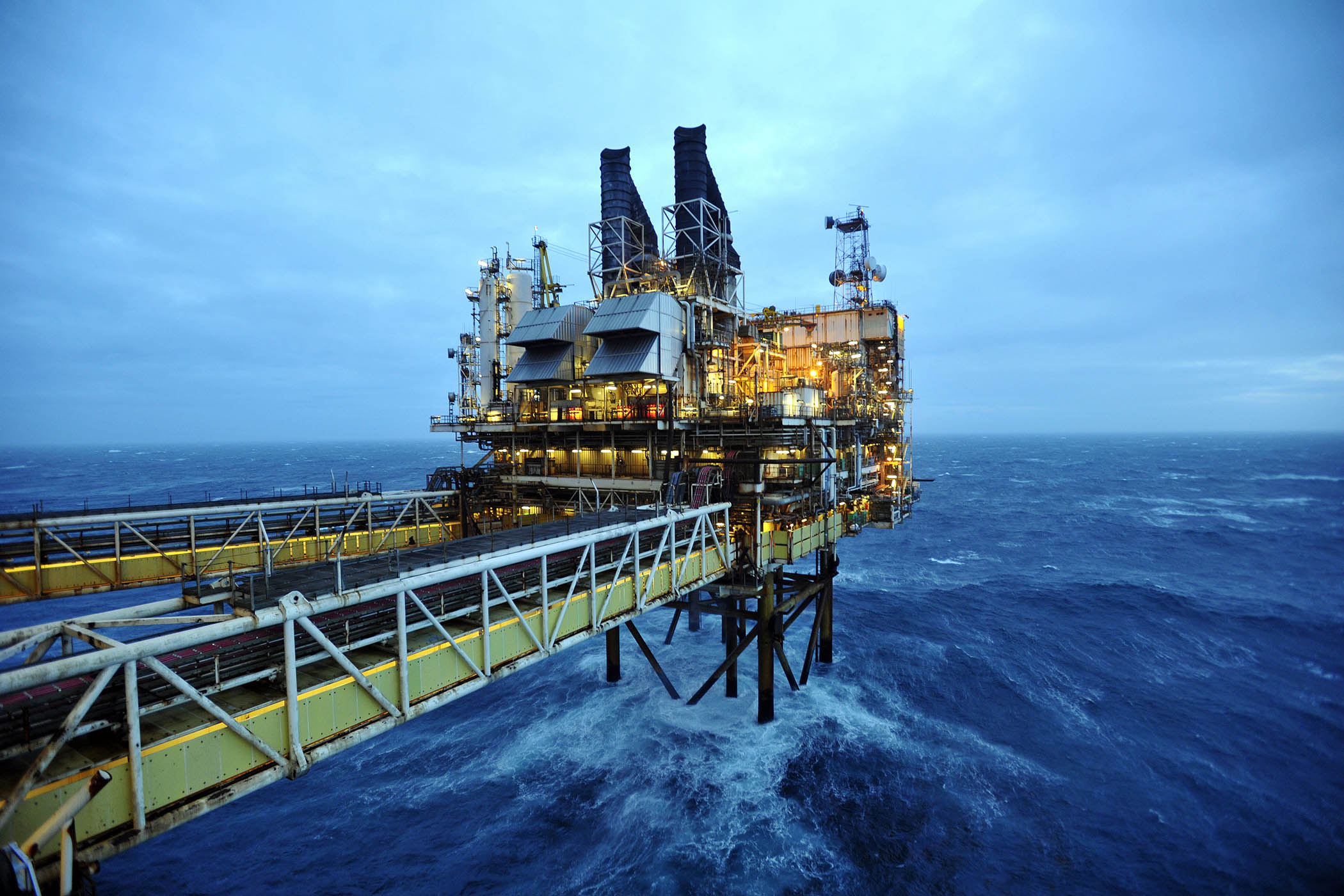


The Labour government is sidestepping its ban on new drilling projects in the North Sea with a fast-tracked scheme to develop untapped oil and gas fields.
Chancellor Rachel Reeves said on Thursday that new projects next to existing fields would be the quickest way to bring more oil and gas on stream. Donald Trump has said the UK should “drill, baby, drill!!!”
Labour’s ban on new North Sea exploration has become a significant political issue because of the oil and gas price increases caused by the Iran conflict. Tory leader Kemi Badenoch says her party would scrap Labour’s ban on new oil and gas licences. Reform UK has said it would aim to extract “every last barrel, every last drop” from the North Sea.
Ministers have confirmed they will not permit new exploration licences in the North Sea, but new drilling will be allowed near existing projects. These projects – known as tiebacks – will use the infrastructure already in place.
“We’re now working through pretty intensely the technical details with the energy companies,” Reeves said. “It’s important that we get the detail right, so that companies have the confidence to exploit those resources.” The proposed new regime was announced in November, with plans to grant production permits called Transitional Energy Certificates to energy firms.
An analysis by the campaign group Uplift has estimated the production sites involved could contain 25m barrels of oil and 20m barrels of oil equivalent of gas. (A barrel of oil equivalent, or BOE, is a unit of energy that combines different energy resources.)
It estimated the total of 45m barrels would be the amount likely to be commercially and technically recoverable. This compares to about 500m barrels of oil equivalent at Rosebank, the UK’s biggest undeveloped oil and gas field.
Production of oil and gas in the North Sea peaked in 1999 at around 4.5 million of barrels of oil equivalent a day and has since been in decline. In 2024, production was 1.09 million barrels of oil equivalent a day.
In a written submission in January to the energy security and net zero parliamentary select committee, the North Sea Transition Authority, the body responsible for licensing and regulating the offshore energy industry, said: “The UK has pioneered the use of subsea tiebacks, where nearby accumulations of oil and gas are linked via under the sea pipelines to existing production facilities.
“Tiebacks are now a well-established and utilised technology in the North Sea and have helped make the UK a global leader in the subsea supply chain.”
Newsletters
Choose the newsletters you want to receive
View more
For information about how The Observer protects your data, read our Privacy Policy
Under the new tieback regime, it is hoped potential development areas can be exploited more rapidly. It can take up to a decade under the current system from a licence being granted to production.
Photograph by Andy Buchanan/WPA Pool/Getty Images