
Listen to more of Francisco’s investigation here
Gatkuoth Liah Diu remembers when the men from Lundin Oil arrived. It was the late 1990s in Block 5A, the vast oil concession near his home village in what is now South Sudan. Liah Diu was about 10 years old. “I had never heard of something called oil – did not know what it meant or what it was,” he said. Things were relatively peaceful when the workers from the Swedish company first arrived. Their surveying instruments were a source of fascination. Liah Diu remembers they placed red flags in the ground; after the visitors packed up and left, he and his friends would sometimes play with them. From a distance, the children could see heavy machinery, which they were not allowed to approach.
The quiet did not last.
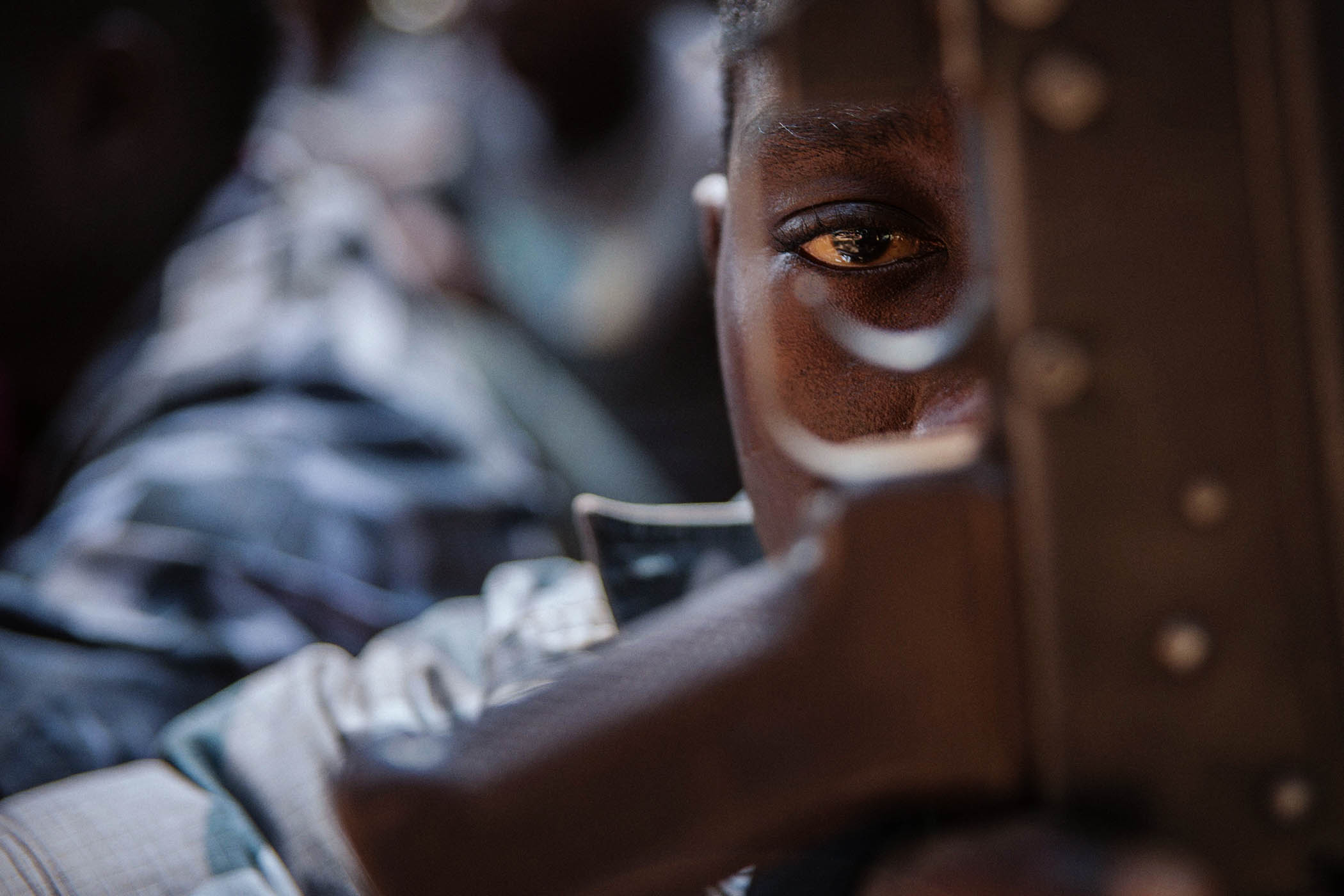
Things began to change with the construction nearby of a road linking the oilfields to the oil company’s base camp. One morning in 1999, a helicopter gunship flew low over Liah Diu’s village. He could see four soldiers inside, likely from the Sudanese military. Liah Diu ran to his mother. The weapons on the helicopter’s wings began to fire and set the village ablaze. He remembers the weight of his mother as she shielded him with her body. He also remembers her last embrace and that he was covered in blood. After his mother’s death, Liah Diu joined the local militia and became a child soldier. In time, the rebels came to an agreement with the Sudanese government: they would help protect the oilfields and the road against attacks by other hostile militia groups.
In March 2001, Ian Lundin, the oil company’s chairman, visited Block 5A in an attempt to combat the increasingly negative PR surrounding its presence in restive South Sudan. “We are really being beaten up by the press, but in the end, who cares? They are a bunch of ignorant buggers,” Lundin wrote to an acquaintance. His arrival was filmed by an accompanying journalist. Liah Diu can be seen in the footage, along with several other child soldiers, thin bodies dwarfed by their automatic weapons. “I did not know that there [was a] video,” he said from Finland, where he now lives. “They came in their cars to speak with other people. We just came to see what was happening.”
I am not the first person Liah Diu has told this story to. In August 2024, he stood up in Stockholm district court to testify against the company he had once protected. Liah Diu is one of 32 South Sudanese plaintiffs who have given evidence over the past two-and-a-half years during the longest criminal trial in Swedish legal history. It began in September 2023 and ended on Thursday. The defendants are Ian Lundin and a Swiss national named Alexandre Schneiter, Lundin Oil’s former CEO. They stand accused of complicity in war crimes committed while the company was present in Block 5A between 1999 and 2003.
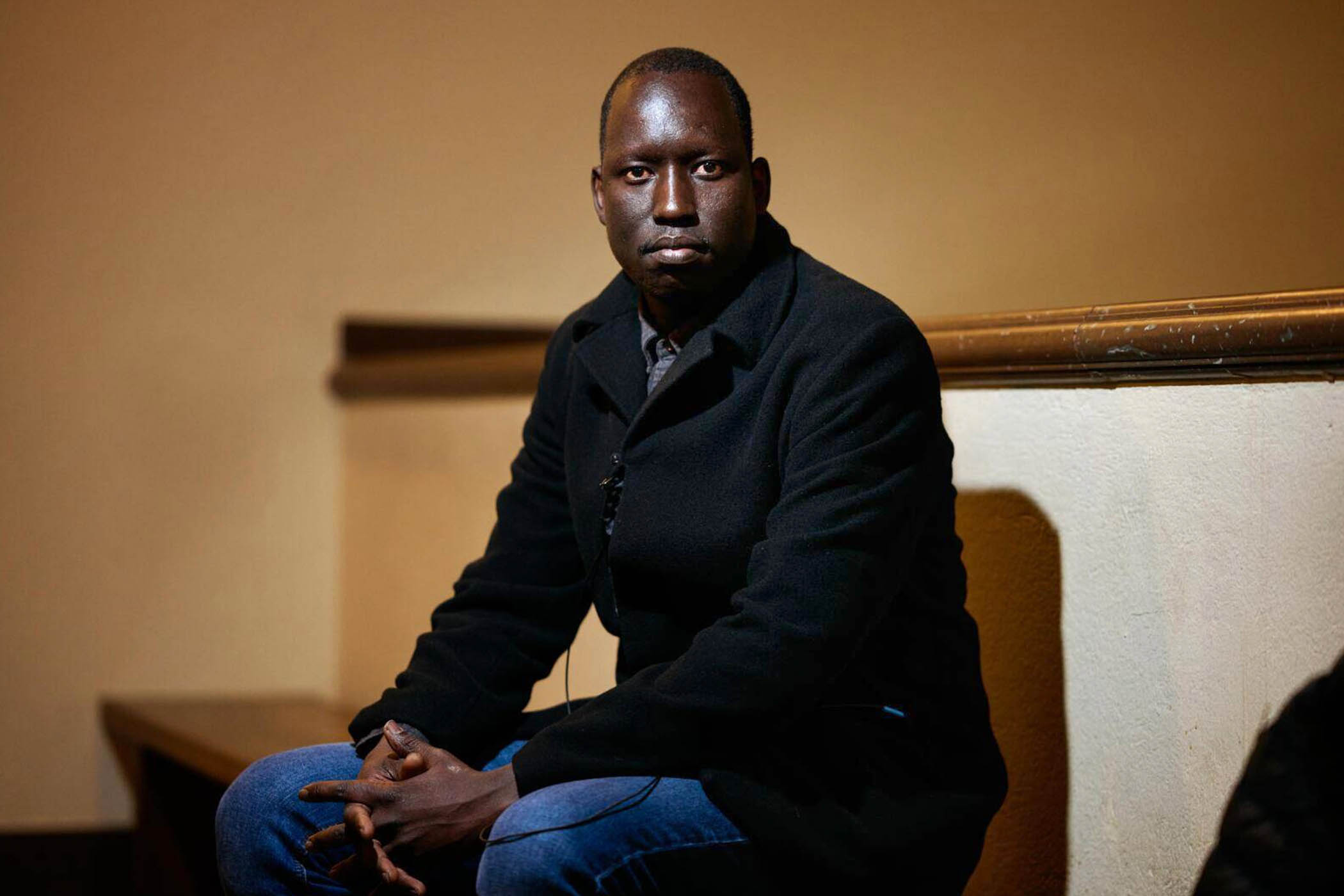
Gatkuoth Liah Diu. Gatkuoth Liah Diu is one of the plaintiffs in the ongoing trial against Lundin Oil in Stockholm examining war crimes committed in Sudan between 1999 and 2003.
The charges are this: that to secure their operations, the company worked closely with the Sudanese government, a brutal military dictatorship headed by President Omar al-Bashir. The indictment alleges that both Lundin and Schneiter knew that the military and allied militias committed war crimes in a bid to pave the way for the company’s work, including intentionally attacking civilians, using starvation as a tactic, forcing displacement and using child soldiers. According to human rights groups, an estimated 160,000 people were displaced from the area around the Lundin concession, and about 12,000 killed. The defence has rejected the charges, vigorously disputing the casualty figures and almost every other point of fact.
But the trial is not just about Sweden and South Sudan. It is also the most extensive attempt since the Nuremberg trials to hold corporate executives accountable for complicity in war crimes. After the second world war, the leadership of three companies – Krupp, Flick KG and IG Farben – were accused of both aiding the Nazi war effort and profiting from it. Alfried Krupp, the German steel magnate, was sentenced to 12 years in prison for employing slave labour and plundering occupied territories. Several lesser figures also served time. All were free by the early 1950s with their fortunes restored, in large part due to cold war anxieties about the health of the West German economy.
Over the intervening decades, the idea that corporations and their top brass might be prosecuted for their involvement in war crimes has faded from view. If the International Criminal Court and other bodies have zeroed in on military and political elites, they have broadly left corporate leaders untouched. There have been other cases, but not for war crimes. Last summer, a Colombian court handed prison time to seven former executives of the Swiss fruit company Chiquita, in connection with payments made to paramilitary groups. In April, a Paris court sentenced Bruno Lafont, the former chief executive of French cement company Lafarge, to six years in prison for financing terrorism. Lafont had argued that he was unaware of his company’s payments of €5.6m (£4.8m) to Islamic State and other jihadist groups to protect Lafarge’s Syria operations from 2013 to 2014. Three other executives were also convicted. In November, activist groups in France lodged a legal complaint against TotalEnergies over the deaths of dozens of civilians at one of its gas facilities in Mozambique. Francesca Albanese, UN special rapporteur for the occupied territories, has also repeatedly argued for holding corporations responsible for their roles in perpetuating – and profiting from – the war in Gaza.
But the charges against Lundin are different. It is no exaggeration to say the trial could change the course of legal history. The prosecution hopes a guilty verdict will set a global precedent: to show that powerful companies and their wealthy representatives can be seriously held to account for complicity in the gravest of crimes.
Newsletters
Choose the newsletters you want to receive
View more
For information about how The Observer protects your data, read our Privacy Policy
On trial in Nuremberg in 1947, Alfried Krupp had described himself as a humble, literal-minded businessman. “We only wanted a system that worked well and allowed us to work unhindered,” he said. This “work” included selling discounted armaments to the German war machine and providing the company’s trucks to the SS to facilitate the deportation of Jews to Auschwitz and other Polish death camps. Krupp’s argument, that his company was merely doing business in a way that reflected the realities of its time and place, was both popular and broadly successful among his fellow Nazi industrialists.
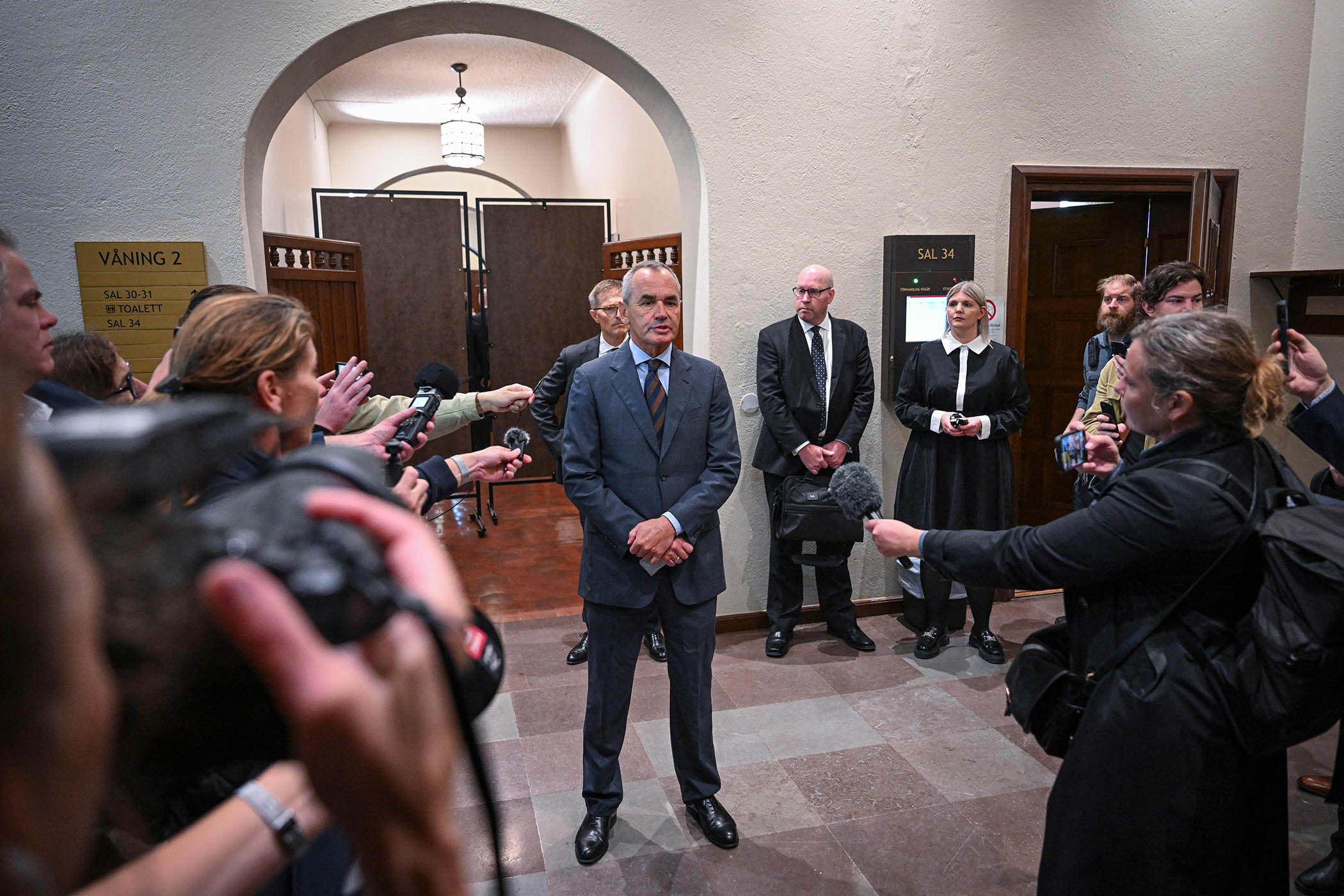
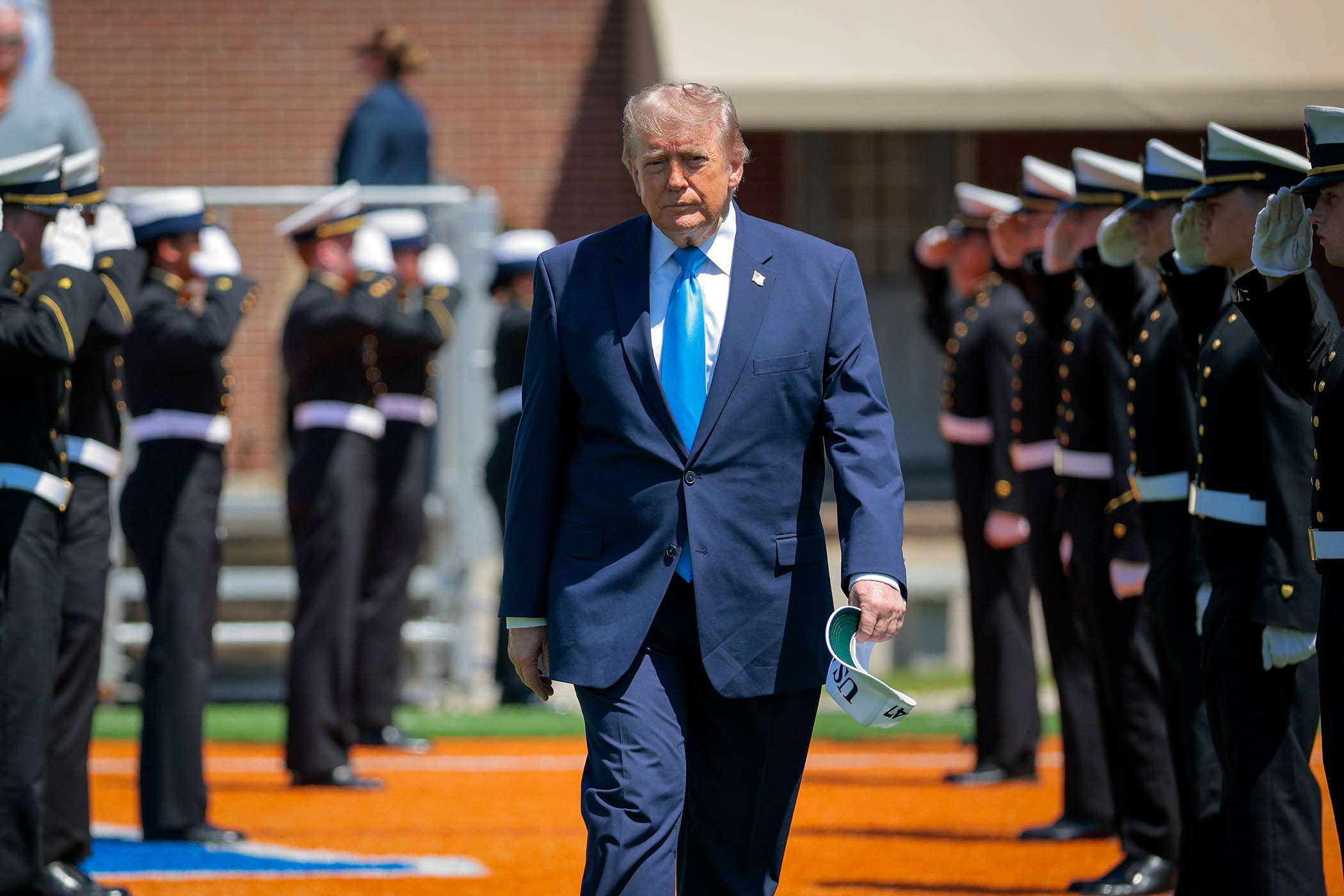
Ian Lundin (C), former chairman of the Swedish oil company Lundin Oil, gives a statement to the press upon arrival on September 5, 2023 to the District Court in Stockholm, Sweden, prior to the start of his trial as he is charged for suspected complicity in war crimes in Sudan.
Lundin’s legal team has adopted a similar approach. The second Sudanese civil war raged from 1983 to 2005. The conflict pitted the government in Khartoum against a shifting coalition of armed forces in the south of the country, sometimes led by the Sudan People’s Liberation Army (SPLA). Millions were killed and displaced for the 25 years it lasted. If the war had several triggers, control over vast oilfields was a major factor.
Significant deposits had been discovered in South Sudan by Chevron, the US energy giant, in the late 1970s. When the Sudanese government deployed forces to try to pacify the territory, the SPLA fought back, aggressively targeting Chevron installations. Three of the company’s workers were killed in 1984. By the 1990s, Chevron had sold its Sudanese assets, spooked by the rising violence.
In 1997, the US government tried to choke the Sudanese regime, imposing sanctions that obliged American companies to leave. For Lundin, this spelled opportunity. In a now infamous interview given to Swedish television, the company’s founder and patriarch, Adolf Lundin – father of the accused, Ian – outlined his philosophy. Competition with other companies, he said, is akin to a war. Local politics was not his concern. Risk was to be celebrated because it scared off competitors. As for the Sudanese, he said, they were skilled negotiators in “darkest Africa”.
Oil, not blood, flowed through Lundin’s veins. “We thrive in maximum anxiety, our guys have physical courage and that is an important factor. During [the 1990] Iraq War, we drilled in the middle of the Strait of Hormuz, while facilities went up in flames,” said Lundin Sr, who died in 2006.
Such bombast, the defence has stressed, is not proof of criminality. But if his son, Ian Lundin, should not be held responsible for his father’s comments, he has his own questions to answer. The same is true for Alexandre Schneiter. Both men feature heavily across thousands of internal documents from Lundin’s time in Block 5A. They appear to show that both were involved at the highest levels of decision-making. On 15 November 2001, Lundin’s head of security wrote in an internal memo that “the army is moving their forces south… to secure our operations”. The prosecution scorned the idea that Lundin and Schneiter did not understand this euphemism; that this “security” meant the army killing and displacing the local population. Under Swedish law, this indifference to the easily predicted consequences of one’s actions is termed “reckless intent”, and is a criminal offence.
Today, Lundin and Schneiter are both grey-haired men in their mid-60s. During the trial, they have invoked the long passage of time. Thirty years is a big chunk of anyone’s life; memories can easily shift and falter. But documents do not suffer from amnesia. Repeated warnings were sounded that civilians were being bombed and shot by the government militia to protect the company’s operations. Why did Lundin’s most senior figures not heed them? When the company’s British former head of security, Kenneth Barker, was questioned in court late last year, he was asked about receiving reports of torched villages. Was it really credible that the company had considered the fires a form of traditional farming? Barker replied that he didn’t know what the locals had in mind.
By 2002, Lundin had suspended its operations in Block 5A. As Chevron had also found, the levels of violence and unrest were simply untenable. “We need some type of sustainable and peaceful environment for us to look at long-term investment,” Ian Lundin told the BBC at the time. Still, he thought the company’s presence had done more good than harm. South Sudan had certainly helped Lundin’s bottom line. In 2003, the Malaysian firm Petronas agreed to pay $142.5m for Lundin’s stake in Block 5A. It represented a tidy $90m profit.
Göran Hjalmarsson is a genial, sandy-haired fellow in his early 70s. The retired lawyer spent the last decades of his career representing plaintiffs in a succession of high-profile war crimes cases that have been heard in Swedish courts.
His career is a very Swedish phenomenon. The country has long taken pride in its self-image as a “moral superpower”. Generous foreign aid budgets and a commitment to international peace efforts have gone hand-in-hand with welcoming hundreds of thousands of refugees fleeing conflicts in Syria and Afghanistan, as well as the western Balkans. Many have been victims of war crimes; others perpetrators. This provoked the Swedish authorities into action, establishing special police and prosecutorial units to investigate war crimes. In 2016, a Swedish court sentenced a man to life in prison for participating in the Rwandan genocide. This month, a 55-year-old Swedish-Palestinian-Syrian national was jailed for life for “serious violations of international law” committed in Syria.
Such cases rely on the concept of universal jurisdiction, which posits that some offences are so heinous they transcend the ordinary limits of national law. Impunity – runs the spirit of universal jurisdiction – has no borders.
In 2010, Magnus Elving, a Swedish state prosecutor, was working on the first Rwandan genocide case when a contact sent him a book on Lundin’s activities across Africa. Could it be grounds for a formal investigation, his contact wondered. “I understood that these were crimes in an area where a Swedish company was working and that this complaint could be of interest,” Elving, a brilliant if sometimes irascible character, explained in a later interview. Two months later he was sent a comprehensive new report into Sudan’s “oil wars”. Titled Unpaid Debt, it contained potent witness testimony outlining violence by government forces in Block 5A. It quotes one elder saying: “Panic broke out in the village and everyone ran for their lives. I saw how two combat helicopters fired indiscriminately at civilians. An Antonov plane attacked fleeing groups of people, including myself and my family. The bombs fell from morning until night.”
Elving’s investigation into Lundin was opened in June 2010. His story is not an especially happy one. After years of working on the case, Elving was diagnosed with cancer in 2017 and taken off the case a year later, against his wishes. He died in December 2023, aged 71, just two months after the Lundin case finally came to trial. “He always looked at the plaintiffs, the small people and said, ‘It doesn’t matter if it’s South Sudan or wherever around the world’,” said Hjalmarsson, who worked closely with Elving. “Nothing was too difficult for him. Some other prosecutors might have dropped the case in the waste paper basket… but not him.”
Prosecuting warlords and executioners is one thing, Hjalmarsson said. Corporate executives require another approach. “In [the] Rwanda case, my clients could point the perpetrator out and say, ‘You were there… I was five metres from you when you were killing a baby’.” This is not the case for white-collar professionals based thousands of miles from the violence they have allegedly played a role in unleashing. Building these cases requires time and resources, both of which are of little concern to a figure such as Ian Lundin, the scion of what is now, after a series of lucrative mergers, a multibillion-dollar Scandinavian energy dynasty. There are also considerable logistical challenges. How, for instance, to track down scattered witnesses and collect the necessary weight of evidence?
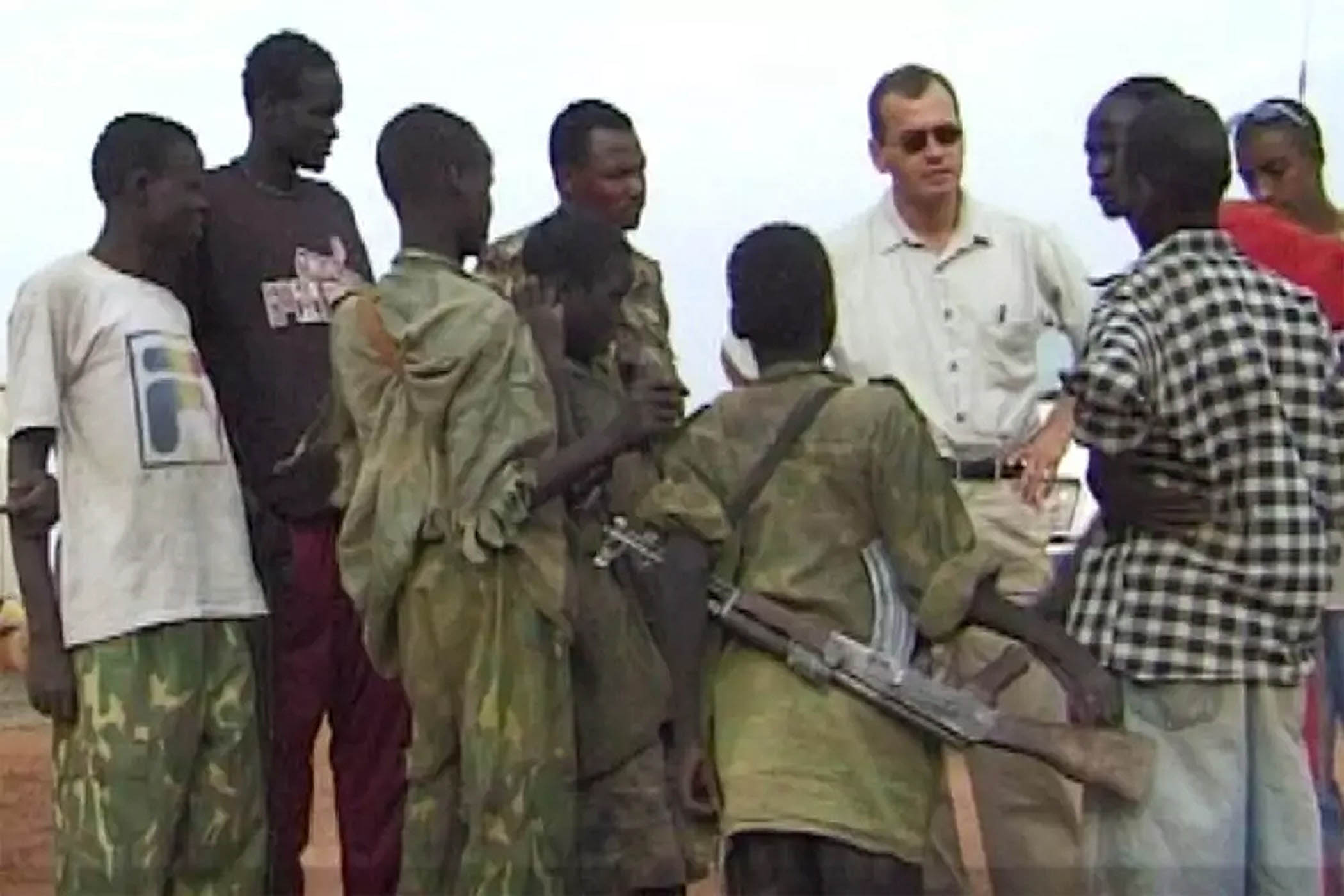
Extract from a film shot in March 2001, presented as evidence in the Stockholm court, showing Ian Lundin surrounded by child soldiers. In the film, Swedish journalist Bengt Nilsson asks him what he thinks of the “child soldiers guarding the oil fields”. It’s a “generalization to claim that they are guarding the oil fields”, replies Lundin.
When the Sudanese government and rebel SPLA signed a peace agreement in 2005, Gatkuoth Liah Diu’s life changed. He was told that his time as a soldier was over, for now, and that he had to go to school. In 2017, Liah Diu was living in a Ugandan refugee camp on the outskirts of Kampala. After attending a wedding, he was informed about Magnus Elving’s investigation. “I said I was willing to participate because of what happened to my mother,” he told me. In the weeks after, he was approached by several other men – their identities are still unclear – who told him to meet them in the Ugandan capital. Though suspicious, Liah Diu agreed. The men offered him a bribe to stay quiet. He replied that their money meant nothing to him. “They said: ‘If some people come and ask you about the case, just tell them that you don’t know anything, [that] Lundin has done something good for you.’”
In early May, the defence’s closing arguments began at Stockholm district court. Proceedings began at 9.15 sharp each morning, a little huddle of reporters and researchers, translators and legal professionals bundling through a pair of thick wooden doors. Martin Schibbye, a Swedish investigative reporter who has attended every one of the 220 court dates, had emailed beforehand to suggest I notify the court to secure a space on the public benches. He shouldn’t have worried: there were plenty of empty seats.
There were no judicial wigs or gowns, no gavelling, no rising or sitting in tandem with the judge. There was no jury either. The Swedish legal system is wired differently. Six judges – two experienced professionals along with four “lay judges” – sat across a thin table at the back of the court, accompanied by a stenographer. The dress code was business casual, a blur of dark suits and sober button-down shirts. One source, a prosecution witness, had joked to me about their stoicism. “Dead fish eyes” was how they put it.
But there has been no shortage of courtroom drama over the past two-and-a-half years. The cross-examination of Ian Lundin drew a sizable crowd, as did the testimony of Gatkuoth Liah Diu. The court has heard stories of appalling suffering from other Sudanese plaintiffs who have been the victims of, and have borne witness to, sexual violence, ethnic cleansing and indiscriminate killing. For many, the decision to testify has not been without danger. Bribes are the least of it. A short audio clip, sent to another plaintiff as a threat, was played in court during testimony. “We are going to assassinate you one by one,” the voice intoned.
My visit coincided with the closing submissions from former CEO Alexandre Schneiter’s team. Neither its contents nor tone came as a surprise. The defence’s strategy has broadly been one of aggressive denial. They have ripped into the credibility of witnesses and the impartiality of the NGO reports upon which the prosecution have relied. They have denied not only their client’s complicity in war crimes but also that such crimes had taken place at all. Violence in Block 5A, they argued, could be explained as localised tribal fighting.
In court, both Schneiter and Lundin looked tired to the point of pallor. Both men listened impassively, flanked by their respective legal teams. The truth was that everyone was increasingly worn out, said Schibbye, who has watched domestic interest ebb and flow since the trial began in 2023. “From a Swedish perspective, Lundin Oil has been debated in the media for decades,” he said. “[Its] role in Sudan has also been [the subject] of books, articles and documentaries.” The company is still a household name, with plenty of supporters on home turf, Schibbye added. People liked the idea of the “Swedish cowboy going aboard [and] pulling up his sleeves, finding oil and making himself and [shareholders] rich. It’s the closest we have to the Dallas family.”
Lundin’s lead counsel, Torgny Wetterberg, told me they were certain of victory. “The prosecution case has [fallen] apart,” he added with a thin smile.
But with many millions spent on both sides, no one is quite sure how this epic – and epically divisive – trial is going to end. A verdict is expected at the end of this year. Whatever the outcome, all participants are braced for a lengthy appeals process. The prosecution has asked for 10 years in jail for Lundin and six for Schneiter, the maximum possible sentences. Weeks before the trial began, Lundin’s company completed an $11bn merger with Norway’s largest oil and gas producer, Aker BP. It isn’t clear that Orrön Energy, the remaining Swedish rump company, has the assets to clear whatever fine might be imposed in the event of a guilty verdict. But either way, no reparations will be paid to the South Sudanese victims. To take up a separate civil claim would require a $45,000 deposit per plaintiff, an impossible figure for residents of one the world’s poorest countries.
For some, the very existence of the trial is powerful enough. A symbol of a fairer world, one in which the powerful can be held to account for exploiting the powerless. But not every country has Sweden’s robust approach to investigating war crimes, or a wealth of crusading prosecutors like Magnus Elving in reserve. The situation in both Sudan and South Sudan remains bleak; the threat of war is omnipresent and the countries’ natural resources are still at the mercy of foreign powers.
For Gatkuoth Liah Diu, money isn’t justice. He moved to Finland in 2020 and is grateful for the quiet of his new home. But South Sudan is never far from his mind. Neither is the past. He knew it would not be easy to stand up in the courtroom in Sweden, and that there would be many challenges along the way: “I was just praying that I can reach the court, and tell them exactly what I saw.”
Listen to more of Francisco’s investigation here
Photographs by Stefanie Glinski/AFP/Getty Images, Margarete Bloom Sandeback for Le Temps, Jonathan Nackstrand/AFP/Getty Images, Ethno Press Sweden