
Photograph by Tom Pilston
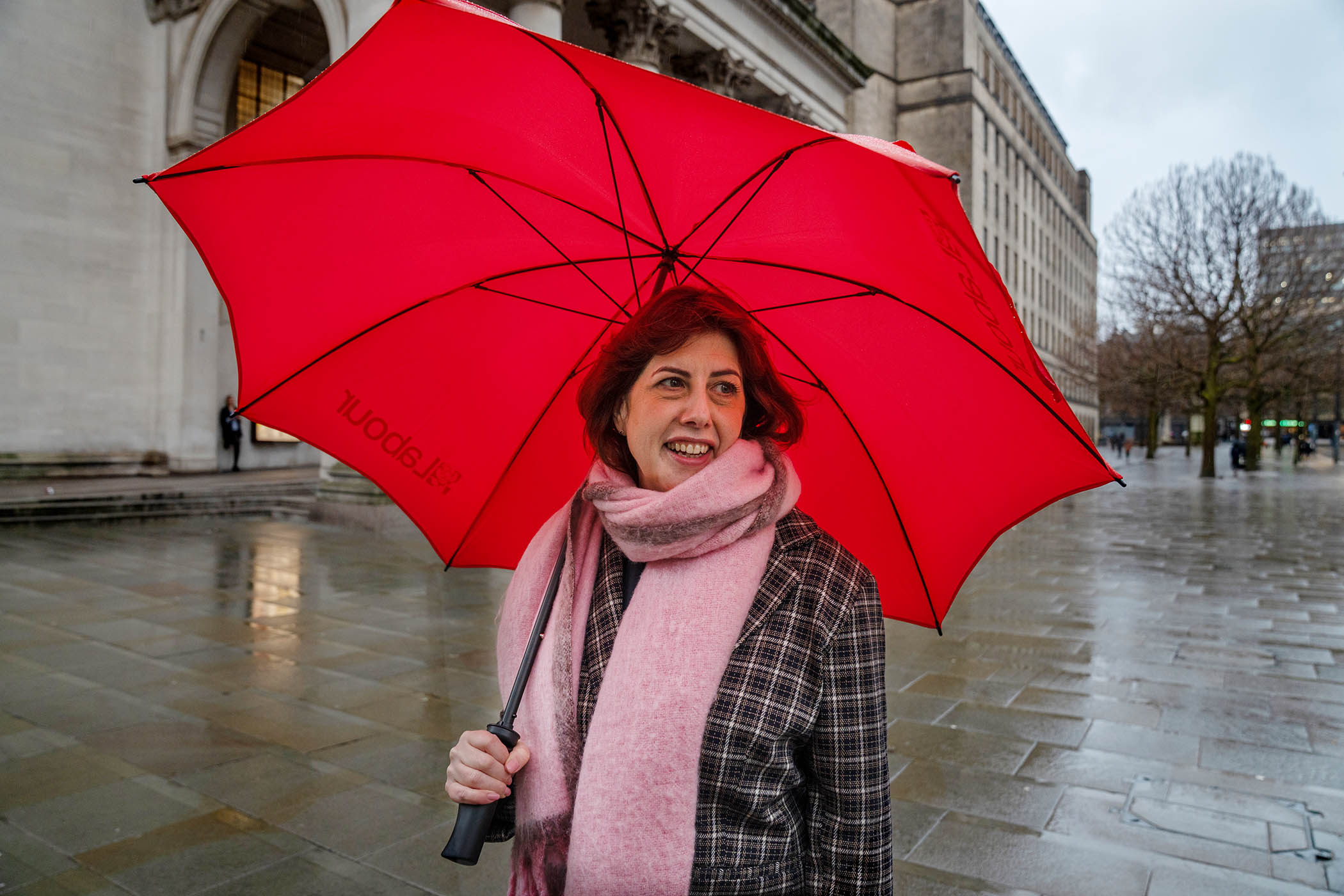
Lucy Powell has only had two hours sleep when we meet in Manchester the day after the Gorton and Denton byelection. The red rosette that was pinned to her jacket at the count has been replaced by a giant pink scarf but the impact of Labour’s devastating defeat is still settling in. After weeks of campaigning in the constituency the deputy Labour leader says it was “incredibly disappointing and heartbreaking on a personal level” to see her party pushed into third place behind the Greens and Reform. “It was a very difficult context for a byelection – we’re midterm, people are frustrated with the Labour government,” she says. “I think what happened was that the Green party was able to claim the mantle of being the party best able to beat Reform.”
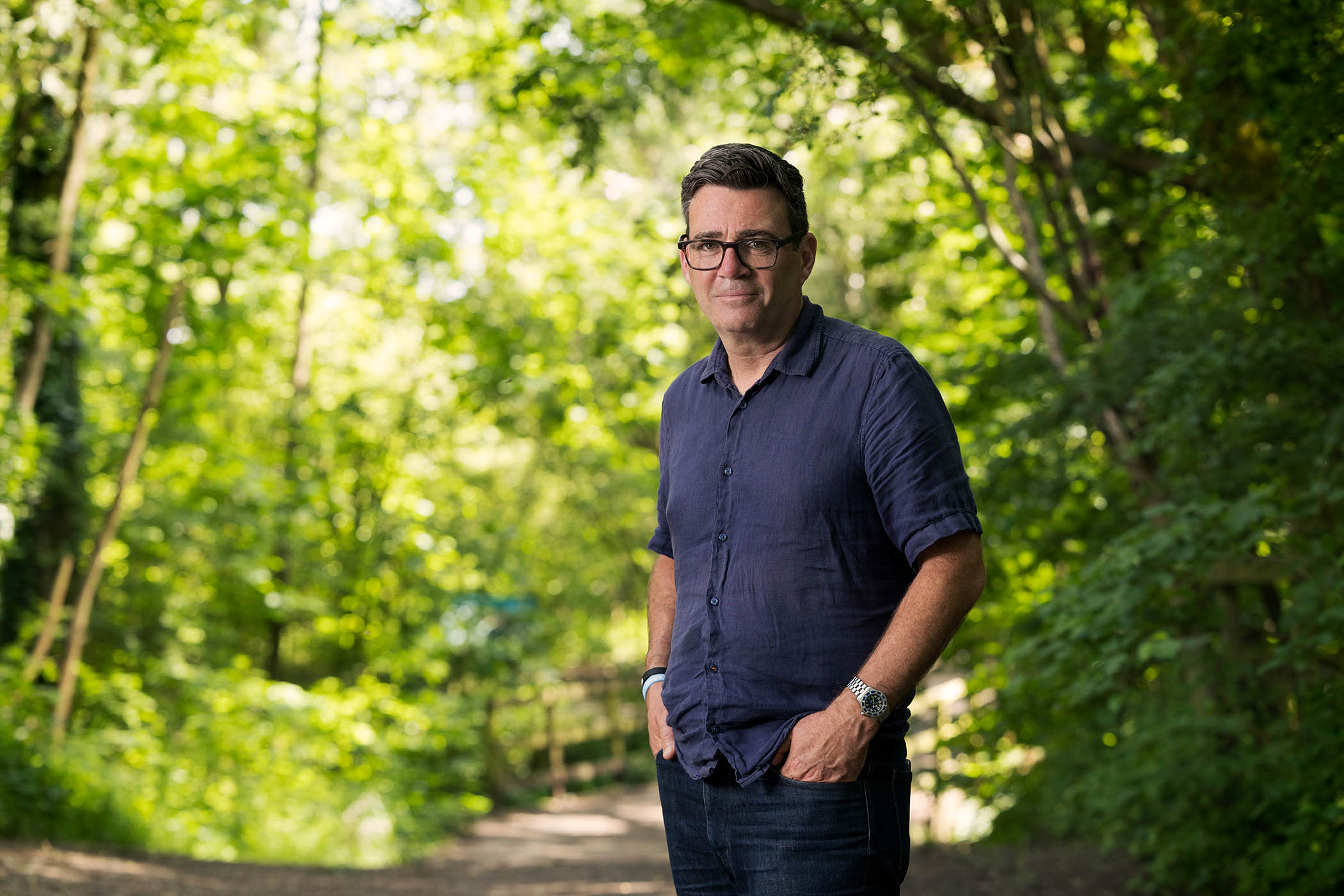
Does she think Andy Burnham, who Keir Starmer blocked from standing, would have won? “Probably,” she replies. Labour must, she insists, take on board the message of the cataclysmic result and “sharpen” its approach and message to “rebuild the voter coalition” it should be representing. “We’re not going to be successful as a political party by trying to out-Reform Reform,” Powell says. “We have to be the leaders of the so-called progressive alliance that is against the politics of the right.”
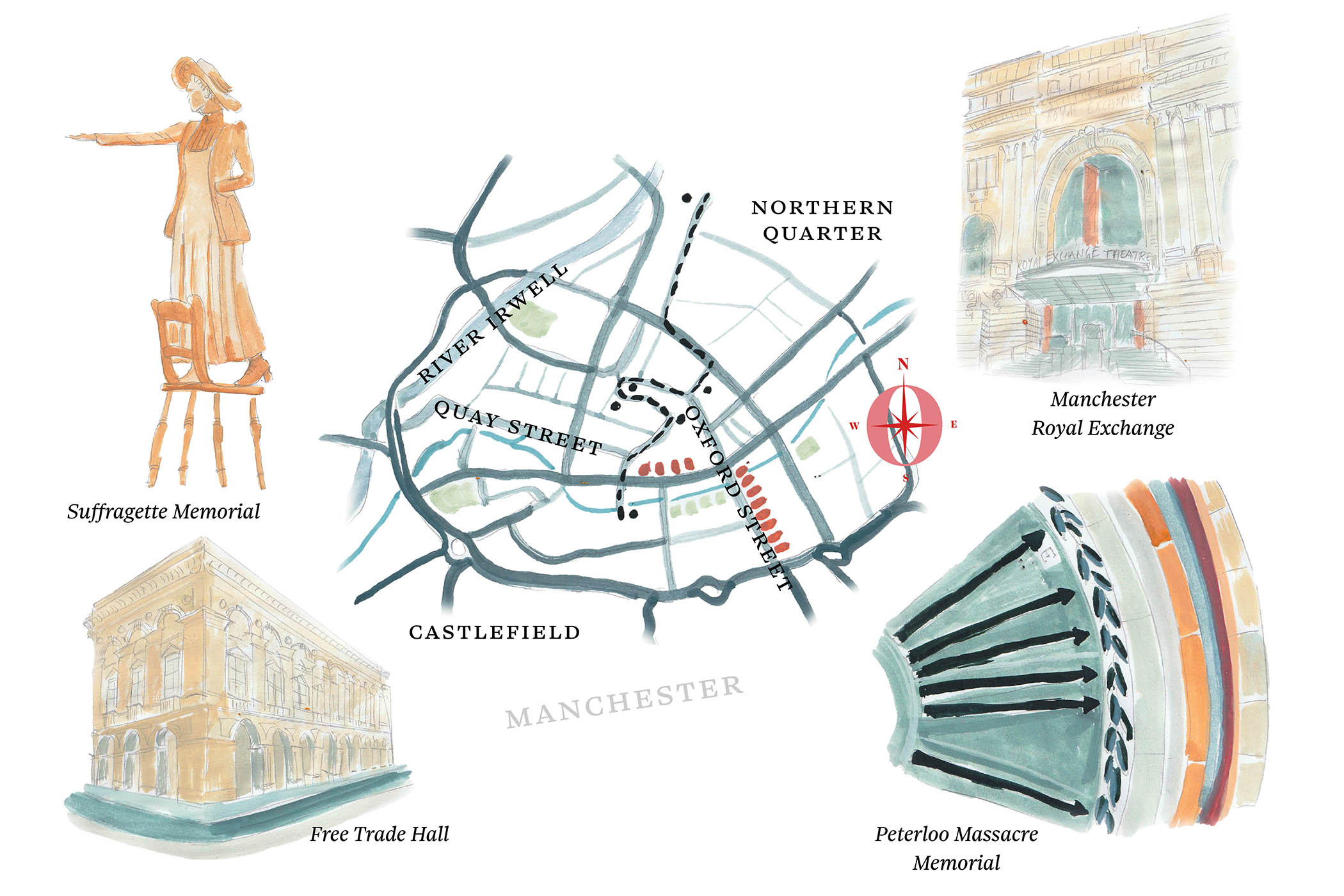
Our walk will take us through the city where Powell grew up and that she now represents as an MP. “We’re going on a cultural, radical, industrial Manchester tour,” she says. We meet outside Home, an arts centre. By the entrance is a sculpture of Friedrich Engels, Karl Marx’s collaborator who lived and worked in Manchester. Around the corner Powell points out the venue where Oasis played their first gig and the site of the Haçienda, where she went clubbing as a teenager – “not always in hot pants but very little clothing” – even on school nights. It’s now an apartment block.
“This is where you would queue up. There was an indie night which had a Madchester Happy Mondays-type vibe, but it was also the emergence of the dance music scene, the smiley face T-shirts and the curtains hair.” Did she take ecstasy? “What went on in the Haçienda stayed in the Haçienda,” she replies.
We walk alongside the railway line to reach the memorial of the Peterloo massacre of 1819 when 18 people were killed and hundreds injured after the cavalry charged into a crowd demanding reform of parliamentary representation.
‘We’re not going to be successful as a political party by trying to out-Reform Reform’
‘We’re not going to be successful as a political party by trying to out-Reform Reform’
Lucy Powell
Powell is proud of Manchester’s long tradition of radical politics, going back to the Industrial Revolution. Labour, she suggests, must be much more willing to celebrate its values. “[Leftwing] is not a dirty word and we are left,” she says. “I think we’ve been a bit too shy in government about some of the more radical big Labour things that we’ve done. The Employment Rights Act was like the secret Cinderella of what we were doing; the public ownership of the railways bill, the Renters’ Rights Act; lifting the two-child benefit cap. We should be shouting louder about those things.”
On Friday, the prime minister wrote to MPs accusing the Greens of embracing a “divisive, sectarian” form of politics and branding their policies as “extreme”. But Powell thinks Zack Polanski’s party is on the same side as Labour when it comes to the fundamental political divide. “There are really two world views emerging in politics. You’ve got the parties of the right, now led by Reform, who think that everything’s going great, and what we need is a bit more trickle-down economics, a few more tax breaks for the rich, and that will eventually spread to everybody else. They want culture wars. They want to whip up grievances. Then there’s our world view that says, ‘No, we need a big change in how the economy is run, we’ve got a deeply unequal society, and we’re on the side of giving ordinary people a better chance’.” Labour and the Greens are “different political parties” but “our voters share many of the same values”, she says. “Many Green voters are people who are otherwise a lot of the time Labour voters or should be Labour voters, and our job is to persuade them to vote Labour. That has to be about more than just being against something.”
The drizzle turns to rain as we arrive at Free Trade Hall, built to mark the repeal of the Corn Laws. Opening a giant red Labour party umbrella, Powell insists she is not contemplating a “rainbow coalition” with Polanski’s party but says tactical voting “will increasingly be a feature” in elections. “It’s not about a pact, it’s about us attracting the voters we need,” she says. “They’re not a homogeneous kind of voter. They’re not all Observer-reading, leftwing urban voters at all. There’s a lot of northern white working class, older communities who historically supported Labour and who aren’t at the moment and don’t want to go Reform. They’ve protested in this byelection. They want to see change happen in their area, and they want to see a change in the way the country is run… We’ve got to be the leaders of that argument.”
Home secretary Shabana Mahmood’s proposals on immigration, which include doubling the time it takes migrant workers to qualify for indefinite leave to remain from five to 10 years, “are a real concern to our ethnic minority communities”, as is “the rhetoric we’ve used around some of these issues”, Powell says. “This came up a lot in the byelection. Most people recognise the need to control borders and tackle illegal immigration, but given the contribution and other requirements for legal migration our tough stance here is less understood.”
Newsletters
Choose the newsletters you want to receive
View more
For information about how The Observer protects your data, read our Privacy Policy
Labour’s deputy leader also thinks the student loan system and the “egregious” interest rate paid by graduates needs to change. “You’ve ended up with a system where you’re just servicing debt for a very long period of time and it’s never going down. I don’t think it is fair.”
Does she think the situation is recoverable for Labour with Starmer in charge? “It needs to be,” she replies. There was a “short moment” of danger for the prime minister after Anas Sarwar, the Scottish Labour leader, called for him to go. But “the conclusion was drawn very quickly that we don’t need to be looking in on ourselves. We’ve been given this huge privilege of running the country less than two years ago and we need to get on with that job.”
When I ask whether Starmer will still be leader at the next general election she is a little more circumspect. “Let’s see where we get to but yes,” she says. “There’s a long way to go until the next election. I think the only real certainty there is in politics right now is how fast it changes and how volatile the electorate is.”
We cross the road and walk towards St Peter’s Square past the central library, next to the town hall where Powell got married. Labour’s deputy leader, who is now 51, comes from a political family. Her father, a social worker, was a Labour activist; her mother, a headteacher, went into labour on election day and refused to give birth until she had voted. Powell joined the party at 15 and by 18 was the Labour candidate in her school elections. The Monster Raving Loony party candidate won.
She cried when she got into Oxford. “I was this northern state school girl from Manchester rocking up. I remember phoning my mum from the open evening and saying, ‘I really don’t want to come here. This is just not me.’ So then, when a few weeks later the letter came offering me a place, I dreaded it. I knew that the expectation would be to go.”
She spent a year studying chemistry at Somerville, Margaret Thatcher’s old college, but struggled and went to King’s College London. But the experience was instructive. “What you learn going to Oxford is how the networks really work. You see all these people in journalism or politics or the civil service,” she says. “I am absolutely not that, I’ve always railed against that and been a bit of an outsider.”
Having worked at Labour headquarters in the run-up to the 1997 general election, Powell managed Ed Miliband’s successful 2010 leadership campaign before being elected as MP for Manchester Central in 2012. She says she has always been driven by a determination to create a more equal society. “The voice and the agency is in the hands of a wealthy well-connected few and that’s what we’re about addressing. People can talk about that in class terms or not. I would see it more as being on the side of ordinary people.”
When Powell was sacked in the reshuffle last September, some thought she would hide away on the backbenches. Instead she stood for deputy leader and won. Now, as the shop steward for MPs and her party, she is if anything more powerful than she was as a cabinet minister. Some are suggesting she may soon be back in the government as first secretary of state.
We dodge the trams and arrive at the statue of Emmeline Pankhurst, the suffragette who was born in Manchester. The slogan “deeds not words” is etched into the stone by her feet. Powell says female politicians do things differently. “Women are more open to different ideas, more consultative, more collaborative about the way in which we work and the way in which we do politics, more empathetic. So having more women around is certainly a benefit to politics and society.”
There was, she says, a problem with the “boys’ club” in No 10 but it was also a case of “groupthink” by a small number of people around Morgan McSweeney, the prime minister’s former chief of staff. “When you’re campaigning in opposition, you need to have a tight discipline. We got a lot of our definition at that time by Keir changing the party and being against the party. When you come to running the country you need to govern more pluralistically.” She was one of several female politicians who was briefed against. “Peter [Mandelson] was part of that briefing culture, historically and recently. I was on the end of it and there was an element of misogyny about that.”
‘The sacrifices to your family, the challenges, the extra burdens that you get from abuse, from expectations, from attention, are just much greater on a woman’
‘The sacrifices to your family, the challenges, the extra burdens that you get from abuse, from expectations, from attention, are just much greater on a woman’
Lucy Powell
Powell thinks women in general have a harder time at Westminster. “It’s always been tougher for women. There are higher expectations, higher standards expected of women. An innocent mistake for a woman is unforgivable, whereas for a bloke it’s perfectly OK. There’s more attention on what you look like, what your circumstances are. That translates into the levels of abuse that we get…, the awfulness of a lot of that, that I think is increasingly putting women off public life.” She tries to ignore it but sometimes she worries for her family. “You don’t want your kids to feel unsafe.”
Should the next Labour leader be a woman? “Of course, I’d love to see a woman leader of the Labour party,” Powell says. She has been mentioned as a potential candidate. Would she want to do it? “Do you know what, I really wouldn’t,” she replies. “I know that’s not the answer you’re supposed to give but for some of the reasons we’ve just been talking about, it’s a really thankless, difficult full-on job and I would actually like to see my children occasionally and be a mum sometimes as well.”
She has two sons and a daughter who are aged 21, 16 and 12. “The balance of life is hard enough in frontline politics, but I think it’s pretty impossible, to be honest, in the top job, which is probably one of the reasons why we still haven’t had a woman leader,” she says. “The sacrifices being asked of you as a woman, as a mum, the sacrifices to your family, the challenges, the extra burdens that you get from abuse, from expectations, from attention, are just much greater on a woman.”
We turn back towards the Haçienda and the gleaming towers that have sprung up since Powell was a teenager. “I’m rooted here, it’s important to me and my family that we live in Manchester,” she says. “I’ve gone through the pain of having children, so I would quite like to see them. I don’t want to live in London. I don’t want all the stuff that comes with being leader. I think you lose a bit of yourself. I’m quite happy being me.”
Illustrations by Ellie Wintour