

When Louis XIV’s gardener invented petits pois, it marked the culmination of centuries of attempts to transform the dull, hard and often bitter pea into a vegetable sweet and soft enough for a king.
But our new obsession with plant-based foods and high-protein diets has reversed that process, prompting researchers to create an entirely flavourless pea.
The pea offers a homegrown alternative to the nearly 4m tonnes of soya protein imported into the UK each year. Soya is an essential base for veggie burgers and other meat substitutes, and is also used as a way to bulk up the protein levels of manufactured meats. Its blandness allows food designers to mimic other foods – impossible with peas until now due to their distinctive flavour.
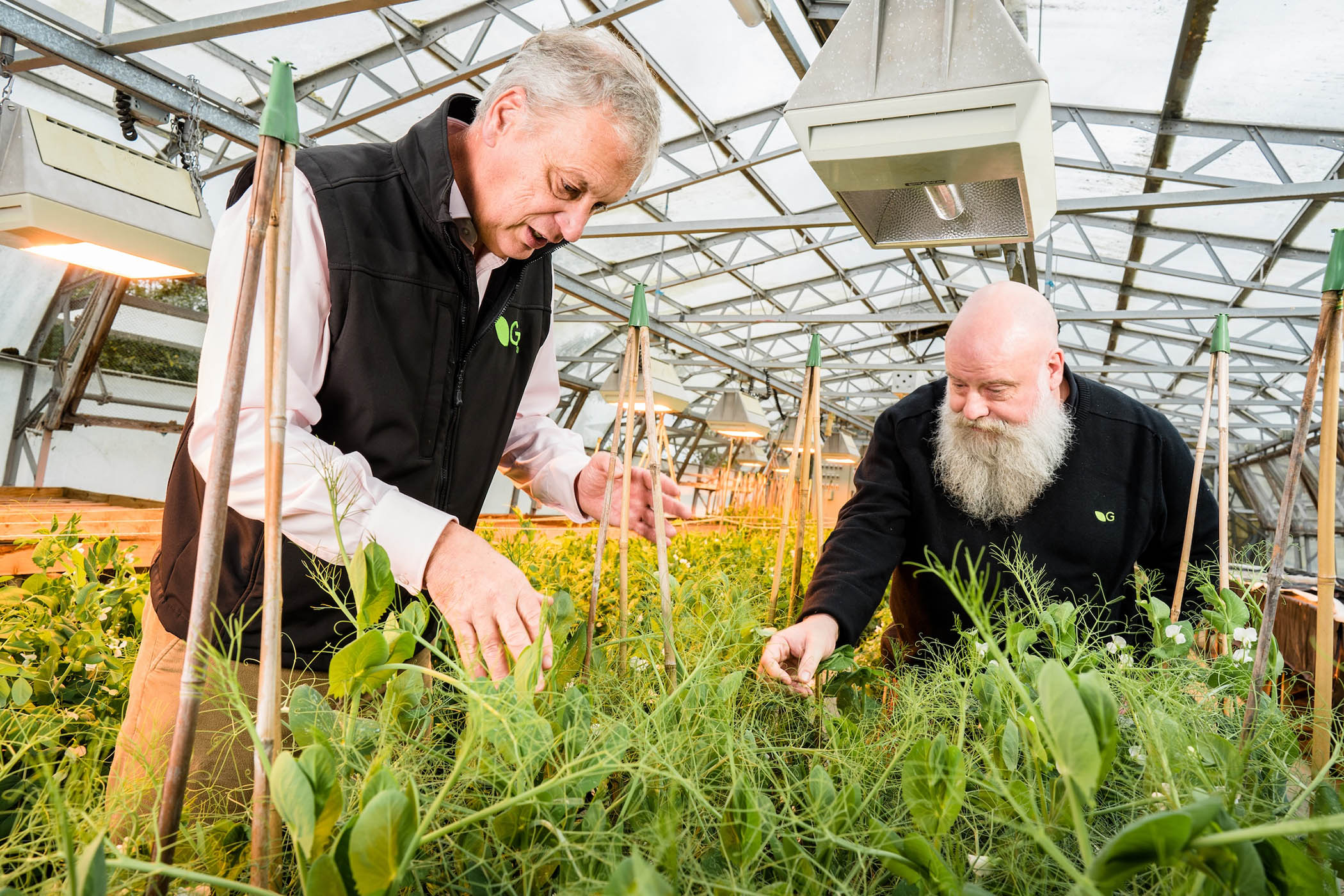
The Pea Protein Project, a collaboration between the John Innes Centre (JIC), seed specialist Germinal, Aberystwyth University and the Processors and Growers Research Organisation, has perfected a flavourless pea and is now beginning to test it out in the field to develop a commercially viable crop.
Traditionally, growing peas has meant a battle between developing the vegetable’s flavour while avoiding the bitterness caused by its micronutrients, according to Prof Claire Domoney of the JIC.
“Growers have to harvest very, very quickly,” she said. “Otherwise, if they leave it hanging around, it develops these off-flavours.”
The flavourless breakthrough was a stroke of luck. “I met one of the breeders and he said, ‘We’ve had to stop the breeding programme because we’re not just losing our off-flavours, we’re ending up with a pea that tastes of nothing’,” Domoney explained.
The arrival of the flavourless pea is part of a long history of plant breeders attempting to change the flavours of our foods, particularly the bitterness that Louis XIV’s gardener was trying to overcome.
Researchers found a way to screen brussels sprouts for bitterness in the 1980s, and other methods mean that sprouts have slowly transformed. No longer are the vegetables lumps of culinary coal at Christmas dinner; two-thirds of Britons now say they enjoy sprouts. Other vegetables, including kale and turnips, have had similar treatment, while premium coffee beans are now roasted lightly to preserve the flavour of the bean and reduce bitterness.
Gene editing and DNA sequencing technology have advanced so far that in 2023 Canadian biologists were able to isolate and knock out genes from yellow peas to make them less bitter.
Newsletters
Choose the newsletters you want to receive
View more
For information about how The Observer protects your data, read our Privacy Policy
Prof Steve Penfield, Domoney’s JIC colleague is working on a way to change the flavour profile of foods that are too bitter for humans to stomach, such as rapeseed meal, the byproduct of rapeseed oil.
“At the moment, we send this meal to animal food,” Penfield said. “The idea is to make it palatable for people.”
This lack of bitterness may have hidden costs, however. Reducing bitterness could end up reducing the healthy antioxidant effects of some foods.
“Bitterness probably has a role in protecting crops against insects,” Penfield said. “So it might not be sensible to remove it by breeding.”
Instead, the researchers hope to remove from rapeseed the protein to which the bitter flavonoid compound binds. “Hopefully, we can make it less bitter and easier to extract.”
Photograph by Elaine Hill