

Hollywood was not initially impressed by Michael Caine’s portrayal of a spy. “Dump [his] spectacles and make the girl cook the meal,” read a panicked cable from one of the backers of The Ipcress File. “He is coming across as a homosexual.”
Harry Saltzman, the producer, also had doubts. This was a long way from James Bond, his other spy series. It was his wife who persuaded him to stick to the image in the book on which the 1965 film was based, arguing that if Cary Grant could look sexy in glasses, so could Caine. As for the spy’s ability with an egg whisk, Saltzman soon saw how women swooned over him making an omelette for Sue Lloyd.
But Caine was unable to crack two eggs in one hand. That trick was performed as a closeup by the man who wrote the book and whose cookery column for The Observer was shown pinned to the spy’s kitchen wall. Len Deighton quite literally had a hand in making Caine a sex symbol.
Deighton spent four years drawing “cookstrips”, or recipes in cartoon form, for The Observer. The film came out the same year as Len Deighton’s Action Cook Book, the cover of which showed a gun with a sprig of parsley in the barrel. Having initially commissioned him for six weeks, the paper asked Deighton to create a 50-part series on French cooking, published as Où est le Garlic?
He became a bestseller in two genres, but while Deighton wrote three more cookbooks, he was most celebrated for thrillers. His first spy, called Harry Palmer in the films but unnamed in the books, reappeared in Horse Under Water (which sold 80,00 copies in two days), Funeral in Berlin, Billion-Dollar Brain and An Expensive Place to Die.
It was Deighton’s good fortune that The Ipcress File was published in 1962 in the same month that Dr No, the first Bond film, was released. He found that critics used it as a “blunt instrument” to bash Ian Fleming, Bond’s creator, over the head. The writers had very different backgrounds – Fleming the Old Etonian banking heir; Deighton, born in a workhouse, the son of a chauffeur – and this came out in their work.
While Bond was all about Mayfair clubs, fast cars and expensive tastes, Palmer lived in a bedsit, commuted by bus and had to do paperwork. Both came served with chips: Bond’s at the baccarat table; Deighton’s on his antihero’s shoulder (and the plate). The Ipcress File is said to be the first hardback that the Cockney Caine bought, and he read out sections to his flatmate, Terence Stamp, saying that he would be ideal to play the role.
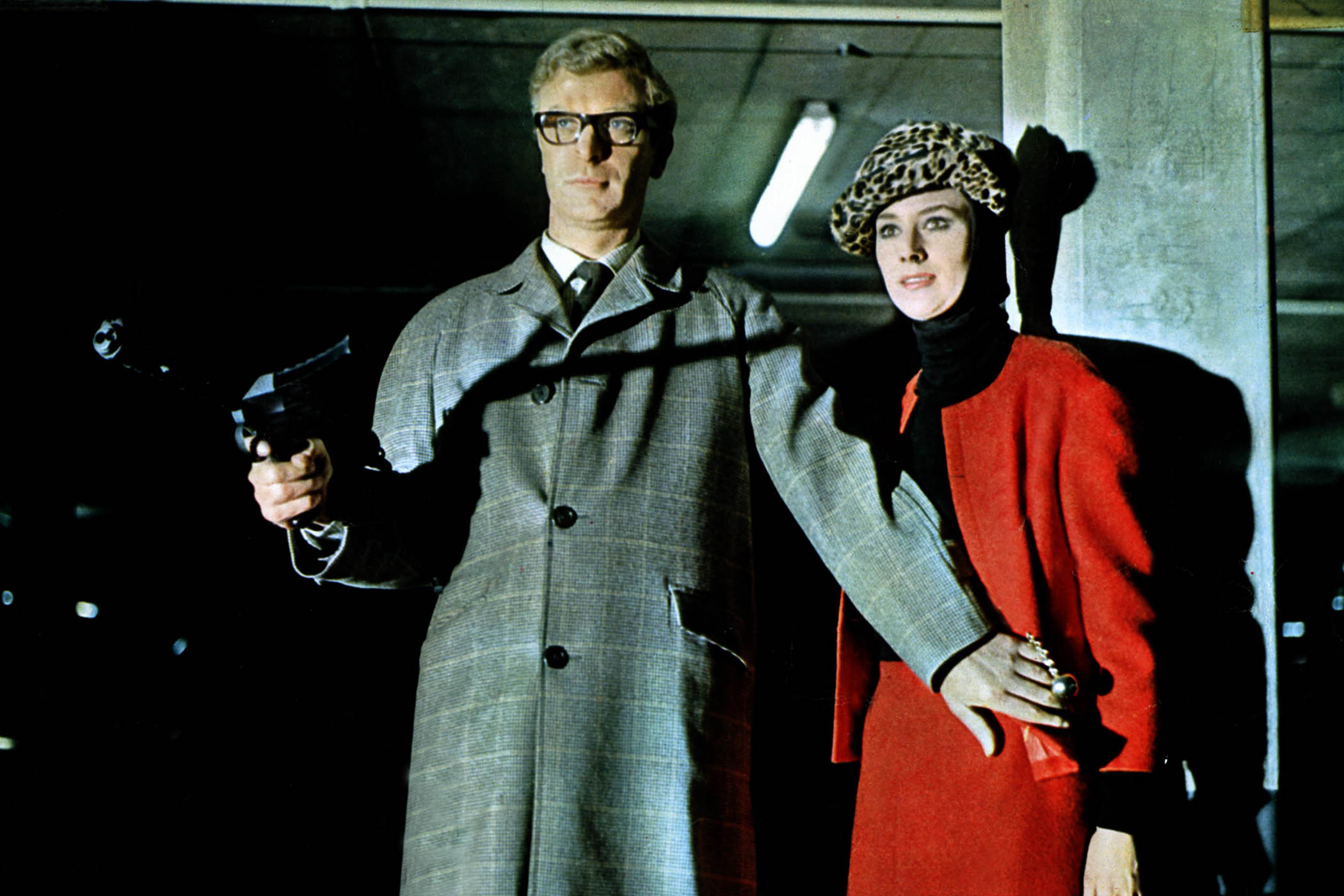
Michael Caine and Sue lloyd in The Ipcress File, 1965
Leonard Cyril Deighton was born in Marylebone in 1929. The family’s neighbour, Anna Wolkoff, was the daughter of a Tsarist admiral. Deighton’s mother cooked for her dinner parties. In 1940, Deighton saw Wolkoff being arrested as a Nazi spy. He later said that her betrayal inspired his writing interests.
After national service in the RAF, he attended art school and began working as an illustrator. He designed the cover for the British edition of Jack Kerouac’s On the Road and supplemented his income as a junior chef at the Royal Festival Hall. To aid his memory, he drew recipes and stuck them above his oven. These were seen by Raymond Hawkey, a friend who created covers for his early novels and, as a graphic designer for The Observer, thought they would make a nice gimmick for its revamped magazine.
Deighton wrote The Ipcress File during two holidays in France. Its success earned him an invitation to draft the screenplay for the second Bond film, From Russia with Love, though it was heavily rewritten. Deighton also wrote and co-produced the 1969 musical Oh! What a Lovely War, which he originally discussed as a vehicle for the Beatles with Paul McCartney over a curry that Deighton cooked in his Elephant and Castle flat.
Newsletters
Choose the newsletters you want to receive
View more
For information about how The Observer protects your data, read our Privacy Policy
It is claimed that his 1970 novel Bomber, about an RAF raid on the Ruhr, was the first book written on a word processor. Deighton’s marriage to Shirley Thompson ended in 1976 and he later married Ysabele de Ranitz, with whom he had two sons.
In Berlin Game in 1983, Deighton introduced a new agent, the jaded Bernard Samson, who Ian Holm played in a TV series. The Samson books ran to three trilogies– Game, Set, Match; Hook, Line, Sinker; Faith, Hope, Charity – and a prequel called Winter. An earlier novel, SS-GB, which imagined Germany having won the second world war, was made into a BBC series in 2017.
Deighton prided himself on accuracy, covering his office with maps and cuttings. He said he preferred researching books to writing them and that “a monumental inferiority complex” made him check everything repeatedly. He was delighted to be encouraged by AJP Taylor to write three wartime histories: Blitzkrieg, Fighter and Blood, Tears and Folly.
His diligence won him a mixed bag of fans, from Aung San Suu Kyi, who read him under house arrest in Myanmar, to PG Wodehouse, who called the Palmer novels “tremendously written and very gripping”. Max Hastings said that in his 20s Deighton’s books “seemed the coolest, funkiest, most sophisticated things we’d ever read”. Even the cantankerous Kingsley Amis came round. Twenty years after panning The Ipcress File, Amis admitted that Deighton was “actually quite good if you stop worrying about what’s going on”.
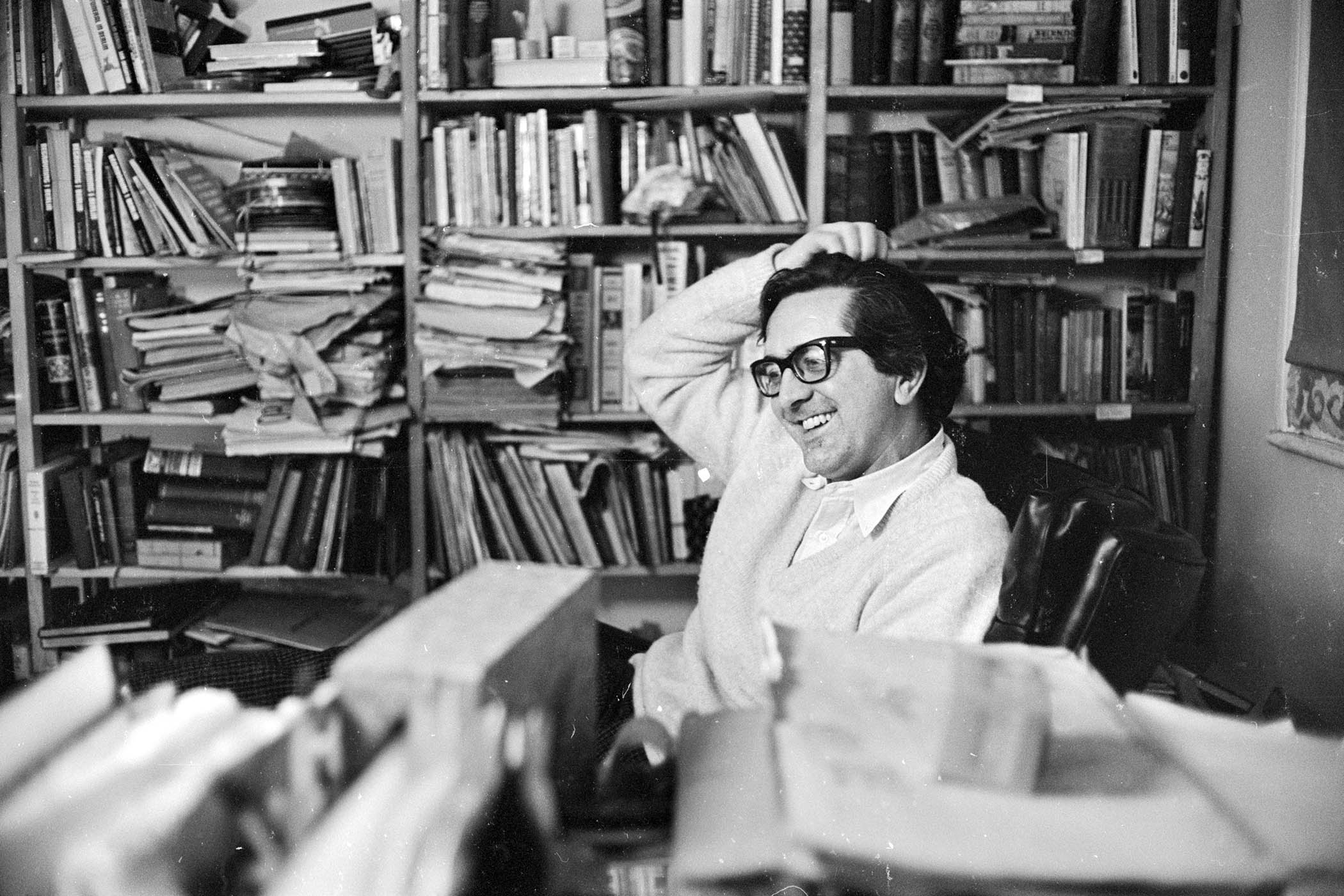
Len Deighton, novelist, was born on 18 February 1929, and died on 15 March 2026, aged 97
Photograph by David Cairns/Express/Getty Images, Allstar Picture Library/Alamy