
Health visitors are to receive new training to spot signs of distress in newborns long before they can talk.
A scheme based on methods of interpreting babies’ facial expressions and behavioural cues is to be rolled out by the NHS to help spot early signs of psychological stress and encourage bonding between infants and parents.
The programme uses a tool called the ADBB (alarm distress baby scale) model, which nearly doubled the number of cases identified with concerns in trials in Warwickshire and the north-east.
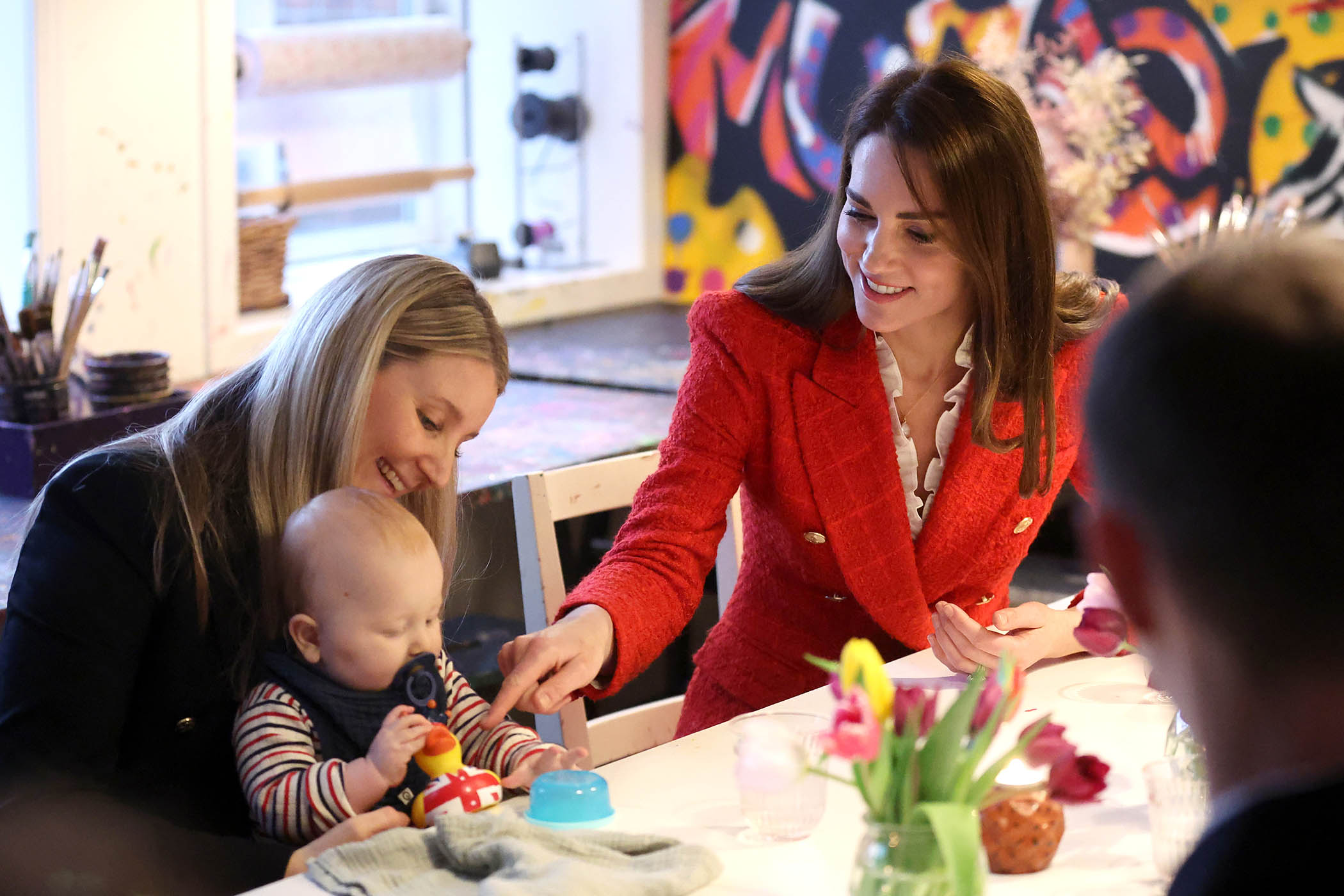
The rollout will be funded by the Royal Foundation Centre for Early Childhood and supported by the Princess of Wales, who saw it in use on a trip to Denmark in 2022.
Health visitors involved in the pilot said it had helped them have more “meaningful” conversations with parents and carers about the emotional wellbeing of their baby. They said the tool had made it easier for them to encourage bonding between parents and infants and identify families in need of greater support. The system was also popular with parents.
Eileen Perrins, the perinatal and infant mental health lead at the Institute of Health Visiting, said the training gave health visitors the confidence to deal with low-level concerns, leading to the reduction in referrals to specialist mental health services.
“It’s a tool that can be used from zero through to 24 months,” she said. “It looks at the little cues and behaviours [such as eye contact]. Babies are born social, ready to connect. We know that they’ve got a lot to say but how do they articulate their story without the physical words? The tool gives a voice to that baby. For me, as a practitioner, it was transformational.”
She said it did not mean ignoring the needs of the mother. “It complements what already exists – it doesn’t take away from that. This is like binocular vision: you are looking at both.”
Christian Guy, executive director of the Centre for Early Childhood, said the programme was part of a wider shift towards funding “practical” initiatives as well as research.
“The princess… wants to both raise understanding about the importance of the first phase of life but also to then help create and catalyse progress,” he said.
Newsletters
Choose the newsletters you want to receive
View more
For information about how The Observer protects your data, read our Privacy Policy
The new tool was “bringing a different lens” that balanced physical checks with social and emotional observations, he said. “We know that the social and emotional wiring we all have is so fundamental that it does need to be elevated and put on a par.”
The Centre for Early Childhood worked with the Institute of Health Visiting to test the tool in the UK. The first pilot in South Warwickshire University NHS foundation trust and Humber teaching NHS foundation trust was successful so the trial was expanded to cover eight areas.
The evaluation, which will be published this week, found that the tool addressed a “clear gap” in health visiting practice by strengthening understanding of infant social withdrawal. There were “measurable changes” at the six- to eight-week postnatal review.
The proportion of babies identified with concerns increased from 7% to 12%. The researchers recommended that the model should be commissioned across the UK.
Prof Sam Wass, a developmental cognitive neuroscientist and director of the Institute for the Science of Early Years and Youth at East London University, said the scheme was an important way of highlighting potential problems early.
“We’re very focused on learning as something that happens when we start school – reading, writing and arithmetic – but, in fact, by far the hardest learning that we ever do at any stage in our lives comes during the very earliest years. It’s during this period that we’re doing those really foundational forms of early learning… and all the evidence is that social interactions are absolutely crucial.”
Last September, more than a quarter of children started reception still in nappies, almost a third were unable to eat and drink independently and a quarter struggled with basic language skills such as saying their name.
Felicity Gillespie, chief executive of the early years charity Kindred Squared, said: “We have teachers telling us they feel they are now forced into ‘babysitting’ or ‘parenting’ roles, teaching foundational social and emotional skills that children should have developed through their early attachments. Health visitors are that vital first universal service supporting parents to understand how and why early cues are so important.”
Photograph by Chris Jackson/Getty Images