

In May we announced five regional winners of the Commonwealth Short Story prize, chosen from almost 8,000 entries. Within days, some found themselves accused of having used artificial intelligence to write the stories that had moved our judges. The weeks that followed were an education. They taught me that in this new age of rapidly evolving digital technology, the first casualty is not the machine’s credibility but the human writer’s, and that an institution such as ours must now decide whose side it is on. On Tuesday we announced the overall winner of the prize: Jamir Nazir, whose fine story The Serpent in the Grove was the focus of much of the suspicion.
Let me be clear about what was placed under suspicion. Our prize is not a commercial venture. It exists to do one thing: to find and amplify voices from the furthest corners of the globe, and to carry readers into worlds they would never otherwise enter. The thousands of entries were read down to a shortlist of 25, and then to five winners; seven pairs of eyes weighed each of those final stories; years of patient, argumentative human judgment stand behind every choice. This is slow, devoted, unfashionable work. It is precisely the kind of work the machine cannot do and precisely the kind a healthy literary culture cannot do without.
We did not hide from the accusations; we investigated in depth. Not by relying on AI-detection software but by using our own judgment. We held lengthy discussions with our winners over their working drafts, time-stamped documents, outlines, and examined the evidence of an artistic journey. AI-detection software, it must be said, is not infallible: it returns inconsistent verdicts. In doing so, it undermines the trust on which a prize depends. Our review found no conclusive evidence of the use of AI in the winning stories. We will not punish honest writers on the word of an algorithm’s guess.
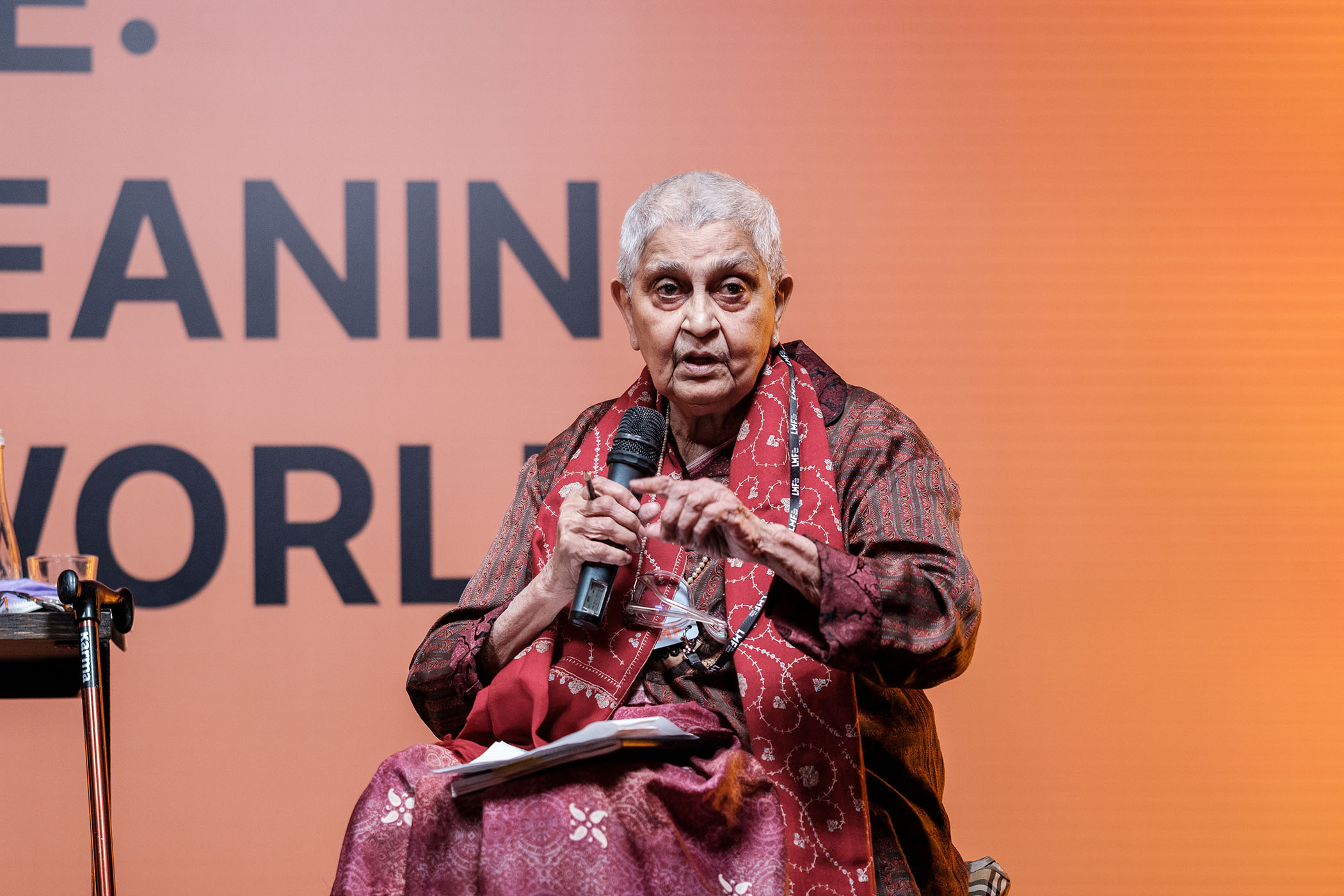
But this episode is a parable of something larger, and here I want to borrow from those who taught us how to think about voice and power. Gayatri Chakravorty Spivak once asked whether the subaltern can speak. Whether the most marginalised can ever represent themselves, or are forever spoken for, represented and written over by systems that claim to act in their name. A large language model is a near-perfect engine of that erasure. It is trained on a corpus that encodes, with mathematical fidelity, every historical inequity of who was once published and who was not.
Edward Said spent a career showing how narration becomes power, how the powerful describe the world, and block other narratives from ever forming. We are now concentrating that power as never before, in a handful of companies trained on a body of text that mistakes the well-resourced for the universal. And here is the cruelty our writers have just lived through.
Where the machine’s default voice is the metropolitan one, any writer whose work is unusual or challenging may be seen as suspect. She may be exceptionally talented, her imagery and voice may thrill and unsettle us – but that very particular voice may make her all the more likely to be accused of being a machine. For a young writer in Nairobi – or Nassau, Nicosia or New Delhi – it’s not enough to be talented; now she is expected to prove her very humanity.
The hardest lesson of these months has been about our duty of care, that to invite a writer on to a platform is to take responsibility for what happens to her once she stands on it.
The heart of our defence will remain what it has always been: human judgment, the experienced eye that knows quality and truth
The heart of our defence will remain what it has always been: human judgment, the experienced eye that knows quality and truth
And yet the answer to all of this is not fear. Every age has tested its writers, and a prize that flinches from criticism betrays the courage it asks of them. We will hold our nerve and we will reform. We are strengthening our entry rules and drawing up a clear framework on the use of AI in submissions, in step with the best of industry practice. But the heart of our defence will remain what it has always been: human judgment, the experienced eye that knows quality and truth when it meets them, which no detector can replace.
Spivak asked whether the subaltern could speak. The honest answer, in her time and too often in ours, was that she could not, because no one had built the structures that would let her be heard without being rewritten. I prefer to read her question as an instruction: let the subaltern speak. That is our work, and we will not be talked out of it. This is the promise we make to every writer who trusted us with their words: the machine will keep talking, but across the Commonwealth, yours is the voice we will choose to hear.
Razmi Farook is director-general of the Commonwealth Foundation
Newsletters
Choose the newsletters you want to receive
View more
For information about how The Observer protects your data, read our Privacy Policy
Photograph by Global Images Ukraine/Getty Images