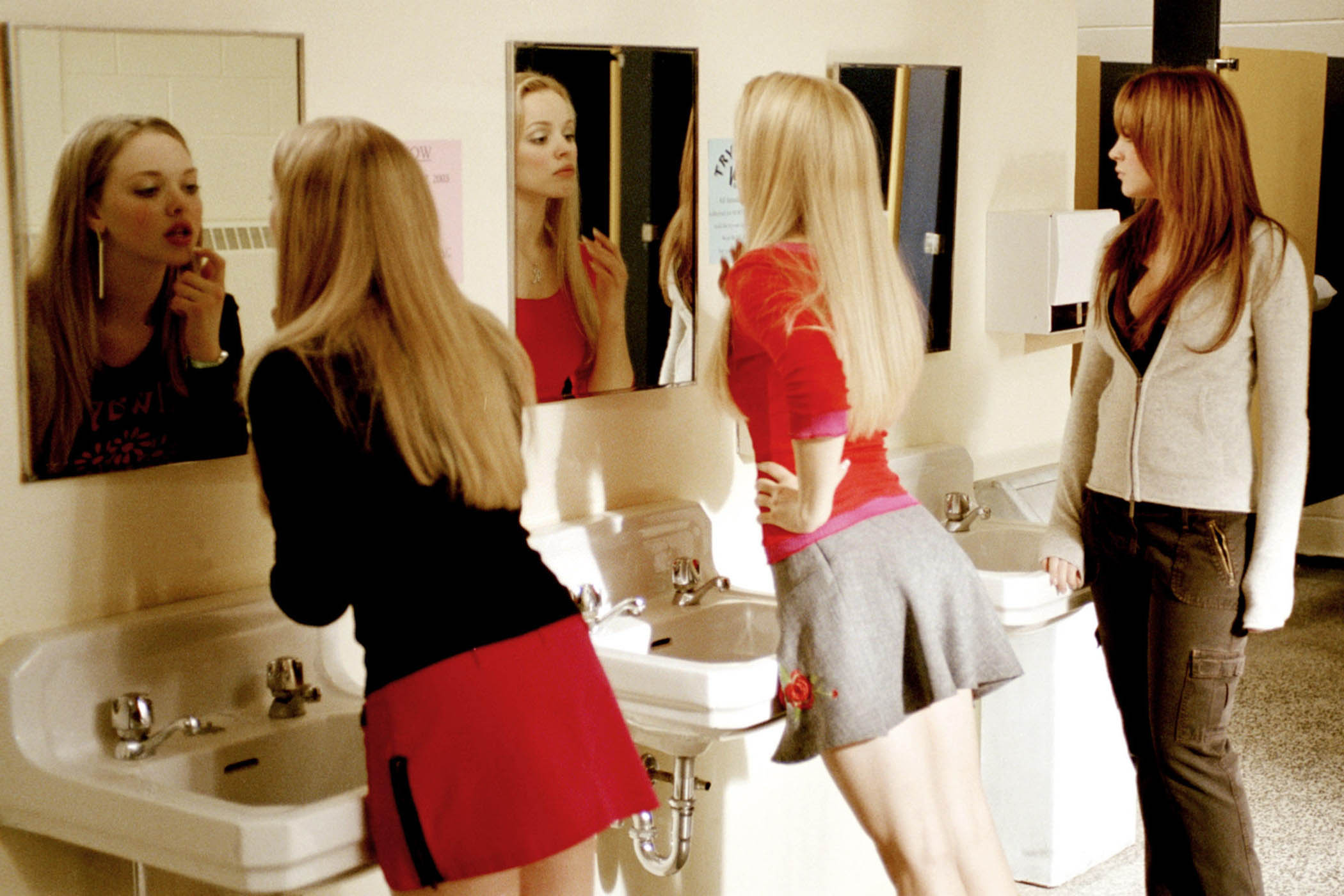
There’s a famous scene in the 2004 movie Mean Girls in which the protagonist first encounters 21st-century western body image. “I used to think there was just fat and skinny,” she says. “Apparently, there’s a lot of things that can be wrong on your body.” Viewers then watch a grim montage: teenage girls in front of a mirror picking apart their hairlines, pores, even their nail beds – problems visible only to them. The morbid joke is that there’s nothing wrong with these girls, who are agonising over imperfections that don’t actually exist, and who represent a worrying culture of hyper-scrutiny pervasive among young women at the time.
The morbid joke now, of course, is that the supposedly minute issues pored over in this scene pale in comparison with the imagined flaws and invasive solutions hounding young people – and, really, all people – today. Twenty years on, following a brief detour via the ultimately shallow body-positivity movement in the 2010s and what felt like true progress after the excessive body-shaming of the 90s and 00s, we have arrived at an unfathomable peak of bad body image. In 2025, there is no part of the body that has yet to be mined as a site of failure, with a host of expensive treatments to improve it.
This new reality happened slowly, then all at once. In the past decade, we have seen an already increasing beauty trend cycle reach unprecedented speeds. Both surgical treatments and less invasive “tweakments” have soared in popularity.
Why has this happened now? The answer will surprise no one. As in other aesthetic spaces, such as fashion and interior design, cosmetic trends have reached warp speed thanks to the way the pandemic changed social media consumption.
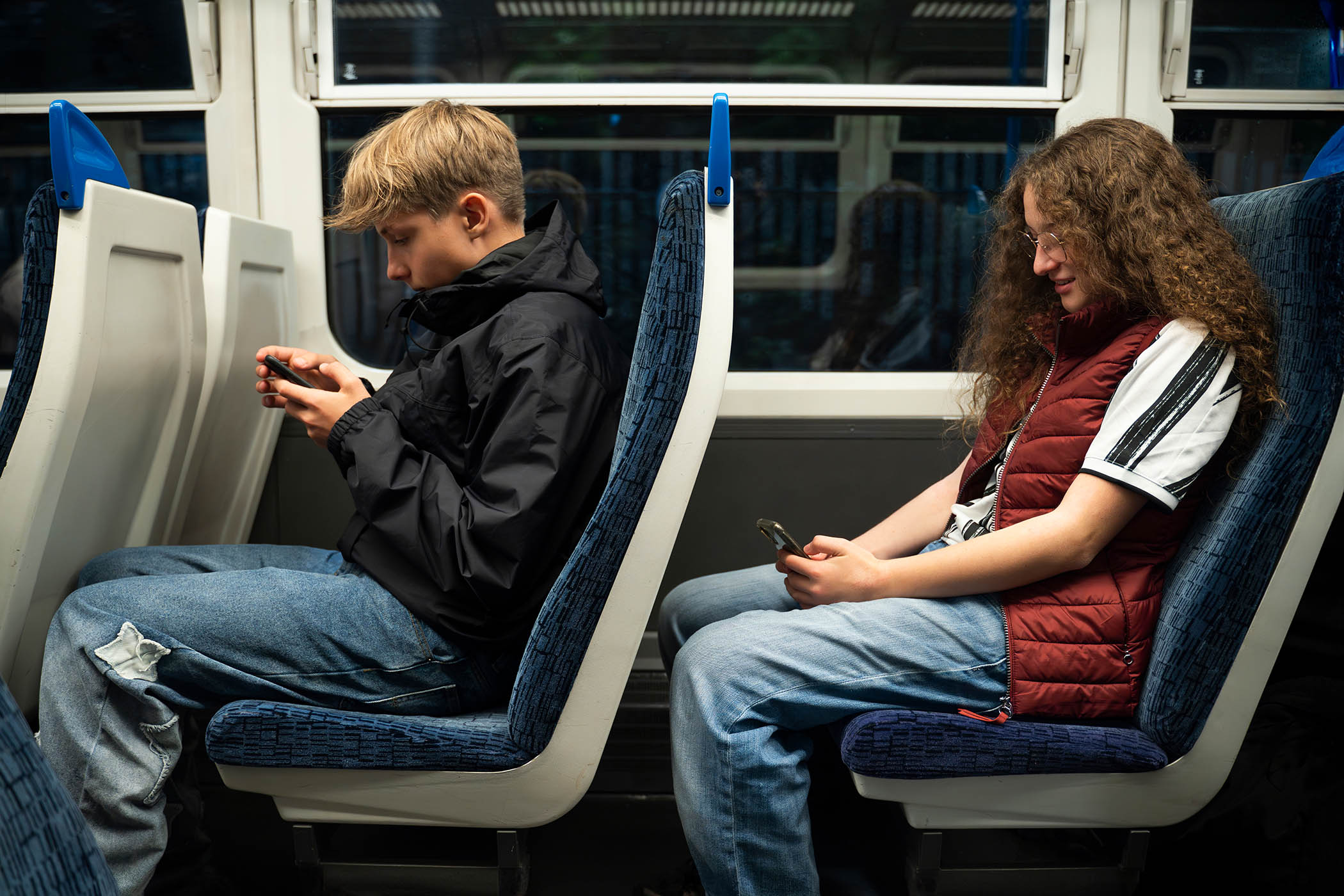
TikTok and Instagram Reels, heavily filtered visual media consumed at an eye-watering pace, are addictive to its mostly young users
TikTok and Instagram Reels, heavily filtered visual media consumed at an eye-watering pace, are addictive to its mostly young users
“What used to take years to become mainstream can now shift within months,” says Dr Raj Juneja, co-founder of Face Teeth Smile dental clinics. “Patients come in referencing specific looks they’ve seen online, and these aesthetic preferences evolve quickly as new influencers, filters and viral makeovers circulate.” TikTok and Instagram Reels, heavily filtered visual media consumed at an eye-watering pace, are addictive to its mostly young users.
Other vectors are the ubiquitous images of celebrities – access to which has been exacerbated by social media and, again, the fast consumption of vertical video – and the rise of online experts (and self-styled experts) analysing the shifts in famous faces and bodies. We can also see the celebrity-first origins in the popularity of drugs such as Ozempic, which initially entered public consciousness via the overnight weight-loss witnessed on red carpets.
The rise isn’t anecdotal. Statistics only affirm that we are in the midst of a body-morphing boom. Global sales of the weight-loss drugs GLP-1s rose 60% between 2023 and 2024 (prescriptions in the US quadrupled between 2020 and 2022). Over the same period in the UK, blepharoplasty surgery (to remove skin from the upper or lower eyelids) rose by 13%, while liposuction and face/neck lifts both rose by 8%. There was a 24% rise in thigh lifts and a 13% increase in brachioplasty (upper arm sculpting). Adoreal, the software platform used by many of Britain’s top cosmetic clinics, reports that breast augmentations have risen at the clinics by between 6% and 15% since last year.
So what happens when your body – and more specifically the work you’ve had done to get it – stops being fashionable a year later? Despite the seemingly inescapable popularity of self-modification, there is another fallout of this beauty industry noise: people choosing to escape. Fatigue has begun to set in and across all ages, there is a notable feeling of being fed up with constantly changing trends. Though still the biggest group, the 25-34 age group have begun to decrease the number of treatments they are having, according to Adoreal – if only by a few per cent.
“The influx of new technologies and procedures, often promoted aggressively across the digital channels, can leave clients feeling overwhelmed, uncertain and anxious about making the right choices,” says Rosanne Joseph-Anthony, the lead aesthetics-prescribing practitioner at Healthium Clinics. “These worries are compounded by rising costs and the presence of many unregulated or underqualified practitioners, which can further corrode patient confidence.” The past few years have also seen a growing awareness of cosmetic surgery horror stories, such as the high risk of a botched Brazilian butt lift (BBL), or even the potential for damage involved in fat-freezing procedures, such as those described by the model Linda Evangelista, who said she had been “brutally disfigured” by CoolSculpting.
This fatigue, apparent in surgical offices and some statistics, also comes alongside the rise of a small but growing chorus of online voices railing against what the beauty writer Jessica DeFino calls “aesthetic inflation” – the creeping normalisation of cosmetic surgery and filtered images, which raises the baseline standard of beauty for all – and loudly choosing to let their bodies exist and age as they would naturally. Celebrities such as the makeup artist Bobbi Brown and the actor Pamela Anderson – who has been barefaced in public for most of the past few years – are openly pushing women to not hide their wrinkles. (Many of these people are, it’s worth noting, often doing so while also trying to sell themselves and their own products.)
And people aren’t just burning out on feeling bad about their bodies, but on watching, hearing and consuming such a rapid rate of images and mixed messages about literally everything.
Though a smaller group, many of the beauty experts I speak to believe this will dictate trends to come.
In 2025 there is no part of the body that has yet to be mined as a site of failure, with a host of expensive treatments to improve it
In 2025 there is no part of the body that has yet to be mined as a site of failure, with a host of expensive treatments to improve it
“We expect to see a more widespread return to subtle, sustainable treatment plans in the years ahead,” says Sian Dellar, a permanent makeup specialist. This is echoed by Juneja, who says this fatigue will move patients in the direction of “timeless, personalised treatments, natural proportions, and skin health over dramatic aesthetic changes”.
It is a seductive idea to think that this change in cosmetic work towards subtler, minimalist treatment is a move in the right direction. One of the biggest trends of the past five years was a widespread undoing: influencers and celebrities proudly sharing all the work they’d had done in the decade previous, removing it all and unveiling their “real” face returned to its prior form.
In the UK, this movement was triggered by the influencer and Love Island 2019 star Molly-Mae Hague, who had gone viral for the volume of exaggerated filler she had in her lips, cheeks and chin but during the pandemic documented the process of dissolving what filler she could. Hague was subsequently celebrated for looking far more beautiful without this work and for “setting a good example” for her young fans.
This fatigue will move patients in the direction of ‘timeless, personalised treatments, natural proportions, and skin health over dramatic aesthetic changes’
This fatigue will move patients in the direction of ‘timeless, personalised treatments, natural proportions, and skin health over dramatic aesthetic changes’
Sian Dellar, a permanent makeup specialist
Even Hague’s admitted work nods to the new era we are entering: the end of obvious interventions being swapped for a “natural look” – one that is achieved through an equal, if not greater number of cosmetic treatments. Almost every professional tells me this is where beauty is headed. Work is becoming more invisible, where people are opting for a host of minimally invasive microtreatments that don’t, on their own, stand out but which together make a whole new look – the kind that makes you stare at someone’s face and think something’s changed without being able to put your finger on what that might be.
But is this “undetectable” work something to champion as progress? We may look at minimalist treatments – smaller boob jobs, millimetre brow lifts over inches-high ones, or fat transfers yielding softer curves rather than the appearance of extreme BBL corsetry – and see that this work looks more “normal” and, by some standards, more appealing. But it is also work that obscures that, for almost everyone, this type of look does demand costly, constant intervention.
Cosmetic surgery is being marketed to people of all genders and all ages as the key to a happy life, delivered by an otherwise inaccessible type of beauty – and not only that, but the key to a life in which your face and body are merely acceptable to others. Standards of beauty are racing toward a world where a life free of this kind of intervention becomes the outlier, not the norm.
Rather than a world free from the noise of trend after trend, we are headed somewhere even more confusing, where we forget what normal ageing, a normal body or even a normal face looks like. That is to say if we aren’t there already.
Photograph by Paramount/courtesy Everett Collection
Newsletters
Choose the newsletters you want to receive
View more
For information about how The Observer protects your data, read our Privacy Policy