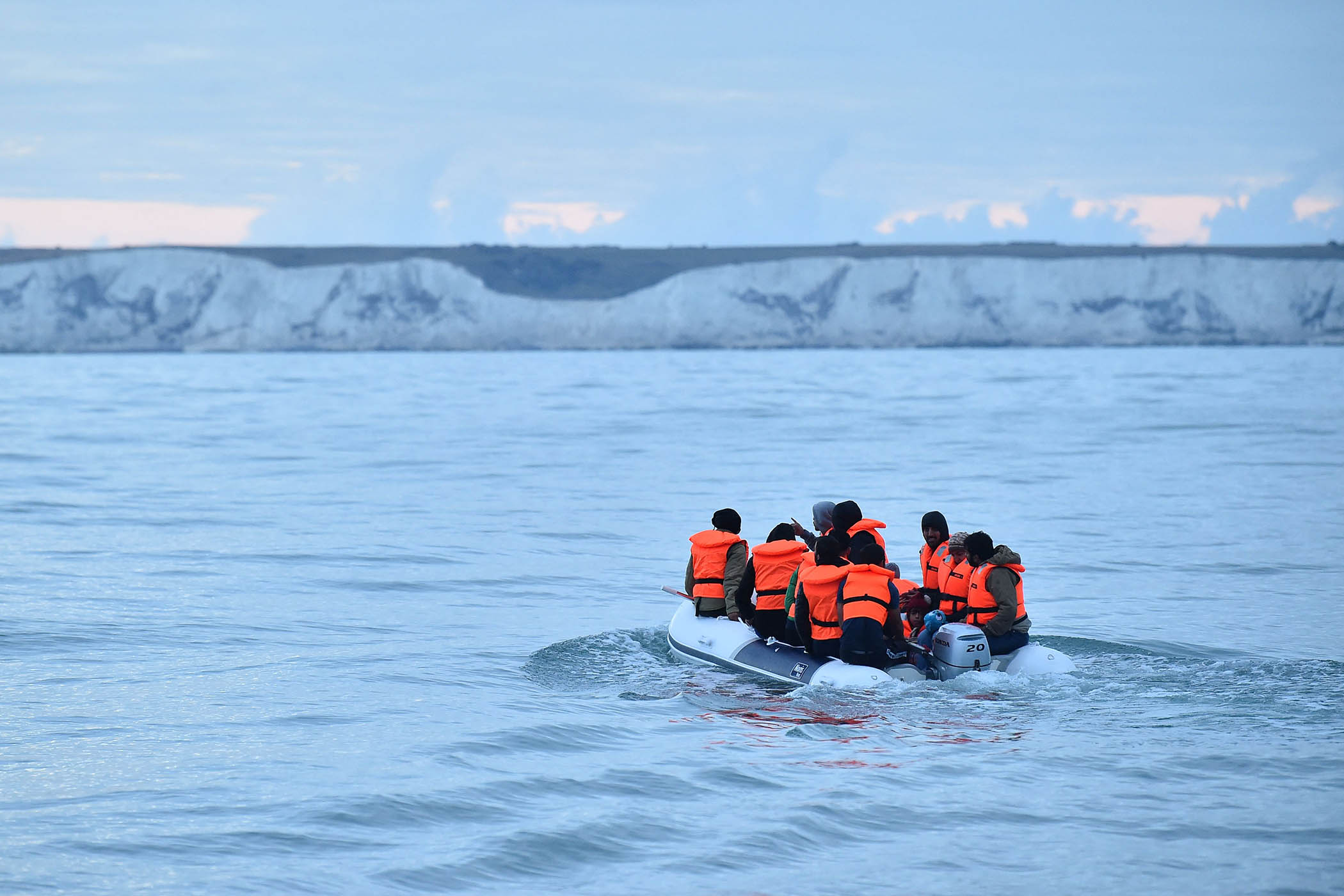


In a skilfully written article for The Observer (28 December 2025), Zack Polanski, the leader of the Green party, spoke movingly of “the people who have lost everything”, waiting in “makeshift migrant camps” in Calais, hoping “that Britain might still honour its word and its values”.
“We are entering 2026,” he said “with a moral reckoning on our hands. The question is,” he continued, are political leaders “brave enough to speak the truth? That immigration is good for this country and that we have a responsibility to protect those failed by global injustice and political neglect.”
Let me, therefore, try a “reckoning” – part moral, part political – of Mr Polanski’s policies on asylum and immigration. He is right to assert that “we have a responsibility to protect those failed by global injustice and political neglect”.
We do meet our international responsibilities. The message of the Good Samaritan remains one of the most powerful ethical imperatives in our society. Most immigration has been good for this country, but not all.
But it’s at this point that the issue becomes more difficult, regardless of who is in government: Reform, Green and every party in between.
We are a relatively wealthy nation, sixth in most international league tables. We are also a small island, with 0.85% of the world’s 8 billion-plus population. For every 1,000 people in the world, eight or nine live in the UK. We are also among the highest densities of population, especially in England.
Our nation’s population has increased by about 10.4 million people, or 18%, since 2000. Most of that was due to net inward migration. In one year alone, albeit an exceptional one – from mid-2023 to mid-2024 – net migration added almost 740,000 people. Over the period from 2000, most migrants came by entirely legal routes, but approximately 430,000 were asylum seekers granted protection or other forms of leave.
Our record compared with many countries in the world is exemplary.
But there have to be limits on the numbers this country can, and should, absorb. Mr Polanski appears to suggest that the current restrictions on numbers are unacceptably low. But what limit would he place? I cannot believe that, as a responsible politician seeking power for his party, he believes that there should be no limits whatsoever?
A no-limit policy would soon hit the buffers of reality – of where to place additional hundreds of thousands of people, and of the cost. Angela Merkel in Germany tried this. The spectacular rise of Alternative für Deutschland has been one consequence.
Newsletters
Choose the newsletters you want to receive
View more
For information about how The Observer protects your data, read our Privacy Policy
Mr Polanski then implies that if the UK adopted his solution, of a “managed migration system with safe routes, from strong international cooperation” the issue of the camps at Calais would evaporate.
It would not, and to say otherwise is wilfully to base a policy on a pretence.
Some of those waiting to board a dinghy at Calais will be successful in claiming asylum in the UK. In the latest reporting period (the first half of 2025), about two-thirds of those arriving in this way were granted asylum.
Even though our current system, given the wide interpretation of articles in the European convention on human rights, is very generous, one-third of those arriving by small boats have no claim to stay here. What should our response be to those who are refused? Just a shrug?
Of course, it’s the case that those who choose to take a chance on a small boat across the Channel are almost always desperate to leave their home country. But there’s another reality, too. These asylum seekers will have been persuaded by ruthless international criminals that getting into the UK is fairly easy, that it’s difficult for people once here to be deported and that the potential danger of a small boat is worth it to jump the queue of any legal route to asylum.
For whatever legal routes and processes were chosen, even by the Greens, many more people would apply than would meet the criteria. The UK is a very attractive country, because of its relative wealth, its tolerance, its language and the openness of its society. Indeed, as long as gross inequalities of wealth and income between nations – and political instability and violence – persist, demand to come to the UK and other wealthy, safe nations will be almost insatiable. What’s immoral, if we are to trade morals, is failing to recognise this.
Moreover, actions, and inaction, by government can also generate their own demand. By way of example, when I became home secretary in 1997, I was asked to clear a backlog of about 30,000 cases of asylum seekers and overstayers: they had no real basis for staying here, but they had been in the UK so long, it was very difficult to deport them.
I agreed to the “write-off”. It seemed like a good idea, on its merits, but I was wrong. The message went out very fast. Get into the UK – and hang on – and you may well be allowed to stay. Thus, my decision acted as a “pull factor”, indirectly encouraging more applications.
In time, I and my successor, David Blunkett, did get the numbers down. Applications peaked at 84,100 in 2002, then fell rapidly to 25,700 in 2005 and further decreased to 17,900 in 2010, according to House of Commons statistics.
The situation we faced was, however, easier than today, not least because the UK was in the EU and benefited from the Dublin regulation, which allowed us to return applicants to the first countries to which they could have made a claim. There was people-smuggling, on vehicles, but numbers from this fell as controls of all kinds improved, and as did cooperation from the French. Dangerous small boat crossings did not start in substantial numbers until 2018.
As to the policy that this government should follow, the home secretary, Shabana Mahmood, has the right approach. We should assess total numbers allowed by legal routes against unmet demand for labour, for example, in the NHS, social care and agriculture, greatly tighten the ability of migrants to bring in dependants and introduce digital IDs – all of which is in hand.
I’d go further, though, and delink our Human Rights Act (of which I was, and remain, a proud author) from the European court of human rights in Strasbourg, which has expanded the “rights” of family life, and in other articles, way beyond anything contemplated when the convention was ratified by the UK in 1951 – and has done so without any democratic warrant.
Mr Polanski ended his article with a clarion call for us to “step forward with a vision that… rebuilds the NHS, makes energy affordable and leads on climate action, while strengthening international cooperation and investing in peace”.
“Some,” he said, “will call this naive.” I don’t. I call it misleading. We are following policies that make progress on all those things, but we also have to deal with the dangerous and divided world as we find it, and not follow policies that, however well intentioned, will, in truth, make the situation much worse and undermine faith in politics even more.
Photograph by Glyn Kirk/AFP via Getty Images