Photograph by Naima LeComte for The Observer
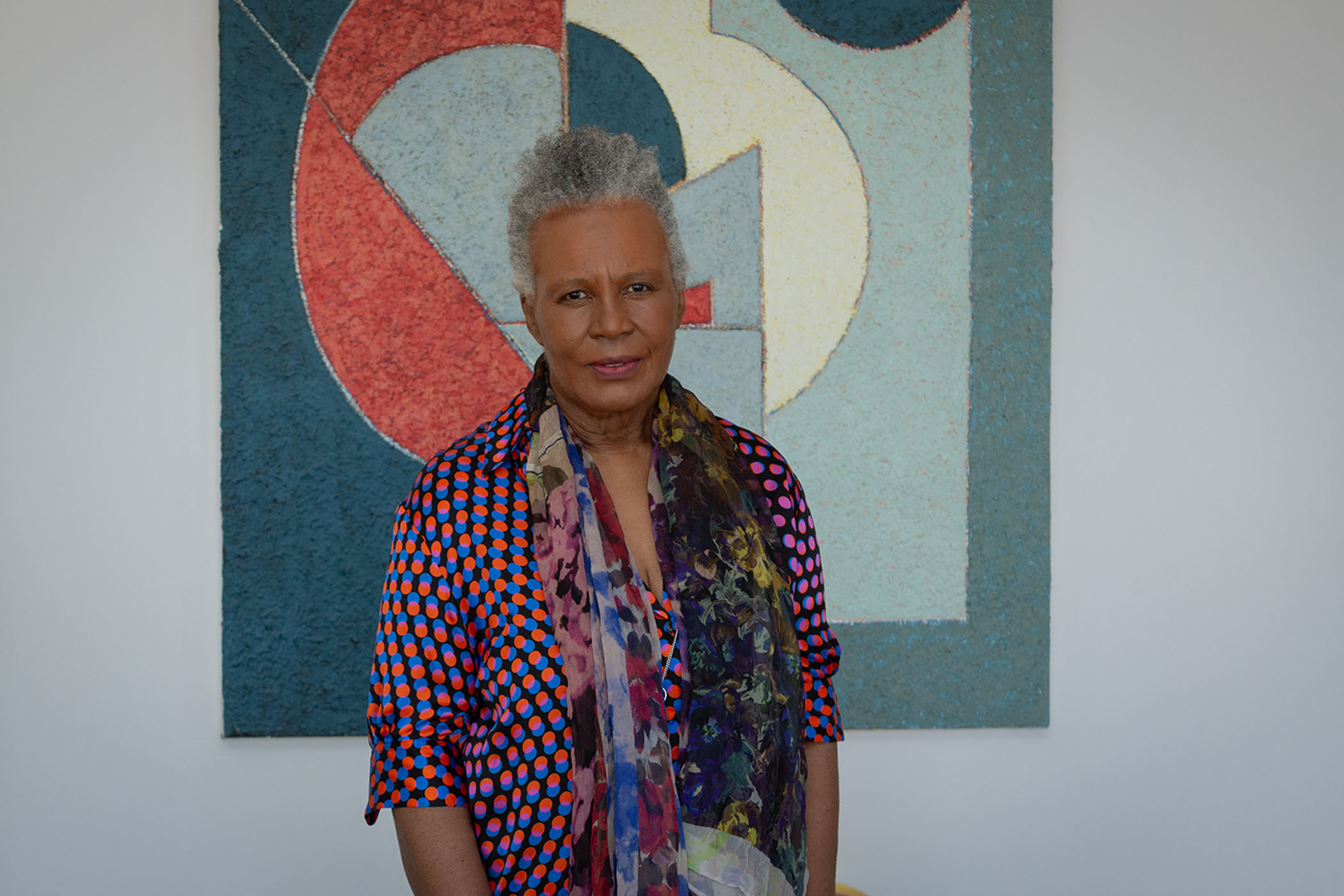
There’s something undeniably cool about Claudia Rankine, in keeping with the clear-eyed certainty of her writing, but the coolness is offset by the warmth of her welcome. Stepping on to the sunny balcony of her rented apartment overlooking the old port of Marseille, I ask her why she’s here. “Why is Trump president?” Rankine retorts, laughing heartily and unexpectedly, as she will throughout our conversation. “Seriously,” she explains, “I’m here because I like the concept of freedom of speech, and I can’t live in the United States, where I feel I have to monitor everything that comes out of my mouth.”
Earlier this year, Marseille came close to electing a far-right mayor from the National Rally (formerly the National Front), and the same rage of fascism has flared in France’s second city as it has flashed across myriad towns and cities in the US. But for now, says Rankine, “I feel more embodied – I feel like I can be myself here”. The writer and public intellectual is so taken by Marseille’s culture and the comforting notion that “her people” (of the global south) make up a significant part of the diverse population that she’s in the process of buying a local property.
Born in Jamaica in 1963, Rankine was educated in the literature of that island, but her life has been shaped by the culture and, increasingly, the culture wars of the US, where she has lived since emigrating at the age of seven to join her mother, a paediatric assistant, in the Bronx. In her fourth book of poetry, Don’t Let Me Be Lonely (2004), Rankine pioneered the “American lyric”, mixing verse, essay and sometimes memoir and photography. She would go on to use this form to electrifying effect in Citizen (2014) and Just Us: An American Conversation (2020), works that interrogate racial trauma and bigotry, state-sponsored assaults on citizen rights and the insidious resurgence of white supremacy.
This last of these threats inspired her, on receiving a MacArthur fellowship in 2016, to establish the Racial Imaginary Institute (TRII), “a multi-disciplinary platform engaged with art and scholarship”, partly focused on a study of whiteness, its origins and legacy. TRII won’t have endeared her to rightwing revisionists in the US, who have advanced absurd notions such as the benefits of slavery to the enslaved, but that’s hardly a surprise to Rankine. “Repression of the real is their white phosphorus,” says a character in her latest book, Triage: Truth, Art & Fiction, “a smoke screen that torches the Constitution.”
‘We have had such a long history, at least in the US, of rhetoric around taking it, bearing it, Black resilience. And I say: forget about that, actually face the devastation’
‘We have had such a long history, at least in the US, of rhetoric around taking it, bearing it, Black resilience. And I say: forget about that, actually face the devastation’
Claudia Rankine
Triage attempts to engage creatively with the escalating state of turmoil at home and abroad. Rankine muses that she can’t recall a darker period in her lifetime. The catalyst for the book came after the brutal assault in Iran on Mahsa Amini, a young woman who died after a “violent arrest” in 2022 for allegedly infringing hijab regulations. “There was something around the circumstances of her death that made me start to write a poem about collapse. That poem was kind of a mess, but it sat there. And it dovetailed into discussions in the US around the end of abortion rights, Jeffrey Epstein’s sordid past, the #MeToo movement. And all of those things came together with the overt takeover of white supremacy in the US. So, in that cauldron, Triage became the product.” As Rankine’s narrator asserts: “Everything is on a collision course with the hardness of now.”
Triage is a dizzying blend of poetry, lyric essay, art criticism and a sort of memoir with two central characters: a Jamaican-American narrator, an approximation of Rankine, and her fearless Palestinian compadre, “the theorist” (a composite of many women Rankine has known), whom the narrator first encounters when they’re students at college in America. The book charts their evolving friendship (“a beloved, if cantankerous, thing”) from university, through a lengthy separation, to a series of reunions in their 60s. As idealistic students, both had been alert to their country’s transgressions, sparking thoughts of counter activism. But whereas the anxious narrator never saw herself as an activist foot soldier (“I had been conscripted too young in a losing battle”), the theorist continued taking the fight to “the man”. “This moment has brought to the fore the difficulty around things like Gaza, genocide, the silencing of students,” says Rankine. “Everybody is having to position themselves, causing rifts in friendships and families. People are understanding commitments that people around them have that they’ve never seen before. And they’re asking themselves, can I keep company with this?”
In composing Triage, “I thought of it as fiction”, adds Rankine. While this may seem a departure from her most recent books, even in her more straightforward nonfiction, she says, “the lyric lives alongside the biographical, fictional writing and political rantings”. Since 2004, she has been published in the US by Graywolf Press, with whom, for Triage, she had the confidence to push the boundaries of genres even further. For the first time, she says, “I wrote, allowing myself to fail”.
Though a hybrid that resists categorisation, Triage is also rooted in Antigone. Since her student days, Rankine has always wanted to rewrite Sophocles’ tragedy of the grieving Antigone who, ignoring her cautious sister Ismene’s warning, defies the King of Thebes in conducting a funeral rite for her brother. For her “treason”, Antigone is buried alive in a cave. In Rankine’s borrowing from Sophocles, the theorist is cast as a version of Antigone, and the narrator stands in for Ismene.
“I wanted to bring Ismene to the fore because she has always been the silent majority,” explains Rankine. “She is those of us at home in agreement with what is being done by the likes of Angela Davis or Martin Luther King – but we’re at home. So, I wanted to bring a consciousness, a struggle, inside that character.”
Newsletters
Choose the newsletters you want to receive
View more
For information about how The Observer protects your data, read our Privacy Policy
There’s always a tension when writing a memoir, even something that isn’t strictly memoir, between candour and self-protection or the protection of others. There are a handful of moments in Triage where Rankine edges towards revelation, such as the startling line, “I began wearing silver eye shadow and black mascara to make up for not being able to read the language of emotions.” I wonder whether Rankine is referring to her own emotion or others. “I had a childhood where I lived with a very abusive father,” she confides. “And in order to get through that period, you couldn’t act based on how you felt. You had to try to become small so that you weren’t seen.” Her relationship with her mother – a woman lacking in tenderness and not given to intervention – was also fraught. The narrator recalls “the cruelty [my mother] made room for in the lives of her children by simply doing nothing”.
That notion of betrayal through passivity also features strongly in Just Us when Rankine attends the play Fairview with a white friend. At the play’s end, the African American actors invite white audience members to take to the stage, to invert their white gaze and put themselves under the spotlight daily felt by black people. The white friend clings to her seat. Rankine is dismayed and fumes at her betrayal: “I didn’t know you were black!”
But now, in Triage, there’s an uncomfortable episode where Rankine turns the tables on herself, placing the narrator in a moral dilemma. When the theorist asks her to put up some refugees in her Berlin apartment, she squirms and demurs. It’s one of the most powerful scenes in the book, I tell Rankine. “That’s because it’s real,” she says. “In New York, I had friends who were approached when students were locked out of their dorm rooms. They were protesting, they went back, the doors were locked, they couldn’t get in. And so faculty members were asked to house them, and some said no.”
I wonder what they were scared about. “Well, it’s America; our privacy is everything, individuality is everything,” Rankine answers. “We are not raised as a resistance; we’re raised as capitalists!”
One of Rankine’s strengths is that, even with the heaviest subjects, she writes with beguiling ease, mirroring her erudite conversational language that’s always on the verge of being punctuated with (“I’m, like, whaaat!”) jokey colloquialisms. There is, though, not much room for humour in the book. The thesis, as Jamaicans would say, “is not a joke, joke thing”.
The theorist bristles with impatience about a world that is “quibbling about whom to grieve, while Gaza, Lebanon, Ukraine, Sudan, the undocumented are under attack and that’s just the beginning”. Those victims conjure the unburied dead of Sophocles’ tragedy, and Triage ends on a bleak, poetic note, evoking Antigone: “All my clothes are black because I expect the world to soil me – The world soils me – The soil covers me.”
There’s a poignant, elegiac quality that haunts the book, but Rankine takes exception to my assessment of its pessimism; rather, she argues, it’s simply an expression of the brutality of fact. But might it not also be that she is grieving the mother who did not express tenderness towards her as a child?
Rankine reveals that halfway through writing Triage, her mother died. “And so, suddenly, she took over my grief, my questions… I think the clothes are black because we are in a moment of grief,” she says.
“Everywhere you look at this point — the faucets are open [whether] it’s every August with the hurricane season in the Caribbean; a hundred-year war of Palestine; an intentional destabilisation happening in Africa now; the takeover of Venezuela.” She delivers her prognosis to me like a physician tasked with levelling with the patient. “There is no place that is steady, and it will not get steady when you have an environment that will necessitate movement and refugees, and superpowers who are intent on taking other people’s resources in defence of an environment they created.”
Triage is built on two connected pillars: the inevitability of embracing a triage approach in prioritising your response to the endless spiral of worldwide conflict and tragedy; and the wisdom of letting go, of collapsing, at least temporarily, when your capacity is exceeded. But after the collapse, what comes next?
When the world became too much for my mother, I tell Rankine, she would say: “I must have my cry. I have to have my cry.” And then the tears would come. She would not be sated, but she could start again. Rankine laughs in sad recognition of my memory. “No, that’s exactly it,” she says. “We have had such a long history, at least in the US, of rhetoric around taking it, bearing it, Black resilience. And I say: forget about that, actually face the devastation, face the disappointments, face the brutality, the violence, the reality, and grieve, fall, which is not to say you don’t rise up, but you cannot take it and carry it and expect to continue.”
Triage: Truth, Art & Fiction by Claudia Rankine is published by Allen Lane (£22). Order from observershop.co.uk for £19.80 (10% off RRP)