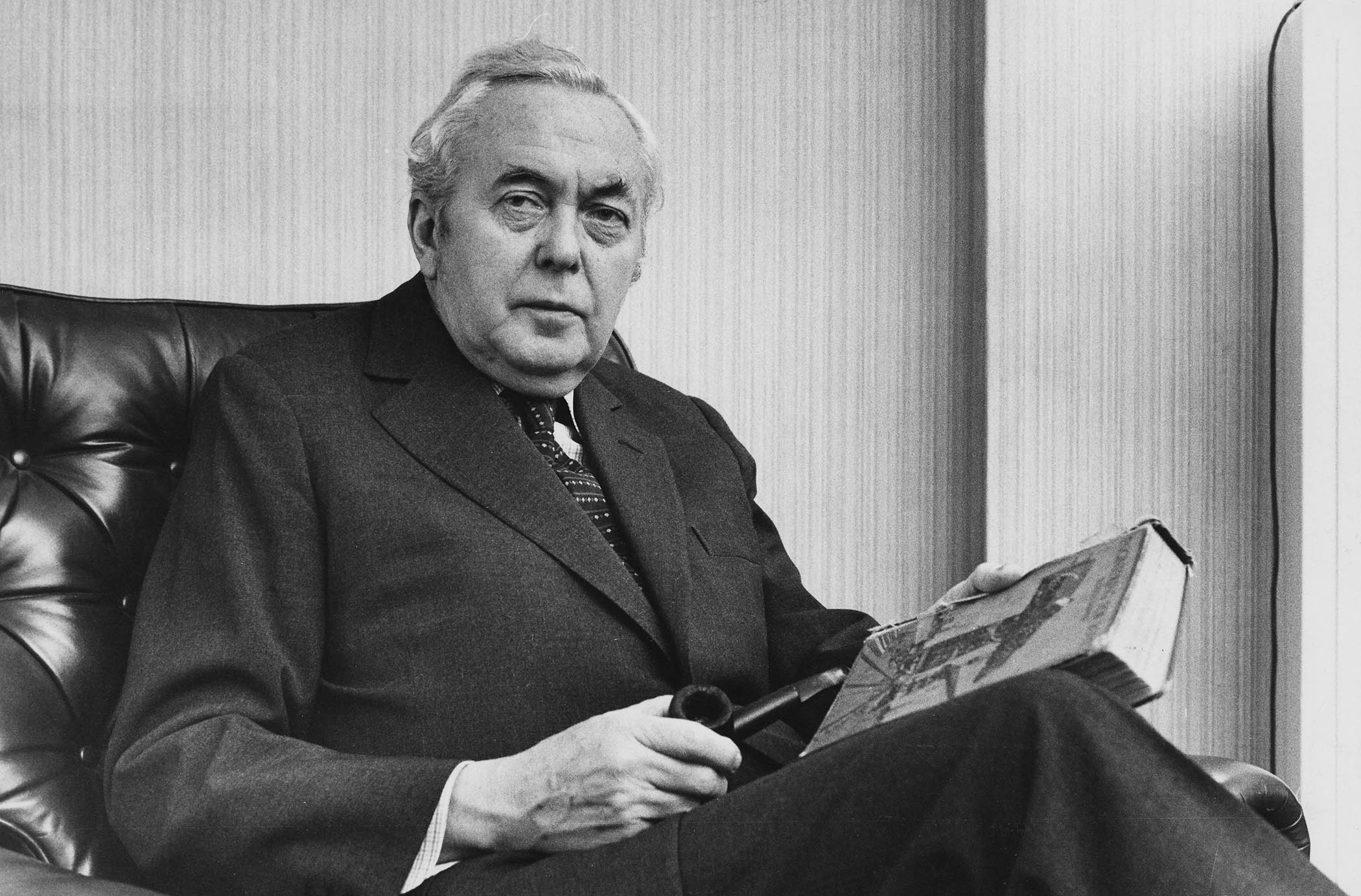



Sir Keir Starmer is having a rough time but might derive some comfort from the way his predecessor Harold Wilson, prime minister from 1964 to 1970 and 1974 to 1976, navigated a sea of troubles.
Wilson’s latest biographer Nick Thomas-Symonds is also the pro-European cabinet minister trying to negotiate a closer relationship with the European Union.
In Harold Wilson: The Winner, Thomas-Symonds writes passages that seem like advance advice to Starmer about what the job entails. On a visit to West Germany in June 1974, Wilson spoke to the then British ambassador Nicholas Henderson, who commented afterwards: “He was quite frank about his main objective, which was to keep all the clashing balls of the Labour party in the air at the same time.”
Wilson’s key task was to resolve tensions between pro- and anti-Europeans in the Labour party after we had entered the European Economic Community in 1973 under the premiership of that great European, Edward Heath. Wilson’s resolution was achieved via a referendum in 1975 on membership of the EEC, which resulted in a 2:1 majority in favour of remaining in.
Then, as now, the Labour prime minister was surrounded by plotters. Wilson wasn’t quite as unpopular as Starmer is, but said “they keep me there not because they love but because there is no alternative”.
The footballing triumph gave Wilson one record: ‘that England only win the World Cup under a Labour government’
The footballing triumph gave Wilson one record: ‘that England only win the World Cup under a Labour government’
As we approach the 2026 World Cup, I am reminded of the fact that Wilson, a Huddersfield Town supporter, was passionate about football – as Starmer is about Arsenal. Thomas-Symonds records that Wilson had a theory that there was “mystical symbiosis between the fortunes of the Labour party and the English football eleven”.
But when England won the World Cup in 1966 any beneficial impact on the economy was short-lived. Wilson’s attempt to ward off market pressure for a devaluation of the pound, via the infamous July 1966 package of deflationary measures, was thwarted, and a devaluation was forced upon the government in November 1967. But as Thomas-Symonds comments, the footballing triumph did at least give Wilson “one record that has still not been broken: that England only win the World Cup under a Labour government”.
High hopes did not prevail in 1970, when England were knocked out of the World Cup by West Germany. But the blow to public confidence administered by this shock defeat was hardly the main factor behind Labour’s subsequent, and unexpected, defeat in the 1970 general election. The culprit was unexpectedly bad trade figures – the obsession then was the balance of payments, rather than the level and cost of government borrowing – and the publicity about Britain being “back in the red”. As Thomas-Symonds says, “economics, rather than football, was cutting through”.
Starmer will be hoping, like Wilson, to preside over an England World Cup victory. New prime minister? In the end Harold Wilson was not forced out, but resigned of his own accord in 1976.
Photograph by Radio Times/Getty Images
Newsletters
Choose the newsletters you want to receive
View more
For information about how The Observer protects your data, read our Privacy Policy